
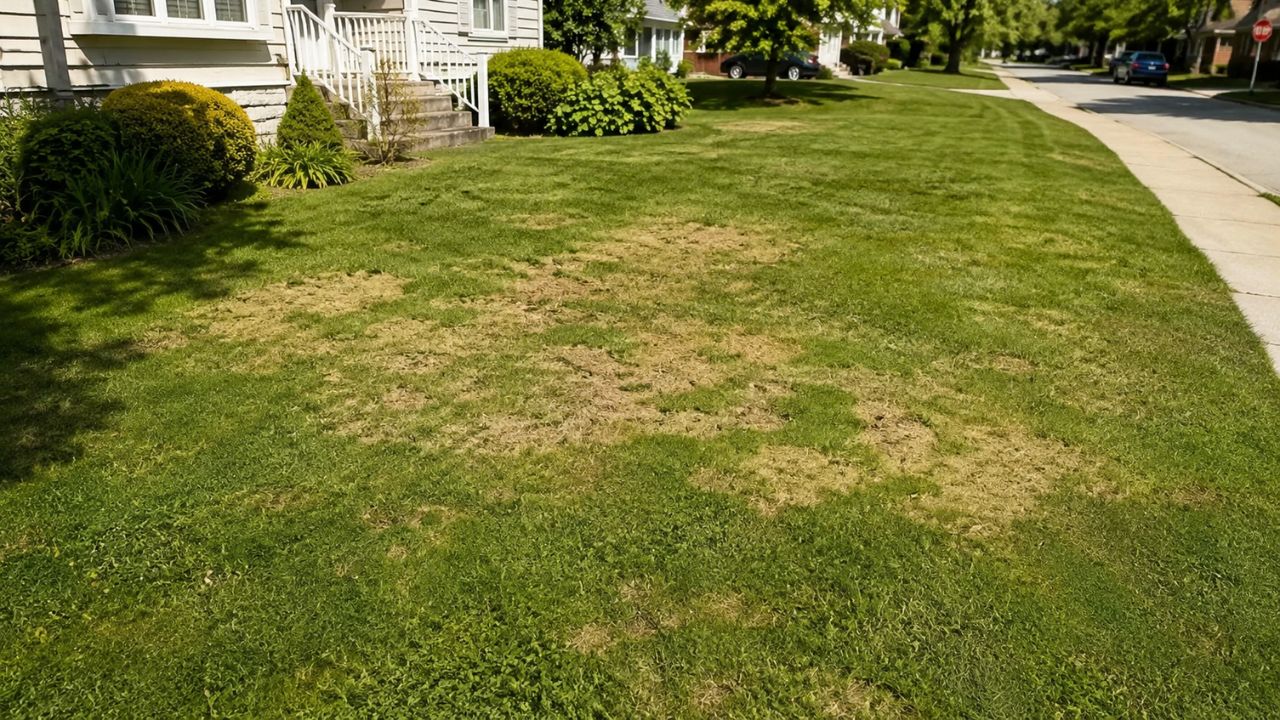
Every spring in Sudbury, I get calls from homeowners who are frustrated. They did everything right last fall — fertilized, cleaned up, maybe even aerated. And now the snow is gone and the lawn looks rough. Brown patches here, matted sections there, a few spots that look completely dead.
And the first thing most of them say is: “What did I do wrong?”
Usually the answer is nothing. Sudbury winters are genuinely hard on grass. The conditions we get up here — heavy snow load, aggressive freeze-thaw cycles, long dormancy periods — put more stress on a lawn than most of Ontario deals with. Some damage every spring is normal. The question isn’t whether you’ll have damage. It’s whether you can read it correctly and respond to the right thing.
That’s what this article is about. How to actually look at your lawn in late May, understand what you’re seeing, and make smart decisions instead of guessing.
What a Sudbury Winter Actually Does to Grass
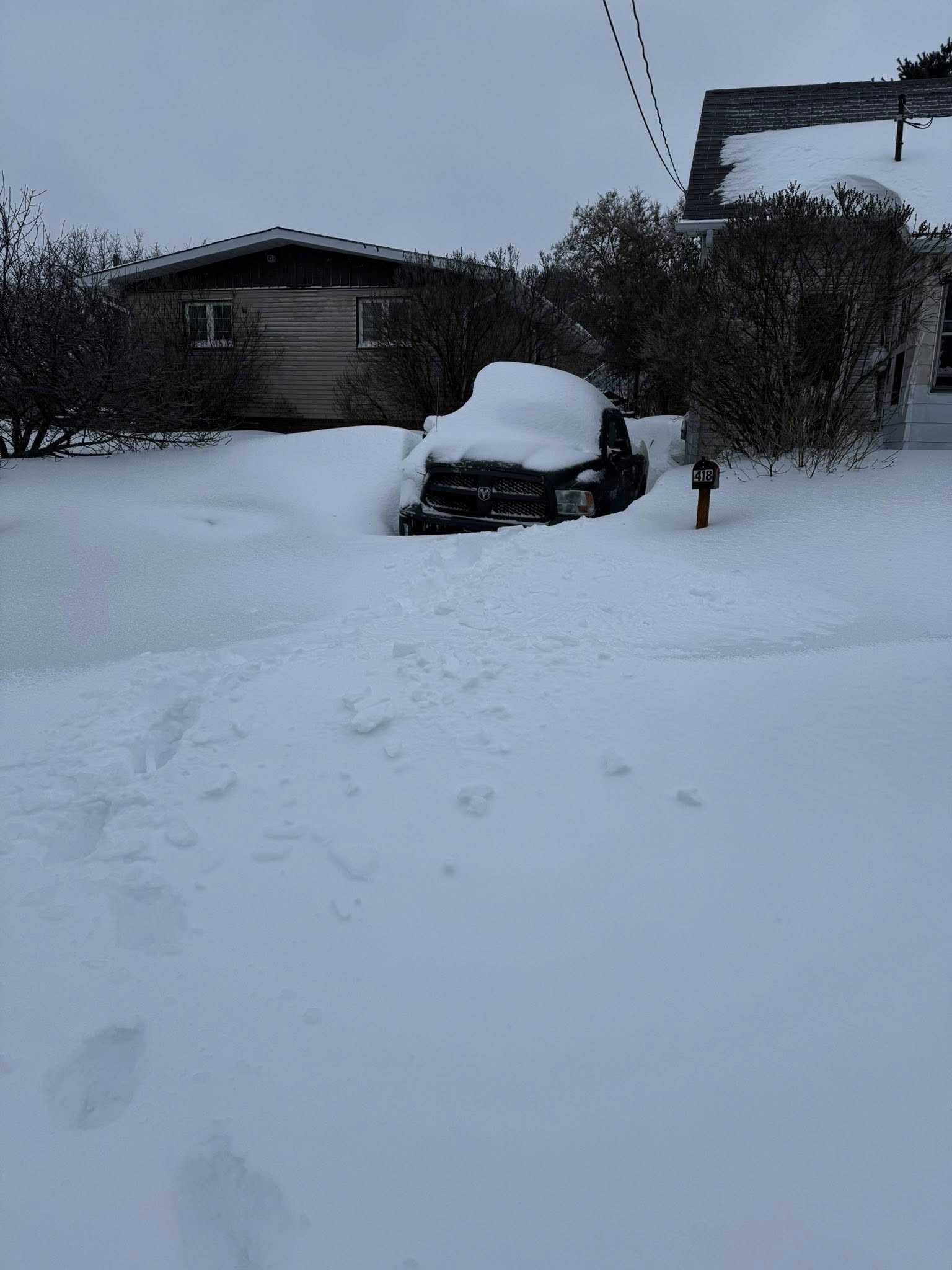
Before you can read the damage, it helps to understand the mechanisms. There are four main ways a Sudbury winter stresses a lawn, and they produce different looking results in spring.
Snow mould. This is the most common winter lawn issue in Sudbury. Snow mould is a fungal disease that develops under snow cover — specifically in conditions where snow falls on unfrozen ground and sits for an extended period. There are two types. Grey snow mould produces circular, bleached-grey patches of matted grass, usually 3 to 12 inches across. Pink snow mould produces similar patches but with a slightly pink tinge at the edges. Both look alarming when the snow first comes off. Both are usually less serious than they appear.
Ice sheeting. When temperatures cycle above and below freezing in late winter or early spring, water from snowmelt can refreeze on the lawn surface as a solid sheet of ice. Grass trapped under ice for more than 30 days can suffocate — the ice layer blocks oxygen exchange and carbon dioxide builds up to toxic levels in the grass tissue. Ice sheet damage looks like large, uniform dead areas that correspond to low spots where water pooled and refroze.
Desiccation. In late winter, warm sunny days combined with wind can dry out grass crowns before the frozen ground can supply moisture to the roots. The grass essentially dehydrates while still frozen in place. Desiccation damage appears as brown, dried-out sections — usually on exposed areas, slopes, or spots that get more wind and sun than the rest of the lawn.
Soil heaving. Repeated freeze-thaw cycles push the soil up and down, which can physically displace shallow-rooted grass plants and break root connections. Young lawns and newly seeded areas are most vulnerable. Heaving damage looks like sections where the grass surface has become uneven, with some plants sitting higher than others and visible soil gaps around the crowns.
And then there’s a fifth cause that isn’t weather-related at all but often gets misread as winter damage: grub damage from European chafer beetles, which feeds on roots all winter underground and reveals itself when the snow comes off. I’ll explain how to tell that apart from true winter damage shortly.
The Four Types of Winter Damage — What Each One Looks Like

Here’s how to visually identify each type when you’re standing in your lawn in late May.
Snow Mould — Circular Matted Patches
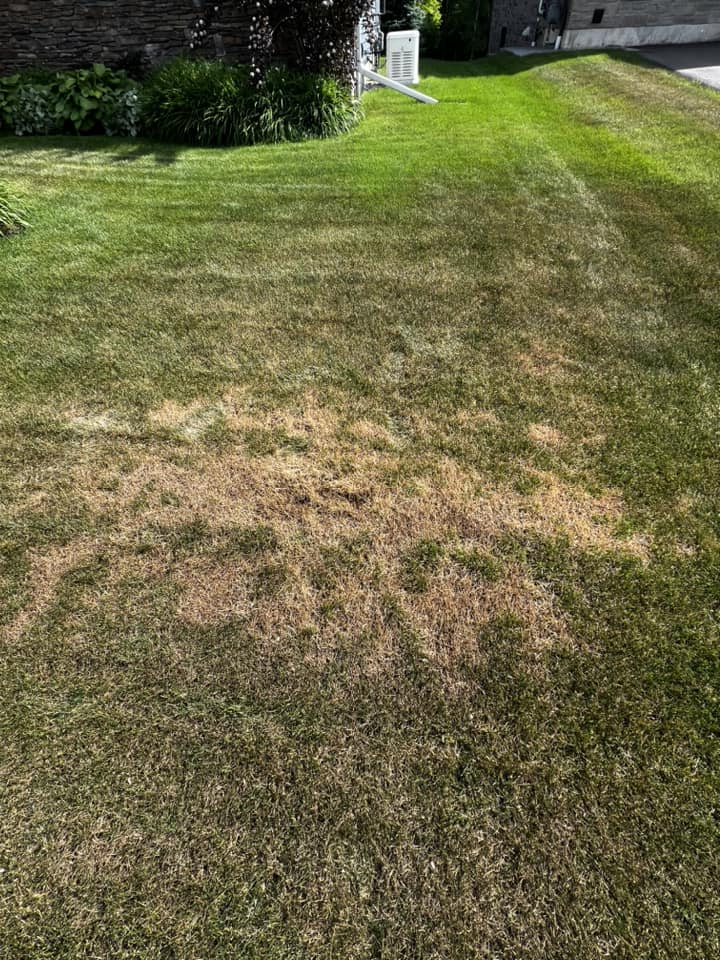
Look for roughly circular patches of matted, pale grey or tan grass, anywhere from the size of a dinner plate to about a foot across. The grass blades in these areas are flattened and stuck together — if you crunch them between your fingers they feel dry and papery. The border between affected and healthy grass is usually fairly sharp.
Key thing to know: snow mould affects the blades, not the crowns. The crown is the growing point at the base of the grass plant, right at soil level. If the crown is still firm and shows any sign of greenish or white colour when you look closely, the plant will recover. Snow mould patches that look alarming in late May are often growing new green shoots by mid-June without any intervention beyond raking them out to improve airflow.
Ice Sheet Damage — Large Uniform Dead Areas
Ice damage covers larger areas than snow mould and the shape follows the low spots and drainage patterns of your lawn rather than appearing as scattered circles. The affected grass is uniformly dead — no variation within the damaged zone — and the dead areas tend to correspond to depressions where water would have pooled.
This damage is more serious than snow mould because the crowns are often genuinely dead, not just dormant. Test by tugging gently — if the grass pulls out with almost no resistance and the crown is dry and brown all the way through, that grass is not coming back. Ice-damaged areas usually need overseeding or sod patching.
Desiccation — Brown Exposed Areas
Desiccation damage appears on the parts of your lawn most exposed to late-winter sun and wind — typically south and west-facing slopes, areas near paved surfaces that absorb heat, or open sections without windbreaks. The grass looks dried out and bleached rather than rotted or matted.
Similar to ice damage, you need to check the crowns. Desiccation can kill crowns or just damage the blades, depending on severity. Mild cases recover on their own with consistent moisture in spring. Severe cases — where the crown is dry and brittle — need reseeding.
Soil Heaving — Uneven Bumpy Surface
Heaving damage is often felt before it’s seen. The lawn surface becomes noticeably bumpy and uneven. In affected areas, you may see exposed soil around the base of grass plants, or sections where the turf has risen and the roots below are partially disconnected from the soil.
Minor heaving often corrects itself as the soil settles and the grass re-establishes contact. Significant heaving — large sections of bumpy, uneven turf with widespread root disruption — benefits from rolling in early spring when the soil is moist but not saturated, followed by core aeration once conditions are right.
How to Walk Your Lawn and Read It Correctly
Here’s the process I use when I walk a Sudbury property in late May for a spring assessment. You can do this yourself in about 20 minutes.
Step One: Wait Until Late May
I know it’s tempting to go out and assess the damage the day the snow melts. Don’t make decisions then. In Sudbury, soil temperatures in early May are still cold and grass that looks dead may simply be dormant. Give it until the last week of May before you start categorizing damage as permanent. Two weeks of warmth will tell you a lot about what’s actually coming back versus what isn’t.
Step Two: Walk the Whole Property Systematically
Don’t just stand at one spot and look. Walk the entire lawn in a grid pattern — up and down, then side to side. What you notice from one angle you’ll miss from another. Pay attention to how the lawn feels underfoot as well as how it looks. Soft, spongy areas that give more than expected are a warning sign worth investigating.
Step Three: The Tug Test
In any area that looks dead or damaged, crouch down and do the tug test. Grab a small handful of the affected grass and pull with moderate, steady pressure.
- Resistance with a firm crown: Dormant or damaged but alive. This grass is coming back.
- Pulls out easily, crown dry and brown: Dead. This area needs reseeding or patching.
- Lifts in a mat, soil visible underneath, roots detached: Grub damage. This is not weather-related. Look underneath for pale C-shaped grubs before deciding on a repair approach.
Step Four: Note the Pattern
The pattern of the damage tells you a lot about the cause.
- Scattered circles of 6 to 12 inches → snow mould
- Large uniform areas following low spots → ice sheeting
- Damage concentrated on exposed slopes and edges → desiccation
- Bumpy, uneven surface with root disruption → heaving
- Sections that lift cleanly with grubs underneath → chafer grub damage
- Damage that doesn’t fit any of these patterns, or multiple types together → likely a combination, assess area by area
Step Five: Estimate the Percentage of Living Lawn
This is the number that drives the replace vs repair decision. Walk the lawn and estimate — roughly, honestly — what percentage of the total area is still alive based on your tug tests. This doesn’t need to be precise. A rough estimate of “about 70 percent alive” or “maybe 40 percent alive” is enough to guide the decision.
Above 50 percent alive: repair almost always makes more sense than replacement. Below 50 percent: the replace vs repair decision needs a closer look at soil conditions, your timeline, and your budget.
What to Do Once You Know What You Have
Once you’ve walked the lawn and categorized the damage, the response becomes much more straightforward.
If It’s Mostly Snow Mould
Rake the affected areas firmly to break up the matted grass and improve airflow. Remove the debris. In most cases that’s all you need to do. The grass will recover on its own within a few weeks. If some patches genuinely don’t fill back in by mid-June, overseed those specific areas. Don’t treat the whole lawn for a snow mould problem.
If It’s Ice or Desiccation Damage With Dead Crowns
These areas need new grass. For small patches, direct overseeding after loosening the soil surface works well. For larger dead areas — anything bigger than a square metre or two — sod patching gives you faster coverage and a more uniform result. Core aeration across the whole lawn before overseeding improves germination significantly. I’ve written the full sequence for this in my article on fixing a Sudbury lawn after winter — that’s the step-by-step guide if you want to go deeper on the repair process.
If You’re Seeing Grub Damage
Don’t start reseeding or sodding until you’ve confirmed the grub situation and made a plan that includes treatment. Putting new grass over an active grub infestation is expensive and temporary. The repair approach — whether that’s partial sod replacement or overseeding — depends on the extent of the damage, but the nematode treatment in August is non-negotiable if grubs are confirmed. Full story and treatment breakdown is in my Hanmer property article.
If It’s a Mix of Everything
Most Sudbury lawns after a harsh winter have a combination of issues, not just one. The approach is the same: assess area by area, categorize each section, and respond appropriately to each type. Don’t apply a single solution to the whole lawn when different sections have different problems. Blanket overseeding a lawn with active grubs doesn’t fix the grub sections. Pulling out viable grass to sod an area that just has snow mould wastes money.
Treat each problem for what it actually is. That sounds obvious, but it’s the mistake I see most often on spring calls — homeowners who’ve already done something to the whole lawn before they understood what was wrong with it.
The One Thing That Helps Every Type of Winter Damage
Regardless of what combination of winter damage your lawn has, there is one thing that helps recovery across all of them: core aeration done at the right time.
Winter compacts Sudbury soil. Freeze-thaw cycles, snow load, and months of dormancy all tighten the soil structure. Compacted soil slows recovery from every type of damage — snow mould patches take longer to fill in, overseeded areas germinate poorly, and even healthy sections of lawn grow more slowly because the roots can’t access oxygen and moisture efficiently.
Core aeration in the last week of May through the second week of June opens the soil, accelerates recovery, and makes every other thing you do — overseeding, fertilizing, patching — work better. I’ve seen lawns with significant winter damage recover dramatically faster after aeration than identical lawns that skipped it. It’s not a magic fix, but it’s the highest-leverage single action you can take on a Sudbury lawn in spring.
When to Call Me Instead of Figuring It Out Yourself
The assessment process I’ve described above is genuinely something most homeowners can do. You don’t need me to walk your lawn if you’re comfortable crouching down, doing the tug test, and reading the patterns.
But there are situations where I’d suggest calling before you do anything:
- You’re finding grubs. Grub situations have more moving parts — treatment timing, repair sequencing, nematode application — and making a mistake in the order of operations wastes money. Let me walk it with you first.
- More than half the lawn is dead. At that point the repair vs replace decision has real financial stakes and it’s worth getting an assessment before committing to either path.
- You’ve done spring repair for two years in a row and the lawn still looks rough. Something structural is going on — drainage, pH, soil depth, or a recurring pest issue — and guessing at it again isn’t the answer.
- You just don’t want to deal with it yourself. That’s a perfectly valid reason. Call me and we’ll handle the assessment and the work.
Call or text me at 705-507-6787, or fill out the free quote form on the site. No charge for coming out and walking the property. We cover all of Greater Sudbury — Garson, Val Caron, Hanmer, Lively, Chelmsford, Azilda, Capreol.
I’ll tell you honestly what I see and what I’d do if it were my lawn.
— Ryan Lingenfelter
Cutting Edge Lawn & Landscaping
Garson, Ontario
705-507-6787
