
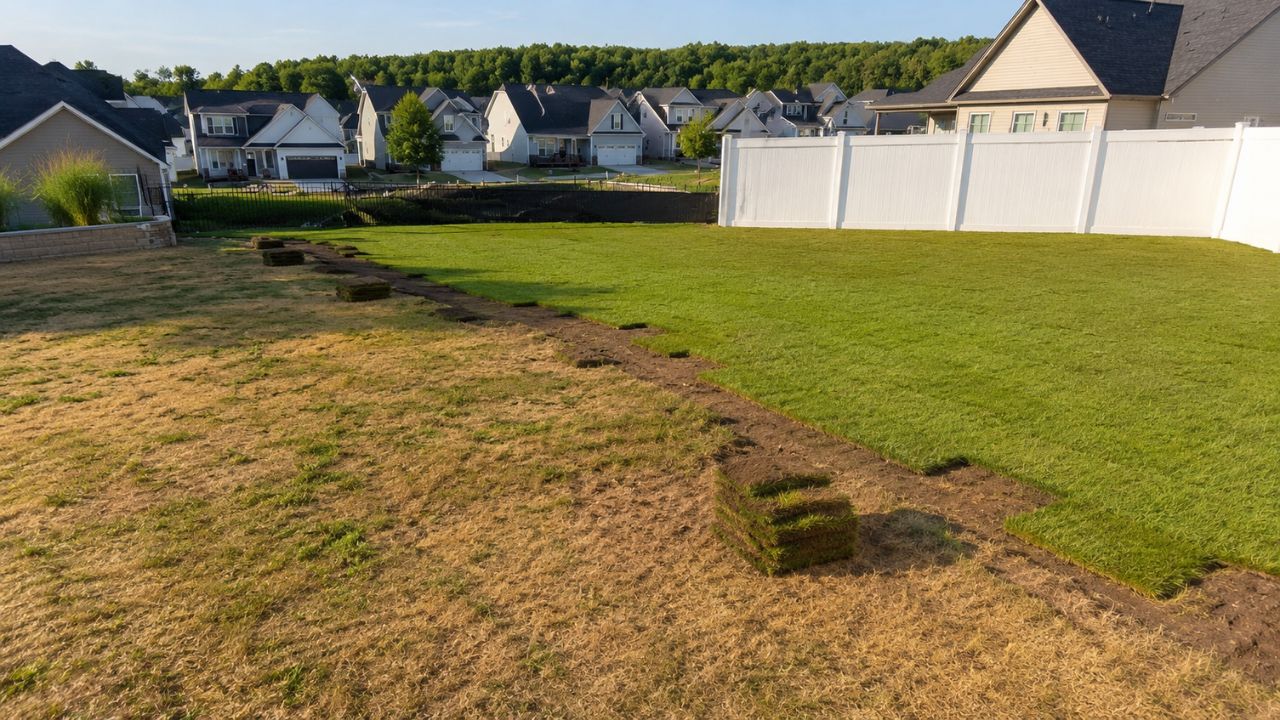
Every sod installation job I do ends the same way. Before I pack up and leave, I sit down with the homeowner — or if they’re not home, I leave a written schedule — and go through the watering instructions in detail.
Not because it’s complicated. Because it’s the single most important thing that determines whether a $3,000 or $5,000 sod installation succeeds or fails. And I’ve seen it fail. Not often, but enough times to know exactly what happens when the watering doesn’t happen the way it should.
I’m Ryan Lingenfelter, owner of Cutting Edge Lawn & Landscaping in Garson, Ontario. I’ve been installing sod on residential and commercial properties across Greater Sudbury since 2020. Here’s the honest, detailed version of what happens to new sod when watering gets skipped — and what you can do if you’re already in that situation.
Why the First Two Weeks Are Different From Everything After
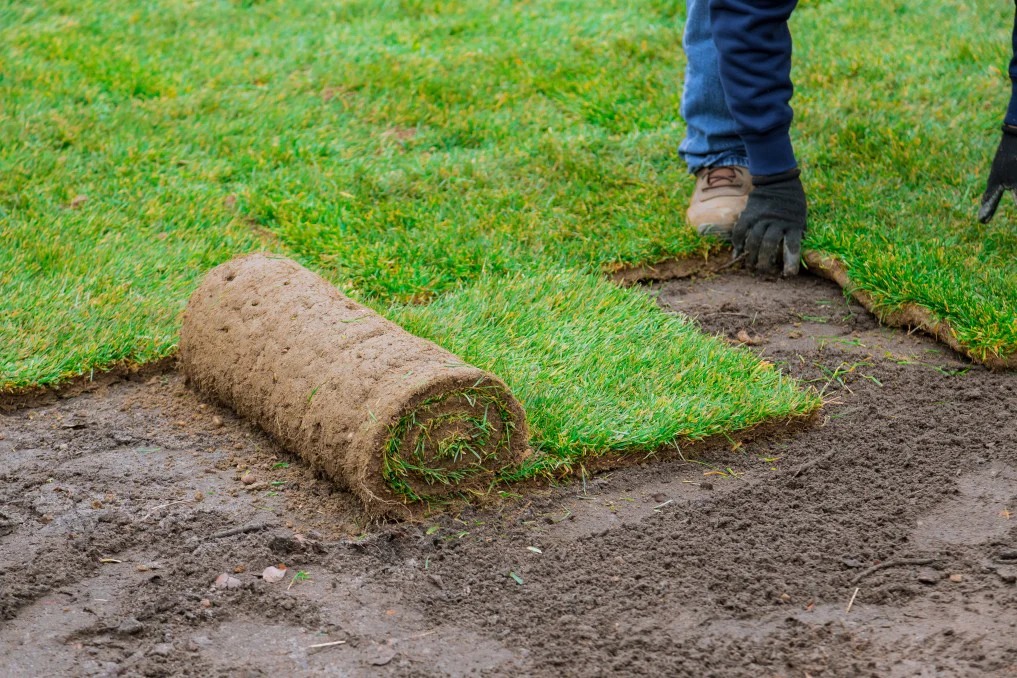
To understand why watering is so critical in the first two weeks specifically, you need to understand what’s actually happening with the sod during that period.
When sod is laid, the roots at the bottom of the sod have been severed from whatever they were growing in at the sod farm. They’re sitting on top of your prepared soil with no real connection to it yet. They’re alive — the cells are still viable, the plant is still functioning — but they’re completely dependent on the moisture already in the sod itself and whatever moisture is immediately available at the soil interface.
The sod’s job over the first two weeks is to send new roots down into your soil. Those roots need to find moisture in the soil to grow toward. This is called establishment — the process of the sod knitting itself into your soil and becoming a self-sustaining plant rather than a cut piece of grass sitting on top of your yard.
Until those roots establish, the sod has no independent access to water. It can’t pull moisture from depth the way an established lawn can. It can’t draw on the water table or deep soil reserves. It is entirely dependent on surface moisture — the moisture in the top inch or two of soil — to survive.
In Sudbury’s climate, that surface moisture can evaporate completely in a matter of hours on a warm, sunny day. The window between “adequately moist” and “critically dry” for new sod is much shorter than most people expect.
After two to three weeks — if watering has been done correctly — the roots are established deeply enough that the sod can begin accessing moisture from further down in the soil. At that point, the risk drops significantly and you can transition to a normal watering schedule. But before that point, the sod is genuinely fragile in a way that it will never be again once established.
Day by Day — What Happens When Watering Stops
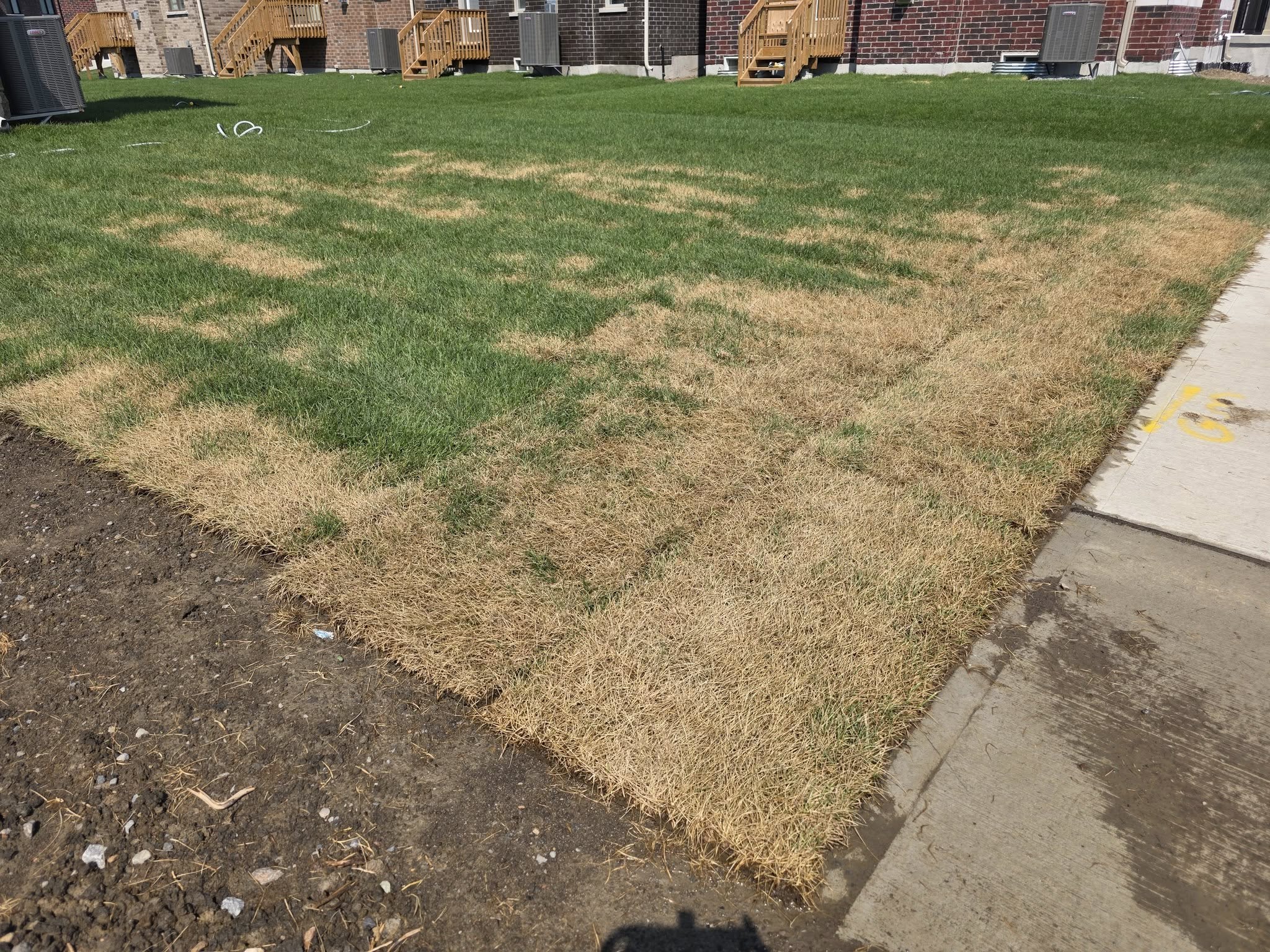
This is the part I want to be very specific about because I think most people underestimate how quickly things go wrong.
Day 1 of No Watering — The Clock Starts
On the first day without watering, the sod looks fine. The moisture already in the sod from installation and previous waterings is still present. The grass is green, the sod feels firm, nothing is obviously wrong.
But underneath the surface, the roots that were starting to grow down into the soil are already experiencing reduced moisture availability. Root growth slows. The clock has started.
Day 2 — First Signs
By the end of day two without watering — particularly in warm weather — you’ll start to see the edges and corners of sod rolls beginning to lighten in colour. The seams between rolls may start to look slightly different from the centre of each roll. The sod may start to feel slightly less firm underfoot.
These are early warning signs. At this stage, thorough watering can still fully reverse the situation. The roots haven’t been damaged yet — they’ve just stopped growing while waiting for moisture.
Day 3 — Visible Stress
By day three without water in warm conditions, the colour change becomes more visible across the whole surface. The grass blades start to take on a slightly grey-green or blue-green tint — this is the grass’s stress response, drawing moisture away from the blades and toward the crown to protect the growing points.
The edges of the sod rolls are now clearly lighter than the centres. In hot, windy conditions, some edges may already be curling slightly.
Watering now will still likely save most of the sod, but you may lose some edge sections, particularly in areas exposed to full sun and wind.
Day 4 to 5 — Critical Window
This is the point where the situation becomes genuinely serious. The sod has now been without adequate moisture long enough that cell damage in the grass blades is occurring. Sections that were already under stress — edges, seams, south-facing areas, spots near concrete or asphalt that radiate heat — are starting to turn brown.
The roots that were beginning to establish have stopped growing and may be starting to die back. The connection to the soil that was forming is at risk.
If you water heavily and consistently from this point, you may save the majority of the sod. You will almost certainly lose some sections. Recovery will take longer than it would have with proper watering throughout.
Day 6 to 7 — Significant Loss Risk
A week without adequate watering on new sod in Sudbury summer conditions is serious. Large sections will be visibly brown. The sod in the worst-affected areas — south-facing, near hardscape, exposed to full sun — may already be dead, with the cells having dried out past the point of recovery.
The sod in shaded areas or areas that received some moisture may still be salvageable. But you’re now looking at partial loss at minimum and potentially significant loss depending on conditions.
Beyond Week One — What I’ve Seen
I’ve been called to assess sod that was installed properly and then not watered adequately. The worst case I’ve seen was a homeowner who went on a week-long trip immediately after installation — in July — without arranging for someone to water. By the time they returned, approximately 60 percent of the sod was dead. The remaining 40 percent in a shaded area of the yard had survived.
That was a full re-installation on the dead sections. The cost of that re-installation was significantly more than arranging for someone to water once a day while they were away would have been.
The Sudbury Factors That Make This Worse
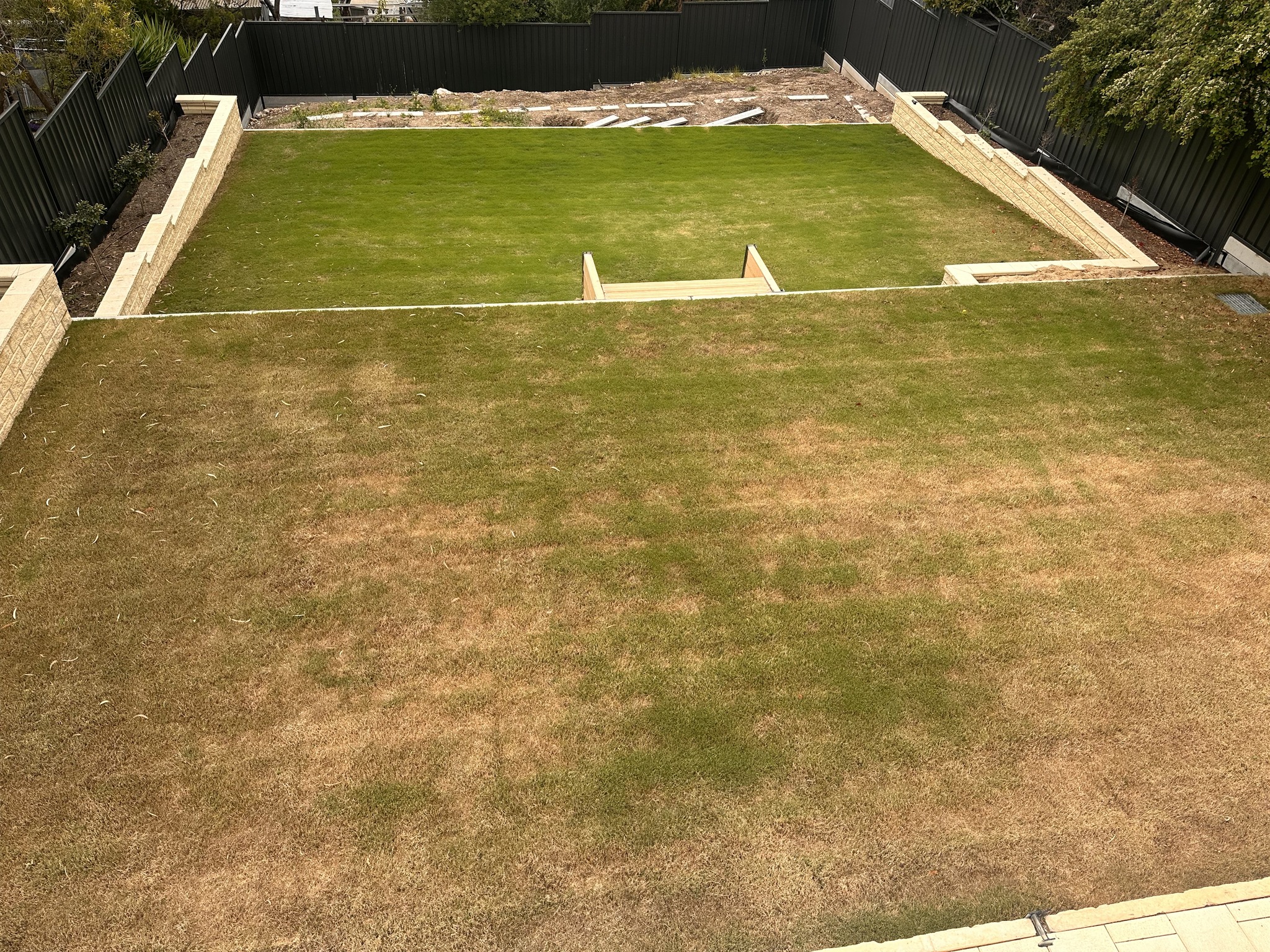
Sudbury’s specific climate and soil conditions make watering new sod more critical here than in many other parts of Ontario. These are the factors I always mention when I walk homeowners through the post-installation care.
Clay Soil Dries Differently
The clay-heavy soil common across most of Greater Sudbury holds moisture well when it’s properly saturated — but when it dries out, it dries out hard and fast. The surface of clay soil can go from adequately moist to cracked and dry within a day in warm conditions. New sod sitting on dried, cracked clay surface has no moisture to pull from at all — the soil has pulled away from the sod roots rather than staying in contact with them.
This is why I always emphasize watering until you see runoff when you first water — you need to saturate the clay, not just wet the surface. And why I recommend checking soil moisture two to three inches down rather than just touching the surface.
Summer Heat Peaks in July and August
If your sod installation happens in July or August — which is common because that’s when people notice their lawns are failing and want them fixed — you’re working against Sudbury’s hottest period. Surface evaporation is highest. The clay soil dries fastest. The sod is under heat stress on top of establishment stress.
July and August sod installations require more watering frequency than spring or fall installations — sometimes three times a day in the hottest, driest periods. I tell homeowners this upfront. It’s a real commitment. If that commitment isn’t possible for their schedule, I recommend waiting until late August or September when conditions are significantly more forgiving.
Wind Dries Faster Than Heat
Sudbury gets wind. On exposed properties — particularly on higher lots, corner lots, or properties without shelter from trees or structures — wind desiccation of new sod can be almost as fast as heat desiccation. A windy day with moderate temperatures can dry new sod edges almost as quickly as a calm day at 30 degrees.
If your property is exposed, factor in wind when assessing watering frequency during the establishment period.
The Correct Watering Schedule — What I Give Every Client
Here is the exact watering schedule I provide after every sod installation across Greater Sudbury. This is based on typical summer conditions. Adjust upward in extreme heat or wind.
Days 1 to 7 — Twice daily minimum: Water in the morning — early, before 9am if possible — and again in the late afternoon around 4 to 5pm. Each watering session should be long enough to wet the soil two to three inches deep. On a standard residential lawn with a sprinkler, this is typically 20 to 30 minutes per zone. In the first two to three days, water until you see slight runoff at the edges — this confirms the soil is fully saturated.
Days 8 to 14 — Once daily deep watering: One long, deep watering per day — morning is best. You’re now starting to encourage the roots to go deeper to find moisture rather than staying at the surface. The goal is to keep the soil moist two to four inches down, not just the surface inch.
Days 15 to 21 — Every other day: Transition to every-other-day watering, still deep rather than shallow. By this point the sod should be starting to root in — you can check by gently trying to lift a corner. Resistance means roots are establishing. No resistance means continue the more frequent watering schedule.
Week 4 onwards: Transition to normal watering — roughly once or twice per week with deep watering sessions, supplemented by rainfall. Treat it like an established lawn.
First mow: Wait until the grass reaches 3.5 to 4 inches. Do not mow earlier — you can pull newly rooted sod right up if you mow before the roots are anchored. When you do mow for the first time, walk the lawn gently and avoid sharp turns.
What to Do If You’ve Already Missed Waterings
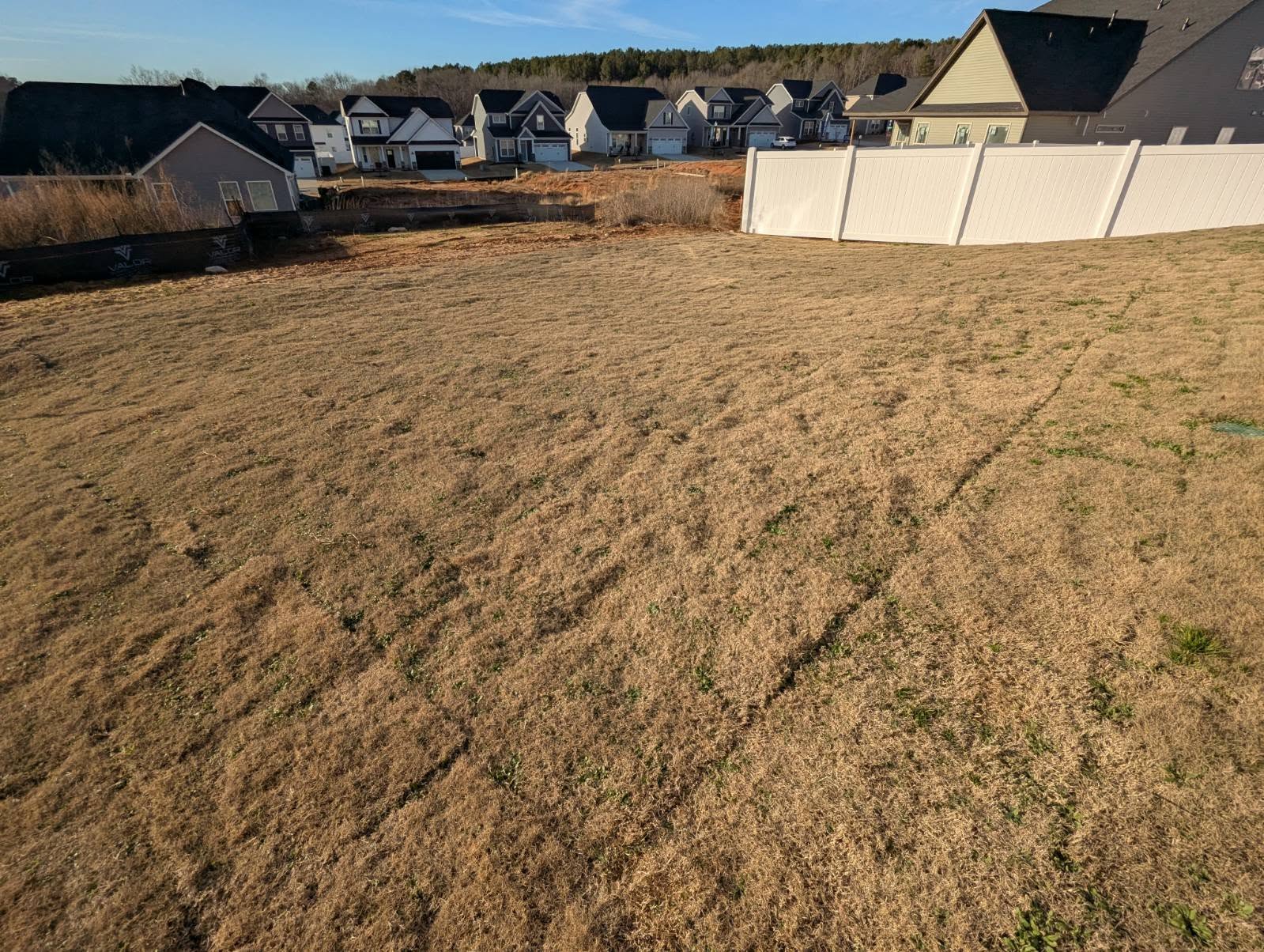
If you’re reading this because you’ve already missed some waterings and your new sod is showing stress — here’s what to do right now.
Water immediately and thoroughly. Don’t wait until your normal schedule. Get water on it now, for long enough to fully saturate the soil. Check two to three inches down — if it’s still dry at that depth, keep watering.
Water again in four to six hours. Don’t wait until tomorrow. The sod that’s been without water needs moisture available continuously while it recovers.
Assess the damage honestly. After you’ve watered thoroughly, look at the sod after 24 hours. Sections that were in early stress — slightly grey-green, slightly firm — will likely recover. Sections that are brown and crispy, particularly at edges and seams, may not. Give it 48 to 72 hours of proper watering before you give up on any section.
Shade if possible. If you have sections that are in full direct sun and clearly stressed, temporary shade cloth for a few days while the sod recovers can help. This isn’t always practical but it genuinely makes a difference on severely stressed sections.
Call me if you’re not sure. If you’re looking at significant brown sections and you’re not sure whether they’re recoverable — reach out. I can come out, assess it honestly, and tell you which sections are likely to come back and which ones need to be replaced. Better to know early than to wait and hope on sections that are already dead.
Need Help With a Sod Installation or Aftercare?
If you’re planning a sod installation and want it done with proper soil preparation and a clear aftercare plan — or if you’ve had sod installed and you’re concerned about how it’s establishing — reach out. I’ll walk you through everything upfront so you know exactly what to expect and what to do.
📞 Call or text me: 705-507-6787
Or fill out the free quote form here — I get back to everyone same day.
— Ryan Lingenfelter
Owner, Cutting Edge Lawn & Landscaping
Garson, Ontario
Related Articles
- Sod Installation in Greater Sudbury — Services and Pricing
- I Replaced a Sudbury Homeowner’s Dead Lawn in 4 Days
- Why Your Sudbury Lawn Goes Brown in July — And When to Actually Worry
- I Said No to a Lawn Job in Val Caron — Six Weeks Later They Called Me Back
- The 2-Week Window in Sudbury That Makes or Breaks Your Lawn All Summer
