
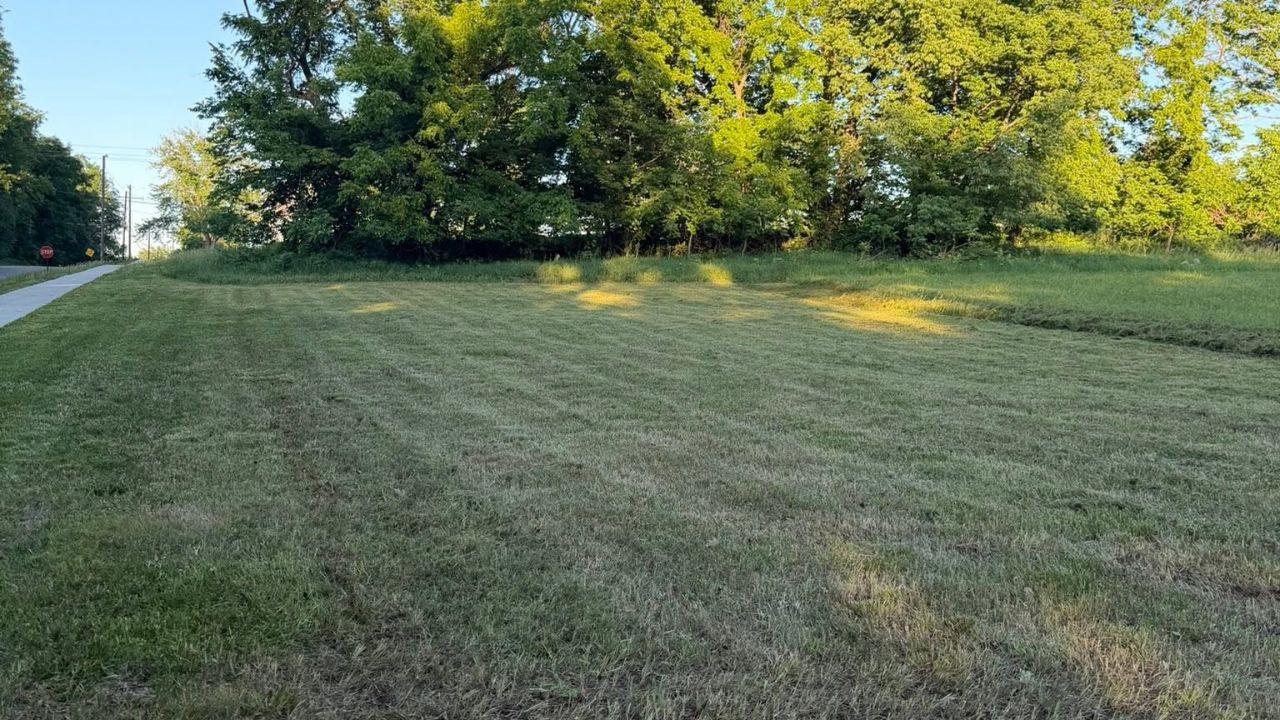
July in Sudbury is when I find out which lawns were actually prepared for summer and which ones just looked fine in June.
It’s also when most homeowners start noticing problems they can’t easily fix anymore — sections going brown that don’t come back with water, patches that look thinner than the surrounding lawn, soft spots that appeared sometime in the last few weeks. By the time these things become visible enough to trigger a call, they’ve often been developing for four to six weeks. The window to address them easily has narrowed significantly.
This article is about what to look for in early to mid-July — the warning signs that show up before the damage is obvious, that are still actionable when you catch them, and that predict what August is going to look like if you don’t respond to them now.
I wrote about the June window that determines August performance in the 7 days in June article. This is the companion to that — July is when you find out whether June went right, and it’s the last meaningful window to intervene before the summer peak stress period arrives.
Why July Is When the Season Is Actually Won or Lost
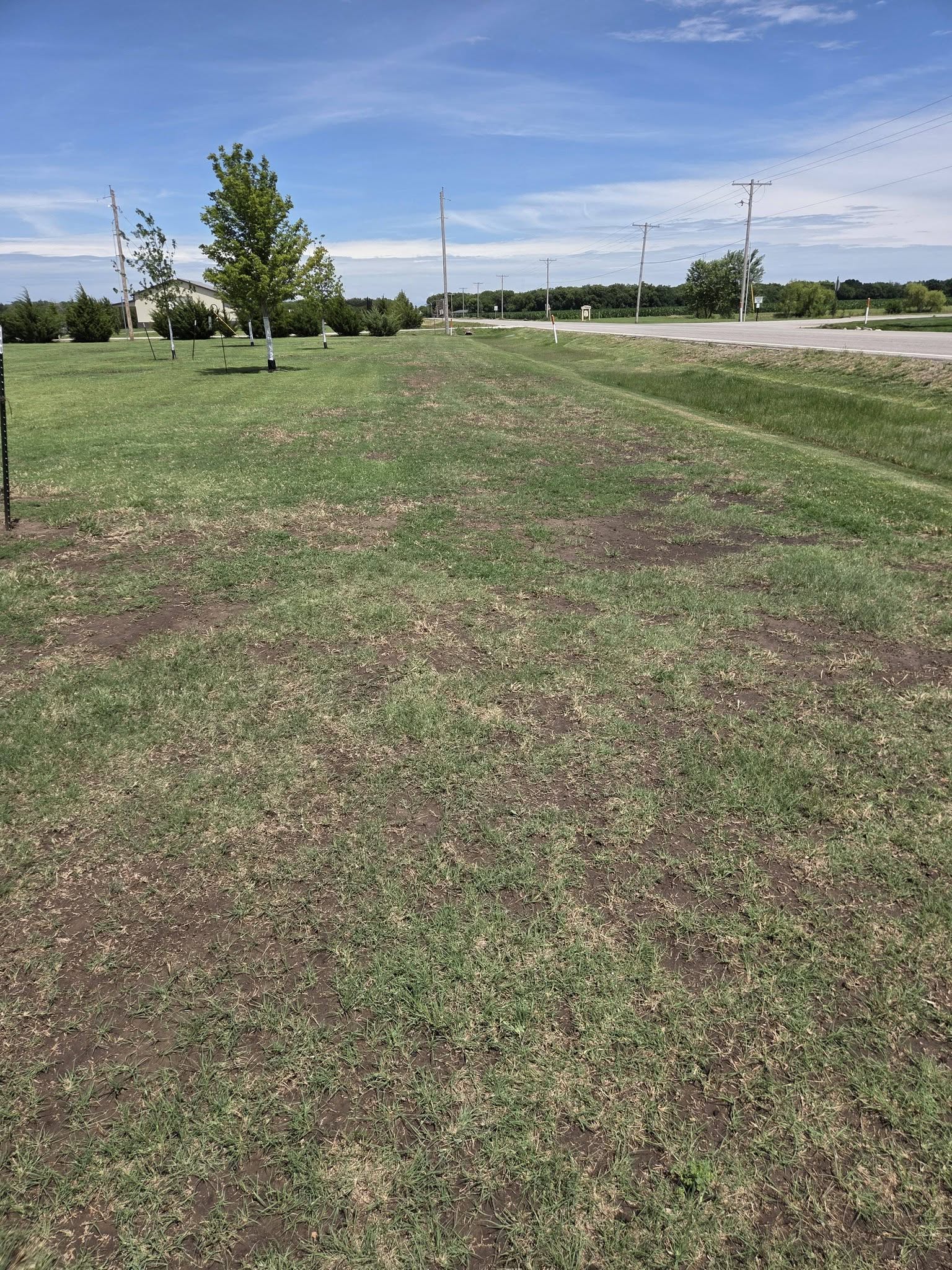
May and June are growth months in Sudbury. The soil is warming, the grass is putting on new growth rapidly, and the conditions are generally forgiving — there’s usually adequate rainfall, temperatures are moderate, and the grass has momentum coming out of winter dormancy.
July changes that. Sudbury’s dry stretches typically hit in late July — periods of 10 to 14 days with minimal rain and afternoon temperatures in the high twenties or low thirties. Soil moisture drops. Evapotranspiration from the grass surface increases. The lawn stops putting energy into growth and starts putting energy into survival.
A lawn with deep roots — developed through good soil conditions and spring aeration — can handle this transition. It draws on moisture from 6, 8, 10 inches down. The surface may slow its growth and look slightly less vibrant, but the root system maintains function through the dry stretch and the lawn recovers quickly when rain returns.
A lawn with shallow roots — because of compaction, inadequate spring preparation, or an underlying issue that prevented root development — hits the same dry stretch with nothing in reserve. When the moisture in the top 2 or 3 inches runs out, the roots have nothing to reach for. Sections that have been marginally surviving begin to fail visibly. And once a section of lawn fails in July, you’re looking at repair work rather than maintenance — a fundamentally different and more expensive situation.
July is the dividing line. The problems that reveal themselves in July were almost always developing since spring, but they reach the threshold of visible damage during the summer stress period. Catching the early warning signs before that threshold is reached gives you options. Missing them until August means dealing with consequences.
The Six Warning Signs Worth Checking For Right Now
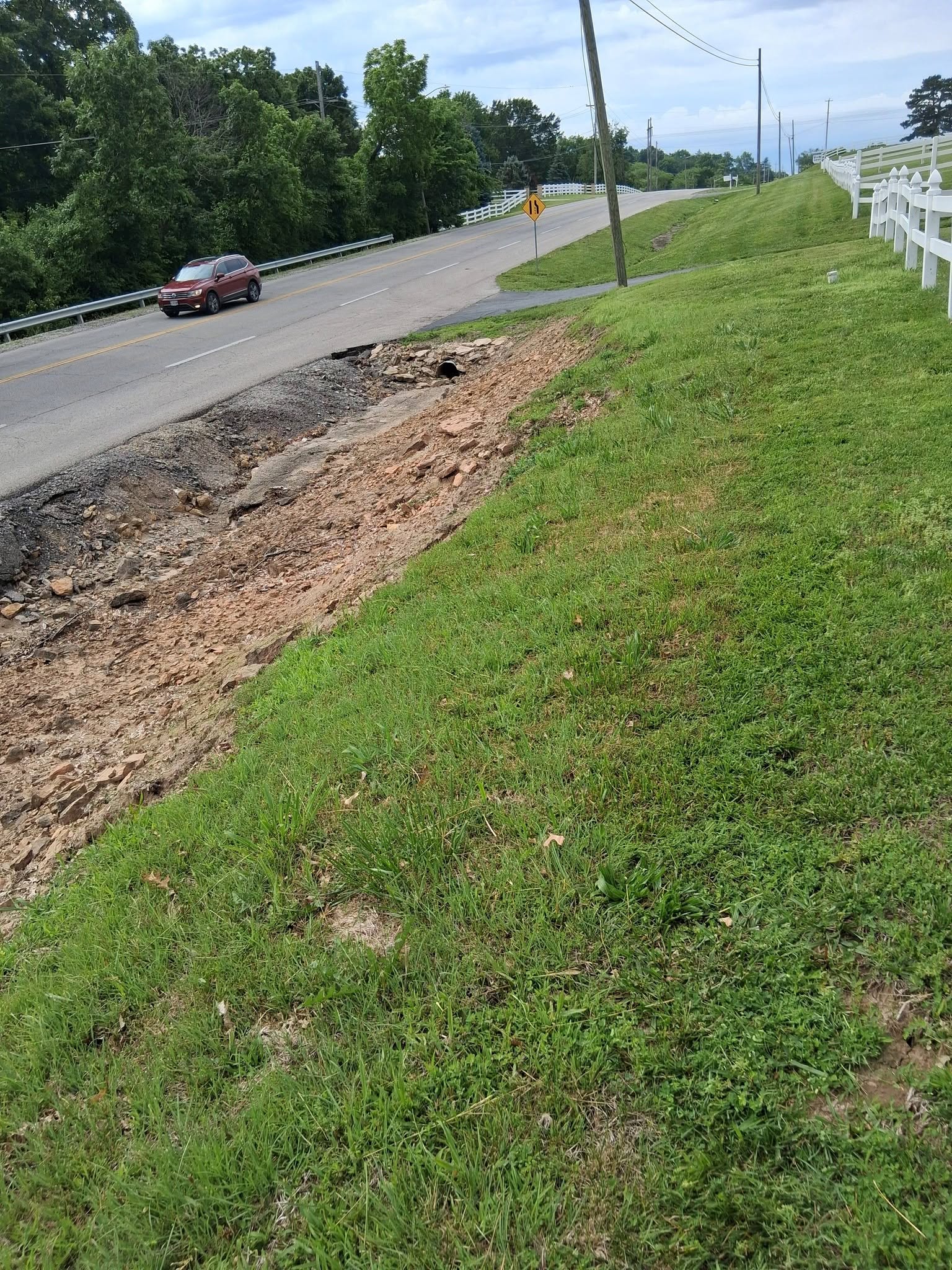
Here are the specific things I look for when I walk a Sudbury property in July — the early signals that something is developing that needs attention before it becomes a bigger problem.
Warning Sign 1: Footprint Persistence
This is the quickest single check for lawn stress I know. Walk across your lawn and look behind you. If your footprints disappear within a few seconds — the grass springs back up — the lawn has adequate moisture and turgidity. If your footprints persist for more than 30 to 60 seconds, the grass lacks the water pressure in its cells to spring back. That persistence is a direct signal of moisture stress in progress.
In June, footprint persistence usually means the surface is dry but the roots have reserves. In July, it can mean the roots are beginning to deplete their reserves. If you’re seeing persistent footprints during a week of no rain, check whether your current watering is actually reaching root depth — and if you haven’t been watering, start before the grass moves from stressed to damaged.
Warning Sign 2: Colour Shift Before Brown
Grass under moderate heat stress changes colour before it turns visibly brown. The shift is from the normal mid-green to a slightly bluish or grey-green, or a flatter, less saturated version of the usual colour. It’s subtle and easy to miss if you’re not looking for it, but once you’ve seen it enough times you recognize it immediately.
This colour shift means the grass is reducing its water usage by partially closing the stomata in its leaves — a stress response that precedes actual wilting. It’s the signal that the lawn is managing, not thriving, and that the current conditions are approaching the limit of what it can handle without intervention.
Catching the colour shift and responding with watering usually prevents the next stage — visible wilting and browning. Missing it means the lawn will brown during the next dry stretch, which takes weeks to recover from even after rain returns.
Warning Sign 3: Soft Spots That Weren’t There in June
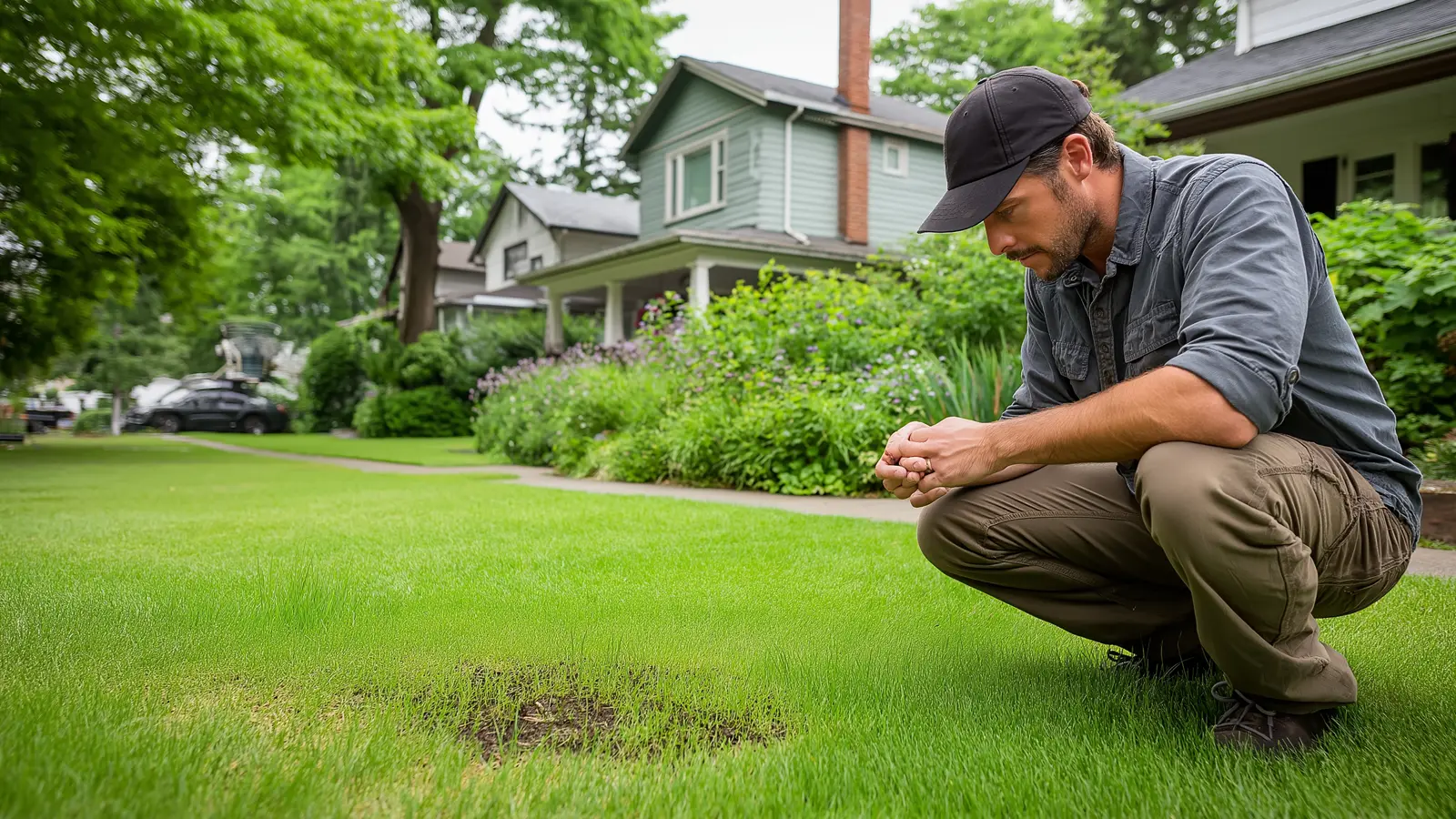
A soft spot that develops in July — an area of lawn that feels spongier underfoot than the surrounding sections, that wasn’t like that in spring — is almost always a grub situation. This is the signature of active grub feeding on the root system during the summer months. The grass above loses its anchoring as roots are eaten, and the surface becomes spongy because the root mat has been compromised.
This is time-sensitive. Grub populations are at the right stage for nematode treatment in late July and August — young enough to be close to the surface, small enough to be vulnerable. A soft spot noticed in early July means there’s still time to get nematode treatment down in the window when it’s most effective. I’ve described the full grub situation and treatment sequence in the piece on underground grub damage in Sudbury — if you’re finding soft spots in July, that article is the one to read next.
Warning Sign 4: Sections Going Brown Before Others in Dry Weather
During a dry stretch, not all sections of a lawn stress at the same rate. Some variation is normal — south-facing sections with more sun exposure go dry faster, as do areas on slopes or near heat-reflecting pavement. That predictable variation is manageable.
What to watch for is sections that go brown significantly earlier than the surrounding lawn for no obvious reason — they’re not on a south slope, they’re not near pavement, they’re not in an area that gets less water from your sprinkler. Early browning in specific sections that doesn’t have an obvious sun or drainage explanation is usually a root depth issue: those sections have shallower roots than the surrounding lawn, either because of compaction that wasn’t addressed, a soil depth issue, or prior damage that prevented proper root development.
On certain properties — particularly the heavier-clay Walden area properties I described in the Walden neighbourhood pattern article — this early-browning pattern in specific sections is one of the most reliable indicators of the underlying clay hardpan issue.
Warning Sign 5: Increasing Weed Pressure in Specific Areas
A lawn under stress is more vulnerable to weed colonization, not because the weeds are more aggressive but because the grass is less capable of competing. If you’re seeing significant weed establishment in sections that were grass-covered in June — crabgrass particularly, which is an opportunistic summer annual — it’s a sign the grass in those sections has thinned under stress enough to leave openings that weeds are exploiting.
The weed pressure itself is a consequence, not the cause. Treating the weeds without addressing what caused the grass to thin doesn’t solve the problem — next year the same sections will thin under the same stress and weeds will move back in. But noticing the weed pressure as a signal of underlying grass stress in July tells you where the problems are concentrated and focuses the remediation effort when September arrives.
Warning Sign 6: Slow Response to Watering
When you water a healthy lawn that’s been slightly dry, it greens up visibly within a day or two. When you water a stressed lawn with compromised roots, the response is slower and less complete — the surface may wet but the grass doesn’t perk up the way it should, because the root system’s ability to take up and distribute water has been reduced by whatever is stressing it.
Slow response to watering is a general warning sign that something is wrong below the surface. It’s not specific enough to diagnose the cause on its own, but combined with any of the other warning signs above, it confirms that what you’re seeing is a genuine developing problem rather than normal summer variability.
What Each Warning Sign Is Actually Telling You
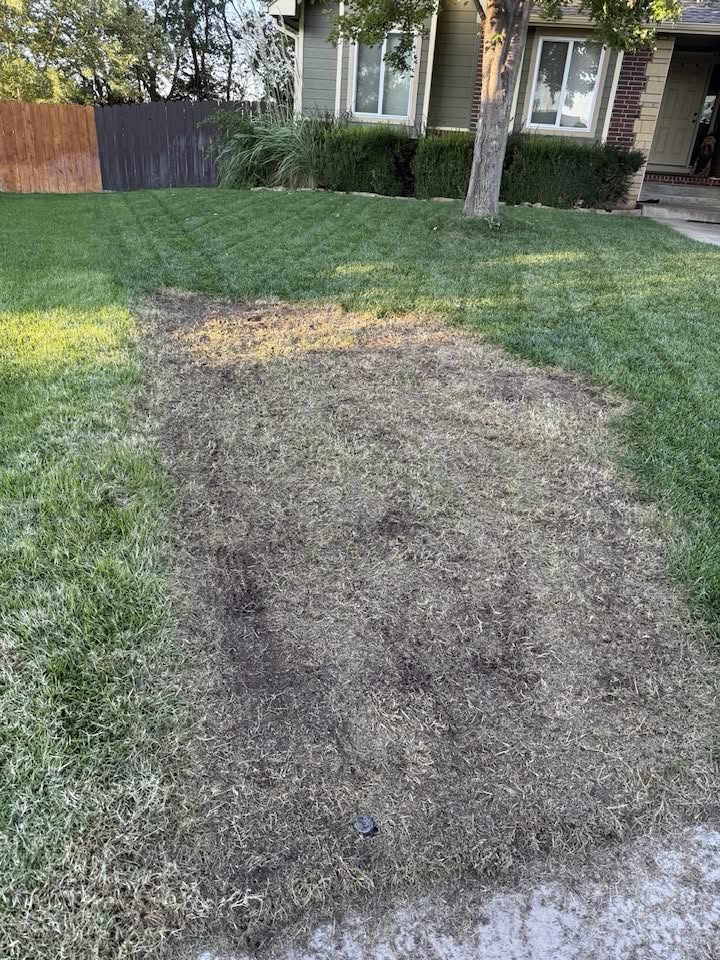
Let me map each warning sign to its most likely underlying cause, because the response depends on the cause and treating the wrong thing wastes time you don’t have in July.
Persistent footprints + colour shift, uniform across the lawn: moisture stress from inadequate watering or a dry stretch. The fix is immediate watering and checking that your irrigation is reaching root depth, not just wetting the surface. This is the most benign of the warning signs because it’s directly addressable with water.
Soft spots appearing in specific locations: grub damage. The fix is confirming with a probe-and-pull test, and if confirmed, scheduling nematode treatment for late July or August before the grub generation matures. Surface treatment without grub treatment will fail.
Sections going brown early with no obvious sun or drainage explanation: root depth problem from compaction, previous damage, or soil depth limitation. The July fix is water management — prioritizing those sections specifically in dry stretches. The fall fix is aeration and overseeding in September, after which those sections will be better positioned for next summer. If the soil depth is genuinely insufficient, topsoil addition is the longer-term solution.
Increasing weed pressure in specific sections: grass has thinned under stress. The July action is minimal — weeds in actively stressed sections during summer heat are hard to address without making the underlying stress worse. The September action is targeted overseeding once conditions cool. Note the location now, plan the September work accordingly.
Slow response to watering, combined with any of the above: something below the surface. This combination warrants a soil probe to check for hardpan, a pull test to check for grubs, and if nothing obvious turns up, a property assessment to look at what else might be limiting root function. Slow watering response that persists after adequate water has been applied is almost never a surface issue.
What to Do When You Find One of These Signs
The response depends on what you find, but here’s the priority sequence I’d use in July.
First, address immediate moisture stress if footprint persistence or colour shift is present. Adjust watering to reach root depth — the corner-lift test I described in the sod install watering article applies here too: after watering, the soil 3 to 4 inches down should be damp, not just the surface. Early morning watering only.
Second, check for grubs if soft spots are present. This is urgent because the nematode treatment window — late July to mid-August — is the most effective timing and it’s approaching. Missing this window means waiting another year while the grub population continues to cause damage through the coming winter. If grubs are confirmed, getting the treatment scheduled is the most time-sensitive action in July.
Third, note where the early-browning and weed-pressure sections are. These are your repair targets for September — the window I wrote about in the never recovers article for addressing underlying issues before winter. The July observation tells you exactly where to focus the September work.
Fourth, if multiple warning signs are concentrated in the same property sections, consider a mid-summer assessment before September. Understanding what combination of issues is driving the symptoms — compaction, grubs, hardpan, soil depth — determines whether September overseeding is sufficient or whether something more involved is needed. Waiting until September to figure that out shortens the window for doing the diagnostic work properly before the seeding season closes.
And fifth: if you’re looking at a property that has significant sections failing and you’re considering whether sod is the right approach this summer, the timing question is real. I’ve written about what August vs September sod timing looks like on Sudbury properties — if sod repair is part of the plan, that article will help you decide whether to move on it in August or wait for early September conditions.
For everything we do across the full service range — including summer assessments and grub treatment scheduling — the complete service breakdown covers it.
If you’re seeing any of the warning signs I’ve described and you want a second set of eyes on the property before August arrives — call me. Walking a property in July and identifying what’s developing is the kind of intervention that’s much more useful at this stage than it will be in late August when the damage has run its course.
Call or text: 705-507-6787
Or fill out the free quote form on the site.
We cover Garson, Val Caron, Hanmer, Lively, Chelmsford, Azilda, Capreol, and surrounding areas.
— Ryan Lingenfelter
Cutting Edge Lawn & Landscaping
Garson, Ontario
705-507-6787
