
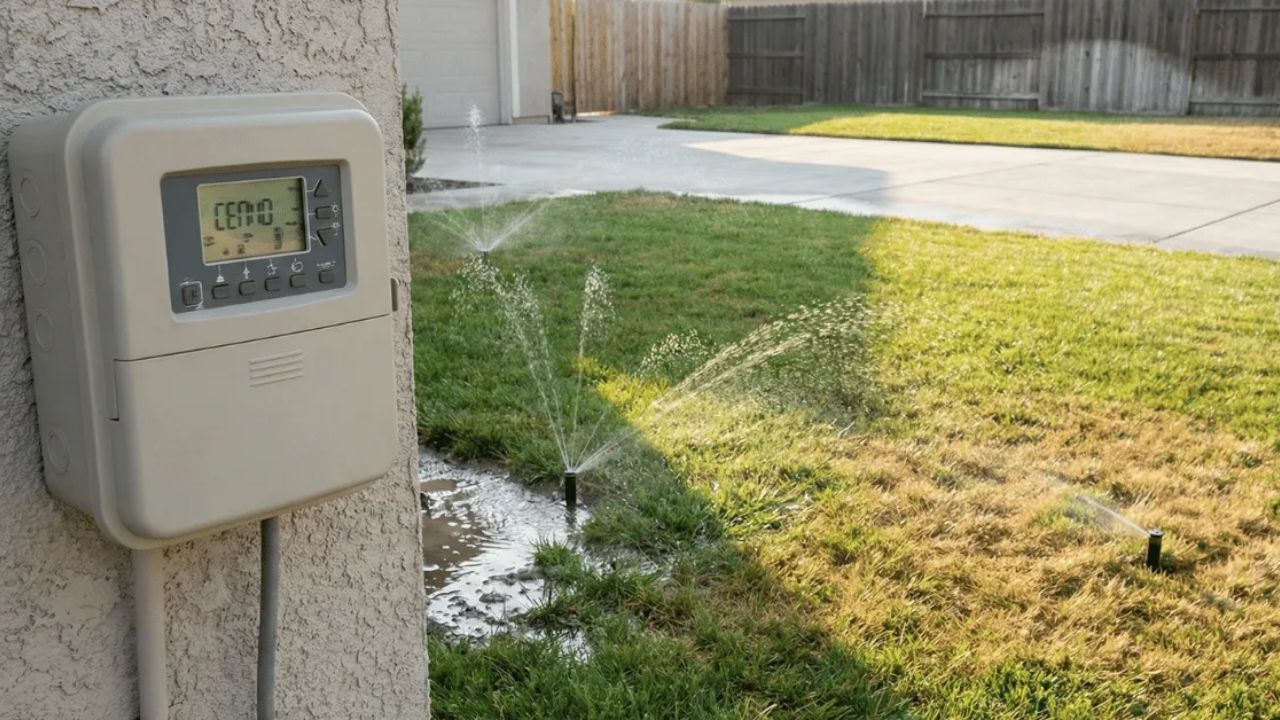
I walk a lot of Sudbury properties in July and August where the homeowner has a functioning irrigation system, a set timer, and a lawn that’s still struggling. The irrigation is running. The lawn is getting water. And it’s still going brown in sections, still showing stress, still not responding the way it should.
The most common explanation, when I look at the timer settings, is that the schedule was set once — usually in spring when the system was turned on, or years ago when the system was first installed — and hasn’t been touched since. The same frequency, the same duration, running on the same days regardless of what the weather is doing, what the season is, or what the lawn actually needs at that particular point in the growing year.
A sprinkler timer set once for the whole season is wrong for most of the season. Not slightly off — genuinely wrong, in ways that either underwater or overwater the lawn depending on which part of the summer you’re in. Here’s why, and what the right approach actually looks like.
The Single-Setting Problem — What Most Sudbury Homeowners Do
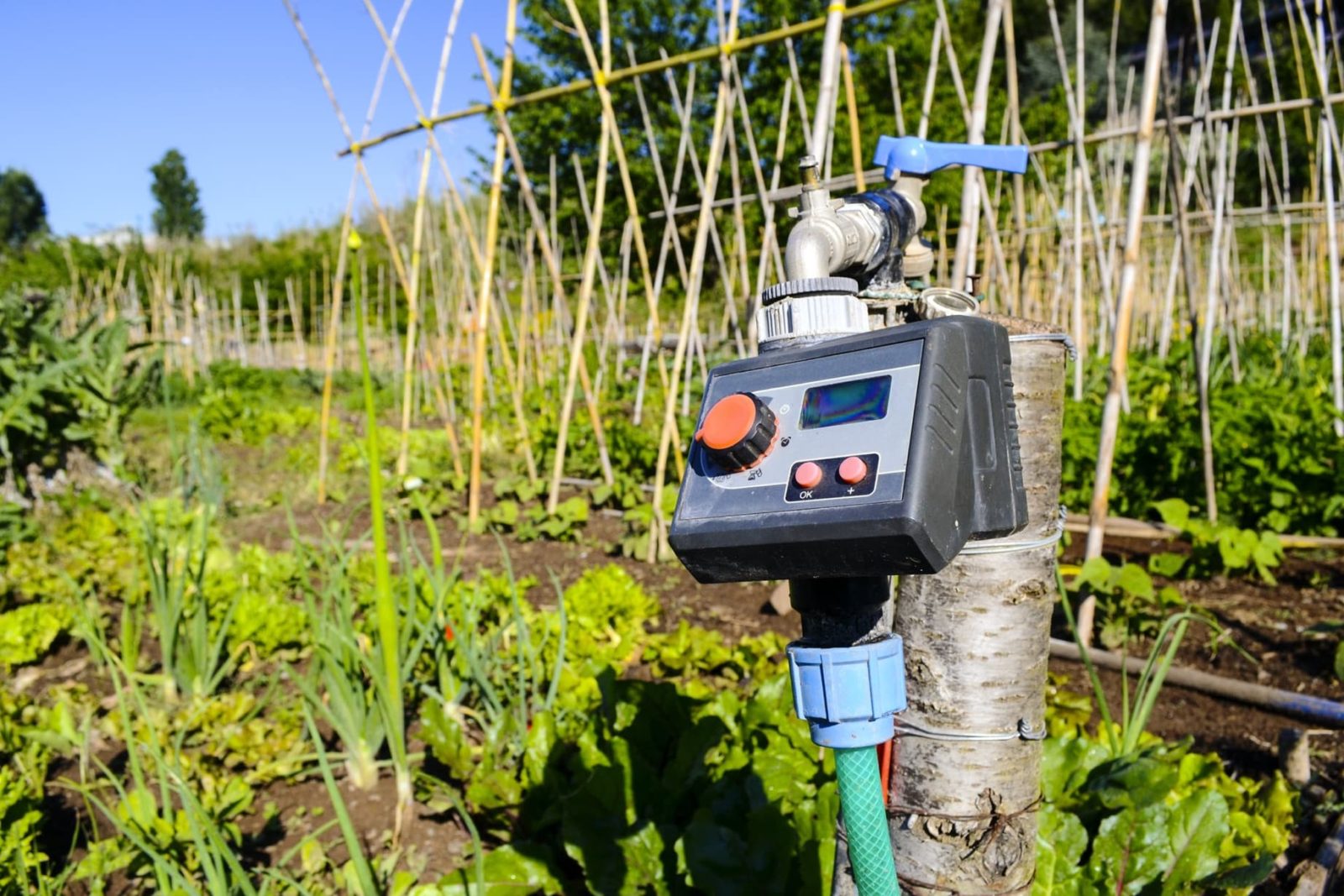
The pattern I see: system comes on in late May or early June. Homeowner sets the timer — let’s say three days a week, 20 minutes per zone. That feels like a reasonable moderate schedule. Then they go about their summer and don’t touch the timer again until they shut the system down in September or October.
The problem is that what the lawn needs from irrigation is not constant across the season. It changes week by week as temperatures change, as soil moisture levels change, and as the grass moves through different stages of growth and stress. A schedule that’s appropriate in early June is overwatering in a cool wet July and underwatering in a hot dry August. Running the same schedule through all of that is the irrigation equivalent of eating the same number of calories regardless of whether you’re sedentary or training for a marathon.
There’s also a secondary problem that compounds the first one: most timer-based irrigation systems in Sudbury run at night or early evening because that’s when the timer was set, or because someone thought watering at night was better to avoid evaporation. Evening watering on Sudbury’s higher-humidity nights — and near-lake properties I’ve written about like Wahnapitae and the wetter Walden sections — leaves the lawn surface wet for 8 to 10 hours. That duration of surface wetness overnight is a significant driver of fungal disease. The evaporation reduction from evening watering doesn’t come close to offsetting the disease risk on most Sudbury lawns.
The result of these two problems together — wrong schedule for the season, wrong time of day — is an irrigation system that’s running and costing money but not producing the lawn results the homeowner expects. And because the system is running, the homeowner doesn’t think watering is the issue. So they look elsewhere for the explanation — seed quality, soil, shade, whatever — when the answer is the timer they haven’t looked at since spring.
What the Right Watering Schedule Actually Looks Like Across a Sudbury Season
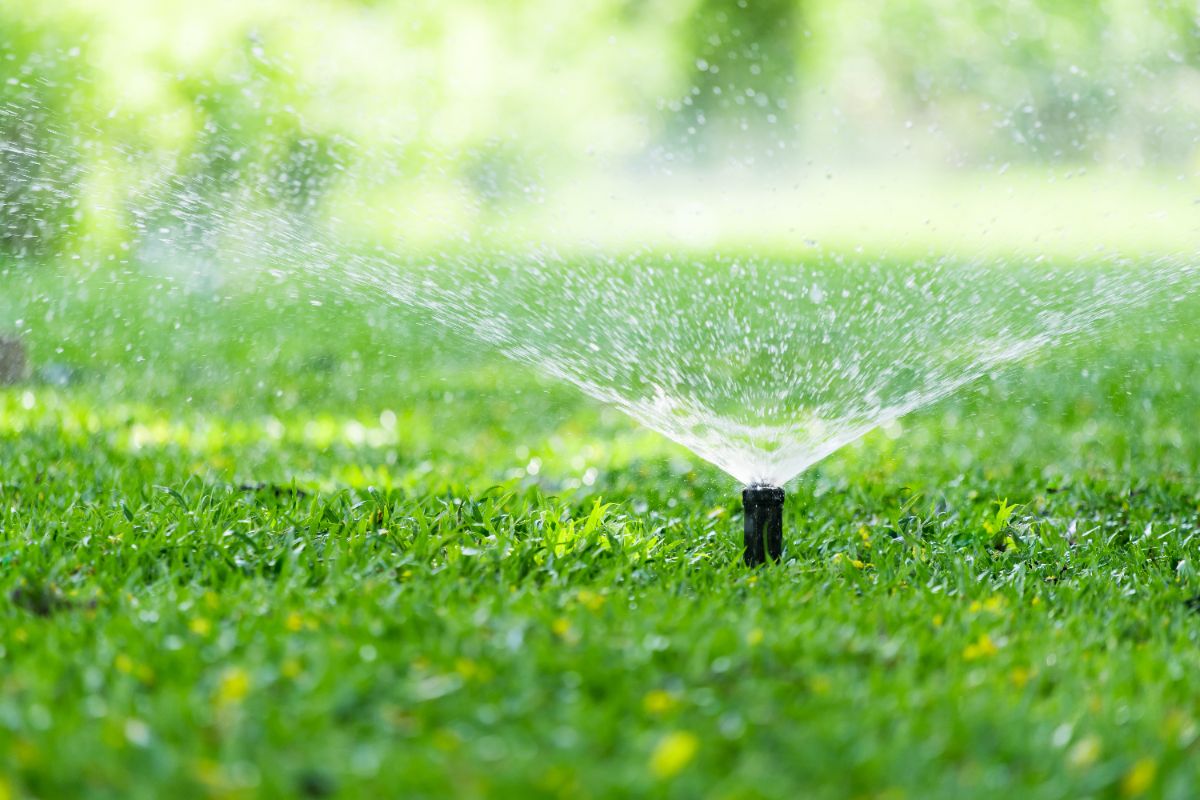
There’s no single right answer because conditions vary, but here’s a framework that accounts for what a Sudbury lawn actually needs at different points in the season.
Late May Through Mid-June — Minimal Irrigation Needed
This is the period I’ve written about in the 7 days in June article as the critical window for aeration and overseeding. It’s also typically the period of best natural moisture in the Sudbury growing season — snowmelt has topped up the soil, spring rains are usually adequate, and soil temperatures are in the ideal range for grass to grow and roots to develop.
Irrigating heavily in this period does more harm than good for most Sudbury properties. Shallow watering — frequent light applications that wet only the top inch or two — trains grass roots to stay near the surface where the water is. The roots don’t develop the depth they’ll need to handle the summer dry stretches. The irrigation system should be doing almost nothing in this period unless there’s an unusual dry stretch of more than 10 days. If the system is on a fixed schedule set for summer conditions, it’s over-applying in June and doing the lawn a disservice by keeping the root zone wet and shallow.
Recommended June schedule: Run only when the footprint test (described in the July warning signs article) shows persistent footprints — indicating actual moisture stress. When you do run it, run it deep. Use a trowel or screwdriver to check that water has reached 4 to 6 inches into the soil before stopping.
Late June Through Mid-July — Transition to Regular Deep Watering
As the natural moisture from spring runs down and temperatures begin to rise toward summer levels, the lawn starts genuinely needing irrigation. This is when the timer should be running — but the schedule should be set up to encourage deep root growth rather than surface dependence.
The principle for this period is infrequent and deep. Two to three times per week maximum, with each session running long enough to wet the soil to 4 to 6 inches depth. Water less often than feels comfortable, and for longer per session than you might expect. Less frequent watering allows the soil surface to dry between sessions, which encourages roots to grow downward chasing the moisture reservoir rather than staying near the surface chasing frequent light applications.
Recommended late June to mid-July schedule: Two deep watering sessions per week, each running 45 to 60 minutes per zone depending on your sprinkler output and soil type. Morning only — start time between 5am and 8am so the surface dries before the humid Sudbury evening. Check depth 24 hours after a session with a screwdriver or trowel — you should be able to push it in easily to 5 or 6 inches the morning after watering. If you can’t, increase duration.
Late July Through August — Peak Stress Period Requires Monitoring, Not Just Schedule
This is when Sudbury lawns are most vulnerable and when a fixed timer schedule fails most visibly. The problem is that late July and August in Sudbury is variable — some years bring dry stretches of 14 days or more, some years have regular rain throughout, and many years have both in the same month.
A fixed schedule set for dry conditions runs the system when it’s been raining, wasting water and potentially overwatering. A fixed schedule set for normal conditions underwatering during a dry stretch. The right approach in this period is one of three things: a timer with a rain sensor that skips scheduled runs when rainfall has been adequate, a smart controller that adjusts based on weather data, or manual adjustment of the timer based on actual weather rather than setting it and forgetting it.
Recommended late July to August approach: Check actual rainfall. If you’ve had 25mm or more in the past week, skip the scheduled irrigation run. If you’ve had less than 15mm in the past week and the lawn is showing footprint persistence or colour shift, add a run. The timer should be a guide, not a mandate. During true heat waves, a morning sprinkler run to cool the soil surface slightly before peak afternoon heat reduces stress — this is additional to the regular schedule, not a replacement for it.
September — Taper Off as Growing Conditions Improve
September in Sudbury typically brings more reliable rainfall and cooler temperatures that reduce evapotranspiration significantly. The irrigation need drops sharply compared to August. Many properties can shut the system down to as little as once per week or rely on natural rainfall entirely, depending on the September weather pattern.
Continuing heavy irrigation into September also interferes with the natural hardening-off process — the grass plant’s transition from active summer growth to the lower-metabolic-rate state it needs to enter before winter. A lawn that’s being heavily irrigated in late September is being encouraged to stay in summer mode when it should be preparing for dormancy.
Recommended September: Taper to once per week maximum unless there’s an unusual dry stretch. Monitor the footprint test before running the system rather than running on a fixed schedule. Shut the system down by mid-October at the latest before freeze risk arrives.
The Depth Problem — Why Duration Matters More Than Frequency
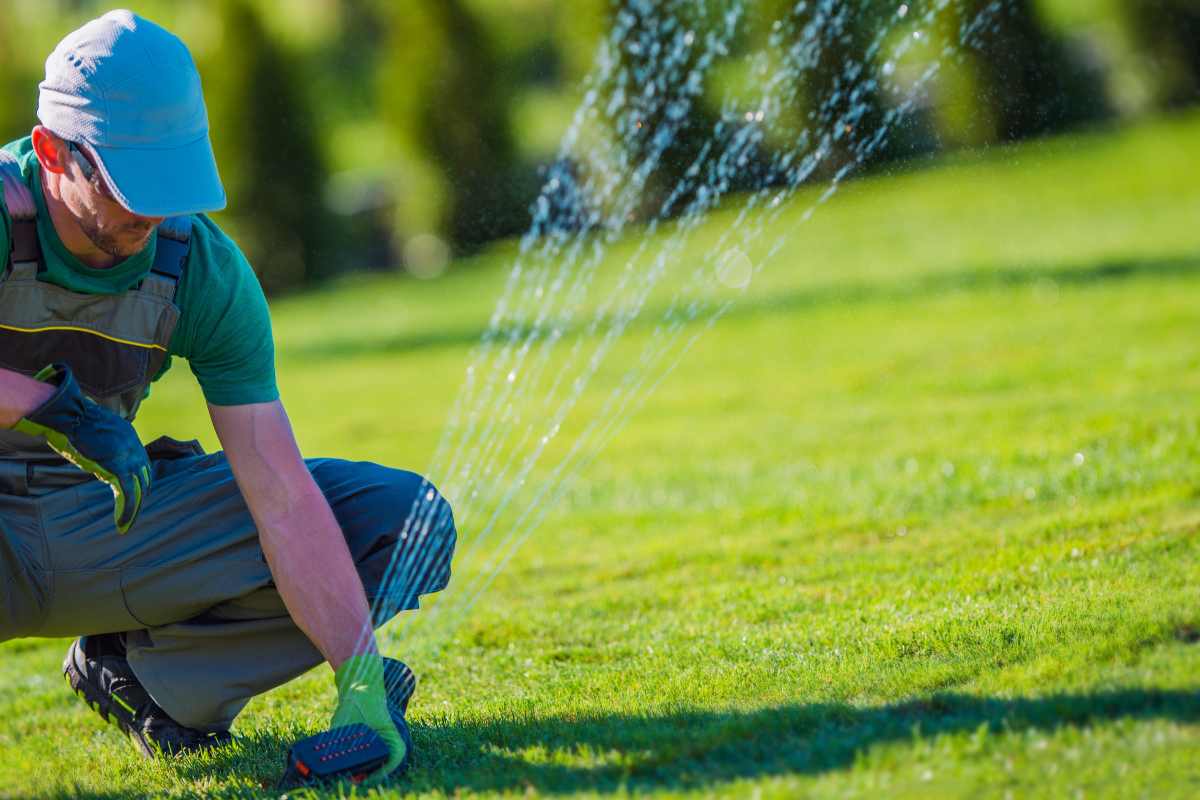
This is the technical detail that most sprinkler timer advice skips, but it’s the one that actually determines whether your irrigation is doing what you think it’s doing.
Most homeowners think about irrigation in terms of frequency — how many times per week to run the system. The more important variable is depth — how far into the soil each watering session actually reaches.
The reason depth matters more: grass roots grow to where moisture is consistently available. If irrigation reliably reaches only the top 2 inches of soil, roots concentrate in the top 2 inches. A lawn with roots in the top 2 inches is completely dependent on surface moisture and goes into stress within a day or two of a missed watering or a hot afternoon. A lawn with roots at 6 to 8 inches can go 5 to 7 days without watering in Sudbury’s summer before reaching the stress threshold.
This is the mechanism behind most of the July lawn failures I see when there’s a functioning irrigation system on the property. The system has been running on a schedule, but the sessions have been too short to wet the soil more than an inch or two deep. The roots stayed shallow. The lawn looks fine for June when the weather cooperates, and then shows stress in July because it has no buffer.
The Canadian Shield soil situation makes this worse on Sudbury properties than in most of Ontario. Thin topsoil means roots have less room to grow deep before hitting rock or dense till. But working with the soil depth that’s available — getting roots to 5 or 6 inches rather than 2 inches — makes a significant difference in drought resilience even on properties with limited topsoil.
The check I recommend — lift a corner of sod or push a screwdriver into the soil several hours after watering — takes two minutes and tells you more about whether your watering is working than any timer setting can. If the screwdriver goes in easily to 5 inches, the water is reaching where it needs to be. If it stops at 2 inches, you need longer run times regardless of what the schedule says.
I described this same principle in the context of new sod in the 200 sod installs article — the depth check after watering is the only reliable way to know if the water is reaching root level rather than just wetting the surface. It applies to established lawns exactly as much as to new sod.
Signs Your Timer Is Currently Wrong — and How to Adjust
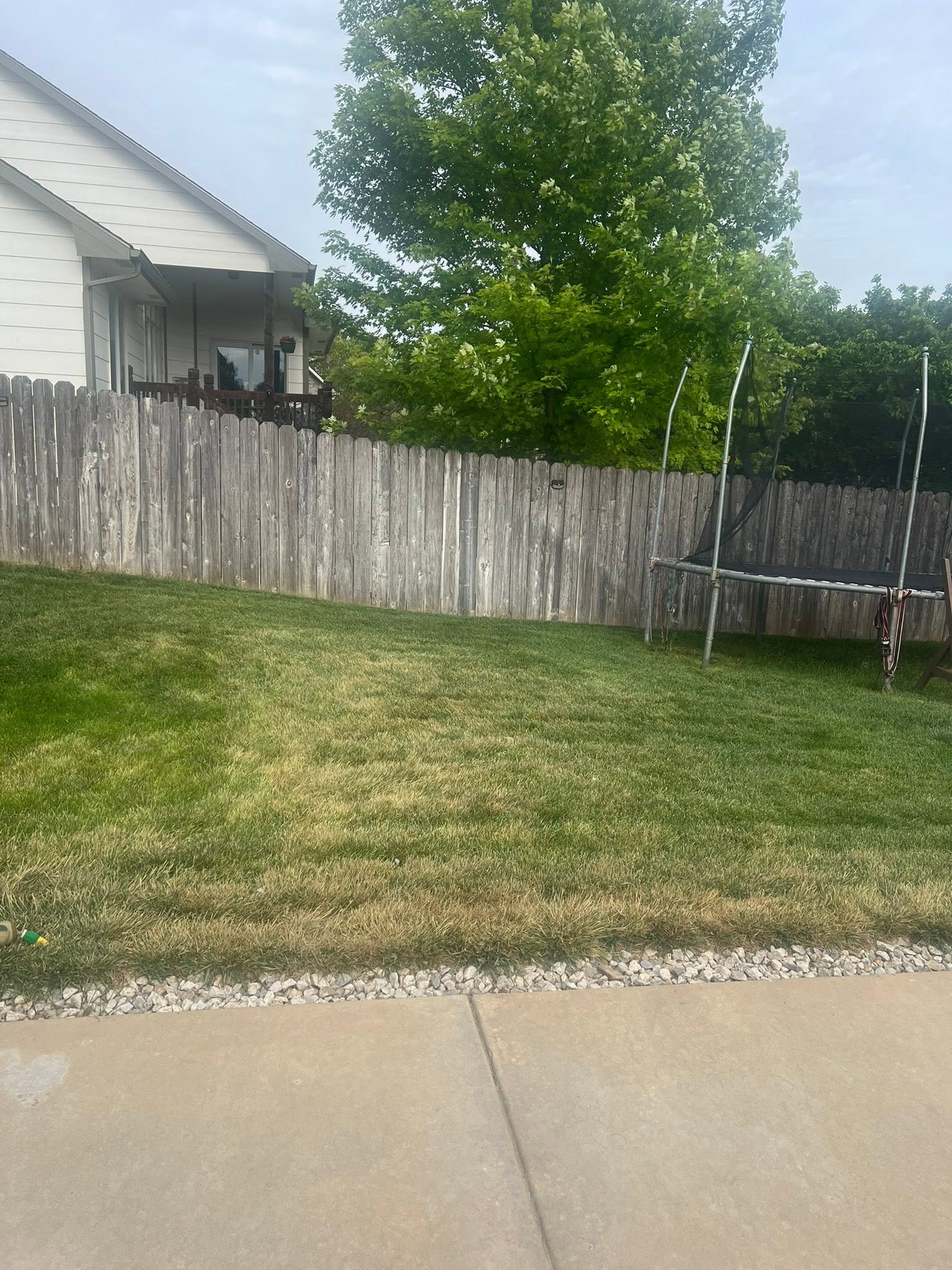
Here’s how to quickly assess whether your current timer schedule is working or failing your lawn.
Signs of Underwatering — Schedule Needs More
- Footprints persist for more than a minute after walking on the lawn
- Grass colour has shifted to a bluish or grey-green rather than normal mid-green
- Sections going brown before others without obvious sun or drainage explanation
- Screwdriver test shows soil dry below 2 to 3 inches within 24 hours of a scheduled run
- Lawn recovers slowly after a natural rainfall — takes more than a day to green up noticeably after rain
Adjustment: increase run duration per zone rather than frequency. Adding a third weekly run doesn’t help if each run isn’t reaching root depth. Increase each session by 15 to 20 minutes and recheck the screwdriver depth 24 hours after the next run.
Signs of Overwatering — Schedule Needs Less
- Lawn feels spongy underfoot in wet conditions (distinct from grub-damage sponginess — this is uniform, not in isolated spots)
- Fungal patches — circular, pale or slightly orange-coloured patches, particularly common in shaded sections or near the lake
- Thatch building up unusually fast — irrigation-fed thatch is a real phenomenon where overly consistent surface moisture encourages surface root development and thatch accumulation
- Weeds thriving in sections that are constantly moist — moss particularly, which establishes in perpetually wet lawn areas
- System running after significant rainfall — if you had 30mm of rain this week and the timer ran anyway, it’s over-applying
Adjustment: reduce frequency first, not duration. You want less frequent but deeper sessions, not more frequent and shallow ones. If the system is running every day, drop to every other day and check whether the lawn shows any stress response. If it doesn’t, it didn’t need the daily watering.
The Easiest Single Fix If You Do Nothing Else
If reading all of the above feels like too much to manage, the single most impactful change you can make to any sprinkler timer is to change the start time to early morning — 5am to 7am — and move it off evening or night running if that’s currently your schedule. Morning watering avoids the overnight surface wetness that drives fungal disease, allows the surface to dry during the day, and still delivers the water before peak afternoon evaporation. That one change alone improves outcomes on evening-watered Sudbury lawns measurably, regardless of frequency or duration.
For homeowners managing a property on a tighter budget who are wondering how much of this matters versus what can reasonably be ignored, the fixed income lawn care article has a realistic prioritization. Watering timing and depth are genuinely in the “this matters” category — not because the system is complicated, but because getting it wrong consistently undermines every other thing you do for the lawn.
For the full range of what we do and how we approach lawn care across a Sudbury season, the complete service breakdown has it all.
If you have an irrigation system and you’re not sure whether your current schedule is working or hurting your lawn, I’m happy to walk the property and check. Fifteen minutes looking at what the sprinkler is actually doing versus what the lawn is actually showing tells you more than any timer manual.
Call or text: 705-507-6787
Or fill out the free quote form on the site.
We cover Garson, Val Caron, Hanmer, Lively, Chelmsford, Azilda, Capreol, and surrounding areas.
— Ryan Lingenfelter
Cutting Edge Lawn & Landscaping
Garson, Ontario
705-507-6787
