I’m Ryan Lingenfelter — owner of Cutting Edge Lawn & Landscaping in Garson, Ontario.
When a July heatwave is coming in Sudbury — and we usually get at least one stretch of 30°C+ weather every summer — most homeowners do one of two things. They panic water everything starting on the first hot day, or they wait to see what happens and call me after the lawn has already gone brown.
Both approaches are wrong. And both are understandable, because most of the advice available online about protecting lawns in heat wasn’t written for Sudbury’s specific conditions.
Here’s the honest version. There’s a window — the few days before a heatwave arrives — where three specific actions can make a meaningful difference in how your lawn comes through the heat. Once the heatwave is underway, your options narrow significantly. The clay soil has already started baking. The roots are already stressed. The work that should have happened before is now unavailable to you.
This article is about what to do in that pre-heatwave window. This weekend, if the heat is coming next week. These aren’t dramatic interventions — they’re adjustments that change how well your lawn handles sustained heat and why they have to happen before the heat, not during it.
Thing 1 — Do a Deep Watering Session Right Now
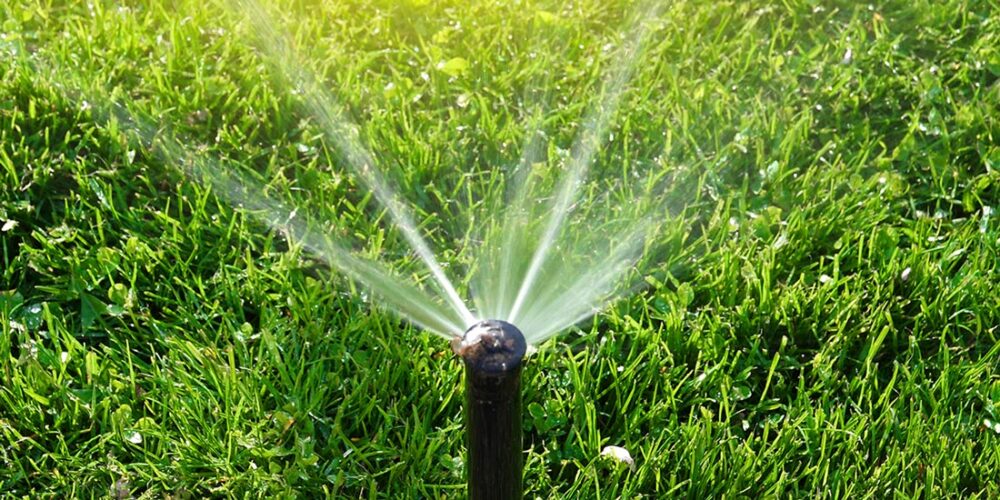
The single most impactful thing you can do before a Sudbury heatwave is load the soil with deep moisture before the heat arrives.
Here’s why timing matters. Once a heatwave is underway and Sudbury clay reaches sustained surface temperatures in the 40-50°C range in direct sun, the clay becomes increasingly hydrophobic — it resists absorbing water rather than accepting it. Water applied to baking clay runs off or evaporates on the surface rather than penetrating to the root zone. The same volume of water that reaches 3-4 inches deep when applied to moist cool clay barely reaches 1 inch when applied to baked hot clay.
If you water your lawn the day the heatwave starts, you’ve already lost the advantage. The clay is already warming and beginning to resist.
Water now — this weekend, before the heat arrives. And do it correctly for Sudbury clay.
The cycle-and-soak approach: run your sprinkler for 15 minutes, stop, wait 45-60 minutes, run again for 15 minutes. The first pass wets and softens the clay surface. The second pass penetrates to the root zone. This produces meaningfully deeper moisture than a single 30-minute session on Sudbury clay. I covered the full science of why clay soil requires this approach in my Sudbury summer watering guide here.
Your goal is to get moisture down 3-4 inches before the clay surface hardens. That moisture reservoir is what your grass roots will pull from during the heat. Roots that had deep moisture going into a heatwave survive stretches that roots starting from dry soil cannot.
Do this Friday or Saturday if the heat is coming Monday. Early morning — before 8am — to minimize evaporation and give the moisture time to move through the soil before the day’s heat arrives.
Thing 2 — Raise Your Mowing Deck Before the Last Pre-Heatwave Cut
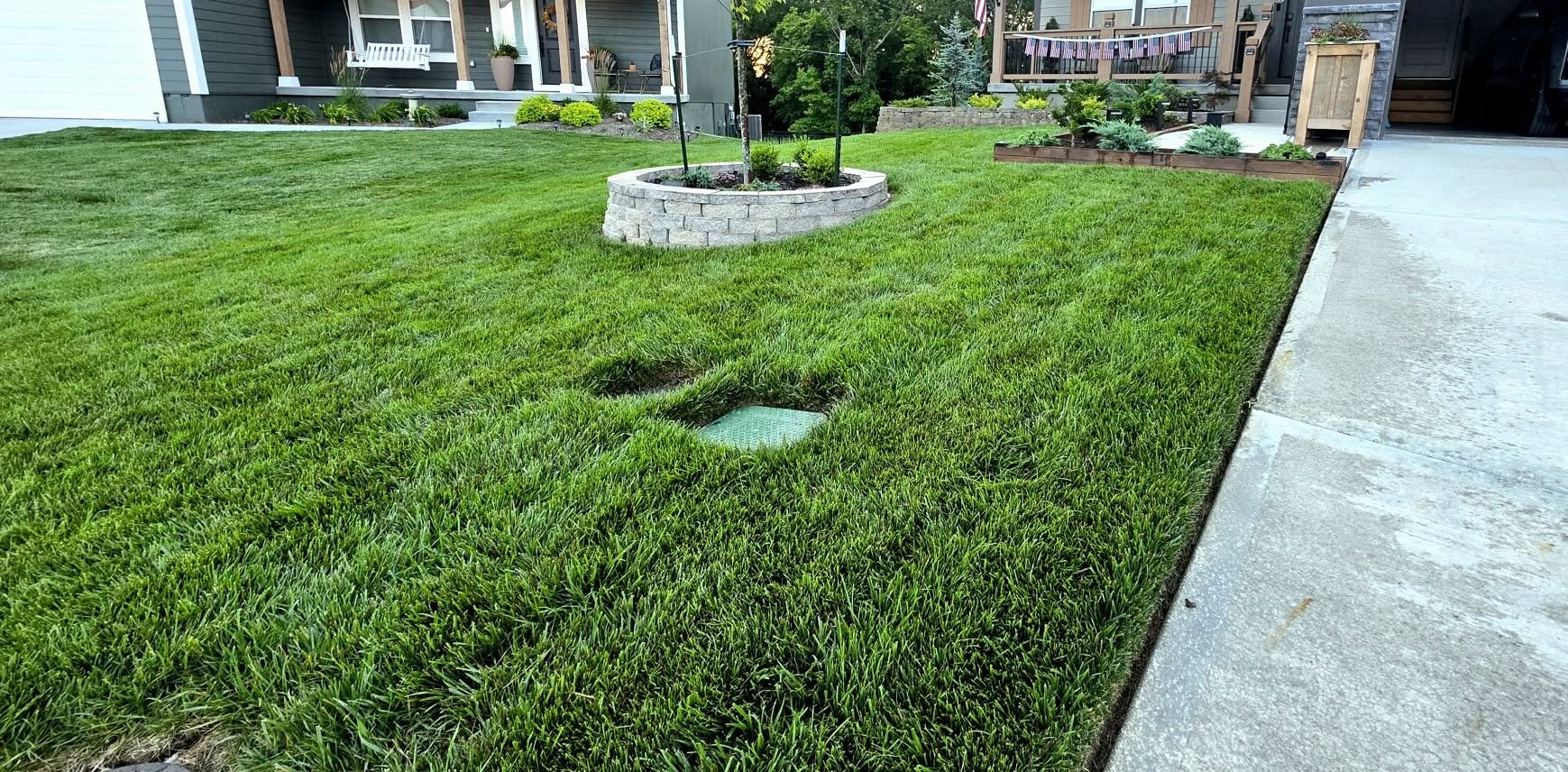
If you’re cutting your lawn this weekend before the heat hits — and you should, so the lawn goes into the heatwave at the right height — the deck height matters more in this cut than in almost any other cut all season.
Here’s what happens when you cut at different heights going into a heatwave.
At 1.5 to 2 inches: the grass blade is short, roots are shallow, the soil surface is exposed to direct sun. Soil temperature climbs faster, moisture evaporates faster from the exposed surface, and the grass plant has minimal leaf area for photosynthesis and cooling. A lawn cut at 2 inches going into a 5-day heatwave is almost certainly going to brown badly. The question is whether it’s going dormant or dying.
At 3 inches: the grass blade is longer, roots are deeper, and — crucially — the blade provides a canopy effect. The longer grass shades the soil surface, reducing soil temperature and slowing moisture evaporation. The plant has more leaf area to produce energy and to transpire, which is how grass cools itself. A lawn cut at 3 inches going into a heatwave has noticeably better odds of surviving it without significant damage.
If your mower deck is currently below 3 inches — adjust it now, before this weekend’s cut. Move it up to 3 inches and leave it there not just for this cut but for the rest of the season. I documented a Chelmsford homeowner who fixed three years of summer browning with this single change in my $35 lawn fix article here — the deck adjustment plus a blade sharpen was the entire fix.
One caution: don’t mow during the heatwave itself. If the heat arrives on Monday, don’t mow on Tuesday or Wednesday to “tidy it up.” Mowing removes leaf blade surface area that the stressed grass needs for energy production and the canopy effect it provides. Mowing during a heatwave on an already-stressed Sudbury lawn adds stress to a plant that has nothing left to give.
Do the cut this weekend before the heat. Leave it alone until the heatwave passes.
Thing 3 — Leave the Clippings Down
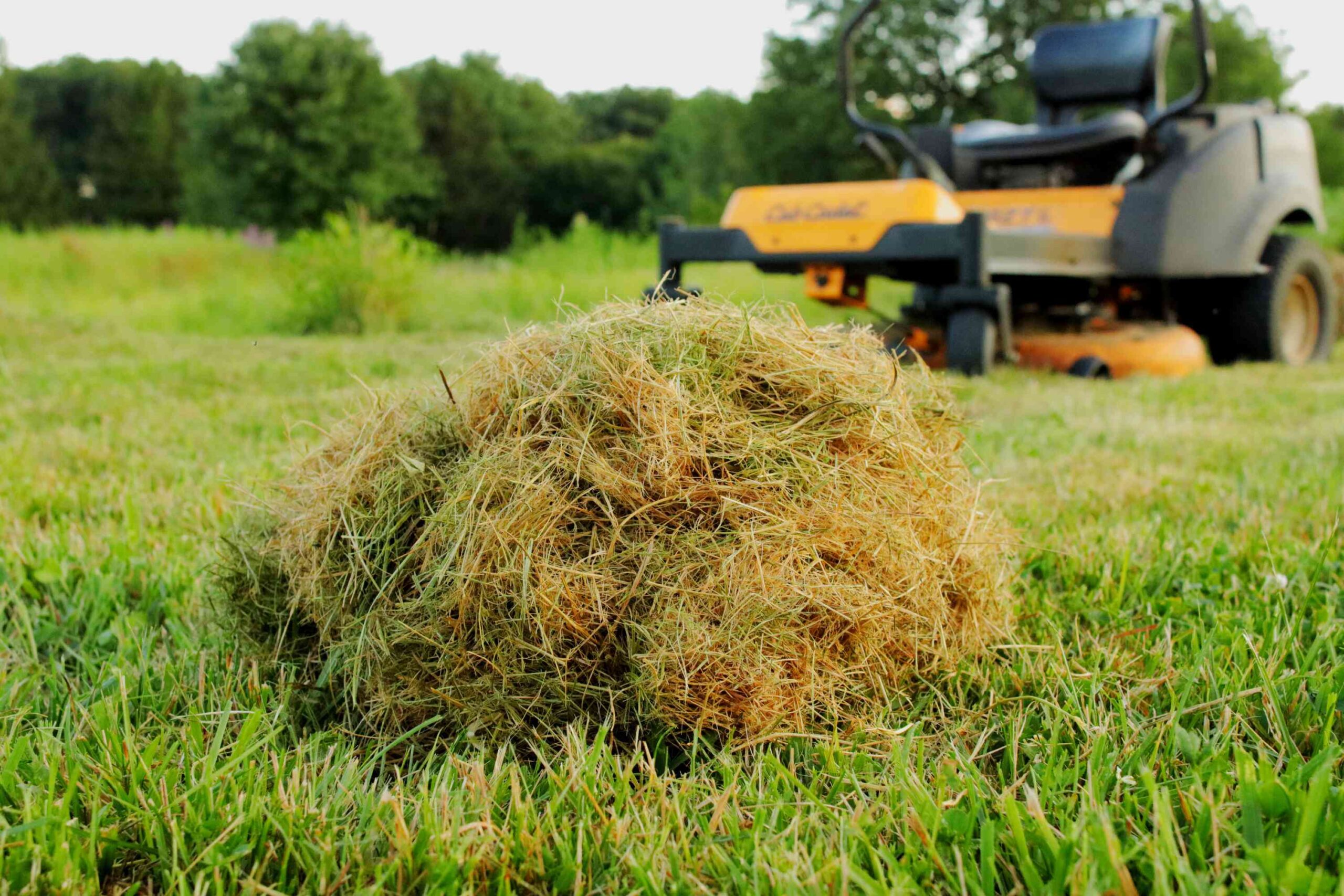
This one is simple and free, and most Sudbury homeowners don’t do it because they’ve been told to bag or remove clippings.
When you do the pre-heatwave mow this weekend — mulch the clippings back into the lawn. Don’t bag them. Don’t rake them off. Leave them.
Grass clippings scattered across the lawn surface create a thin organic layer that insulates the soil. This matters during a heatwave for two reasons.
First, it reduces soil surface temperature. A bare lawn surface in direct July sun can reach soil temperatures that stress or kill the shallow root layer. A thin layer of clippings provides modest but real insulation that slows this temperature rise.
Second, it slows moisture evaporation. The same bare soil that heats up fast also loses moisture fast through evaporation at the surface. The clipping layer slows this evaporation, retaining more of the deep moisture you loaded in with the pre-heatwave watering.
The objection most homeowners have to leaving clippings is appearance — they can look messy if they clump on the surface. The solution is mulching rather than side-discharge. A mulching blade or a mulching setting on your mower chops clippings finely enough that they drop through the grass and onto the soil surface rather than sitting on top of the blades in visible clumps. Most modern mowers have this setting — check the manual if you’re not sure.
If your mower doesn’t mulch, leaving clippings is still worth doing during a heatwave period even if they’re visible on the surface for a few days. The benefit to the lawn’s heat tolerance outweighs the cosmetic issue.
What to Do During the Heatwave — Once You’ve Done the Prep

The three steps above are what happen before the heat. During the heatwave, the options narrow — but here’s what actually helps on Sudbury clay during sustained heat.
Continue cycle-and-soak watering, always before 8am. Morning is the only window where water application on baking Sudbury clay is reliably effective. Afternoon watering on hot clay evaporates significantly before it penetrates. Evening watering keeps the surface wet overnight, which on Sudbury clay creates fungal conditions. Morning, cycle-and-soak, every day of the heatwave.
Accept some dormancy in high-risk sections. South and west-facing sections with thin soil over clay — the sections I described in my June-to-August failure article here — will go dormant during a sustained Sudbury heatwave regardless of preparation. That’s not failure. Dormant cool-season grass comes back when conditions improve. The prep you did this weekend is what determines whether it’s dormant or dead when the heat passes.
Don’t fertilize. Don’t mow. Don’t aerate. None of these things help during an active heatwave on Sudbury clay, and all of them add stress to a plant operating at its limits. The time for fertilizer and aeration is spring or fall — not July 32°C. The time for mowing is before or after the heatwave — not during it.
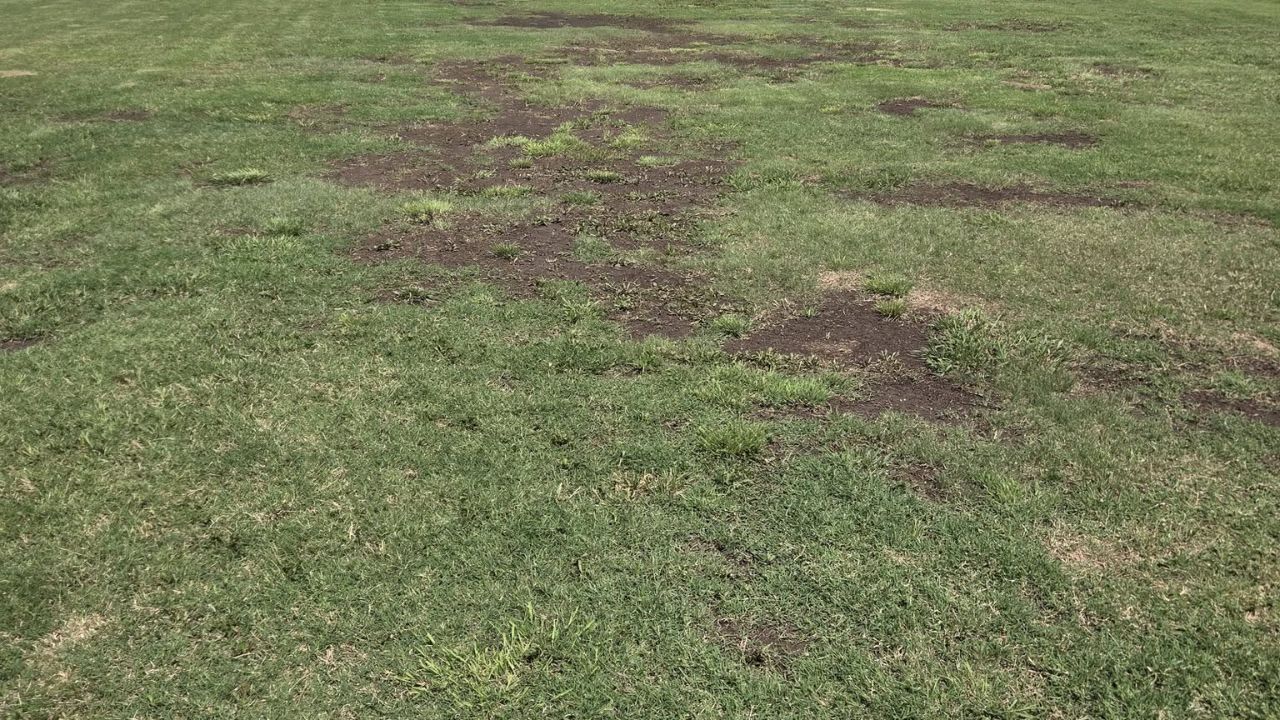
Give it two weeks after the heatwave before assessing damage. Dormant Sudbury lawns look dead. They usually aren’t. The tug test — pull gently on brown grass — tells you. Resistance means dormant and alive. No resistance means dead. Give the lawn two full weeks of normal conditions after the heatwave before concluding that sections need sod or overseeding. Most of the lawn that looks damaged the day after a heatwave ends looks better two weeks later than you’d expect.
The Preparation That Makes the Biggest Long-Term Difference
I want to be direct about something. The three things I described — deep pre-heatwave watering, correct deck height, leaving clippings — help. They make a real difference in how a Sudbury lawn comes through July heat.
But the preparation that most dramatically determines heat performance happens in May, not the weekend before the heatwave.
Annual spring aeration is what creates the soil structure that lets deep watering actually penetrate to meaningful depth. It’s what allows root systems to develop deep enough to access moisture below the surface layer. The lawn that withstands a Sudbury heatwave without significant damage usually withstood it because of the spring window work, not because of the emergency prep the weekend before.
If your lawn is consistently struggling through July heat every year — the pre-heatwave steps help, but the root fix is annual aeration on Sudbury clay every spring. I covered why this is maintenance rather than optional on our soil type in my spring vs fall aeration guide here, and why the specific timing window in spring matters for how much benefit the aeration actually produces in my spring window article here.
The weekend prep is real. Annual spring aeration is what makes the weekend prep maximally effective.
📞 Call or text me directly: 705-507-6787
Or fill out the free quote form here and I’ll get back to you same day.
We service Garson, Val Caron, Hanmer, Lively, Chelmsford, Azilda, Capreol, and all of Greater Sudbury.
— Ryan Lingenfelter
Owner, Cutting Edge Lawn & Landscaping
Garson, Ontario
Frequently Asked Questions
What should I do to my Sudbury lawn before a July heatwave?
Three actions before a heatwave produce the best results on Sudbury clay soil. First, do a deep cycle-and-soak watering before the heat arrives — two shorter sessions 45-60 minutes apart loads the soil with moisture while the clay can still absorb it. Second, mow at 3 inches this weekend and leave the deck there — the longer blade shades the soil surface and reduces temperature and moisture loss during the heat. Third, leave the clippings on the lawn as a thin insulating layer rather than bagging them. All three actions are most effective done before the heat arrives, not once it’s underway.
Why does watering before a Sudbury heatwave matter more than watering during it?
Sudbury clay becomes progressively hydrophobic — resistant to water absorption — as it heats up under sustained sun. Water applied to baking clay during a heatwave runs off or evaporates before penetrating to the root zone. Water applied before the heat arrives, when clay is still at normal temperatures and absorbent, reaches 3-4 inches depth where roots can access it. Pre-loading the soil moisture gives grass roots a reservoir to draw from during heat that post-heatwave watering cannot replicate on the same timeline.
Should I mow my Sudbury lawn during a July heatwave?
No — avoid mowing during active heatwave conditions. Mowing removes leaf blade area that stressed grass needs for energy production and for the canopy effect that shades and cools the soil surface. If the lawn needs mowing, do it the weekend before the heat arrives at 3 inches deck height. Once the heatwave is underway, leave the lawn alone until temperatures return to normal. The exception is if the lawn is genuinely approaching 5-6 inches — in that case, mow at 3 inches as early in the morning as possible during the coolest available day of the stretch.
What does dormant vs dead Sudbury lawn look like after a heatwave?
Both look brown. The tug test distinguishes them: pull gently on brown grass in the stressed sections. Resistance — the grass holds — means the root system is intact and the plant is dormant, not dead. Dormant cool-season grass typically greens up within 7-14 days after normal temperatures and moisture return. No resistance — the grass lifts easily — means the root system has failed. Give the lawn two full weeks of normal conditions after a heatwave before concluding that sections need repair, as dormancy recovery takes time to show visually.
Why do some Sudbury lawns survive July heat better than others?
The primary factors are aeration history, mowing height maintained all season, and watering practice — all established before a heatwave arrives. Lawns aerated annually have deeper soil structure and root channels. Lawns cut consistently at 3 inches have deeper root systems that access moisture below the surface layer. Lawns watered with deep twice-weekly cycle-and-soak sessions have moisture reserves 3-4 inches down that surface-watered lawns don’t have. The weekend prep helps. The season-long foundation is what makes the difference on the worst days.
When should I assess heatwave damage on my Sudbury lawn?
Two weeks after the heatwave ends and normal temperatures return. Most Sudbury lawns that appear damaged immediately after a heatwave are dormant, not dead, and show visible recovery within 7-14 days. Assessing too early produces false conclusions about what needs repair. At two weeks, do the tug test in sections that haven’t shown recovery — sections that lift easily with no resistance are genuinely dead and are candidates for fall overseeding or sod. Sections that resist pulling are still alive and should continue recovering.
Ryan Lingenfelter is the owner of Cutting Edge Lawn & Landscaping in Garson, Ontario. Since 2020, his crew has provided full lawn care and landscaping services across Greater Sudbury — Garson, Val Caron, Hanmer, Lively, Chelmsford, Azilda, and Capreol. Licensed, insured, BBB A+ rated, and ThreeBest Rated for lawn care services in Sudbury.
📞 Phone: 705-507-6787
📍 Service Area: Greater Sudbury, Ontario
🔗 Free Quote: cuttingedgelawn.ca/quote
Related Services
- Core Aeration Services in Sudbury
- Grass Cutting Services
- Sod Installation in Sudbury
- Property Cleanup Services
Continue Reading
- How to Water Your Sudbury Lawn the Right Way
- The $35 Fix That Saved a Sudbury Lawn
- Perfect in June, Half Dead by August — The Problem Nobody Talks About
- Spring or Fall Aeration in Sudbury — Which Is Better?
- The 4-Hour Spring Window That Determines Your Sudbury Lawn All Year
- What a Heat Dome Does to a Sudbury Lawn — And How to Save It