By Ryan Lingenfelter · Cutting Edge Lawn & Landscaping, Garson, Ontario · June 2026
Every spring the same pattern plays out in Greater Sudbury. Homeowners start getting quotes for yard work and lawn care. They call around — sometimes three or four companies — and the prices they hear are consistently higher than what they expected. Some of them conclude that the companies are overcharging. Some of them find the lowest number they can and hire it without asking what it includes. Some of them call me and ask whether the prices they’re hearing are normal.
The answer is usually yes — the prices they’re hearing from reputable, properly operating companies in Greater Sudbury reflect what yard work actually costs in 2026. The expectation they came in with was shaped by something else: what they paid five years ago, what a neighbour told them, what they found on an Ontario pricing guide written for a different cost environment than current Sudbury conditions, or what they imagine the work costs based on how simple it looks.
The gap between expectation and reality in yard work pricing is real, it’s been widening, and understanding where it comes from is more useful than being frustrated by it. Here’s the honest version.
Where the expectation gap comes from — and why it’s gotten wider in 2026
Three things primarily drive the gap between what homeowners expect to pay for yard work and what it actually costs in Greater Sudbury in 2026.
Reference pricing from a different cost environment. Most homeowners haven’t priced yard work in the past two or three years. Their reference point is what they paid the last time they hired someone — which may have been in 2021, 2022, or earlier. The cost environment for operating a service business in Ontario has changed significantly since then. Commercial insurance premiums increased substantially in 2025 and 2026 — I wrote specifically about what happened to my own insurance costs in the article on my lawn care insurance bill doubling this year. Fuel costs have increased. Equipment replacement costs have increased. Labour market rates for reliable workers have increased. A service that was priced at $X in 2021 cannot be delivered at the same price in 2026 by a business that has absorbed those cost increases honestly. The homeowner’s reference point is stale, and when current quotes come in higher than the reference, the natural interpretation is that someone is overcharging — when the reality is that costs have moved.
Comparison to informal or uninsured operators. In every market for residential services, there are operators who work at lower prices because they’re operating with lower overhead — no commercial insurance, cash-only business without registered taxes, equipment that hasn’t been maintained or replaced at appropriate intervals, no workers’ compensation coverage. These operators can and do quote below what a legitimately operating business can quote and remain viable. When a homeowner gets a quote from an informal operator at $X and a professional quote at 40 to 50 percent higher, the assumption is that the professional is overpriced. The reality is that the informal operator is underpriced because they’re not carrying the costs that protect the homeowner, the workers, and the business from risk. The comparison is between different things, not different prices for the same thing.
Underestimating the labour component. Yard work looks physical but straightforward from the outside. You push a mower, you pull a rake, you trim some edges. The assumption is that the labour component should be cheap because the work isn’t skilled. The reality is that reliable, consistent, physically capable workers who show up on a schedule and do good work are not cheap anywhere in Ontario in 2026. The market rate for the kind of labour that produces a good yard work result — someone who shows up when they say they will, works at a productive pace, understands what a clean edge looks like, and doesn’t damage property in the process — has increased with the broader labour market. That cost is in the price, and there’s no honest way to remove it.
The services with the biggest gap between expectation and reality
Not every yard work service has the same expectation gap. Some are understood by most homeowners at roughly the right price level. Others consistently produce sticker shock. Here’s where the gap is largest in Greater Sudbury in 2026.
Spring and fall property cleanup — expected: $50 to $80. Actual: $150 to $350.
This is the service with the largest consistent expectation gap I encounter. Homeowners imagine a cleanup as someone raking for an hour and bagging the debris. The actual scope of a proper spring or fall cleanup on a standard Greater Sudbury residential property includes raking out the matted material from the lawn surface, clearing garden beds, cleaning the perimeter of the property, edging along hardscapes that have softened over winter, removing any branch material from wind or storm events, bagging or hauling everything collected, and leaving the property in a condition ready for the season.
On a property with significant mature trees — which is common in the older established neighbourhoods of Garson, Val Caron, Hanmer, and the New Sudbury area — a spring cleanup involves substantial leaf volume that overwintered under the snow. On a property with garden beds that weren’t cleaned in fall, the spring cleanup includes everything the fall cleanup would have addressed plus what winter added. The labour time on a thorough cleanup on a standard Greater Sudbury lot is typically two to four hours for a two-person crew. At a realistic labour rate for 2026, plus overhead, disposal costs, and equipment, the price range is what it is.
The $50 cleanup exists. It’s someone with a rake who spends forty-five minutes on your property and leaves. That service produces a different result than a proper cleanup, and the difference shows up in how the lawn performs through the season — matted surface material left behind creates thatch, excludes air from the surface, and suppresses the spring green-up that a clean surface supports. The full seasonal impact of proper spring cleanup is in the article on the 4-hour spring window that determines your Sudbury lawn all year — cleanup is the prerequisite that everything in that window builds on.
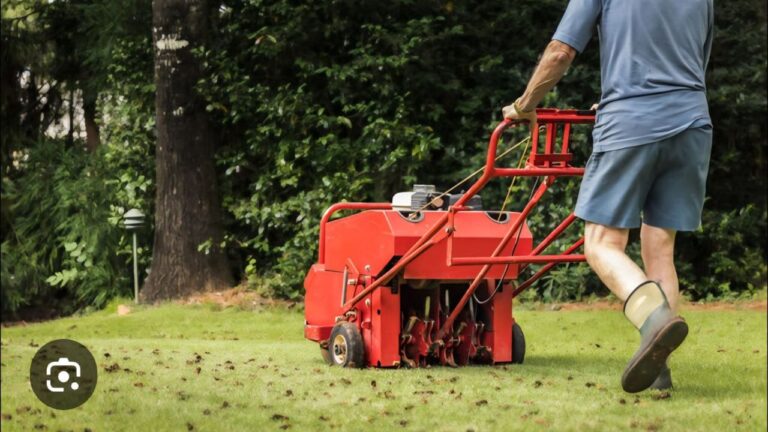
Core aeration — expected: $40 to $60. Actual: $100 to $225.
The expectation on aeration pricing is almost universally below what aeration actually costs from a properly operating company with appropriate equipment. The gap is partly because homeowners know rental equipment exists — they know they could theoretically rent an aerator and do it themselves for the cost of the rental — and the professional price feels like a markup over the rental cost.
The comparison isn’t quite right. Commercial aeration equipment is heavier, produces deeper and more consistent plugs, and covers a property in less time than rental equipment. The aeration result is meaningfully better with professional equipment, not just marginally better. I covered what rental aeration actually produces versus commercial equipment in the article on why I sometimes tell Sudbury homeowners not to hire me — DIY aeration with a rental machine is worth doing when budget is the constraint, but it’s a different product than professional commercial aeration.
Hedge trimming — expected: $30 to $50. Actual: $80 to $200.
The most consistent sticker shock in spring is hedge trimming. Homeowners see the hedge, they see someone with trimmers, and they imagine it takes twenty minutes. For a single small hedge on a property with good access and cooperative plants, maybe. For the reality of most Greater Sudbury properties — hedges that have been growing for years, at heights that require a ladder or long-reach equipment, along fence lines with uneven ground, with cleanup and disposal of significant clipping volume — it takes substantially longer and produces substantially more debris than the imagination suggests.
Sod installation — expected: $1.50 per square foot. Actual: $1.40 to $1.95 per square foot all-in with soil preparation.
Interestingly, sod is one of the services where the expectation is actually close to the reality for the material cost — but the expectation often doesn’t include soil preparation, which is what most of the labour cost is. The full breakdown of what sod installation actually costs and what drives that cost is in the article on buying sod in Sudbury.
What drives the real cost — the components homeowners don’t see
When you pay for yard work in Greater Sudbury, you’re paying for more than the time the worker is on your property. Here’s what’s in the price that isn’t visible on the day of service.
Commercial insurance. Commercial general liability insurance for a lawn care and yard work operation in Ontario in 2026 costs significantly more than it did two years ago. This is not discretionary overhead — it’s the coverage that protects you as a homeowner if the operator damages your property or a worker is injured during service. I covered the specific increase I experienced and what it means for homeowners in the article on my insurance bill doubling this year. This cost is in the price. An operator without insurance can price lower — and shifts that cost onto you as risk.
Equipment purchase and maintenance. A commercial lawn mower costs $3,000 to $8,000. It requires maintenance every season — blades, belts, filters, oil — and replacement every five to eight years of hard use. A commercial string trimmer, commercial edger, leaf blower, debris collection equipment — the capital investment in equipment for a properly equipped yard work operation is substantial. That capital is recovered through pricing. An operator using consumer-grade equipment purchased once and run until it fails has lower equipment costs and can price lower — but consumer equipment produces consumer-grade results, and when it fails mid-season, it fails on your property.
Vehicle and fuel. Getting to your property costs money. Commercial vehicles carry commercial insurance — which is different from personal vehicle insurance and which most informal operators operating without it are violating the terms of their personal policy every time they drive to a job. Fuel costs have fluctuated but remain higher than pre-2022 levels. Vehicle maintenance and replacement are ongoing costs. These are in the price for every legitimate operator.
Scheduling and communication infrastructure. A company that shows up reliably, responds to your calls, communicates proactively when something changes, and manages your account accurately has administrative infrastructure that an informal operator doesn’t. That infrastructure — software, time, staffing, or some combination — costs money. The difference between a company you can reach and one that’s unreachable the week they miss your scheduled visit is partly a function of whether the pricing supported that administrative capacity.
The cost of doing the work right. This is the least visible component and the most important one. Proper yard work takes more time than shortcut yard work. A thorough spring cleanup that actually clears the matted surface material from the lawn takes longer than one that moves the visible debris and calls it done. Proper edging with a mechanical edger takes longer than string-trimmer edging that produces a softer line. The time difference between doing it thoroughly and doing it quickly enough to hit a price point is where service quality lives. At a price point that doesn’t support the time, the corners get cut. At a price that does, they don’t.
How to evaluate a quote in Sudbury — what the number should tell you
When you receive a quote for yard work in Greater Sudbury, here’s how I’d suggest thinking about evaluating it.
Ask what’s included, specifically. “Spring cleanup” is not a sufficient description for a quoted service. Ask: does it include the lawn surface raking or just the beds? Does it include debris removal and disposal or does it produce a pile at the curb? Does it include edge cleanup along hardscapes? The more specific the scope, the more meaningful the price comparison. A $150 cleanup that includes everything and a $150 cleanup that includes half of everything are different products at the same price.
Ask about insurance. Request a certificate of insurance before any work begins. Any properly insured operator produces one within twenty-four hours on request. If the quote is notably low and the operator can’t produce an insurance certificate, you now understand one of the reasons it’s low.
Compare quotes against the real market range, not against your expectation. If you get three quotes and they’re all in the $150 to $200 range for a cleanup, and your expectation was $75, the three companies in the same range are probably pricing correctly for 2026 conditions in Sudbury. The expectation from five years ago or from a different cost environment isn’t the right reference point.
Understand that the lowest quote represents a set of trade-offs. Sometimes the lowest quote is legitimately the best value — efficient operator, lower overhead, same quality. Often it represents trade-offs in insurance, equipment quality, or the time allocated to the service. Understanding which situation you’re in requires asking the questions above. I went into this analysis in detail in the article on why the $200 lawn visit is sometimes cheaper than the $80 one — the full season accounting that makes the lower per-visit price sometimes the more expensive overall choice.
Value transparency over price. The operator who tells you specifically what they’re doing, what it costs, and why is more likely to deliver what they quoted than the operator who gives you a number without explanation. Transparency about pricing and scope is correlated with transparency about service quality. The conversation I described in the article on the Sudbury customer who asked me to charge her more was fundamentally a conversation about that correlation — about wanting to pay a price that supported the quality she’d been receiving, because she’d learned that quality and price are connected.
The prices in Greater Sudbury in 2026 for properly executed yard work are what they are. They’re not arbitrary. They reflect what it costs to do the work correctly with appropriate equipment, appropriate insurance, appropriate labour, and appropriate administrative support. If those prices are higher than what you expected, the expectation is the variable to adjust — not the price.
If you want a quote that’s specific, explained, and backed by the full scope of service those prices imply — give me a call.
📞 705-507-6787 | Get a free quote online
— Ryan Lingenfelter
Owner, Cutting Edge Lawn & Landscaping
Garson, Ontario · 705-507-6787