A homeowner in Hanmer asked me something last June that I get a version of pretty regularly during sod and seeding season. “Should I be putting up some kind of shade over the new sod? I keep reading about protecting new grass from the sun.”
It’s a reasonable question, and the honest answer is that it depends entirely on conditions, timing, and what you’re actually establishing — sod or seed — because the right answer for one situation is the wrong answer for another. Shading new grass in Sudbury isn’t a default best practice. It’s a specific tool for a specific set of conditions, and using it when you don’t need it can actually slow establishment down rather than help it.
I’m Ryan Lingenfelter, owner of Cutting Edge Lawn & Landscaping in Garson, Ontario. Since 2020, I’ve installed sod and overseen seeding across Greater Sudbury — Garson, Val Caron, Hanmer, Lively, Chelmsford, Azilda, Capreol — through a wide range of conditions. Here’s exactly when sun protection actually helps new grass establish, and when it’s unnecessary or even counterproductive.
Why Grass Actually Needs Sun to Establish — The Default Assumption Is Backwards
Before getting into when shading helps, it’s worth being clear about something that runs against the instinct most homeowners have. Both new sod and new seed need sunlight to establish properly. Photosynthesis is how the plant generates the energy it needs to grow roots and recover from the stress of being cut and transplanted, in sod’s case, or to push up its first shoots, in seed’s case.
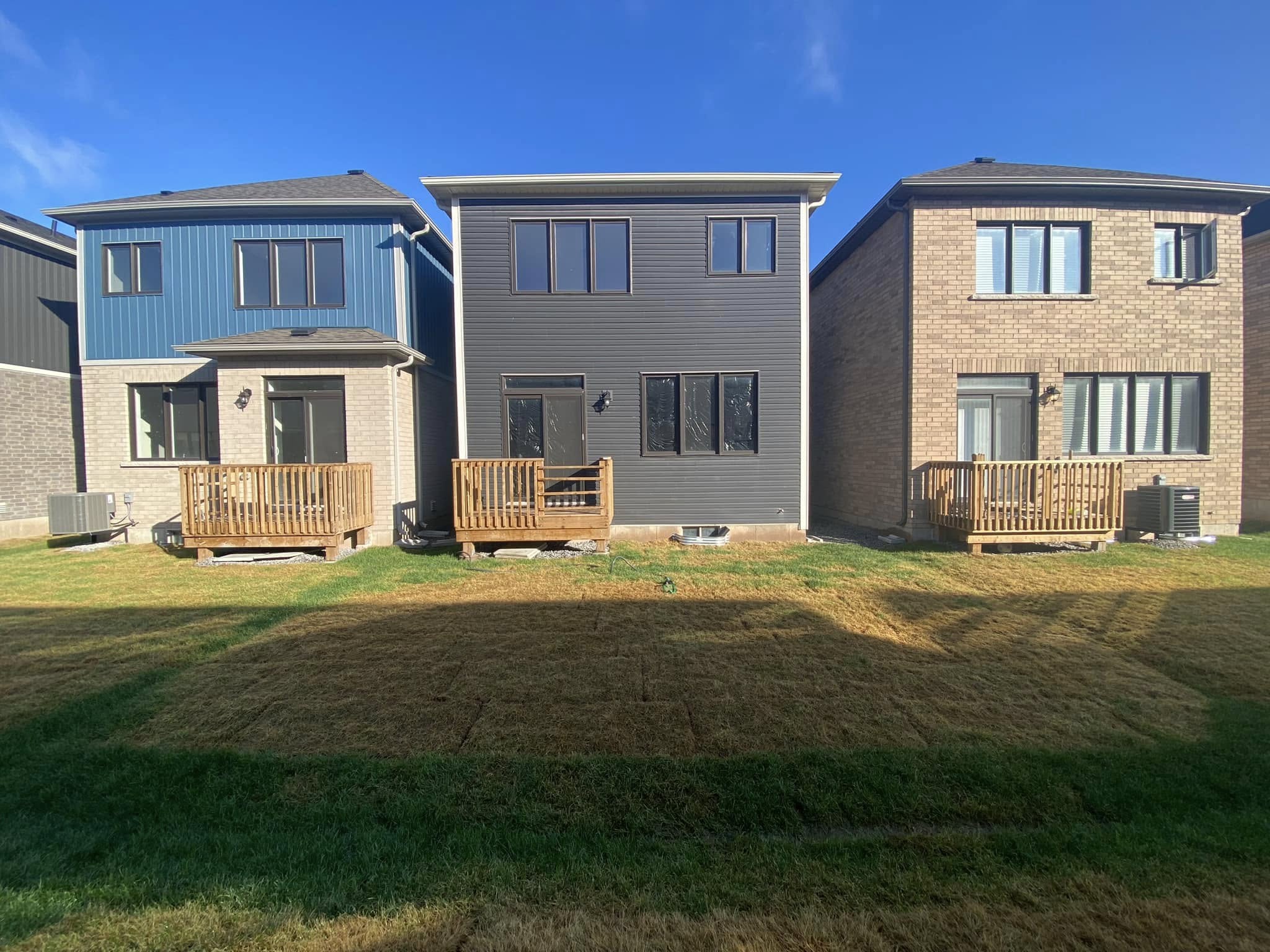
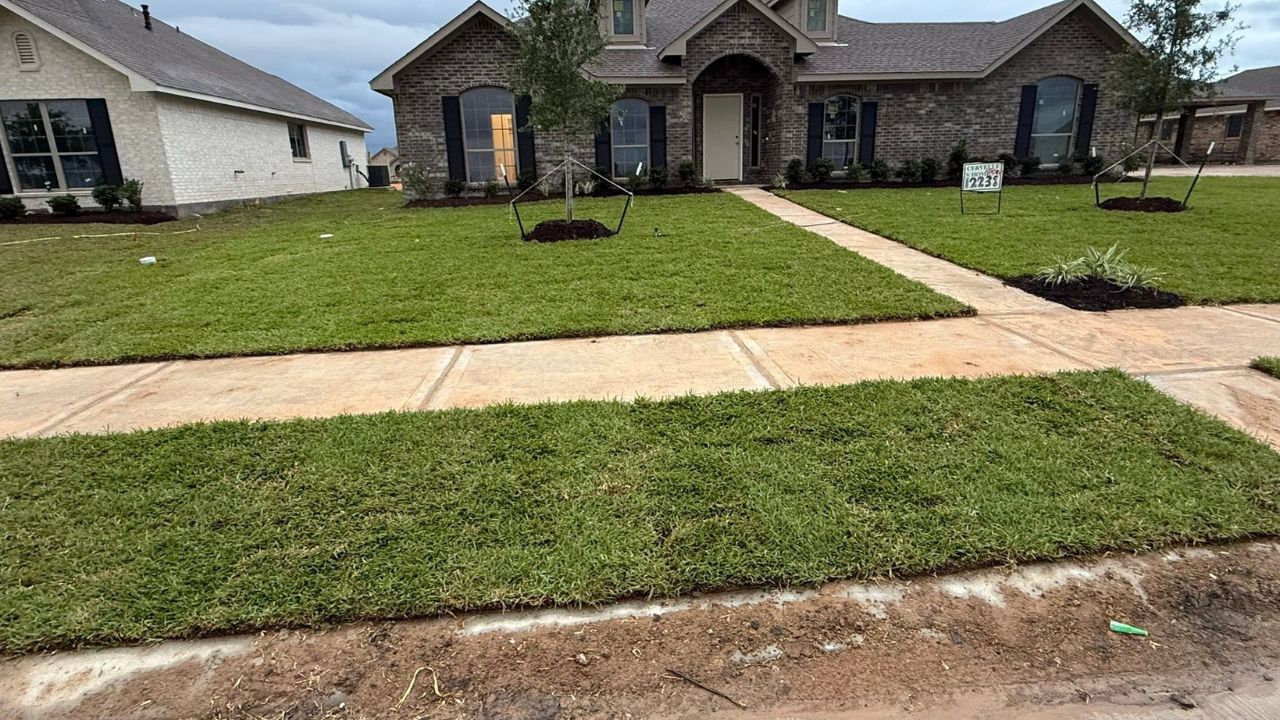
Sun itself isn’t the enemy. Heat stress and excessive moisture loss are the actual problems that sun can cause under specific conditions, and those are the things worth protecting against — not sunlight in general. A typical sodding job done in late May under normal Sudbury spring conditions, with proper watering, doesn’t need any additional shading at all. The sun is part of what makes the grass establish in the first place.
This distinction matters because reflexively shading new grass “just in case” can actually slow root development by reducing the energy the plant has available to put into growing downward. Shade is a tool for a specific problem, not a general precaution that’s always beneficial.
When Sun Protection Actually Helps — Specific Conditions
There are real situations where some form of shading or heat mitigation genuinely helps new grass establish better in Sudbury. Here’s when that’s the case.
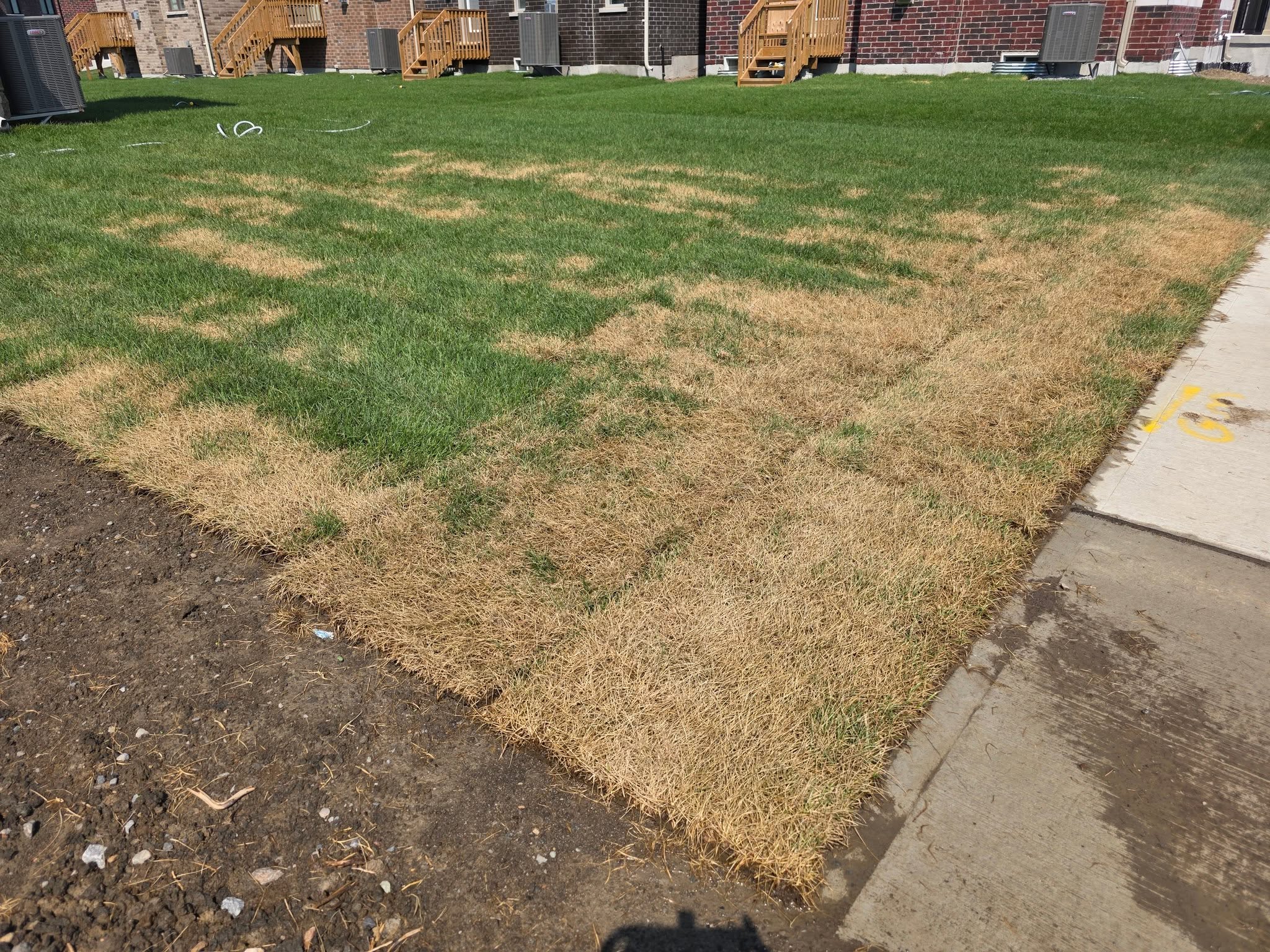
Sod installed during a sudden, severe heat spell. If you’re installing sod and the forecast shows several consecutive days above 30 degrees with little cloud cover, that’s a situation where the combination of fresh-cut sod and intense heat can outpace what watering alone can manage, particularly in the first 24 to 48 hours before any rooting has begun. In this specific window, temporary light shade cloth over the most exposed sections — south or west-facing areas getting the most direct afternoon sun — can reduce moisture loss enough to matter while the watering schedule keeps up.
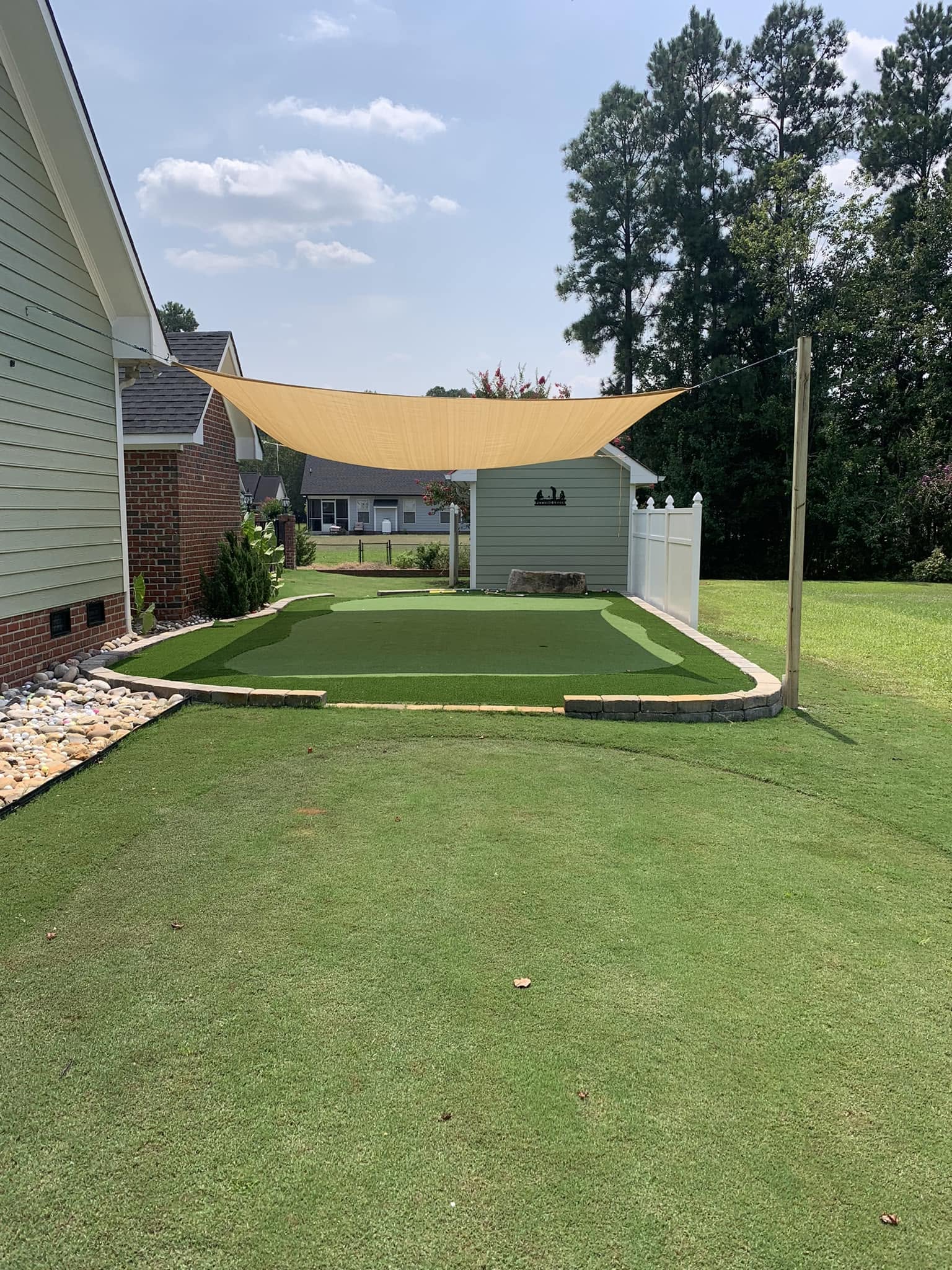
South or west-facing slopes with no natural windbreak. A slope facing directly into afternoon sun, without any structure, fence, or mature planting providing even partial relief, dries out faster than a flat or partially sheltered area under the same conditions. On a property like this, temporary shading during the first one to two weeks of establishment — whether for sod or seed — can meaningfully reduce the watering burden and improve consistency in a spot that’s naturally working against you.
New seedlings during an unusually dry, hot stretch right after germination. Seedlings in their first week or two above ground are far more vulnerable to drying out than established grass, and a hot dry stretch right at this stage can kill a significant percentage of newly germinated grass before it has any real root system to draw on. A light shade cloth — letting through partial light rather than blocking it completely — over a freshly germinated seeded area during a genuine heat event can be the difference between a thin patch and a properly filled-in lawn.
When Sun Protection Is Unnecessary — Most Standard Installations
For the majority of sodding and seeding work done in Sudbury under normal seasonal conditions, no shading is needed at all, and adding it can introduce problems of its own.
Standard late May or late August installations under typical conditions. Both of Sudbury’s ideal installation windows — late May to early June for sod, and late August to mid-September for the best seeding results — generally come with moderate temperatures that don’t require any special heat mitigation. If you’re installing during these windows under reasonably normal weather, proper watering on its own is sufficient. I covered the full timing logic for these windows in the grass seed timing guide here — choosing the right window in the first place reduces or eliminates the need for any additional sun protection.
Shaded or partially shaded properties already. If the area you’re sodding or seeding already gets partial shade from a nearby tree, fence, or the house itself for part of the day, additional artificial shading is redundant and can actually create too little light for proper establishment, particularly with sod, which needs reasonably consistent light to root and green up evenly.
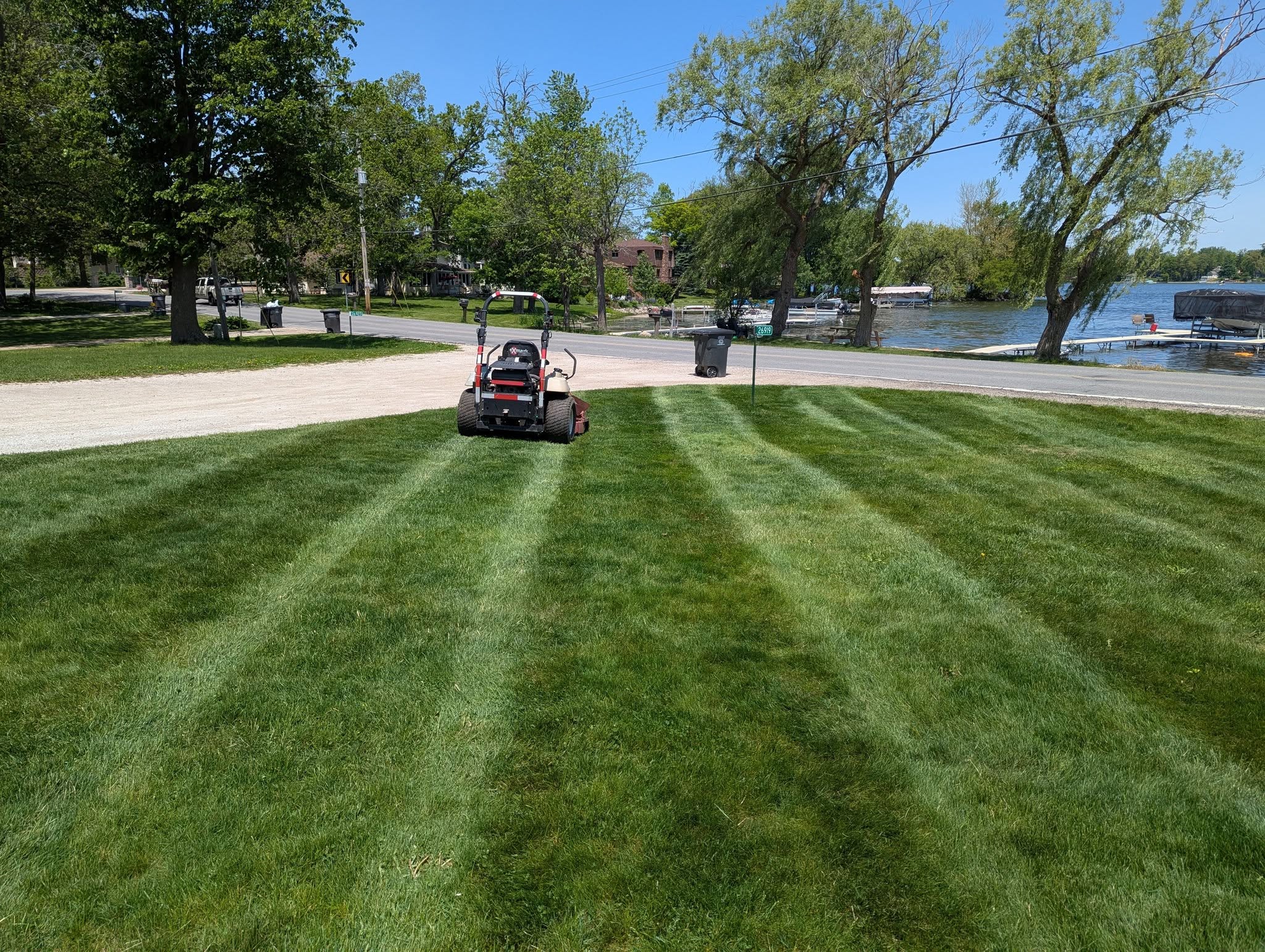
Once roots have actually established. For sod, once the tug test shows real resistance — typically around day 14 to 16 under good conditions — the plant has rooted into the soil and can access deeper moisture on its own. Continuing to shade past this point provides little benefit and can interfere with normal mowing and the lawn’s transition to standard maintenance. I walked through what proper establishment looks like at each stage in the 30-day sod results article here — once you’re past the early establishment window described there, sun protection isn’t doing anything useful anymore.
What to Actually Use If Shading Is Warranted
If you’ve genuinely got one of the specific conditions above — a sudden heat spell during sod installation, an exposed south or west-facing slope, or seedlings hit by a dry stretch right after germination — here’s what actually works without overdoing it.
Light, breathable shade cloth rated for roughly 30 to 40 percent shade is the right level for new grass. This reduces heat and moisture loss without blocking so much light that the grass can’t photosynthesize properly. Avoid solid tarps or anything that blocks light completely — that creates a different problem, trapping heat and humidity underneath in a way that can actually encourage fungal issues rather than helping the grass.
Elevate the shade cloth slightly above the grass surface rather than laying it directly on top, using stakes or a simple frame, so air can still circulate underneath. This matters specifically because direct contact traps heat against the grass rather than relieving it. Keep the shading temporary and remove it once the immediate heat spell passes or once seedlings have established their first real root system, generally within a week or two depending on conditions.
If you’re not sure whether your specific installation timing and location actually calls for this kind of protection, that’s a fair thing to ask about on a quote call. I’ll look at the exposure, the timing, and the forecast and tell you honestly whether it’s worth the extra step or whether proper watering alone will do the job.
📞 705-507-6787
🔗 Get a Free Quote
📍 Serving Greater Sudbury — Garson, Val Caron, Hanmer, Lively, Chelmsford, Azilda, Capreol
— Ryan
Frequently Asked Questions
Does new sod need to be shaded from the sun in Sudbury?
Not under normal conditions. New sod actually needs sunlight to establish through photosynthesis, and standard installations during Sudbury’s ideal windows — late May to early June, or late August to mid-September — under typical weather don’t require any shading at all, provided watering is consistent. Shading is only worth considering during a sudden severe heat spell, on an exposed south or west-facing slope with no natural windbreak, or for fresh seedlings hit by an unusually hot, dry stretch right after germination.
Will shading new grass slow down establishment in Sudbury?
It can, if used when it isn’t actually needed. Shading reduces the light available for photosynthesis, which the plant needs to develop roots and establish properly. Applying shade as a default precaution rather than in response to a specific heat or exposure problem can slow root development rather than help it. Shading should be used as a targeted response to genuine heat stress conditions, not as a general practice for every new sod or seed installation.
What kind of shade cloth should I use for new sod or seed in Sudbury?
Light, breathable shade cloth rated around 30 to 40 percent shade is appropriate for new grass. This reduces heat and moisture loss without blocking enough light to interfere with establishment. Avoid solid tarps or any material that blocks light completely, since that traps heat and humidity against the grass, which can encourage fungal problems rather than help the lawn establish.
How long should I leave shade cloth over new sod in Sudbury?
Only as long as the specific heat condition that prompted using it in the first place. For a temporary heat spell during sod installation, remove the shade once temperatures moderate, typically within a few days. For seedlings affected by a dry, hot stretch right after germination, shade is generally needed for one to two weeks at most, until the young grass develops enough of a root system to handle normal conditions on its own.
Is it better to install sod in shade or full sun in Sudbury?
This depends on what the area will be like long-term, not just during establishment. If the area is naturally shaded by a tree, fence, or building for part of the day, that’s the normal condition the grass will live in, and no extra shading is needed during establishment — it would actually be redundant. Full sun areas establish fine under normal Sudbury seasonal conditions without shading; the exception is during an unusual heat event, which calls for temporary protection regardless of whether the long-term exposure is sun or shade.
Ryan Lingenfelter is the owner of Cutting Edge Lawn & Landscaping in Garson, Ontario. Since 2020, his crew has provided full lawn care services across Greater Sudbury — Garson, Val Caron, Hanmer, Lively, Chelmsford, Azilda, and Capreol. Cutting Edge is licensed, insured, BBB A+ rated, and ThreeBest Rated for lawn care services in Sudbury.
📞 Phone: 705-507-6787
📍 Service Area: Greater Sudbury, Ontario
🔗 Free Quote: cuttingedgelawn.ca/quote
Helpful Lawn Care Services in Sudbury
- Sod Installation in Sudbury
- Core Aeration for Healthy Lawns
- Grass Cutting Services
- Property Cleanup Services
- Mulch & Decorative Stone
- Hedge Trimming Services
Continue Reading
- What a Sudbury Lawn Looks Like 30 Days After Sod Installation
- Best Time to Plant Grass Seed in Sudbury — Spring vs Late Summer
- Sod vs Seed in Sudbury — Which One Is Right for Your Lawn?