By Ryan Lingenfelter · Cutting Edge Lawn & Landscaping, Garson, Ontario · June 2026
I don’t usually write about the business side of running Cutting Edge Lawn & Landscaping. The articles on this site are almost all about lawns — what they need, what goes wrong, how to fix it. But something happened when I renewed my business insurance this spring that I think is worth being transparent about, not because it’s dramatic, but because it directly connects to something homeowners in Greater Sudbury should understand before hiring any lawn care company.
My commercial general liability insurance premium doubled compared to what I paid in 2024. Not increased modestly. Doubled. The same coverage, the same policy structure, the same insurer — the premium came back at roughly twice what I had budgeted for it.
I paid it, because not carrying insurance isn’t an option for how I operate. But the experience prompted me to think about what insurance actually means in the context of lawn care — specifically, what it protects you as a homeowner from, and what your exposure is when the person working on your property doesn’t have it.
What happened to my insurance costs — the honest numbers
Commercial general liability insurance for a lawn care operation covers property damage and bodily injury that results from the business’s work. If a mower throws a rock through a window — which happens in this industry — the insurance covers the repair. If an employee is injured on your property, the insurance covers the liability. If a piece of equipment damages something on the property — a garden feature, a vehicle, a structure — the insurance covers it.
The premium increase I experienced isn’t unique to my business or to Greater Sudbury. Commercial insurance rates across the property and casualty market in Canada increased significantly in 2025 and 2026, driven by a combination of factors — increased claims frequency across the industry, reinsurance market pressure from large weather events, and rising replacement costs for everything from vehicle glass to property repairs. The lawn care sector specifically saw rate increases because the claims experience in the industry — flying debris, equipment damage, slip and fall incidents — has increased as more operators entered the market during the post-pandemic home improvement boom and not all of them were operating safely.
The practical result for a properly insured lawn care operator in Greater Sudbury in 2026 is that insurance costs are meaningfully higher than they were two years ago. That increase either gets absorbed by the business — which reduces margin — or it gets reflected in pricing. For an operator whose previous pricing was already tight, the insurance increase is the kind of cost that creates pressure to either raise prices or find somewhere else to cut costs. For some operators, “somewhere else” is the insurance itself.
This is the part that affects you as a homeowner in Greater Sudbury. The competitive pricing pressure in the lawn care market creates an incentive for operators to reduce costs by operating without insurance or with inadequate coverage. It’s easier than it sounds to operate without insurance in this industry — there’s no provincial licensing requirement for basic lawn care in Ontario, no mandatory certification, and no automatic enforcement mechanism that ensures operators carry coverage. The barrier to operating without insurance is essentially the personal ethics of the operator and whether they get caught by a claim.
What lawn care insurance actually covers — and what happens to you when it doesn’t exist
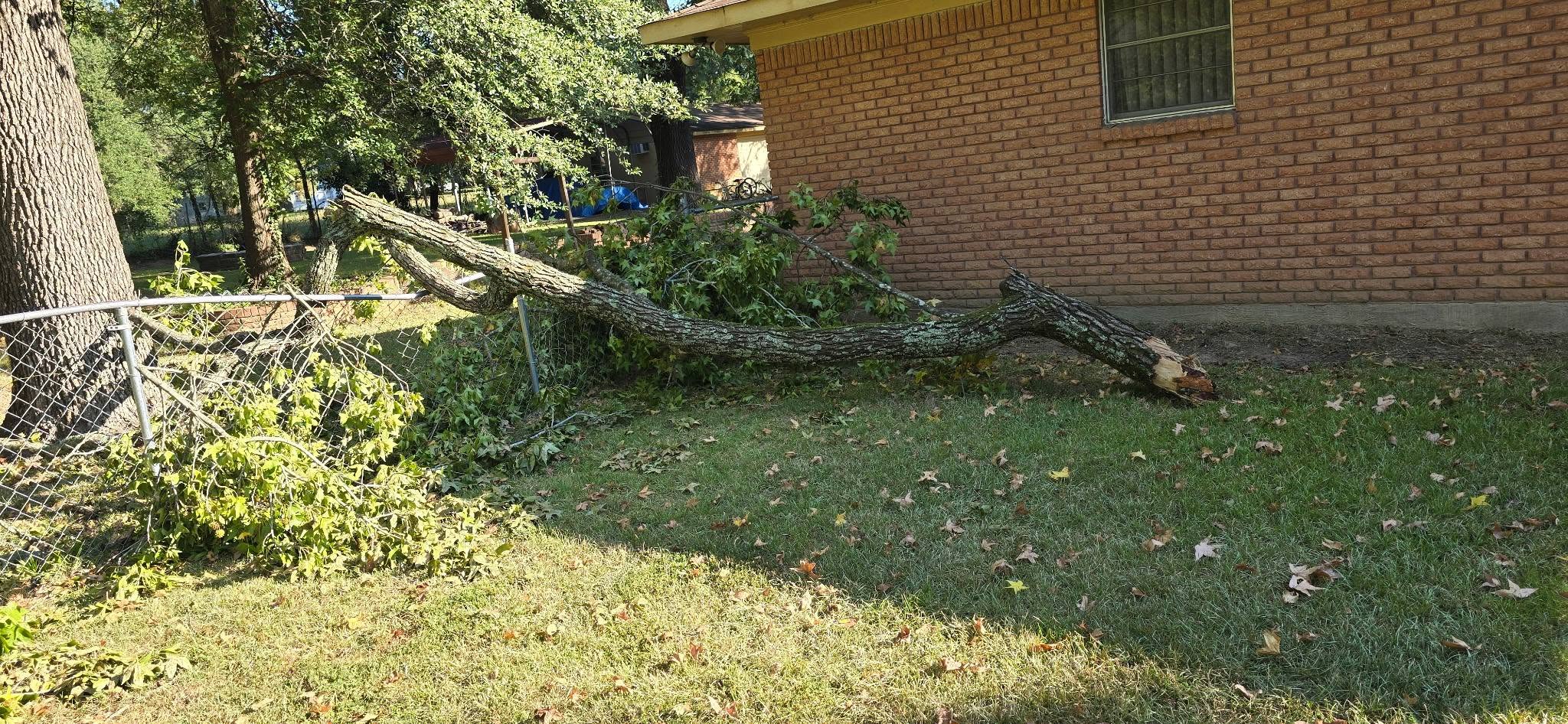
Here are the specific scenarios where lawn care insurance protects you as a property owner — and what your position is in each scenario if the operator working on your property isn’t insured.
Flying debris damage. A mower or string trimmer encountering a rock, a piece of debris, a fragment of mulch — and throwing it at speed. The most common target is a window, but vehicles, siding, outdoor furniture, and other property items get hit. A rock thrown by a commercial mower can crack a windshield, put a hole in a vinyl siding panel, or break a decorative window insert. This happens. Not every job, not even every month. But in a season of weekly visits across multiple properties, the probability of a debris-throw incident over the course of a career is significant.
If the operator is insured: you file a claim with their insurer, the damage is assessed, and it’s repaired or compensated. Inconvenient, but resolved.
If the operator isn’t insured: you are dealing with an individual, not an insurer. The operator may offer to pay. They may dispute that their equipment caused the damage. They may have no financial capacity to pay. Your recourse is small claims court — which requires your time, your documentation, and produces a judgment that you still have to collect from someone who may not have assets to satisfy it. The practical outcome of an uninsured damage incident is often that the homeowner absorbs the cost.
Injuries on your property. If a lawn care worker is injured while working on your property, the liability situation depends on whether the operator carries appropriate coverage. A sole operator without workers’ compensation coverage or personal accident insurance who is injured on your property — slipping on wet stairs while carrying equipment, for example — can potentially make a claim against your homeowner’s insurance as a visitor who was injured on your premises. Your homeowner’s insurance covers some of this, but the claim affects your premium and your claims history regardless of how legitimate the underlying incident was.
A properly insured operator carries their own coverage that addresses their workers’ situations without that scenario landing on your homeowner’s policy. The liability stays with the operator where it belongs.
Property damage beyond debris. Equipment contact with irrigation heads, garden structures, retaining wall sections, decorative features. Damage from improper chemical application. Damage from equipment that was too heavy for the surface conditions. These incidents are less common than flying debris but they happen, and the resolution without insurance coverage is the same problematic path — individual negotiation rather than insurer involvement.
Why uninsured lawn care in Sudbury is more common than you’d think — and how to check

The lawn care market in Greater Sudbury ranges from established companies with proper business infrastructure to individuals who have bought a mower and started accepting cash for cuts. Both ends of that spectrum can do good work. But the insurance situation across that spectrum is not uniform.
An operator who started cutting lawns informally — perhaps a teenager who grew the business, or someone who lost employment and started doing yard work while looking for other work — may genuinely not have thought through the insurance requirement. They’re not necessarily acting in bad faith. They may simply not know that their personal vehicle insurance doesn’t cover commercial use of that vehicle, or that their homeowner’s policy doesn’t extend to business operations, or that they have meaningful personal liability exposure if something goes wrong on a client’s property without commercial coverage in place.
An operator who has been in the industry for a while and is operating without insurance is making a deliberate choice — either that the cost isn’t worth it, or that the probability of a claim is low enough that self-insuring makes financial sense for them. That calculation transfers the risk to their clients rather than carrying it themselves.
The way to check is straightforward: ask for a certificate of insurance before any work begins. A certificate of insurance is a one-page document issued by the insurer that shows the policy number, the coverage type, the coverage limits, and the policy period. Any properly insured operator can produce one within twenty-four to forty-eight hours of being asked — their broker or insurer generates it on request. It’s a standard document in any commercial relationship involving work on someone’s property.
If an operator says they’re insured but can’t produce a certificate: that’s a problem. Insurance without a certificate available on request is either not in place or not current. Ask for the certificate before the first visit, not after. Once work has started, your leverage to require documentation before proceeding is reduced.
The specific questions to ask and what good versus bad answers look like are part of the broader hiring evaluation framework I described in the article on yard work help for Sudbury seniors — the insurance question is on that list alongside the other red flags that distinguish reputable operators from risky ones. The list applies to any homeowner hiring lawn care, not just seniors.
What this means for pricing — and why the cheapest quote is sometimes the riskiest one
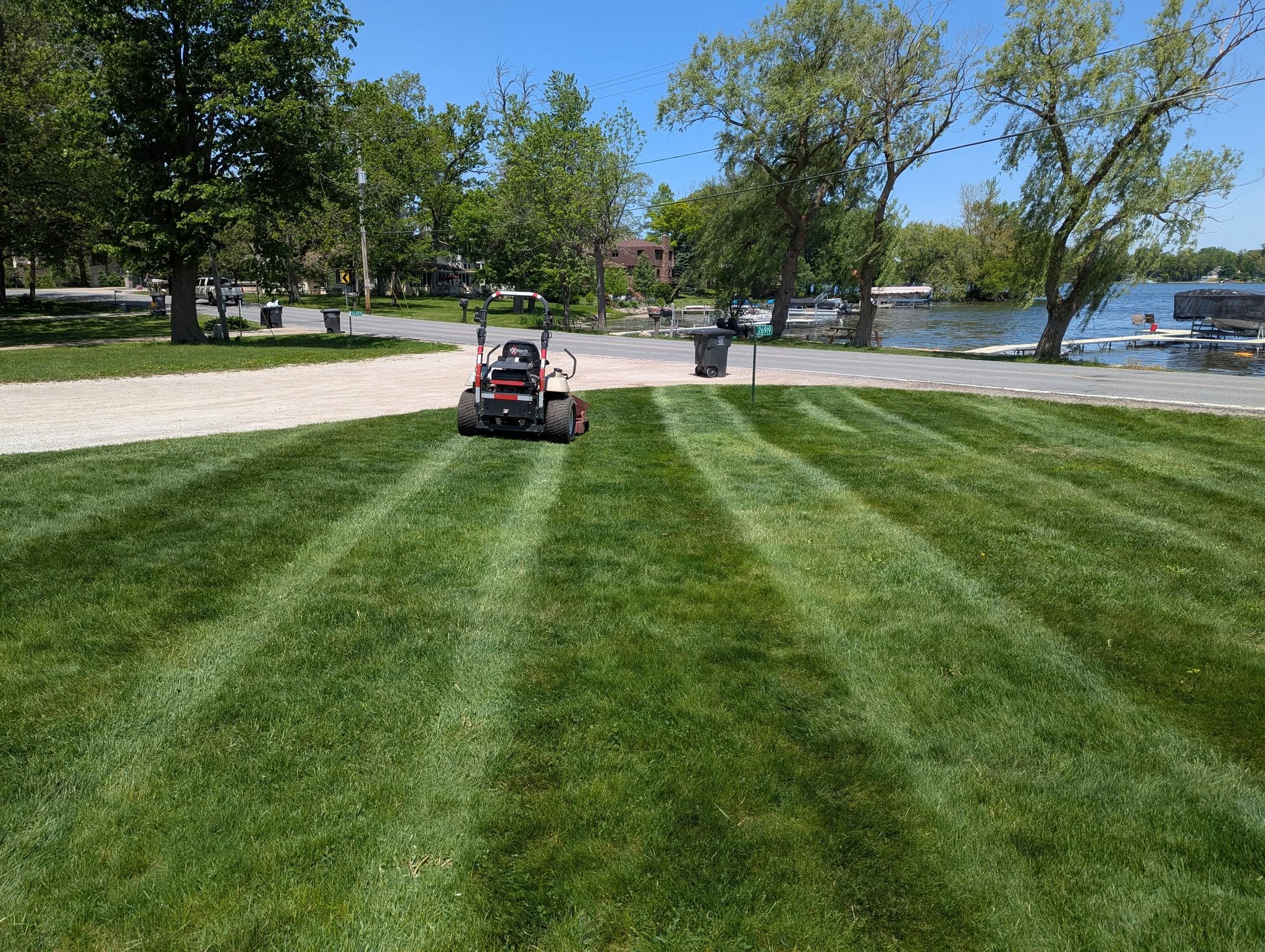
Here’s the practical pricing implication of what I’ve described. A properly insured, properly operating lawn care company in Greater Sudbury in 2026 has insurance costs that are meaningfully higher than they were two years ago. Those costs are part of the overhead structure that the pricing has to cover. An operator without insurance doesn’t have those costs — which means they can price lower and still maintain the same margin, or price the same and take higher margin.
This creates a pricing dynamic where the lowest quote in the market is sometimes the one from the least compliant operator. Not always — there are other reasons for price variation, including efficiency, scale, and equipment quality. But when you’re comparing quotes and one is significantly below the others, the insurance situation is worth investigating before attributing the difference entirely to efficiency or value.
What does “significantly below” mean in 2026 Greater Sudbury pricing? For regular grass cutting on a standard residential lot, the fair market range is $45 to $65 per visit for a properly operated service with insurance, appropriate equipment, and reliable scheduling. If you’re seeing quotes at $30 to $35 per visit for the same scope of work, the math of how that price sustains a legitimate business operation starts to get thin. It’s not impossible — a very efficient sole operator with low overhead can approach those numbers. But it’s worth asking about insurance specifically when the price is below the range that covers the operating costs of a compliant business.
The full pricing context for all lawn care services in Greater Sudbury in 2026 is in the article on Sudbury lawn care news and pricing 2026 — including the ranges for services beyond regular cutting. And the broader analysis of what per-visit price differences actually mean over a full season is in the article on why the $200 lawn visit is sometimes cheaper than the $80 one in Sudbury — the insurance situation is one component of why the lower price can carry higher total risk.
What I’m doing about my own insurance increase:
I absorbed the increase in 2026 without passing the full amount through to pricing. I’m operating on tighter margins this season than last season. That’s a business decision I made because I believe my pricing relative to the market was already in a reasonable range and I didn’t want to price customers out of insured service and toward the uninsured alternative. Whether that’s sustainable depends on where rates go in 2027.
What I will not do is reduce coverage to reduce cost. The coverage exists to protect the homeowners I work on, not just to protect my business. If a debris incident happens on a property I’m maintaining, the homeowner’s experience of that incident should be a straightforward insurance resolution — not a negotiation with me personally about whether I have the capacity to make them whole. That’s what the coverage is for. Reducing it to save on premium would be transferring my cost reduction directly to my clients as increased risk exposure. That’s not a trade-off I’m willing to make.
If you’re evaluating lawn care options in Greater Sudbury this season and you want to confirm that the operator you’re considering is properly insured — ask for the certificate. If they’re legitimate, they’ll provide it without hesitation. If they can’t or won’t, that tells you what you need to know.
📞 705-507-6787 | Get a free quote online
— Ryan Lingenfelter
Owner, Cutting Edge Lawn & Landscaping
Garson, Ontario · 705-507-6787
