
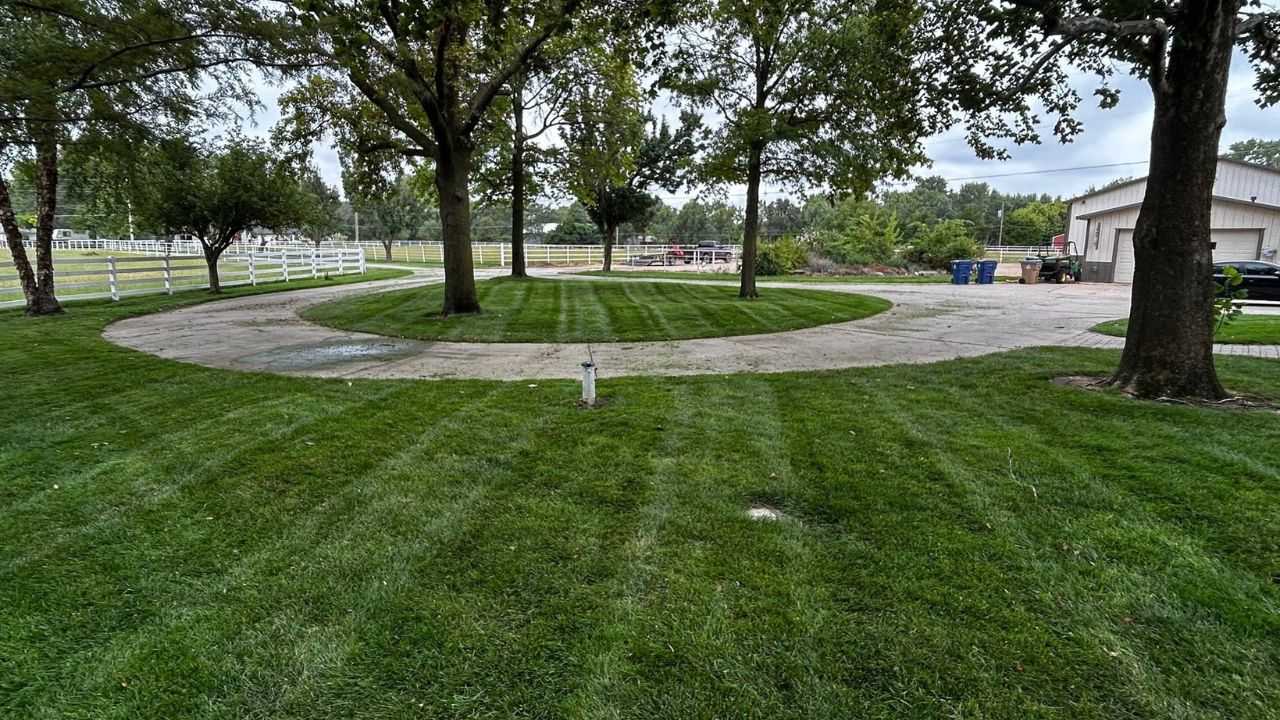
I have one property in Garson that I’ve maintained continuously since 2020 — the same homeowner, the same schedule, the same approach, every single season since I started this company. It’s the closest thing I have to a long-term experiment, and it’s taught me more about what consistency actually does to a Sudbury lawn than almost anything else I could point to.
I’m Ryan Lingenfelter, owner of Cutting Edge Lawn & Landscaping in Garson, Ontario. I’ve maintained properties across Greater Sudbury — Garson, Val Caron, Hanmer, Lively, Chelmsford, Azilda, Capreol — since 2020, and this particular property has been with me the entire way. Here’s what five consecutive years of the same care actually produced, year by year, and why the timeline matters as much as any individual treatment.
Year One — Starting From Reasonable, Not Rough
I want to be upfront that this wasn’t a dramatic before-and-after story starting from a disaster. The lawn in 2020 was reasonably maintained — the previous homeowner had cut it regularly, just without much beyond basic mowing. No aeration history that anyone could confirm. Average Garson topsoil over the clay subsoil that’s typical for that part of the city.
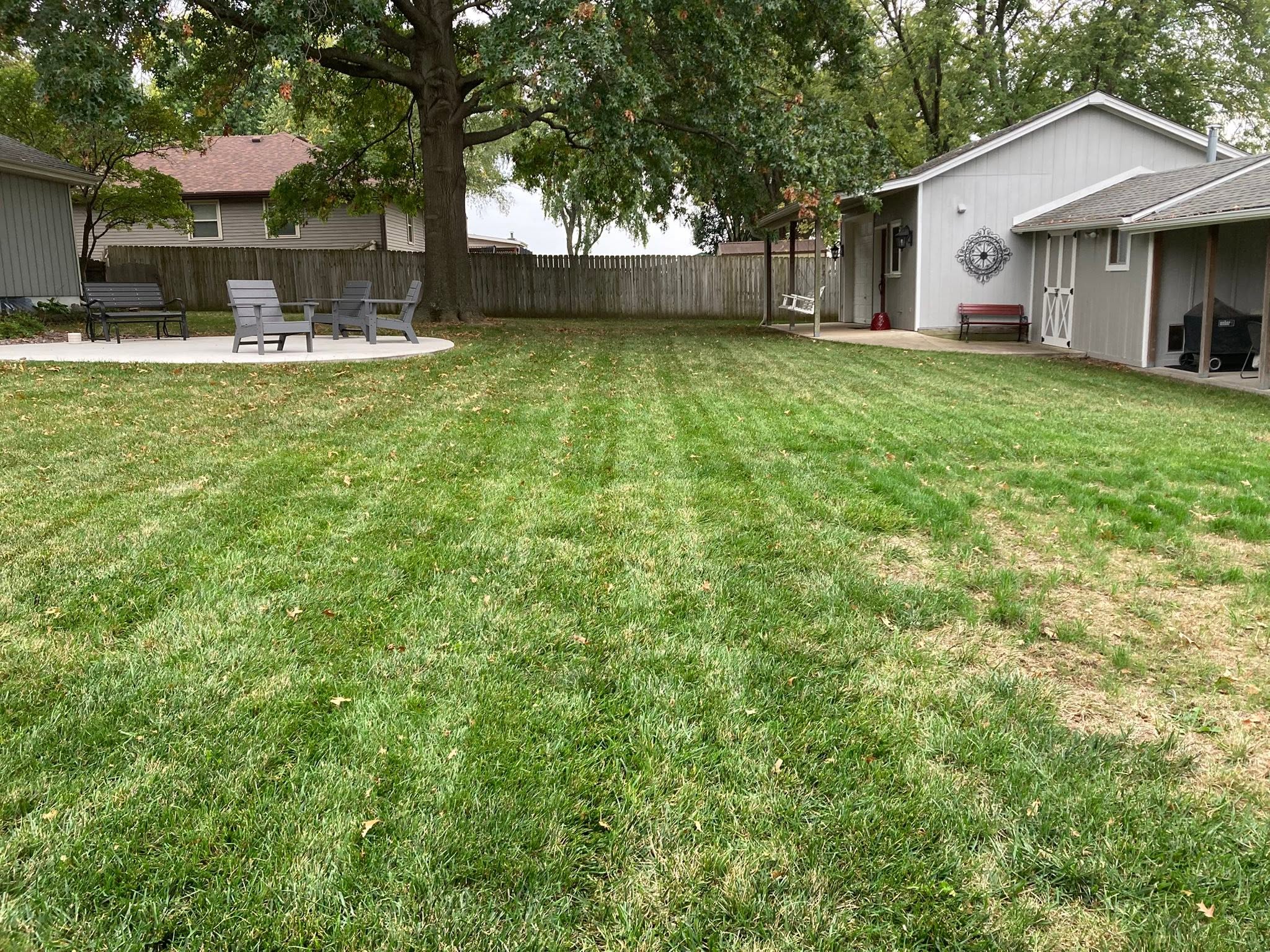
The screwdriver test that first spring told the real story underneath the surface — stopping at about an inch and a half across most of the property. The grass looked acceptable because it had been mowed consistently, but the compaction underneath meant the root system had nowhere to actually go. We started the first season with a property cleanup, the first core aeration the lawn had likely ever received, and got the mowing height up to 3 inches from whatever shorter height it had been at previously.
The visible change in year one was modest — the lawn held green slightly longer into a dry July stretch than it had the previous summer, according to the homeowner, but nothing dramatic. This is honestly the most important thing to understand about consistent care on Sudbury’s clay soil: the first year is mostly about starting the process, not finishing it. Anyone expecting a transformed lawn after one season of aeration is going to be disappointed, even though the work is genuinely setting up everything that follows.
Years Two and Three — The Compounding Starts to Show
This is where the timeline genuinely matters in a way that’s hard to communicate to someone who’s only ever done a single season of treatment. By the second consecutive year of annual aeration, the soil that had compacted for years before I ever touched it was now being opened up for the second time in two years rather than fighting from scratch.
The screwdriver test in spring of year two went in noticeably further than it had at the start of year one — not all the way to where healthy uncompacted soil should be, but a real, measurable improvement. By year three, that same test was reaching 4 to 5 inches in most spots, which is within the range I’d call genuinely healthy for Sudbury clay.
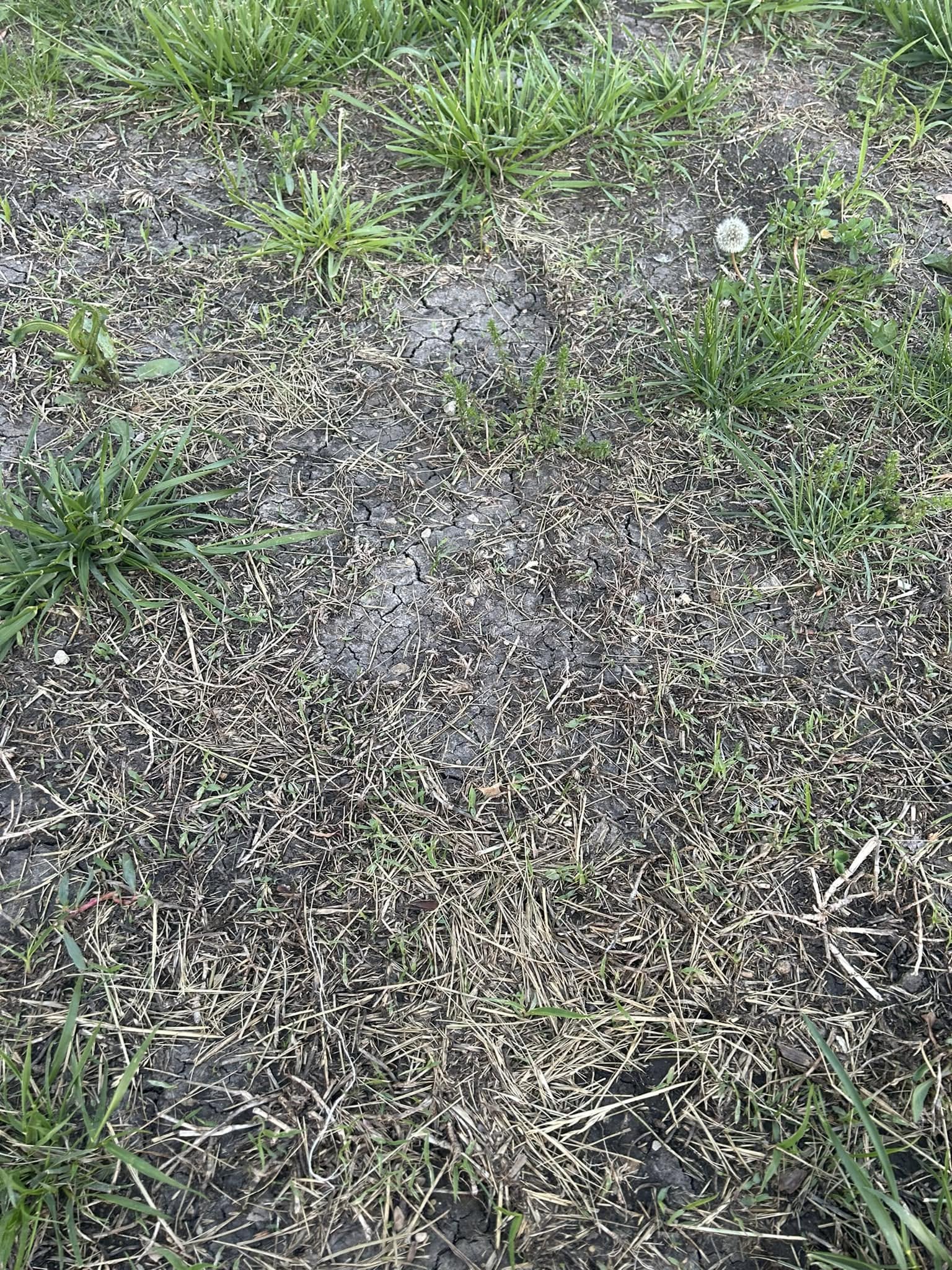
The grass density changed alongside that. Thin areas from the first spring had filled in noticeably by year three, partly from the late-summer overseeding we did each of those years directly after aeration, and partly because grass that’s been able to develop a proper root system simply spreads and thickens better on its own. Weed pressure, which had been moderate in year one, dropped significantly by year three — not because of any specific weed treatment, but because the thickening turf was increasingly outcompeting new weed seed germination. I’ve written about exactly why this sequence — aerate, overseed, let the grass thicken, watch weeds lose ground — works the way it does in the clay soil improvement guide here, and this property is essentially that process playing out in real time over multiple seasons.
Year Four — The First Real Test of a Bad Stretch
Year four happened to include one of the drier mid-summer stretches Sudbury’s had in recent memory, and this is where I actually got to see what four years of consistent care had built versus what a typical maintained lawn does under the same stress.
Neighbouring properties on similar soil, similarly maintained but without the same aeration history, browned out significantly during that dry stretch — which is the expected, normal response for shallow-rooted grass on compacted Sudbury clay during a genuine dry period. This particular lawn, by contrast, held a noticeably better colour through the same weeks. Not immune to the stress entirely — there was some fading — but nowhere near the severity I saw on comparable properties nearby.
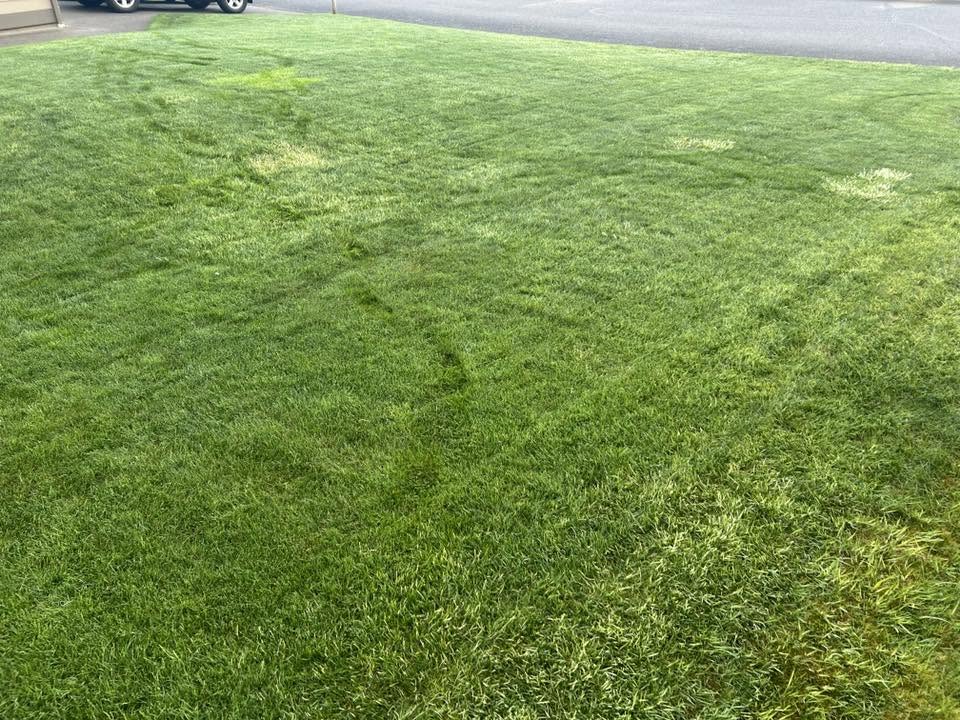
This is the practical payoff of years of consistent aeration that’s easy to describe abstractly but much more convincing to actually see — a root system that’s had four years to develop properly can access moisture several inches deeper than one that’s never had the soil opened up. During a genuinely dry stretch, that difference in root depth is the entire difference between a lawn that holds and one that browns out. I covered the mechanics of exactly why mowing height and root depth interact this way in the mowing mistake article here — four years of proper height maintenance compounding with four years of aeration is what actually produced this result.
Year Five — Maintenance, Not Transformation
By the fifth consecutive year, the work on this property has genuinely shifted character. The first few years were about correcting years of accumulated compaction and building a root system that had never really had the chance to develop. By year five, the annual aeration and overseeding are maintaining an already healthy lawn rather than fixing a struggling one.
The visible difference from year to year is much smaller now, which is itself the point — the lawn isn’t dramatically improving every season anymore because it’s reached a genuinely healthy baseline and the annual work is what keeps it there against Sudbury’s relentless winter compaction. Weed pressure stays low without any targeted herbicide treatment, simply because the turf is thick enough that new weed seeds rarely find the bare soil they need to establish. The mowing height has never changed from 3 inches since that first season, and at this point it’s just routine rather than a correction.
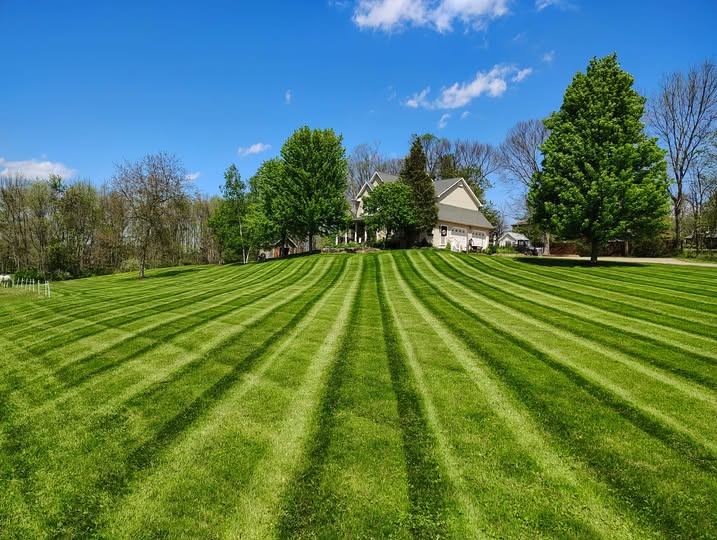
This is genuinely the most useful thing I can tell someone who’s a year or two into their own lawn improvement process and frustrated that it isn’t transformed yet. The first couple of years are correction. Somewhere around year three, the compounding becomes visible. By year four or five, you’re not fighting the same uphill battle every spring — you’re maintaining something that’s already working, and the annual work becomes meaningfully easier and produces visibly better results for the same effort than it did at the start.
What This Means If You’re Earlier in Your Own Timeline
If you’ve had one or two seasons of consistent care and you’re not seeing the kind of result I’ve described here, that’s not a sign something’s wrong — it’s roughly where this exact property was at the same point. The compounding genuinely takes a few years on Sudbury’s clay soil, and expecting a five-year result after one season sets up disappointment that the process itself doesn’t actually warrant.
What matters most is not skipping years along the way. A property that gets aerated for two years and then skips a season doesn’t just pause its progress — it loses meaningful ground, because Sudbury’s freeze-thaw cycles compact the soil again regardless of what was done previously. The value of this kind of long-term result comes specifically from the consistency, not from any single treatment being unusually effective on its own.
If you want to start this same process on your own property, or if you’re a couple of years in and want an honest read on where you actually stand relative to where this kind of timeline typically goes, give me a call. I’ll walk the lawn, tell you what I see, and give you a realistic sense of what to expect from here.
📞 705-507-6787
🔗 Get a Free Quote
📍 Serving Greater Sudbury — Garson, Val Caron, Hanmer, Lively, Chelmsford, Azilda, Capreol
— Ryan
Frequently Asked Questions
How long does it take to see real results from consistent lawn care in Sudbury?
On Sudbury’s clay-heavy soil, the first year of consistent care — aeration, proper mowing height, overseeding — is mostly correction rather than visible transformation, since it takes time to reverse years of prior compaction. Compounding improvement typically becomes clearly visible by year two or three, with noticeably better drought resistance and density by year three or four. By year five, the work shifts from correction to maintenance of an already healthy lawn.
Why does annual aeration matter more than a single aeration treatment in Sudbury?
Sudbury’s freeze-thaw winter cycles compact clay soil every single year regardless of what was done the previous season. A single aeration provides temporary relief, but without annual repetition, the compaction returns and progress is lost. Consecutive years of aeration compound — each year’s treatment builds on soil that’s already somewhat improved from the previous year, producing meaningfully better soil structure over time than any single treatment could on its own.
Does a long-maintained lawn handle drought better in Sudbury?
Yes, significantly. A lawn that’s had multiple consecutive years of proper aeration and mowing height develops a deeper root system that can access soil moisture several inches below the surface. During a genuine Sudbury dry stretch, that root depth is the difference between a lawn that holds reasonable colour and one that browns out severely. This advantage compounds with each additional year of consistent care.
Will weeds go away on their own with consistent lawn care in Sudbury?
Often, yes, without needing dedicated herbicide treatment. As a lawn thickens over multiple years of proper aeration, overseeding, and mowing height, the dense turf increasingly crowds out new weed seed germination, since most common weeds need exposed soil to establish. Weed pressure on a long-maintained Sudbury lawn typically decreases noticeably by year two or three of consistent care, even without specific weed control products.
Is it worth continuing lawn care if I don’t see dramatic year-to-year improvement anymore?
Yes — a smaller visible change from year to year on an already well-established lawn is actually a sign of success, not stagnation. Once a lawn reaches a genuinely healthy baseline after a few years of consistent care, the annual work shifts to maintaining that condition against Sudbury’s ongoing winter compaction rather than producing dramatic new improvement. Skipping maintenance at that point doesn’t just pause progress, it allows the compaction and decline to resume.
Ryan Lingenfelter is the owner of Cutting Edge Lawn & Landscaping in Garson, Ontario. Since 2020, his crew has provided full lawn care services across Greater Sudbury — Garson, Val Caron, Hanmer, Lively, Chelmsford, Azilda, and Capreol. Cutting Edge is licensed, insured, BBB A+ rated, and ThreeBest Rated for lawn care services in Sudbury.
📞 Phone: 705-507-6787
📍 Service Area: Greater Sudbury, Ontario
🔗 Free Quote: cuttingedgelawn.ca/quote
Helpful Lawn Care Services in Sudbury
- Core Aeration for Healthy Lawns
- Grass Cutting Services
- Property Cleanup Services
- Sod Installation in Sudbury
- Mulch & Decorative Stone
- Hedge Trimming Services
Continue Reading
- How to Fix Clay Soil in Your Sudbury Lawn (Without Replacing It)
- The May Mistake That’s Killing Sudbury Lawns by July
- I Tried to Fix My Own Lawn for 3 Years — Here’s What Finally Worked
