

Every July I get the same calls. A homeowner in Val Caron or Hanmer is standing in their backyard looking at a lawn that was green in June and is now brown, thin, and struggling. They want to know what went wrong. They’re thinking about the heat, or the dry stretch we just had, or whether they need to water more.
I’m Ryan Lingenfelter, owner of Cutting Edge Lawn & Landscaping in Garson, Ontario. I’ve been maintaining lawns across Greater Sudbury since 2020 — Garson, Val Caron, Hanmer, Cheney Manor, Lively, Chelmsford, Azilda. And after six years of walking these properties in July and tracing the damage back to its source, I can tell you almost every time: the lawn didn’t die in July. It was set up to fail in May.
The heat in July is real. But a healthy, properly prepared Sudbury lawn handles July heat without drama. What it can’t handle is July heat on top of compacted soil, shallow roots, and a root system that was stressed before summer even started. That combination — which is what most Sudbury lawns are dealing with — is what kills grass in July.
Here’s exactly what happens, why it happens, and what to do differently this May so your lawn doesn’t end up as another July casualty.
The Real Problem: What Happens Underground in May
Most homeowners look at their lawn and see what’s above the surface — the colour, the density, whether it looks tidy. What they don’t see is what’s happening in the top 3 to 4 inches of soil, and that’s where July is decided.

Sudbury’s clay-heavy soil compacts hard over winter. Our freeze-thaw cycles are aggressive — we can swing from -20 to +5 multiple times between November and April. Each cycle compresses the clay tighter. By the time May arrives, most Sudbury lawns are sitting on soil that’s significantly denser than it was the previous September.
When soil is compacted, grass roots can’t grow downward. They stay shallow — in the top inch or two of soil — because that’s the only place they can go. Shallow roots work fine in May and June when surface soil is cool and moist. But when July arrives and the surface dries out, those roots have nowhere to reach. The grass runs out of water and goes into stress. Then it goes dormant. Then, if the stress continues, it dies.
I pulled a core aeration plug from a property in Cheney Manor last May and held it up for the homeowner. Dense, dark, barely crumbled when squeezed. “That’s what your grass roots are trying to grow through,” I told him. He looked at it and said “no wonder it looks like garbage every July.” Exactly right. The July problem started with that plug.
Tip you can use today: Do the screwdriver test. Push a standard flathead screwdriver straight down into your lawn. On healthy, non-compacted soil it should go 4 to 6 inches without much force. If it stops at 1 to 2 inches, your clay is severely compacted and everything I’m about to describe applies directly to your lawn.
Mistake #1: Skipping Core Aeration in May
If there’s one thing that separates the lawns in Sudbury that look great in July from the ones that don’t, it’s whether they were aerated in late May. I’ve seen this comparison play out on the same street, with the same soil type, in the same weather conditions. The aerated lawn holds green. The un-aerated lawn browns out.

Core aeration pulls hollow plugs of soil out of the ground — typically 3 to 4 inches deep, spaced about 3 inches apart across the whole lawn. Each hole is a channel for air, water, and nutrients to reach the root zone directly. Each hole is also a place where new grass roots can grow downward instead of hitting compacted clay.
The timing matters specifically in Sudbury. Late May aeration — after the soil has warmed but before the heat stress of summer — gives the grass 4 to 6 weeks of ideal growing conditions to push roots deeper into the newly opened soil. Those roots are what carry the lawn through July.
I aerated over 60 properties in Greater Sudbury this spring. The ones I’ve been doing annually for two or three years now have soil that’s noticeably different — darker, more crumble to it, better penetration. The screwdriver that was stopping at an inch and a half three years ago now goes in four inches on those same properties. Three years of annual late May aeration did that.
One homeowner in Garson had been fighting a July browning problem for four straight years. Fertilizer, new seed, extra watering — nothing worked. First spring we added annual aeration to her program. That July, her lawn stayed green two weeks longer than it ever had. Second spring aeration, it barely browned at all. Same lawn, same soil, same July weather. Different result because the roots had somewhere to go.
Tip: Book core aeration for late May — specifically May 20 to June 5 in most Sudbury years. That window gives the grass maximum root development time before July heat arrives. If you’re also overseeding, aerate first — the plug holes are perfect seed pockets and dramatically improve germination rates on Sudbury clay.
You can read more about core aeration timing and what it actually does on Sudbury clay if you want the full breakdown before booking.
Mistake #2: Fertilizing Too Early — or Not at All
Fertilization timing in Sudbury is something I could talk about for an hour. The short version: applying fertilizer too early in spring is almost as bad as not applying it at all, and both lead directly to the July problem.
Here’s what happens when you fertilize too early — say, late April or early May when the ground is still cold. The nitrogen goes down before the grass has the root system to absorb it properly. It sits in the soil, gets partially washed away by spring rain, and what does get absorbed drives fast, weak top growth on a plant that hasn’t built any root structure yet. That weak, fast-grown grass looks great in June. It collapses in July.
The right window for first fertilization in Sudbury is mid to late May — once soil temperatures are consistently above 8°C and the grass is actively growing. That timing means the nutrients go into a plant that can actually use them to build root mass, not just push up fast shoots.
I had a homeowner in Val Caron who’d been applying the same big-box fertilizer on the same early May schedule for three years. His lawn looked fantastic in early June — thick, dark green, his neighbour was asking what he was doing. By July 15th it was thin and brown. We shifted his first application to May 22nd and switched to a slow-release formula. The following July his lawn held green until the second week of August. Same lawn. Three-week timing shift and a different product.
Tip: If you’re DIYing fertilization, look for “slow release” or “controlled release” on the bag. Slow-release nitrogen feeds the plant steadily over 8 to 12 weeks instead of 3 to 4. That steady feed builds better root structure than a fast hit of nitrogen does. Avoid anything that promises green-up in 3 days — that’s salt-heavy product that burns more than it feeds, especially on Sudbury clay.
If you want to understand the full seasonal fertilization program that actually works up here, I walked through it in detail in the Sudbury lawn fertilization guide — including what each visit does and why the fall winterizer is the one most people skip.
Mistake #3: Cutting Too Short in May
This one is so common and so fixable that it frustrates me every time I see it. Homeowners who are doing everything else right — aerating, fertilizing on time — and then cutting their lawn at 1.5 or 2 inches through May and June and wondering why it browns in July.

Mowing height directly determines root depth. Grass cut at 3 inches grows roots 3 to 5 inches deep. Grass cut at 1.5 inches grows roots 1 to 2 inches deep. On Sudbury’s clay soil where the surface dries out quickly in dry July stretches, the difference between roots at 2 inches and roots at 4 inches is the difference between a lawn that survives July and one that doesn’t.
The damage from short cutting in May compounds through the season. Every cut at 1.5 inches is signalling the plant to keep its roots shallow. By the time July arrives, that root system is locked in at 1 to 2 inches — exactly where all the moisture has dried up.
I took over a maintenance contract in Hanmer from another company two seasons ago. First thing I noticed was the cut height — they’d been maintaining at 2 inches. The lawn was thin and brown every July, and the homeowner had been told it was a watering problem. I raised the deck to 3 inches on the first visit. The following July that lawn held green 3 weeks longer than it ever had. The “watering problem” was a cutting height problem the whole time.
Tip: Measure your actual cut height — don’t trust the number on the mower deck dial. Set the mower on a hard flat surface and measure from the ground to the blade. Most deck markings are off by a quarter to half inch. Know your real height. Then set it to 3 inches and leave it there all season.
Mistake #4: Watering Wrong After Getting Everything Else Right
You can aerate in late May, fertilize on the right schedule, cut at 3 inches — and still end up with a July problem if you’re watering wrong. This is the mistake I see most often on properties that are otherwise well-maintained.
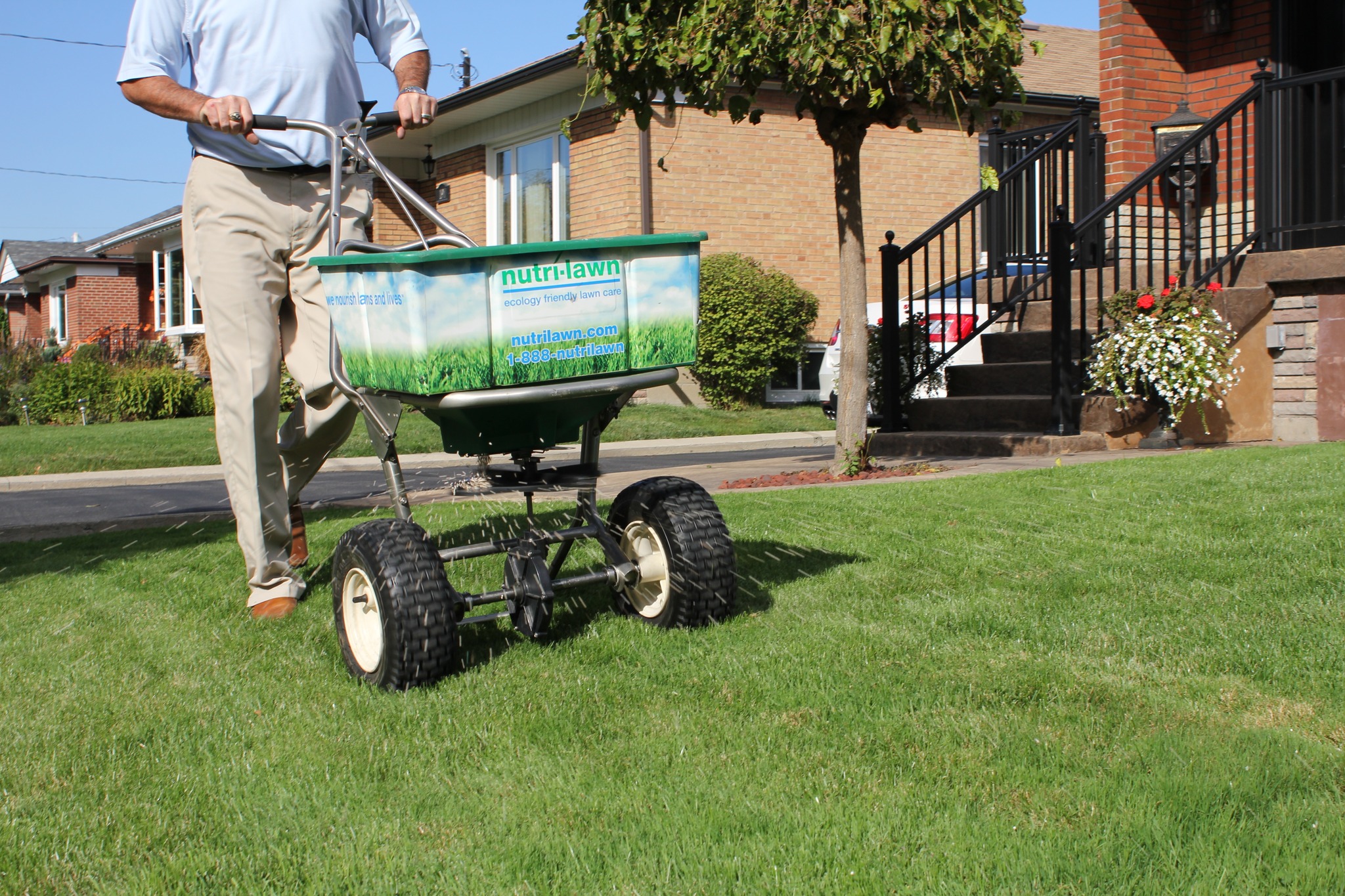
The wrong way to water on Sudbury clay: short, frequent sessions every day. Ten minutes morning, ten minutes evening. The surface stays damp, the grass looks fine, and the roots have no reason to grow downward because moisture is always available at the surface level. Then you go on vacation for a week in July and the lawn crashes — because the roots never went anywhere deeper.
The right way to water on Sudbury clay is cycle-and-soak. Two sessions with an hour gap between them — the first softens the clay surface, the second penetrates into the loosened soil. Longer sessions, less often. You’re trying to push moisture down 3 to 4 inches so roots chase it downward. Water twice a week deeply rather than every day shallowly.
After aeration, this approach becomes dramatically more effective. The plug holes act as direct channels into the root zone — water that would have run off a compacted clay surface now has a straight path down. It’s one of the reasons the aeration-first sequence matters so much. You’re not just loosening soil, you’re making everything else you do more effective.
One homeowner in Chelmsford was watering every single day for 15 minutes. Her lawn was green in June but died in patches every July the moment she missed a couple of days. We shifted her to two deep watering sessions per week. The following July her lawn handled a 10-day dry stretch without going dormant. Same lawn, same July weather, completely different outcome because the roots had learned to go deep.
Tip: Buy a cheap rain gauge from Canadian Tire ($8 to $12) and put it in your lawn. Your goal is 1 inch of water per week from rain plus irrigation combined. Most Sudbury homeowners are either over or under that target without knowing it. The gauge tells you exactly what’s happening.
What a Properly Prepared Sudbury Lawn Actually Looks Like in July
I want to paint a picture of what’s possible, because I think some Sudbury homeowners have accepted July browning as inevitable. It’s not.
A lawn that gets late May aeration, proper fertilization timing, consistent 3-inch cutting height, and deep twice-weekly watering will handle a normal Sudbury July without going brown. It might slow its growth rate. It might go slightly lighter in colour during a real dry stretch. But it won’t die. It won’t thin out. It won’t need emergency reseeding in August.
I have customers in Garson and Val Caron who’ve been on this program for three consecutive seasons. Their neighbours’ lawns go brown every July. Theirs don’t. Same street, same soil type, same weather. The difference is entirely in what was done in May.
If your lawn has already been struggling through multiple July browns, it might also be worth looking at whether thin or bare patches need addressing before next season — I covered the seeding timing that works best in Sudbury in the grass seed timing guide, including why late August is almost always better than spring for getting new grass established.
The work that matters happens in May. July just reveals what you did or didn’t do two months earlier.
I’ve been walking Sudbury lawns since 2020 and the July problem never gets old — because it’s always fixable, and it’s always traced back to the same handful of May decisions. If you want someone to walk your property, do the screwdriver test, and tell you honestly what your lawn needs before next July, give me a call.
📞 705-507-6787
🔗 Get a Free Quote at cuttingedgelawn.ca
📍 Serving Sudbury, Cheney Manor, Garson, Val Caron, Hanmer, Lively, Chelmsford, and Azilda
— Ryan
Frequently Asked Questions
Why does my Sudbury lawn go brown every July?
Almost always a combination of compacted clay soil and shallow roots caused by one or more spring mistakes — skipping core aeration, fertilizing too early, cutting too short, or watering too frequently with shallow sessions. Sudbury’s clay-heavy soil compacts hard over winter, and without annual late May aeration, grass roots stay in the top inch or two of soil. When July dries out that surface layer, shallow roots have nowhere to reach and the grass goes into stress or dormancy.
What is the most important thing to do in May to prevent July lawn damage in Sudbury?
Core aeration in late May — specifically May 20 to June 5. Aeration opens the compacted clay soil and gives grass roots the channels they need to grow deeper before July heat arrives. The lawns I’ve been aerating annually for two to three years in Sudbury handle July significantly better than un-aerated properties on the same street with the same soil type. It’s the single highest-impact thing you can do in spring for July performance.
Does watering more in July fix a dying Sudbury lawn?
Not if the roots are shallow. More watering at the surface level keeps shallow roots shallow — it doesn’t fix the underlying problem. The fix is deep, infrequent watering (twice a week with long sessions) combined with annual aeration so water can actually penetrate the clay. A lawn with roots at 4 inches handles a dry July week without drama. A lawn with roots at 1.5 inches crashes the moment you miss two days of shallow watering.
What height should I cut my Sudbury lawn to avoid July browning?
3 inches, all season. Grass cut at 3 inches develops roots 3 to 5 inches deep on Sudbury clay. Grass cut at 1.5 to 2 inches stays at 1 to 2 inches deep. The surface of Sudbury clay dries out quickly in July dry stretches — roots at 2 inches have nowhere to go when that happens. Raising the deck to 3 inches is one of the easiest and most impactful changes a Sudbury homeowner can make, and the July difference is visible within one season.
When should I fertilize my Sudbury lawn to prevent July problems?
Mid to late May — once soil temperatures are consistently above 8°C and the grass is actively growing. Earlier than that and the nitrogen drives weak top growth on a root system that isn’t ready to support it. That fast weak growth looks great in June and collapses in July. Use a slow-release formula that feeds steadily over 8 to 12 weeks rather than a fast-green-up product. The steady feed builds root mass; the fast product just pushes surface growth.
Ryan Lingenfelter is the owner of Cutting Edge Lawn & Landscaping in Garson, Ontario. Since 2020, his crew has provided full lawn care services across Greater Sudbury — Garson, Val Caron, Hanmer, Lively, Chelmsford, Azilda, and Capreol. Cutting Edge is licensed, insured, BBB A+ rated, and ThreeBest Rated for lawn care services in Sudbury.
📞 Phone: 705-507-6787
📍 Service Area: Greater Sudbury, Ontario
🔗 Free Quote: cuttingedgelawn.ca/quote
Helpful Lawn Care Services in Sudbury
- Core Aeration for Healthy Lawns
- Grass Cutting Services in Sudbury
- Lawn Seeding and Overseeding
- Sod Installation in Sudbury
- Property Cleanup Services
- Mulch & Decorative Stone
Continue Reading
- How to Fix Clay Soil in Your Sudbury Lawn (Without Replacing It)
- When to Mow Your Lawn in Sudbury — Spring 2026 Timing Guide
- How Much Does Lawn Fertilization Cost in Sudbury? (2026 Guide)
