
Most of my client relationships start with a conversation about what the homeowner wants and what they’re willing to spend, and we work from there to find the right scope and approach. That’s the normal version.
This one started differently. The call came from a man named Robert, a property owner in Garson who was managing a rental property on a street I knew well. He had limited time to deal with the property himself, lived across town, and had been having persistent issues with the lawn — different mowing services, inconsistent results, a property that looked fine some weeks and neglected others depending on who showed up.
After about four minutes on the phone, he said something I’ve only heard a handful of times in five years of doing this: “I don’t want to micromanage it. Just do what you think is best for the property and let me know what you did.”
I’m Ryan Lingenfelter, owner of Cutting Edge Lawn & Landscaping in Garson, Ontario. This is what “what I think is best” actually looked like over six months — and what the property looks like now.
What the Property Looked Like When I Got the Keys
I did the full assessment in early May. Robert had arranged key access and asked me to send him a written summary of what I found, which I did.
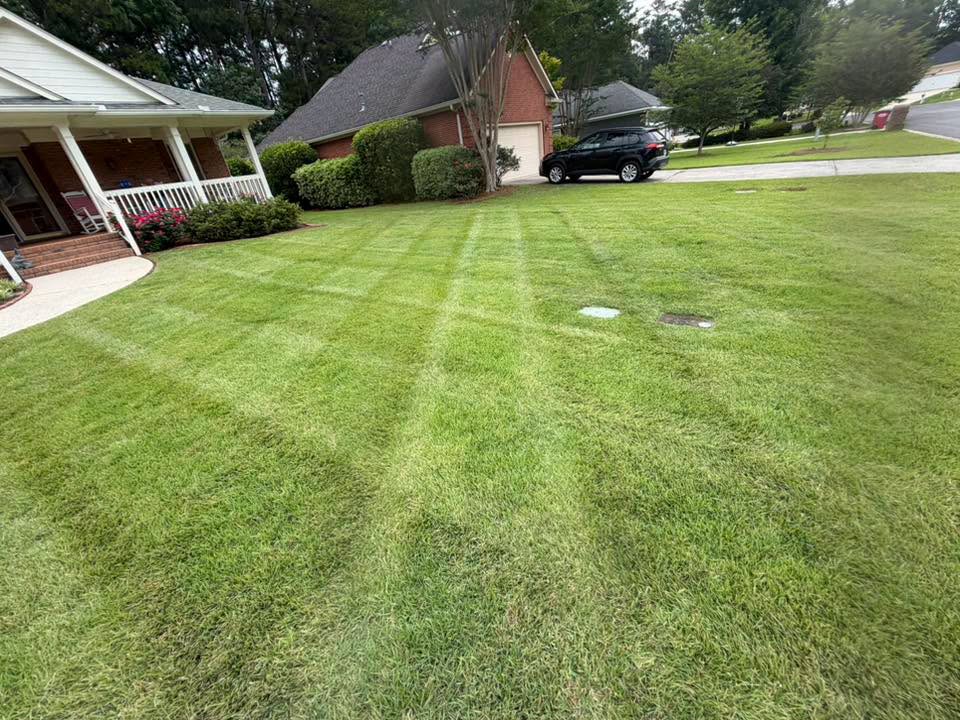
The property was a standard Garson residential lot — front and back, combined around 1,600 square feet of lawn. The previous mowing arrangements had kept it from getting critically overgrown, but that was about the extent of what had been done. No aeration in at minimum three years, probably longer. Thatch at about three quarters of an inch — on the edge of becoming a real problem. A moderate compaction reading — screwdriver stopping at about an inch and a half across most of the lawn.
The drainage on the back property was fine — good grade, nothing pooling — which was genuinely good news. Soil drainage isn’t something you can improve cheaply or quickly, and a property with naturally good drainage is working with you rather than against you from the start.
There were two thin patches in the front — one near the driveway edge, likely from foot traffic and heat off the pavement, and one in the back left corner where the tenant had apparently been parking something heavy at some point based on the visible compression of the soil in a rectangular shape. Neither was a bare patch yet, just visibly thinner coverage.
The grass variety was a Kentucky Bluegrass dominant mix — standard for Garson and well-suited to our climate. Nothing unusual about the variety itself, just a lawn that had received inconsistent maintenance and was showing the cumulative effects of that inconsistency in its current condition.
I sent Robert the summary and my proposed plan. He replied with two words: “Sounds good.”
Month 1 and 2 — The Foundation Work
May and early June were foundation work — the stuff that determines whether everything else in the season actually lands or just maintains the status quo.
Core Aeration — First Week of May
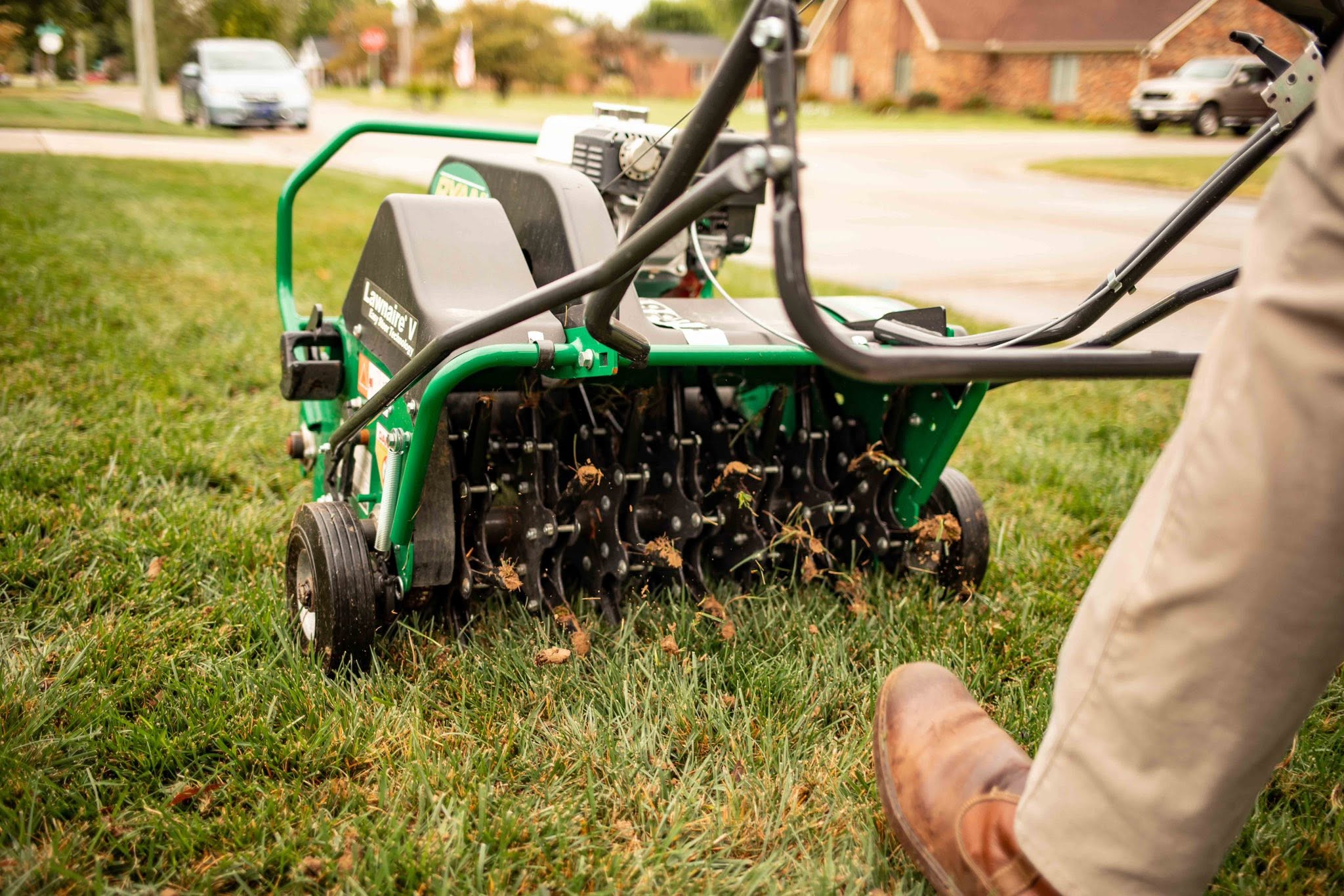
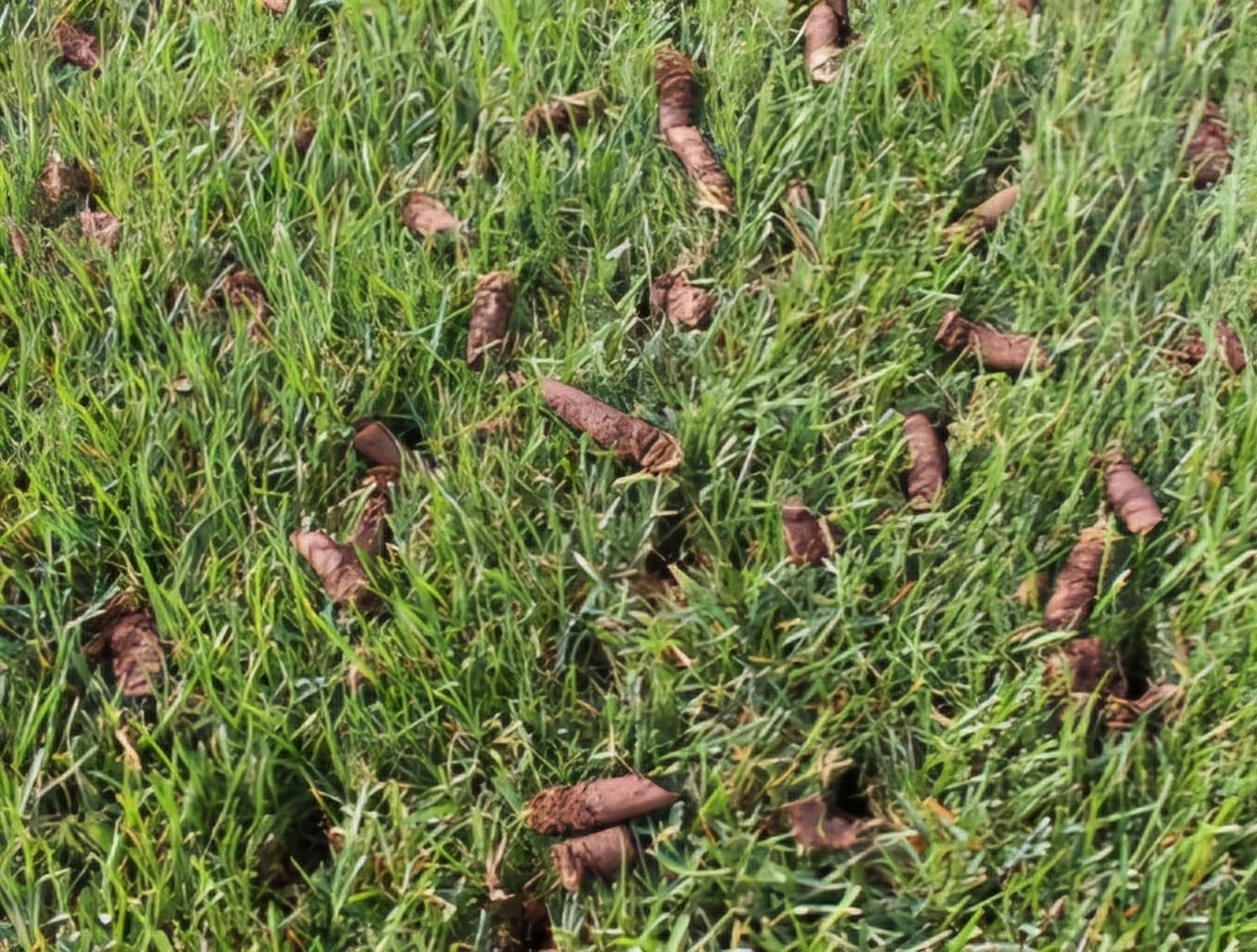
The compaction at an inch and a half was the priority. Two-pass aeration across the entire property — front and back — with a proper commercial core aerator. The cores were left on the surface to break down naturally, returning organic matter to the soil and contributing to the microbiome that keeps thatch in check.
I’ve explained in detail why annual aeration is the single most impactful maintenance task for Sudbury’s clay-heavy soil in what to expect from lawn aeration near you in Sudbury. On a property like this one — several years without it, moderate compaction building — the first aeration is the most important one. Everything else depends on the soil being open enough to respond.
Overseeding — Same Day as Aeration
Immediately after aeration, quality cool-season seed broadcast across the full lawn with particular attention to the two thin patches. Aeration holes give seed direct soil contact — germination rates in aerated lawn are dramatically better than seed on an untouched surface. Starter fertilizer applied at the same time.
Addressing the Driveway Edge Patch
The thin patch near the driveway had a specific cause — heat radiation off the pavement and compaction from foot traffic in a narrow corridor. I applied a heavier seed rate to that section and added a thin layer of quality topsoil specifically to that area to give the seed better conditions than the compressed, heat-exposed soil was providing on its own.
First Regular Cut — Third Week of May
Once the overseeding had been down for two weeks and the new seedlings were establishing, the first regular cut at 3 inches. I noted in my records that the grass had responded quickly to the aeration and overseeding — the thin patches were showing good germination, the overall colour had improved from the first watering after aeration, and the compaction improvement was visible in how the grass felt underfoot — less hard, more cushioned.
Month 3 and 4 — Managing the Summer Stretch
June and July are the months where a Sudbury lawn’s early-season preparation either shows up or doesn’t. A lawn that went into summer with open soil, established roots, and consistent moisture does noticeably better through the heat than one that went in compacted and shallow-rooted.
Robert’s property, after the May foundation work, fell into the first category.
Weekly Mowing at 3 Inches Throughout
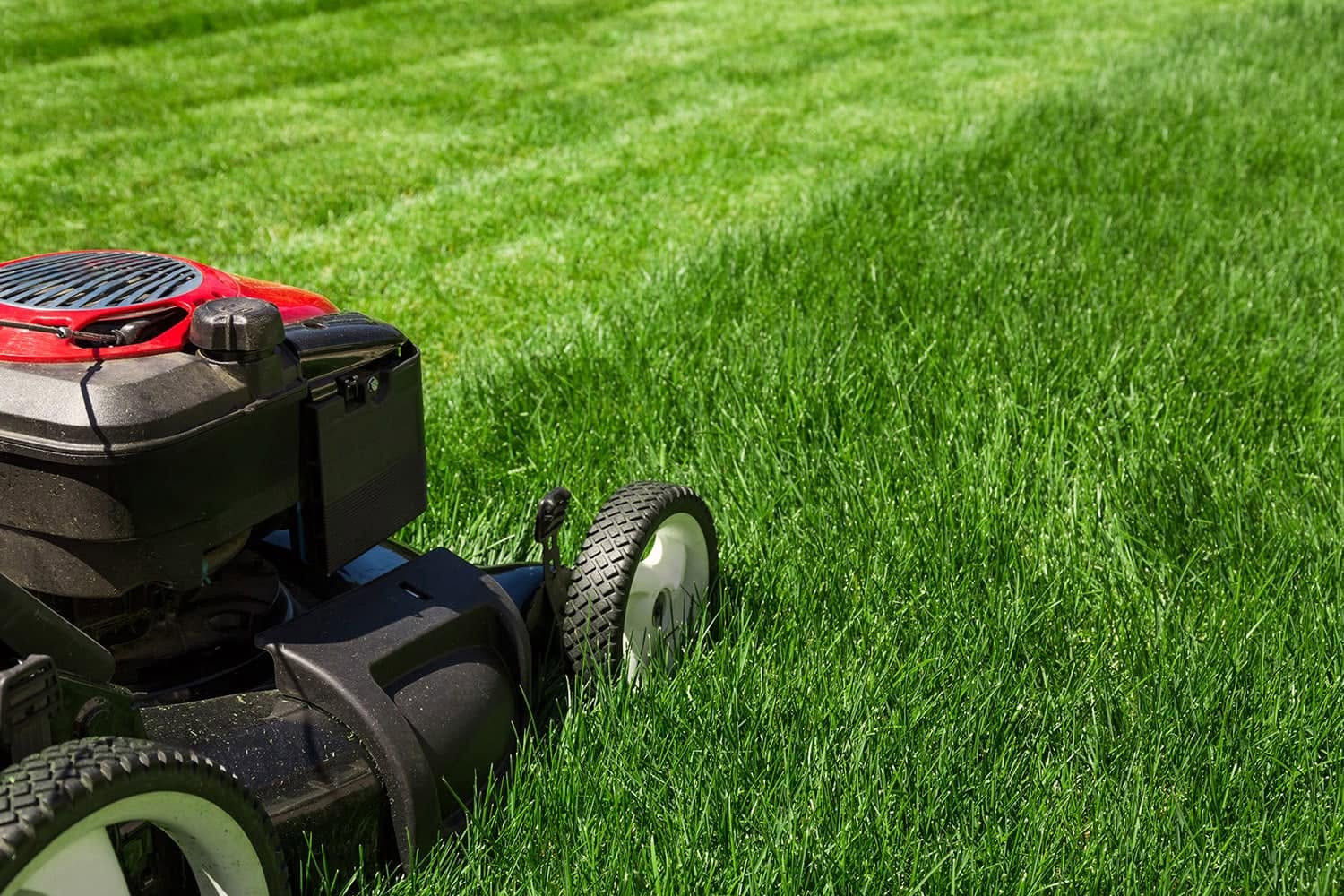
Consistent weekly mowing at exactly 3 inches through June, then raising to 3.5 inches for the hottest weeks of July. This is the adjustment I make on every property I manage through summer — the extra half inch makes a real difference in how the lawn handles peak heat by shading the soil surface and reducing moisture evaporation. I’ve described the specific mechanics of why this matters in Sudbury’s climate in detail in the week most Sudbury lawns start struggling and how to get ahead of it.
Monitoring Without Disrupting
On each visit, I do the same observation routine I described in the 4-step weekly lawn routine — colour check, soil feel, edge condition, any new problem areas. July brought a dry stretch of about ten days where I flagged the need for supplemental watering in the areas nearest the driveway, which I communicated to the tenant directly with Robert’s permission, providing the specific instructions the tenant needed to follow on their permitted odd/even watering days per the City of Greater Sudbury bylaw.
The dry stretch produced some light browning in the most exposed sections — normal Sudbury July behaviour that I’ve covered in detail in why Sudbury lawns go brown in July and when to actually worry. The browning resolved within a week of the dry stretch ending without any damage to the established root system, which is exactly what you expect from a lawn with roots going to proper depth rather than staying in the top inch of compacted clay.
One Grub Check in Mid-July
Based on what I described in the Lively lawn that looked fine in May and was half dead by August, I now proactively check for grub activity mid-July on properties I’m managing rather than waiting for visible symptoms. Robert’s property came back clean — no meaningful grub population, no unusual bird activity in preceding weeks. Noted and filed.
Month 5 and 6 — The Fall Work and Where It Stands Now
August and September are the second critical window of the Sudbury lawn calendar. A lawn that gets the fall work done right goes into winter with deep roots, reduced thatch, and established coverage from any late-season overseeding. A lawn that skips fall prep goes into winter in whatever condition it happened to be in when the frost came — which is often not the best it could have been.
Second Aeration — First Week of September
Annual aeration means once in the growing season, not twice — but because this property hadn’t been aerated in years before the May work, a second pass in September of the first season was worth doing to continue breaking down the thatch that had accumulated and to keep the compaction improvement moving in the right direction. This was a judgement call specific to this property’s history. For a property already on an annual aeration rhythm, fall aeration the first year wouldn’t typically be necessary.
Overseeding — Again, Same Day
Second overseeding pass in early September, focused this time specifically on the driveway edge patch — which had filled in well from the spring work but still had slightly thinner density than the surrounding lawn — and any areas that had shown any stress during the July dry stretch. Fall overseeding in Sudbury, with warm soil and cooling air temperatures, produces excellent germination conditions that spring overseeding doesn’t always match.
Final Cut at Correct Height
The last cut of the season is one I pay specific attention to — the height matters for how the lawn goes into winter. Too long and it mats under snow, creating ideal snow mould conditions. Too short and the plant doesn’t have enough energy reserves going into dormancy. The target for a Sudbury lawn’s final cut is 2.5 to 3 inches — details I’ve laid out in how to prepare your Sudbury lawn for winter.
Where the Property Stands Now
Six months in, the screwdriver test on Robert’s property reads close to three inches across most of the lawn — up from an inch and a half when I started. The thin patches have both filled in substantially, with the driveway edge patch now matching the surrounding density and the compressed back-left section noticeably improved. Overall coverage is even and consistent across both front and back.
Robert sent me a one-line message after seeing the late-September photos I included in my monthly update to him: “That’s better than I’ve ever seen it.”
That’s what “do what you think is best” looks like when what I think is best is grounded in actually understanding what the property specifically needs, in the right sequence, through a full season.
What Robert’s Arrangement Actually Involves
I want to be practical about what this kind of full-management arrangement actually looks like operationally, because I think some homeowners assume it’s more complicated than it is.
Robert receives a brief monthly summary — what was done, what was observed, what’s planned for the following month. That’s it. No phone calls asking him to decide on this or that, no surprise invoices for work he didn’t know was coming, no need for him to think about his lawn at all. The billing is predictable and itemized so he knows exactly what he paid for.
For a landlord, a busy homeowner, or someone who simply doesn’t want to spend their attention on lawn decisions, this kind of arrangement is available and not particularly complicated to set up.
Want Someone to Just Handle It?
If you’re at the point where you’d rather hand it off than manage it yourself — whether it’s a rental property, a primary residence you’re too busy to think about, or just a lawn that’s been frustrating you and you want someone else to take the wheel — reach out.
📞 Call or text me: 705-507-6787
Or fill out the free quote form here — I get back to everyone same day.
— Ryan Lingenfelter
Owner, Cutting Edge Lawn & Landscaping
Garson, Ontario
Related Articles
- Lawn Aeration Near Me in Sudbury — Cost, What to Expect, and What to Ask
- This Is the Week Most Sudbury Lawns Start Struggling — Here’s How to Get Ahead
- The 4-Step Sudbury Lawn Routine That Takes 12 Minutes Once a Week
- The Sudbury Lawn That Looked Fine in May and Was Half Dead by August
- How to Prepare Your Sudbury Lawn for Winter — October Checklist
- Sudbury Landlords — This Lawn Care Mistake Is Quietly Costing You Tenants
