
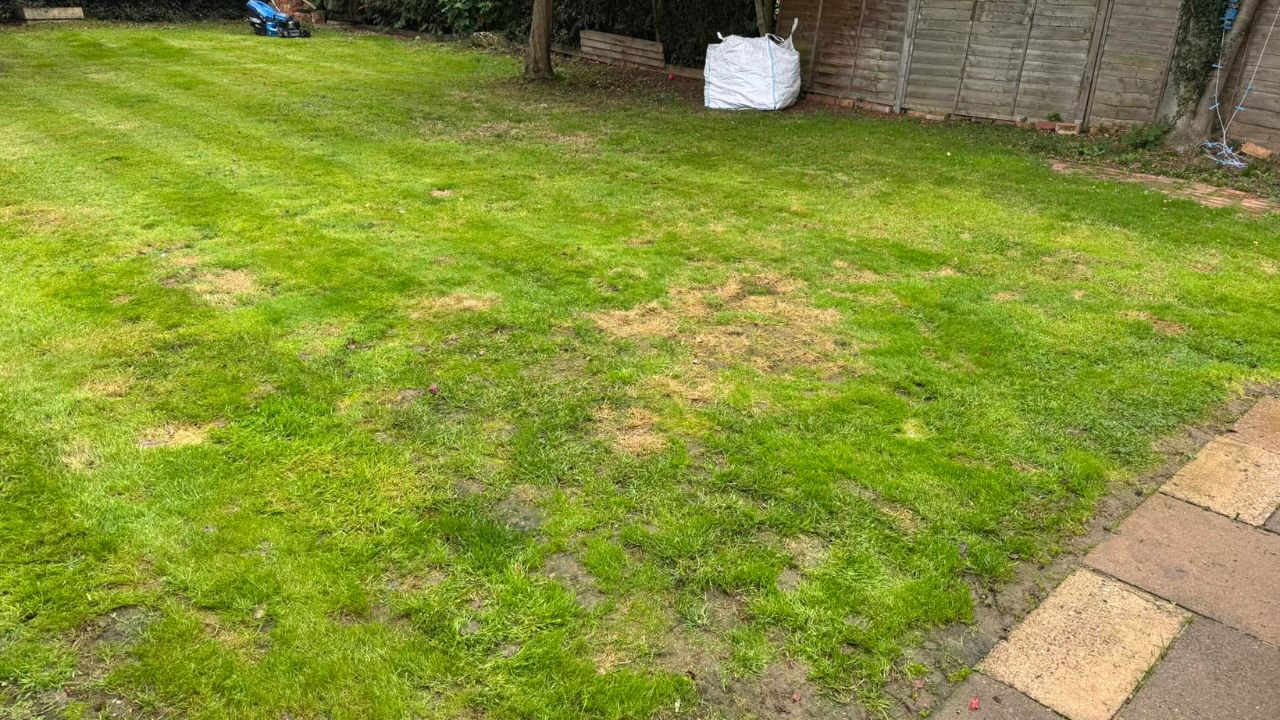
Every fall I walk properties where homeowners have spent real money on their lawn through the season. Fertilizer programs. Bags of seed. Aeration. Sometimes sod on sections that kept failing. Watering on a schedule. Everything that the advice says to do.
And the lawn is still struggling. Or it looked good in May and fell apart by August. Or the same sections that were repaired in spring are bare again.
When I trace back through what happened on those properties, the expensive mistake is almost never the wrong product or the wrong service. It’s something earlier. A decision made before any of the visible work started — or a decision that wasn’t made when it should have been — that determined whether everything spent after it would work or be wasted.
I’m Ryan Lingenfelter, owner of Cutting Edge Lawn & Landscaping in Garson, Ontario. We’ve been servicing properties across Greater Sudbury since 2020 — Garson, Val Caron, Hanmer, Lively, Chelmsford, Azilda, Capreol. Here’s the mistake I see cost Sudbury homeowners the most money over a full season — and why it’s so easy to make without realizing it.
The Mistake: Spending on Inputs Before Fixing the Soil

The most expensive lawn care mistake in Sudbury is applying inputs — seed, fertilizer, topdressing, water — to soil that can’t receive them properly.
It doesn’t look like a mistake in the moment. You’re doing the right things. You bought quality seed. You fertilized on schedule. You watered properly. You did what the bag said and what the YouTube video recommended. The problem is that all of those inputs were applied to compacted, unaeracted soil — and on Sudbury’s Canadian Shield clay, compacted soil rejects most of what you put on it.
Fertilizer applied to compacted clay sits near the surface. The nutrients don’t reach the root zone because the compaction prevents water from carrying them down. The grass gets a brief surface response — a flush of green that looks promising — and then fades when that surface layer dries out, because the roots never developed the depth to sustain growth through stress.
Seed applied to compacted clay germinates. It always germinates — that part works fine. But the seedling roots hit the compaction layer a few inches down and stop. The grass looks fine for a few weeks and then fails at the first heat or dry stretch because it has no root depth to draw moisture from.
Water applied to compacted clay runs off rather than soaking in. A well-intentioned watering schedule delivers water to the surface efficiently, most of which is lost to runoff or evaporates from the top half-inch of soil. The root zone below the compaction layer stays dry regardless of how much is applied above it.
The inputs aren’t wrong. The sequence is wrong. On Sudbury’s specific soil, inputs work in direct proportion to the condition of the soil they’re applied to. Applying them without first addressing compaction is the most reliable way to spend money on lawn care that doesn’t produce lasting results.
This is not a new observation — it’s just one that most generic lawn care advice doesn’t emphasize because it was written for somewhere with deeper, more forgiving soil. Sudbury is not that place. The soil conditions here make the sequence of what you do matter more than anywhere else in Ontario.
What This Actually Costs Over a Full Season
Let me put real numbers on this because I think it makes the point more clearly than the explanation alone.
A typical Sudbury homeowner spending on lawn care through a full season — without addressing soil compaction first — might spend:
- Fertilizer program: $80 to $150 for product, or $200 to $400 for a professional program
- Overseeding bare patches: $40 to $80 in seed material, or $150 to $300 professionally done
- Watering: Increased water bill through the season — $50 to $150 above baseline depending on property size and schedule
- Repeat seeding when spring seed fails: Another $40 to $80 in material, another $150 to $300 if done professionally
- Fall repair on sections that failed through summer: $200 to $600 depending on scope
Total for a single season of reactive, input-first lawn care: $600 to $1,500 or more, with a lawn that ends the season in similar or worse condition than it started.
Compare that to a soil-first approach. Core aeration on a standard Sudbury residential property runs $150 to $300. Done first, before any other inputs, it changes the performance of everything applied after it — seed establishes properly, fertilizer reaches the root zone, water penetrates instead of running off. The season’s total spending is lower, and the results are genuinely better.
I’ve watched this comparison play out on adjacent properties dozens of times. The homeowner who aerated first and spent less overall ends the season with a better lawn than the one who spent more on inputs without addressing the soil first. Every time.
The most expensive lawn care in Sudbury is reactive lawn care — spending season after season on the same inputs that didn’t work the previous year, because the soil condition driving the failures was never addressed. The cheapest long-term approach is fixing the soil once and watching everything else work better after.
Why This Mistake Is So Easy to Make in Sudbury Specifically

Most of the homeowners I work with who have fallen into this pattern are not careless or uninformed. They’ve done research. They’ve followed advice. The problem is that the advice they followed was written for somewhere else.
Generic Ontario lawn care content — what you find on the bags, on the big-box garden centre websites, in the YouTube videos from Toronto-based creators — assumes soil conditions that Greater Sudbury doesn’t have. It assumes adequate topsoil depth. It assumes soil that doesn’t compact as aggressively as Canadian Shield clay. It assumes a climate without Sudbury’s freeze-thaw extremes. When you follow that advice precisely on a Sudbury property, you get Sudbury results — which are different from what the advice predicts, because the advice wasn’t designed for your conditions.
The second reason this mistake is easy to make is that compaction is invisible. A compacted Sudbury lawn looks exactly like an uncompacted one from the driveway. You can’t tell by looking. The screwdriver test — pushing a standard screwdriver into the soil in several spots — is the only way to know what you’re dealing with before you spend anything. Three inches or less of penetration before hitting resistance means compaction is working against everything you apply. Six inches means the soil is in decent shape. Most Sudbury properties I assess without recent aeration history hit hard resistance at two to three inches.
If you haven’t done the screwdriver test on your property this season, do it before the next time you buy seed or fertilizer. It costs nothing and takes two minutes. What you find should determine what you spend money on first.
I covered why Sudbury’s specific geology and climate create these conditions more severely than anywhere else in Ontario here: Why Landscaping in Sudbury Is Different From Anywhere Else in Ontario.
The Second Most Expensive Mistake: Reactive Repair Instead of Prevention
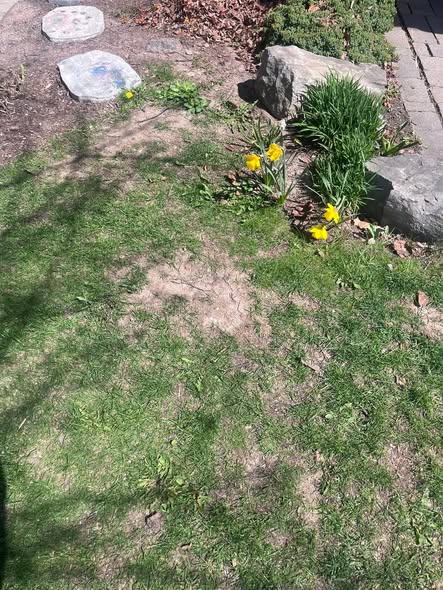
Close behind input-without-soil-prep in terms of total season cost is the pattern I call reactive repair — addressing lawn problems after they’ve become visible damage rather than preventing the conditions that cause them.
It plays out in a predictable sequence on Sudbury properties. Spring looks reasonable. Summer heat hits. Sections go brown or thin. By late July the damage is obvious. The homeowner calls me in August — or buys products at the garden centre in August — to fix sections that wouldn’t have failed if certain things had been done in May and June.
The reactive repair cost is always higher than the prevention cost would have been. A sod repair on a section that failed through summer drought costs $200 to $600 depending on size. The aeration that would have given that section adequate root depth to survive the same drought costs $150 to $300 for the whole lawn. The math isn’t close.
The properties I walk in the fall that look genuinely good almost always had two things happen in spring: proper aeration before any other work, and bare or thin sections addressed before summer heat rather than after. The properties I walk in the fall that have the most repair work ahead of them almost always skipped aeration in spring — or did it too late, in July, when the recovery window was closing — and then played catch-up through August on sections that had already failed.
For the full picture of what Sudbury lawns look like at the halfway point of the season and how to read what’s already happened versus what can still be addressed: What a Sudbury Lawn Looks Like at the Halfway Point of the Season — And What It’s Telling You.
And for the specific decision framework on when sod is the right repair call versus when overseeding makes more sense — and which choice produces better value over two to three years: Sod Replacement in Sudbury — When to Replace vs Repair.
What the Right Sequence Actually Looks Like — And What It Costs

I want to give you a concrete picture of what the right sequence costs and what it produces, because I think the comparison to the reactive pattern makes the case more clearly than the concept alone.
The soil-first, prevention-first approach:
- Core aeration in May — $150 to $300 for a standard residential lot. Opens the compaction layer, creates channels for water, air, and nutrients to reach the root zone. Changes the performance of everything applied after it.
- Targeted bare-zone repair in May/June — overseeding small areas ($40 to $80 in material) or sod on larger dead zones ($300 to $600 depending on size). Done before summer heat while the growing window is open. Sod or seed applied after aeration into open soil performs dramatically better than the same application without aeration.
- Fertilizer applied after aeration — $80 to $150 in product. Applied to aerated soil, nutrients reach the root zone instead of sitting on the surface. One application produces the results that previously required two or three.
- Correct mow height through the season — free. 3 to 3.5 inches from May through September. Reduces moisture evaporation, reduces heat stress, reduces the frequency and severity of summer browning that drives fall repair costs.
Total for a prevention-first season: $570 to $1,050 for a complete, properly sequenced lawn care program on a standard Sudbury property — with a lawn that ends the season in noticeably better condition than it started and requires less repair the following year.
Compare that to the reactive pattern above: $600 to $1,500 or more, with the same or worse lawn at the end of it.
The prevention-first approach costs the same or less. It produces better results. The difference is entirely in the sequence — doing the soil work before the inputs rather than after, and addressing problems before they become expensive failures rather than after.
For a real first-hand account of what this sequenced approach looks like across a full season on a difficult Sudbury property — and what the total cost of the right sequence was compared to the reactive approach that preceded it: Sudbury Yard Transformation: My First Year Fixing the Worst Lawn.
And for the full current picture of what this summer is putting Sudbury lawns through and what can still be done in the second half of the season to reduce fall repair costs: Sudbury Lawn Care News — Mid-2026 Updates Every Homeowner Should Know.
Ready to Stop Spending More Than You Need To?
Cutting Edge Lawn & Landscaping handles core aeration, sod installation, property cleanup, and weekly grass cutting across Greater Sudbury — Garson, Val Caron, Hanmer, Lively, Chelmsford, Azilda, and Capreol.
— Ryan Lingenfelter
Owner, Cutting Edge Lawn & Landscaping
Garson, Ontario
📞 705-507-6787
🌐 Free Quote — No Obligation
Licensed & Insured | Owner-Operated | BBB A+ Rated | Serving Greater Sudbury Since 2020
Frequently Asked Questions
What is the most common expensive lawn care mistake in Sudbury?
Applying seed, fertilizer, and water to compacted soil before addressing the compaction first. On Sudbury’s Canadian Shield clay, compaction prevents inputs from reaching the root zone — fertilizer sits on the surface, seed germinates but can’t establish deep roots, and water runs off rather than soaking in. The result is a full season of spending on products that don’t perform the way they should, followed by fall repair costs on sections that failed because the inputs couldn’t compensate for the soil condition. Core aeration done first — before seed, fertilizer, or any other treatment — changes the performance of everything applied after it. It’s the single highest-return thing I do on Sudbury properties, and it’s the step most commonly skipped by homeowners following generic lawn care advice written for somewhere with better soil.
How much does the wrong lawn care sequence cost over a full Sudbury season?
A homeowner following an input-first approach without addressing soil compaction typically spends $600 to $1,500 or more over a full season — fertilizer, seed, repeat seeding when the first application fails, water, and fall repair on sections that failed through summer. A prevention-first approach that starts with aeration and addresses bare zones before summer heat typically costs $570 to $1,050 for a complete program — and produces a lawn that ends the season in better condition and requires less repair the following year. The prevention-first approach costs the same or less and produces better results. The difference is entirely in the sequence.
Does fertilizer work on Sudbury lawn soil?
Yes — but significantly better after aeration than before it. On compacted Sudbury clay, fertilizer applied to the surface doesn’t reach the root zone efficiently. Water carries it to the top of the compaction layer and it sits there rather than moving down to where the roots can use it. The grass gets a brief surface response and then fades. On aerated soil, those same nutrients move through the channels aeration created and reach the root zone properly. One application of fertilizer on aerated Sudbury soil produces results that previously required two or three applications on compacted soil. Aeration first, then fertilizer — not the other way around. I covered the full detail of fertilization timing and cost in Sudbury here: Lawn Fertilization Cost in Sudbury 2026.
Why do Sudbury lawns cost more to maintain than lawns in southern Ontario?
Two reasons. First, Sudbury’s Canadian Shield soil compacts more aggressively and has less natural structure than the deeper-topsoil conditions in most of southern Ontario, which means maintenance inputs — seed, fertilizer, water — have to work harder for the same result and need to be preceded by soil preparation steps that aren’t necessary on better soil. Second, Sudbury’s shorter growing season and more extreme freeze-thaw cycles mean winter damage is more severe and the spring recovery window is narrower. You have less time to do the right things before summer stress arrives. Both factors compound: harder soil conditions plus a shorter correction window means mistakes are more expensive to fix. Understanding those conditions specifically is the starting point for spending less on lawn care here, not more: Sudbury Climate and Soil: Why Lawn Care Is Harder Here Than Anywhere in Ontario.
Is it too late in the season to stop the expensive mistake cycle?
It depends on where you are in the season. In June and early July, aeration followed by targeted bare-zone repair is still within the optimal window — there’s enough growing season ahead for seed or sod to establish properly and for the lawn to benefit from aeration through the rest of summer. From mid-July onward, the remaining window shifts toward preparing for fall: aeration in late July or early August, overseeding in mid-August, and setting the lawn up for the fall growing period that runs through September. Fall is one of the best times of year for grass to establish in Sudbury — lower temperatures, adequate moisture, and no summer heat stress. The money spent on the right sequence in August produces fall results that reduce spring repair costs significantly.
How do I know if compaction is the problem on my Sudbury lawn?
The screwdriver test: push a standard screwdriver into the soil in several spots across your lawn — including the sections that struggle most. If you’re hitting hard resistance at two to three inches, compaction is a primary driver of your lawn’s performance. On healthy uncompacted soil, the screwdriver goes to five or six inches without significant force. Most Sudbury properties I assess without recent aeration history hit resistance well below four inches. If your property shows that pattern, aeration before any other lawn input is the highest-return decision you can make this season. Everything applied after aeration — seed, fertilizer, water — performs significantly better than the same inputs applied to the compacted soil first.
Ryan Lingenfelter is the owner of Cutting Edge Lawn & Landscaping in Garson, Ontario. Since 2020, his crew has provided full lawn care and landscaping services across Greater Sudbury — Garson, Val Caron, Hanmer, Lively, Chelmsford, Azilda, and Capreol. Licensed, insured, BBB A+ rated.
📞 Phone: 705-507-6787
📍 Service Area: Greater Sudbury, Ontario
🔗 Free Quote: cuttingedgelawn.ca/quote
Related Services
- Core Aeration — Greater Sudbury
- Sod Installation — Greater Sudbury
- Spring & Fall Property Cleanup
- Weekly Grass Cutting — Greater Sudbury
- Mulch & Decorative Stone
Continue Reading
- Sudbury Climate and Soil: Why Lawn Care Is Harder Here Than Anywhere in Ontario
- Why Landscaping in Sudbury Is Different From Anywhere Else in Ontario
- What a Sudbury Lawn Looks Like at the Halfway Point of the Season
- Sod Replacement in Sudbury — When to Replace vs Repair
- Lawn Fertilization Cost in Sudbury 2026
