

Hey, I’m Ryan Lingenfelter — owner of Cutting Edge Lawn & Landscaping in Garson, Ontario.
Every once in a while a Sudbury property comes across my quote list that just doesn’t add up. Everything about the lawn looks normal from the street. The soil looks fine when you scratch at it. The neighbour’s yard next door is healthy. But something about the grass isn’t behaving right and no obvious explanation fits.
There was a property in Lively last summer that had me completely stumped for three visits. First visit I gave what I thought was a solid diagnosis. Second visit the problem had changed shape and I had to admit I was wrong. Third visit I finally figured out what was actually going on — and it turned out to be something I hadn’t seen on any other Sudbury property before or since.
Here’s the whole story, because I think there’s a real lesson in it for any Lively homeowner — and honestly for anyone in Greater Sudbury dealing with a lawn that isn’t responding the way it should.
The First Visit — What I Thought I Was Looking At

The call came in mid-June. Older Lively home — the kind of 1960s bungalow you see all through that neighbourhood, brick and vinyl, single garage, mature trees around the perimeter. The homeowner was a retired guy who’d owned the place since 1994. He told me the lawn had “gotten weird” over the last two years and he couldn’t figure out why. He’d tried fertilizer, he’d tried aeration, he’d tried a service that came out and did some spraying. Nothing changed.
I pulled up, walked the property, and thought I had it figured out inside of ten minutes.
The lawn had irregular patches where the grass was thin, yellowing, and struggling. In between those patches, the grass looked genuinely healthy. The pattern didn’t match any of the usual suspects — no clear line where a chemical had been spilled, no shade pattern from a tree, no traffic pattern from foot use. Just random-looking dead zones scattered across the property.
My first read was compacted soil. The neighbourhood is old enough that soil compaction from decades of foot traffic and vehicle use would fit. Compacted soil produces exactly that kind of scattered pattern — some spots root freely, others don’t, and the ones that don’t die back gradually.
I gave the homeowner my diagnosis. Aeration wasn’t going to fix it because the aeration he’d done was too shallow. What he actually needed was deeper core aeration, followed by topdressing with quality compost, followed by overseeding in fall. I quoted the work and he signed off on it.
I felt confident about the diagnosis. I’ve seen the same pattern on maybe fifty Sudbury properties over the years. This is the kind of thing I explained in more detail in my piece on why I sit in my truck for a few minutes before walking a Sudbury property — you build up pattern recognition over enough properties that a specific look tends to match a specific cause. This looked like compaction. So I called it compaction.
The Second Visit — Something Was Off

Three weeks later we came back to do the aeration work. It was early July and there’d been a decent stretch of dry weather leading up to the appointment.
I walked the property before we started, just to refresh my memory on where the worst patches were. And that’s when I noticed something that didn’t sit right with me.
The pattern of struggling grass had shifted. Some of the patches I’d flagged in June looked better. But new areas that had looked healthy in June were now showing the same yellowing struggle. If it had been compaction — which is a structural, unchanging condition — the same patches should have been struggling both times. Compacted soil doesn’t move around the yard week to week.
I did the aeration anyway because I’d committed to it and the property still needed the work regardless of the underlying issue. But I told the homeowner I wasn’t confident in the diagnosis anymore. I told him I wanted to come back after the aeration had a few weeks to settle and take another look. Compaction was clearly part of the story. But there was something else going on that I hadn’t identified yet.
He appreciated the honesty. Most homeowners do. I’ve written before about what Sudbury homeowners actually want from a lawn service based on hundreds of these conversations, and honesty about what you don’t know ranks higher than a lot of contractors realize. Nobody expects the guy running the truck to be right on the first try every time. What they don’t want is for him to bluff.
I drove home that afternoon irritated at myself. I don’t like getting a property wrong. I especially don’t like sending a customer an invoice for work I did while genuinely unsure whether the work addressed the real problem.
The Third Visit — When I Finally Saw It
I came back in early August. The aeration had had six weeks to work, we’d had a mix of rain and dry stretches, and I wanted to see how the property was actually responding.
The pattern had shifted again.
Now there was a clear correlation I hadn’t caught before — the struggling patches got worse during dry stretches and improved after rain. The healthy patches stayed consistent regardless. That was a critical clue. Whatever was going on had to do with how water was moving through the soil, not just how the soil was structured.
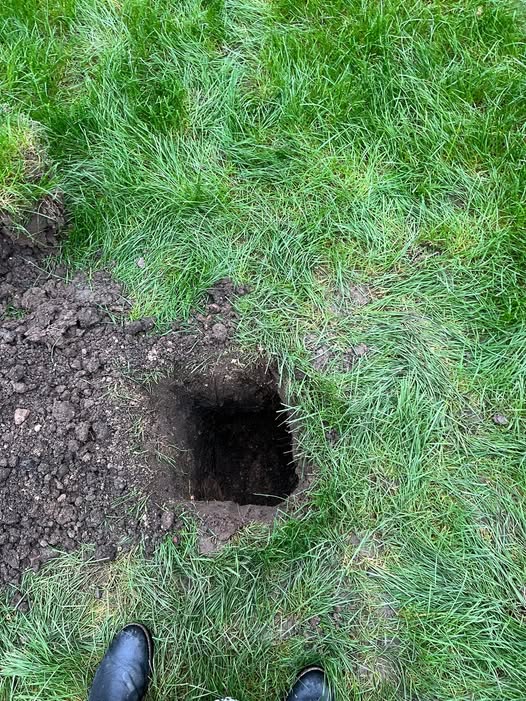
I got permission from the homeowner to dig a few small test holes in the struggling areas. Just a shovel-depth exploration to see what was actually underneath the surface.
What I found in the third hole is what solved the whole mystery.
About six inches below the topsoil, buried across a wide section of the front yard, was a layer of old plastic sheeting. Black polyethylene, the kind that used to be sold at hardware stores in the 1970s and 80s for weed control under landscaping. Whoever had lived in the house before the current owner — probably in the 80s based on the age of the plastic — had laid this stuff down across sections of the property, presumably intending to build garden beds or pathways on top. Then somebody had covered it with topsoil and it had been forgotten for thirty-plus years.
The plastic wasn’t a solid sheet across the whole yard. It was patchwork — pieces laid out in strips and irregular shapes based on where the original owner had been working. That’s why the pattern of struggling grass shifted with weather. Where the plastic was, the roots couldn’t grow deep and the shallow root zone dried out quickly during dry weather. Where the plastic wasn’t, roots could develop normally and the grass stayed healthy regardless of conditions.
The “weird” pattern that had shifted between visits wasn’t shifting at all. The plastic layer was fixed underground. What was changing was which patches were dried out enough for the shallow-root problem to become visible above ground. Wet weather masked it. Dry weather revealed it.
I dug three more test holes in different areas. Found plastic in all three. This wasn’t a small project. This was a full-property issue.
What We Actually Had to Do About It
Once we knew what the problem was, the fix was straightforward but significant. There was no way to save the lawn without dealing with the buried plastic. Leaving it in place meant the shallow-root problem was permanent.
What we ended up doing over the following month was excavating the affected sections in phases, removing the plastic sheeting, amending the exposed soil with quality topsoil and compost, and reseeding. It wasn’t a small job. The homeowner had to be patient — the front yard looked rough for six weeks while we worked through it in sections.
By the following spring the lawn was completely different. The patchy pattern was gone. The grass responded normally to weather changes. Aeration and fertilization actually worked because the roots could finally go where they needed to go.
The homeowner sent me a text with a photo in June of this year. The lawn is now the best-looking one on that stretch of the street.
What Every Lively Homeowner Should Take From This
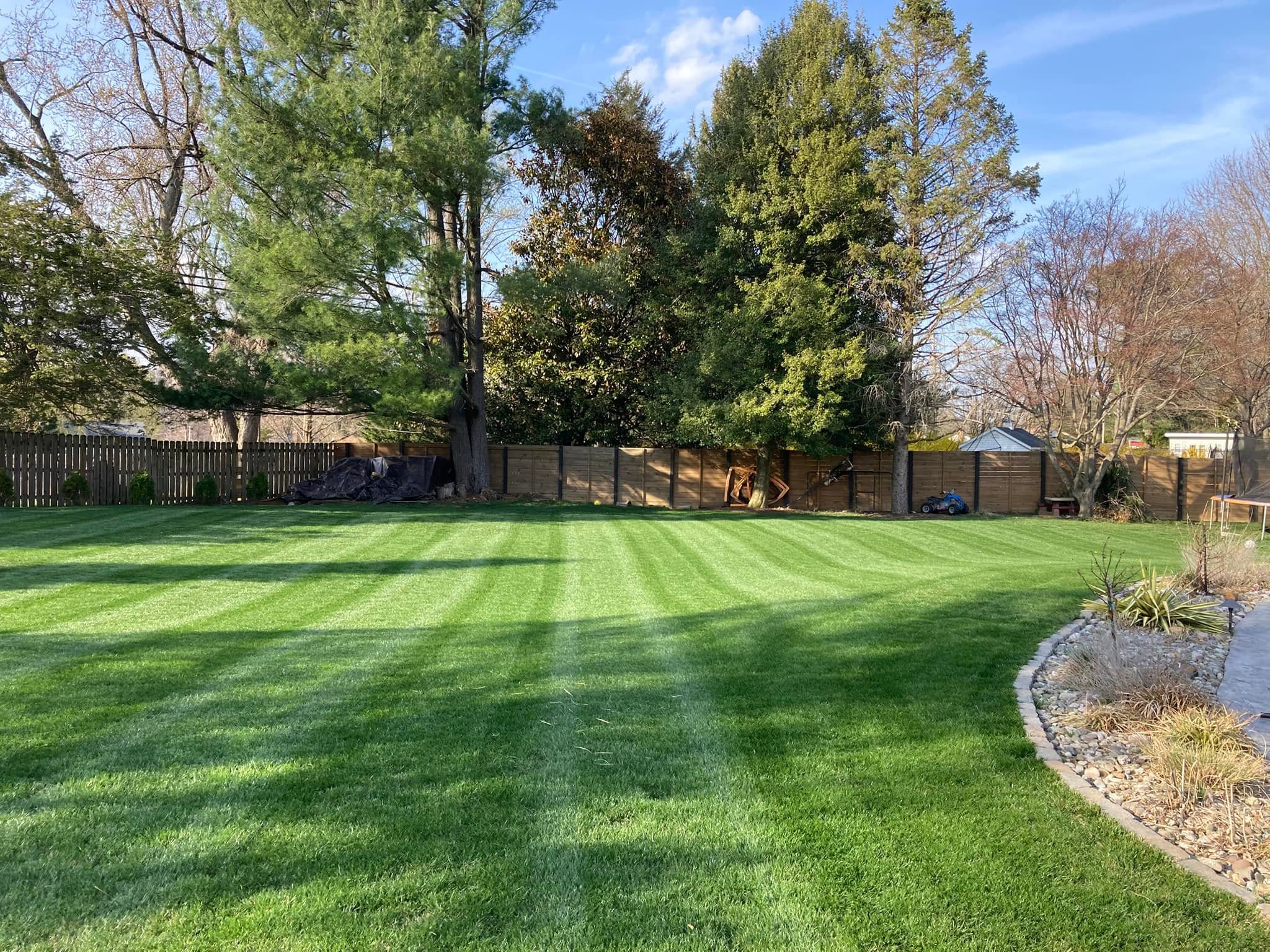
Lively is one of those Sudbury neighbourhoods where a lot of the housing stock is older than the current owners. Homes built in the 60s and 70s. Sometimes owned by two or three different families across those decades. Every one of those previous owners had ideas about what they wanted to do with the yard. Some of those ideas involved landscape fabric, garden bed liners, buried edging, decorative rock, plastic sheeting, and other materials that were considered normal at the time.
A lot of that material is still down there. Most of it doesn’t cause problems, but some of it does. And when it does, the problems it causes look nothing like the problems modern lawn care is designed to address. You can aerate a compromised lawn all you want, and if there’s a plastic layer six inches down, you’re going to keep struggling.
Here’s what I’d tell any Lively homeowner — and by extension, any Sudbury homeowner with an older property.
If your lawn is struggling in patterns that don’t match the usual causes, dig. Not the whole yard. Just a few test holes in the affected areas, maybe eight to ten inches deep. See what’s actually underneath. You might find nothing. You might find something surprising. Either way, you’ll know more than you did.
Ask the previous owner — or the neighbours — what used to be on the property. An older neighbour who remembers seeing landscaping work done in 1985 might solve the whole puzzle in one conversation. This is the kind of information that never shows up in any property record.
Don’t accept a diagnosis that doesn’t fit the whole pattern. If a contractor tells you it’s compaction but the pattern shifts with weather, question the diagnosis. Compaction doesn’t shift with weather. Chemical burn doesn’t shift with weather. Whatever changes with weather has to do with water movement through soil, and that means something structural in the root zone.
Older properties deserve older diagnostic thinking. A 1960s Lively home has 60 years of history in its yard. Assume that history includes at least one previous owner who tried something that seemed like a good idea at the time and might still be affecting the lawn today.
Why I Keep Telling This Story
I bring this story up in conversations with new Sudbury customers pretty often. Not to scare anyone into thinking their yard has buried plastic in it — most yards don’t. But to make the point that Sudbury lawns don’t always behave the way lawn care textbooks say they should, and that there’s real value in a contractor who’s willing to admit when a diagnosis isn’t fitting and go back for another look.
I’ve written before about the one mowing mistake that kills Sudbury lawns by July and about the standard problems that account for most calls we get. This story is the opposite of that — it’s the outlier that reminded me why pattern recognition can only take you so far, and why real assessment sometimes means being wrong once or twice before you get it right.
The Lively homeowner didn’t want a contractor who was always right. He wanted a contractor who cared enough to keep looking. That’s a different thing.
If You’ve Got a Sudbury Lawn That Isn’t Responding the Way It Should
Cutting Edge Lawn & Landscaping handles core aeration, sod installation, property cleanup, weekly mowing, hedge trimming, and mulch and decorative stone across Greater Sudbury — Garson, Val Caron, Hanmer, Lively, Chelmsford, Azilda, and Capreol.
If your lawn is doing something you can’t explain — patterns that don’t match, patches that come and go, areas that don’t respond to what should fix them — call 705-507-6787 or send your details through the Get A Free Quote page. I’ll come out, walk the property, and give you my honest read. If it’s a common problem I can name, I’ll name it. If it’s something odd that needs more looking, I’ll say that too.
Every property has its own story. Sometimes the story is written on the surface. Sometimes it’s buried six inches down waiting to be found. Either way, the only way to figure it out is to actually look.
If This Story Rings True to You
If your Sudbury lawn has patterns you can’t explain: Start with my piece on the one mowing mistake that kills Sudbury lawns by July — many “mystery patterns” turn out to be mowing height issues, not soil problems.
If you’re new to owning an older Sudbury property: My first-year story of buying a Sudbury house with the worst yard on the block walks through what a beginner homeowner actually faces when the lawn was neglected before they arrived.
If you’re vetting contractors and want to hire the right one: The 7 questions to ask before hiring a Sudbury lawn care company covers what actually separates good contractors from bad ones.
If you want to understand the philosophy behind how we assess properties: Why I sit in my truck for a few minutes before walking a Sudbury property explains the pattern-recognition process I mentioned in this article.
If you’re curious what a Sudbury customer actually said about our approach: A Sudbury customer left me a review I wasn’t expecting is a story that came out of exactly this kind of situation.
Frequently Asked Questions
What causes patchy grass in older Sudbury neighbourhoods like Lively?
Older Sudbury properties often have layers of history in the yard that affect grass growth today. Buried landscape fabric, old plastic sheeting, forgotten garden bed liners, historical construction debris, and soil amendments from previous owners can all create irregular patterns of struggling grass that don’t match standard causes like compaction, disease, or shade. When patterns don’t fit the usual explanations, digging test holes in the affected areas often reveals the underlying issue.
How can you tell if lawn problems are structural versus chemical or biological?
Chemical and biological issues (like fertilizer burn or fungal disease) tend to spread or move over time. Structural issues (like compaction, buried debris, or drainage problems) stay in the same location. If a problem pattern is consistent regardless of season and treatment, it’s likely structural. If it shifts with weather — worse in dry conditions, better after rain — that’s often a water movement issue caused by something in the root zone.
Should I dig test holes in my own lawn before calling a contractor?
You can, and sometimes it helps. Digging a few small test holes eight to ten inches deep in struggling areas can reveal buried materials, hardpan layers, or clay barriers that aren’t visible from the surface. Bring photos or notes from what you find to your contractor conversation. Most contractors will appreciate the diagnostic help. Don’t dig indiscriminately — pick specific problem spots and keep the holes small.
Is Lively a difficult area for lawn care in Sudbury?
Lively isn’t particularly difficult for lawn care compared to other Sudbury neighbourhoods. It has typical Northern Ontario soil conditions and standard residential lot sizes. What makes it interesting is the age of the housing stock — many Lively properties are 50+ years old with layered landscaping history from multiple previous owners. That history sometimes creates unusual problems that need diagnostic patience rather than standard treatments.
What should I do if a contractor gave me a diagnosis that isn’t working?
Ask them to come back and reassess. Most reputable contractors will do this at no charge if their initial diagnosis didn’t resolve the issue. If they’re unwilling to reassess, or if their new diagnosis doesn’t make sense given the actual pattern of the problem, get a second opinion from a different contractor. Lawn problems are diagnosable when someone takes the time. The wrong diagnosis stuck in place for years is often what turns a small problem into a large one.
Ryan Lingenfelter is the owner of Cutting Edge Lawn & Landscaping in Garson, Ontario. Since 2020, his crew has provided full lawn care and landscaping services across Greater Sudbury — Garson, Val Caron, Hanmer, Lively, Chelmsford, Azilda, and Capreol. Licensed, insured, BBB A+ rated, and ThreeBest Rated for lawn care services in Sudbury.
📞 Phone: 705-507-6787
📍 Service Area: Greater Sudbury, Ontario
🔗 Free Quote: cuttingedgelawn.ca/quote
