
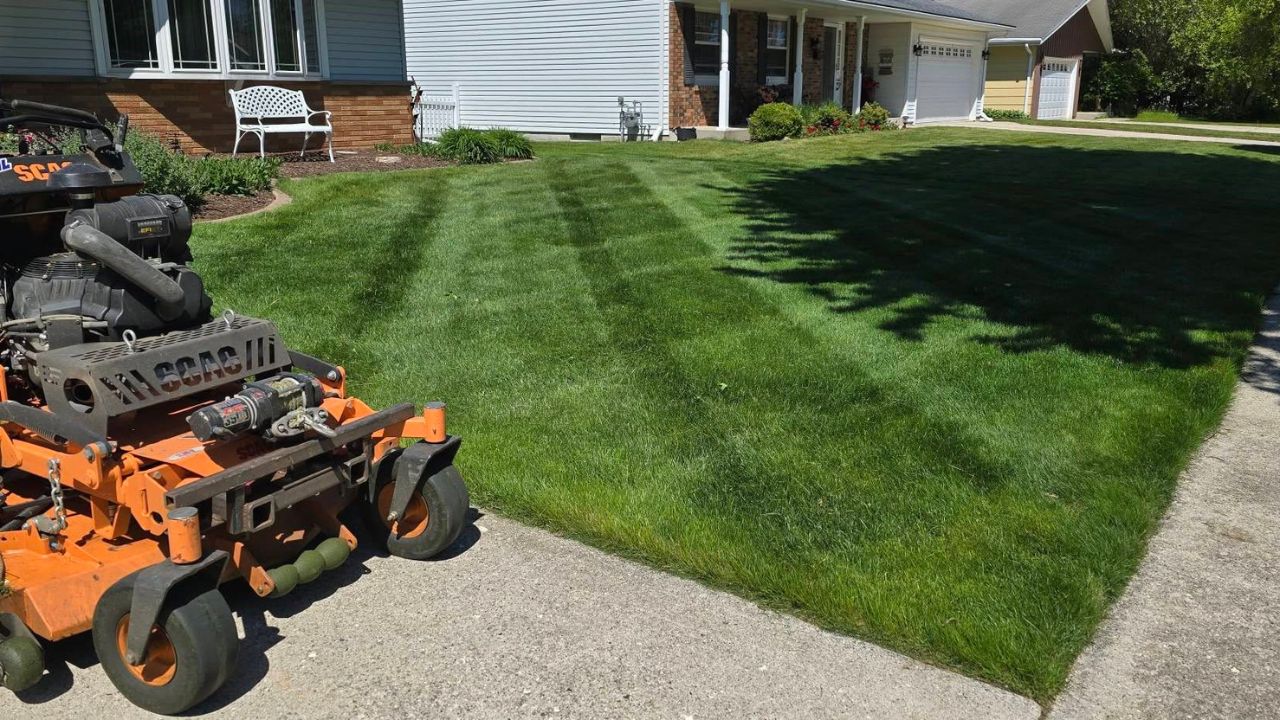
Every time I walk a property for an assessment, I do the same five checks in roughly the same order. I’ve done them so many times that they’re automatic — I’m not running through a mental checklist consciously anymore, I’m just moving through the property in a specific way that gives me a clear picture of what the lawn is actually doing versus what it looks like from the driveway.
The thing is, none of these checks require professional training or special equipment. They require knowing what to look for and how to interpret what you find. Most homeowners who learn these five things start seeing their lawn differently — not as a surface that looks good or bad, but as a system with specific signals that tell you what’s going on below what’s visible.
Here’s the full version of what I do and why, written for anyone who wants to assess their own Sudbury property the way I’d assess it for them.
Why Reading a Lawn Is a Skill — and Why It’s Learnable
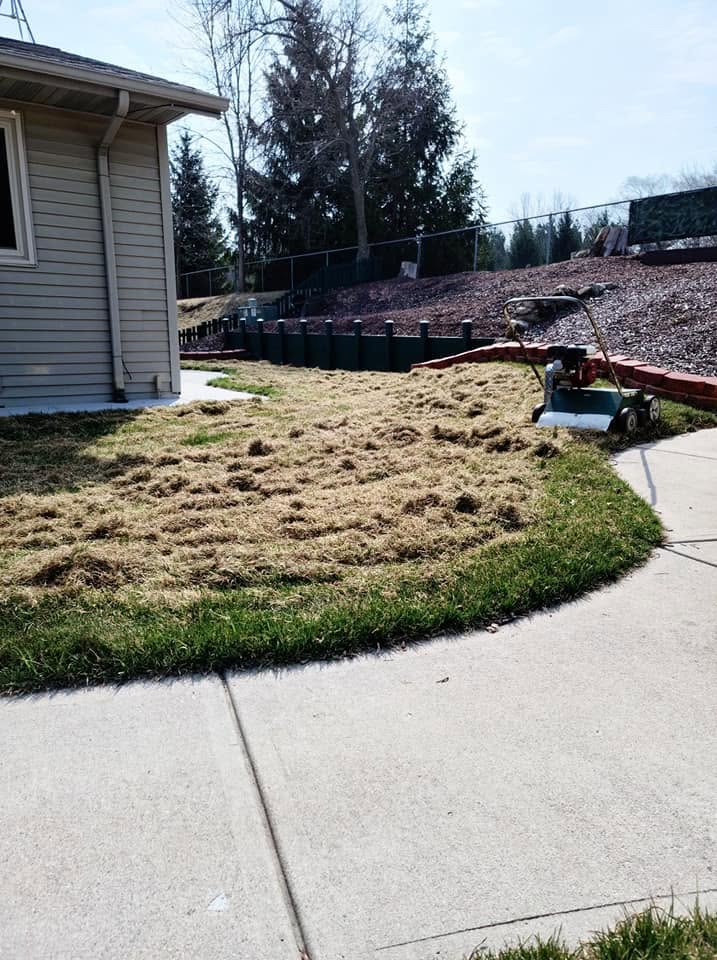
Most people look at a lawn and see green or not-green. Thick or thin. Weedy or clean. These are real observations, but they’re endpoint observations — they tell you the result of what’s been happening to the lawn without telling you what’s causing it or what’s going to happen next.
Reading a lawn the way a pro does means looking for process signals rather than endpoint signals. Not “is the lawn thin” but “why is it thin and where is the thinning coming from.” Not “is it browning” but “what is the pattern of the browning and what does that pattern indicate about root depth, soil conditions, or something below the surface.”
Sudbury specifically rewards this kind of observation more than most places, because the conditions up here — thin Shield soil, aggressive freeze-thaw cycles, specific seasonal windows for treatment — mean that the same symptom can have different causes than it would in southern Ontario. Browning in July on a Toronto lawn is probably drought stress. Browning in July in a specific section of a Sudbury lawn might be drought stress, or it might be grub damage, or it might be thin soil over rock in that section specifically, or it might be a compaction pattern that hasn’t been addressed since the property was developed. Same symptom, different causes, different responses.
Learning to read which cause applies in which situation is the skill. Here are the five checks that get you there.
Check 1 and 2 — What You Feel and What the Surface Tells You
Check 1: The Walk-and-Feel
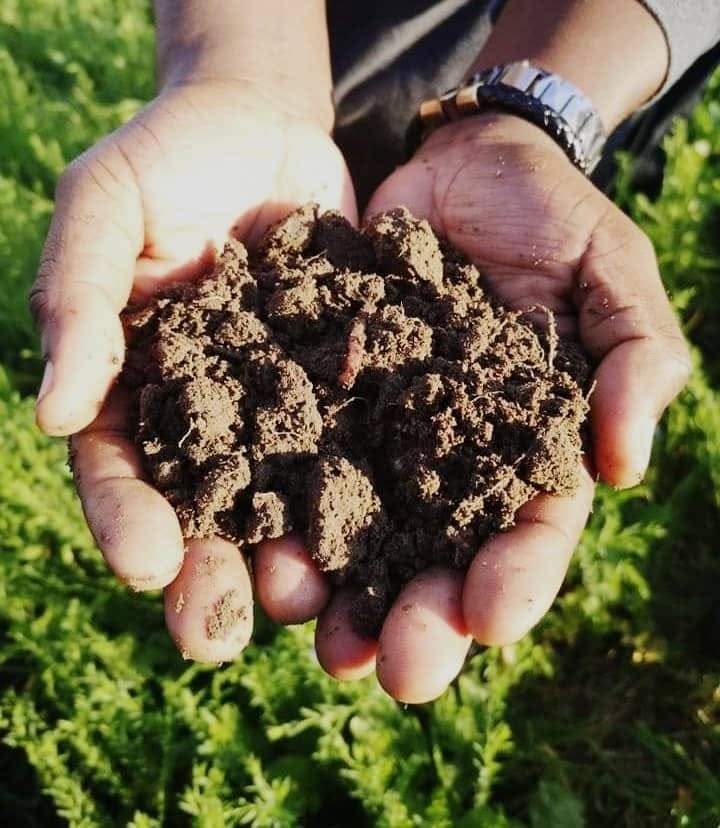
Before I look at anything, I walk the property. Not to get a visual overview — to feel it underfoot.
A healthy, well-aerated lawn feels consistent underfoot — a slight springiness, firm without being hard, even across the property. Deviations from that consistency tell me things immediately.
Hard and compacted: The surface feels like packed dirt rather than turf. No give at all. This is the compaction signal, and on Sudbury’s clay-based or Shield soils it’s more common and more severe than on most Ontario properties. Compacted sections are candidates for aeration and will underperform on every other metric until that compaction is addressed.
Soft and spongy in isolated spots: Distinct from the general springiness of healthy turf. A specific area — maybe 3 to 6 feet across — that feels notably softer and less stable than the surrounding lawn. This is the grub damage signal almost every time. I wrote about this pattern in the underground grub damage piece — the root system has been eaten through and the turf has lost its anchoring. The size and location of the soft area tells me how severe and how localized the infestation is.
Uneven and bumpy: The surface isn’t uniformly flat — there are ridges, humps, low spots that weren’t intentionally graded. In spring, this is usually frost heaving from the winter. Mid-season, it can be tree root development near the surface, thatch buildup in specific sections creating height variation, or soil settling in ways that weren’t apparent at the start of the season.
Wet in specific spots after dry weather: If an area feels wetter than the surrounding lawn despite there being no recent rain and no obvious reason for it to hold more moisture, that’s usually a subsurface drainage issue — either a hardpan layer directing subsurface water to a collection point, or a high water table area near a lake or drainage feature. I described this specifically in the context of the Walden neighbourhood pattern.
Check 2: The Footprint Test
I described this in the July warning signs article as the quickest check for moisture stress, and I use it on every summer assessment.
Walk across the lawn. Turn around. Look at where your feet were.
If the grass springs back immediately — footprints disappear within a few seconds — the lawn has adequate moisture and cell turgidity. The grass is fine.
If footprints persist for 30 seconds to a minute — the grass blades are lying flat and recovering slowly — the lawn is under moisture stress. The cells don’t have enough water pressure to spring back. This is an early warning sign, not a crisis, but it means the current watering schedule isn’t keeping up with demand.
If footprints persist indefinitely — the grass stays flattened and doesn’t recover — the lawn is in active distress. Immediate intervention with deep watering is needed.
I do this check at different points around the property because moisture stress is rarely uniform. The south-facing slope may show persistent footprints while the shaded north section is fine. Knowing which sections are stressed and which aren’t tells me where to focus the watering and where the root depth is likely insufficient.
Check 3 and 4 — What You See When You Look Closely
Check 3: The Colour and Pattern Read
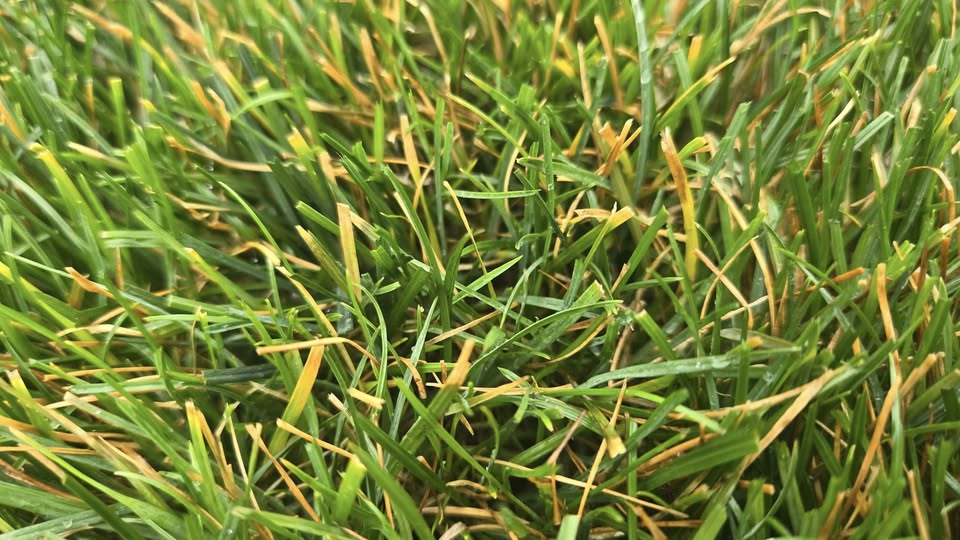
Lawn colour looks simple from a distance — green, yellow, brown. Up close and in sections, colour tells a much more nuanced story.
Uniform mid-green: The baseline healthy colour. Grass is growing, has adequate nutrients, and roots are functioning. Nothing to investigate here.
Bluish or grey-green, uniform across the lawn: Pre-stress colour shift. The grass is closing its stomata in response to heat or moisture stress. Not yet in crisis, but indicating the lawn is approaching the limit of what current conditions can support. This usually appears in the afternoon on hot days and recovers by morning — if it’s present in the morning, the stress level is higher.
Yellow-green in specific sections, not uniform: Several possible causes, and the location of the affected sections helps distinguish them. Yellow in shaded areas often means nutrient competition from tree roots. Yellow in sections that dry out fastest points to drought stress combined with possible shallow soil. Yellow in sections with consistent wildlife digging suggests grub damage. Yellow along drainage paths suggests either waterlogging or nutrient runoff washing through.
Bleached or pale circular patches: Snow mould if you’re reading this in spring. On spring assessments, these are the most common visual finding on Sudbury lawns — I described how to distinguish between the types that recover on their own and the types that need intervention in the winter damage reading article.
Dark green areas that look lush compared to surroundings: Often indicates where a pet is regularly using the lawn, or where a higher nitrogen concentration exists — near a fertilizer spill, where grass clippings have been repeatedly deposited, or near organic matter breaking down. Not a problem in itself, but a signal of non-uniform conditions.
Pattern matters as much as colour. Uniform discolouration across the lawn usually points to a uniform cause — soil pH, uniform compaction, general nutrient deficiency. Section-specific discolouration that follows a specific geographic pattern — the low spots, the south-facing sections, the areas under certain trees — points to conditions specific to those locations.
Check 4: The Crown and Blade Inspection
For any section that’s dead-looking or showing concerning colour, I crouch down and look at the individual grass plants — specifically the crown, which is the growing point at the base of the grass plant right at soil level.
This is the tug test I’ve described in multiple articles. Grab a small clump of the affected grass and pull with moderate, steady pressure.
Resistance with a firm, slightly greenish or white crown: Dormant or stressed but alive. This grass is not dead. It will recover with the right conditions — water, warming soil, removal of whatever was stressing it. Don’t reseed or sod this section yet.
Pulls out easily with a dry, brown crown: Actually dead. The crown is the last thing to die in a grass plant — if the crown is dry and brown all the way through, the plant isn’t coming back. This section needs new grass, either from seed or sod.
Pulls out in a mat with roots detached from soil: Grub damage. Not drought, not disease — the roots have been eaten. The soil underneath will have grubs visible if you dig a few inches in the affected area. Treat the grubs before addressing the surface.
This three-way distinction — dormant, dead, or grub-damaged — is the most important diagnostic you can make before deciding what to do with a struggling section. Getting it wrong is expensive: overseeding dormant grass is wasted money, sodding grub-damaged areas fails in the same way the original lawn did.
Check 5 — The Underground Question Most Homeowners Never Ask
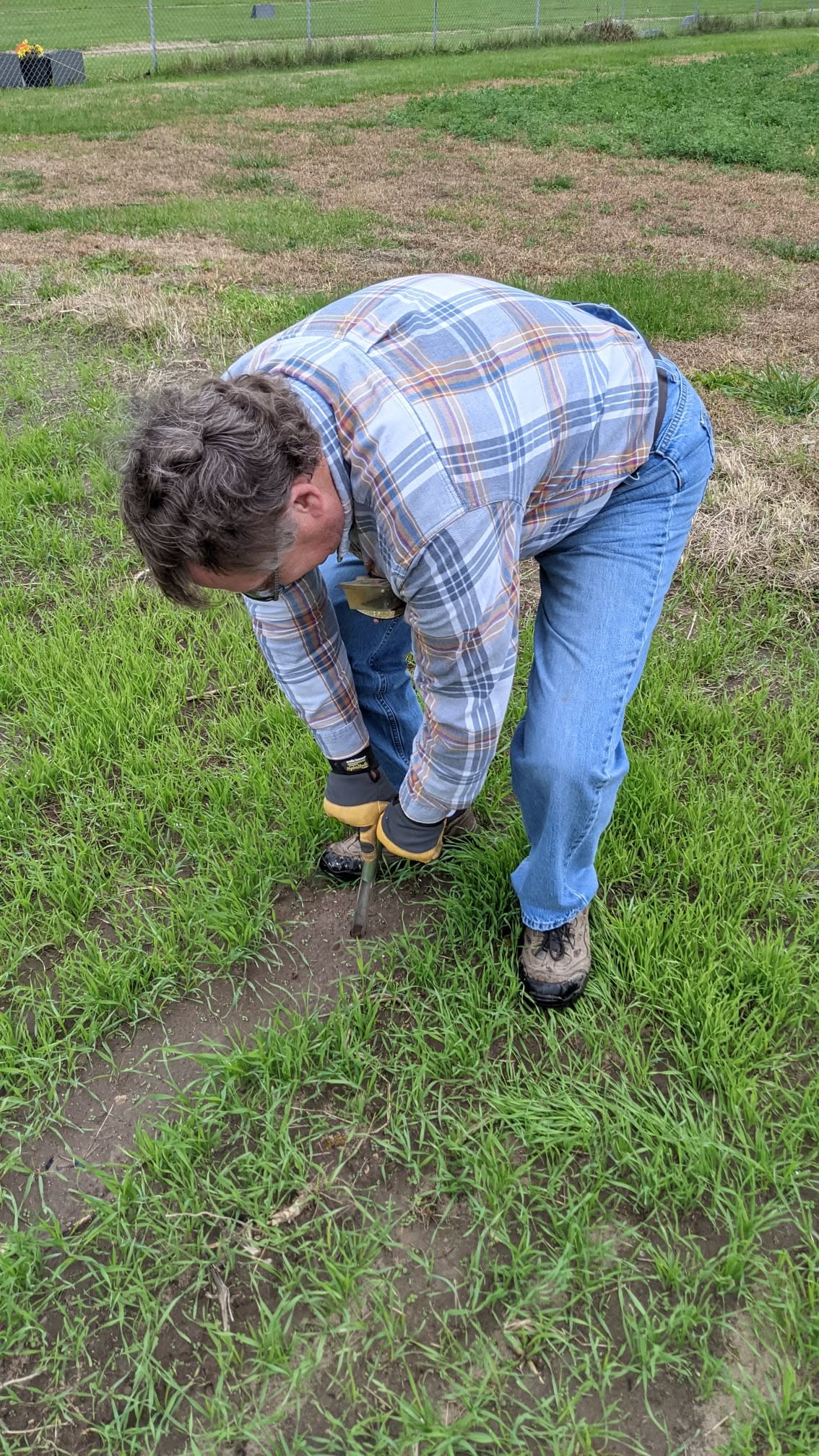
This is the check that separates a surface read from a real assessment. Everything above is observable at or near the surface. This one goes underground — and on Sudbury properties, what’s underground often explains everything that’s confusing at the surface.
The Soil Probe
A soil probe is a narrow steel cylinder you push into the ground and pull out, taking a core of soil as it comes. I carry one to every assessment. It’s the single most useful tool I own for diagnosing Sudbury lawn problems, because Sudbury’s conditions — thin Shield soil, variable depth to bedrock, history of construction on rocky terrain — make underground variation more consequential here than in most of Ontario.
What the probe tells me:
Soil depth: How far down before hitting rock, dense till, or construction debris. A probe that goes 8 inches into good soil tells a completely different story than one that stops at 3 inches. That difference explains why two sections of the same lawn that look similar from above respond completely differently to drought, aeration, or seeding.
Soil composition: The plug that comes out of the probe shows what the soil is actually made of at different depths. Dark, organic-rich topsoil in the first few inches. Lighter, less structured subsoil below. Compacted clay layers that feel denser than the material above and below them. Sandy sections with low organic content. Each of these profiles has different implications for what treatments will work.
Moisture at depth: The plug fresh out of the probe tells you how moist the soil is below the surface. Moist throughout means the water is reaching root depth. Dry below 2 inches despite recent watering means the water is staying near the surface and not penetrating — either because of compaction, or because the watering sessions are too short.
On properties where I’m seeing persistent problems in specific sections — thin grass that doesn’t respond to treatment, soft spots that return, early browning in the same locations every summer — the probe almost always reveals an underground explanation that surface observation couldn’t have confirmed. I wrote a specific story about this in the eight-year underground problem article — buried construction debris that no surface check would ever have found.
You can buy a basic soil probe for under $30 at a farm supply or garden centre. It’s the most underused piece of diagnostic equipment available to homeowners, and on a Sudbury property specifically, it’s worth owning.
Putting It Together — What These Five Checks Tell You
When I do all five of these checks on a property, I come away with a specific picture: which sections are healthy, which are struggling, what’s causing the struggling sections to underperform, and which of the struggling sections are candidates for immediate intervention versus ones that need a different kind of treatment.
That picture determines everything else — what treatments make sense, in what order, in what seasonal windows. Without it, the tendency is to apply generic treatments to specific problems that generic treatments won’t fix. With it, the work is targeted and the results hold because they’re matched to the actual cause.
Any homeowner who goes through these five checks on their Sudbury property will understand it better than most people understand their own lawns. And that understanding is the foundation for everything else — whether you’re doing the work yourself, managing a relationship with a lawn care company, or deciding whether a problem you’re seeing warrants calling someone.
If you want to walk your property together and have me go through these checks while you watch — explaining what I’m seeing and why as I go — that’s an option. It’s one of the most useful hours I can spend with a new Sudbury customer, and it doesn’t cost anything extra for the walk itself.
For everything we do across the full service range, the complete service breakdown covers it.
Call or text: 705-507-6787
Or fill out the free quote form on the site.
We cover Garson, Val Caron, Hanmer, Lively, Chelmsford, Azilda, Capreol, and surrounding areas.
— Ryan Lingenfelter
Cutting Edge Lawn & Landscaping
Garson, Ontario
705-507-6787
