
By Ryan Lingenfelter — Owner, Cutting Edge Lawn & Landscaping · Garson, Ontario · Serving Greater Sudbury since 2020
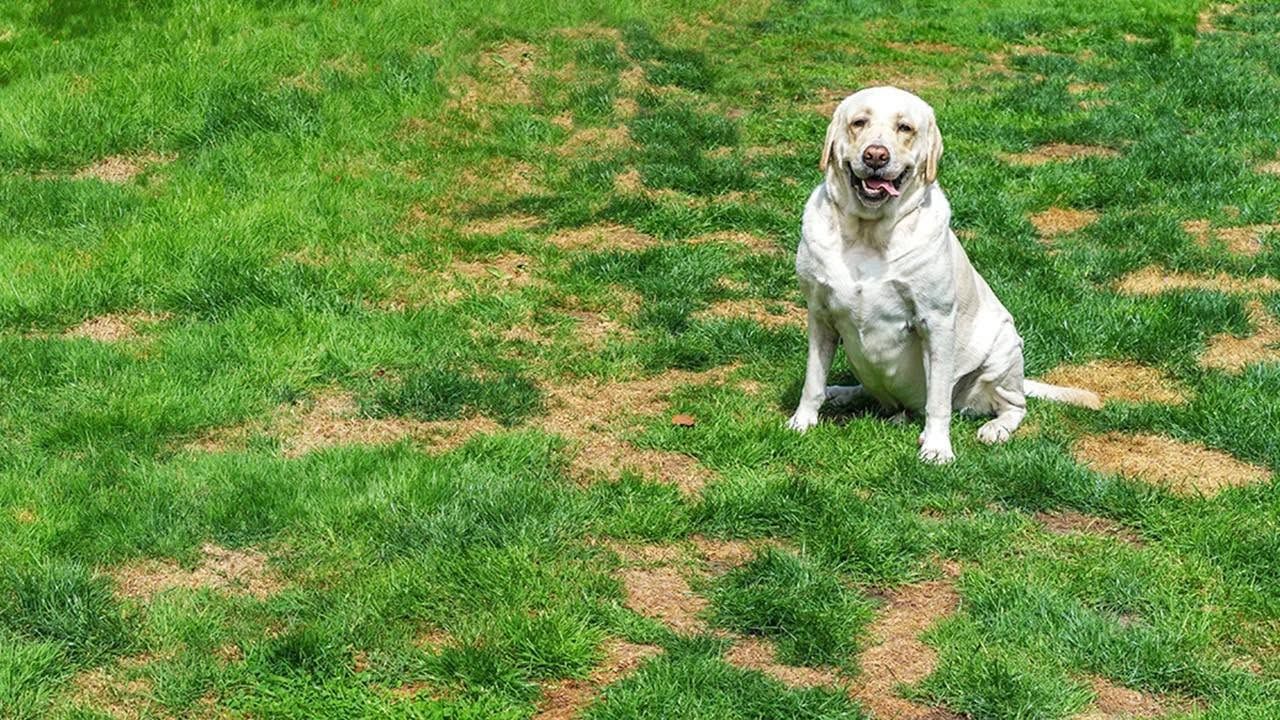
About a third of the residential properties I service in Greater Sudbury have dogs. And on almost every single one of them, the same three spots come up — the same three areas that the homeowner has already tried to fix, has fixed partially and watched fail again, or has quietly given up on.
I’ve had the same conversation dozens of times. Homeowner shows me a section of lawn that looks rough. I ask if they have a dog. They say yes. I say: “Is this the run path, the fence corner, or the bathroom section?” They look at me like I read their mind.
It’s not mind reading. It’s just pattern recognition from enough properties. Here are the three spots — exactly where they are, exactly why they fail, and what actually stops the cycle rather than just temporarily patching it.
Spot 1 — The Run Path
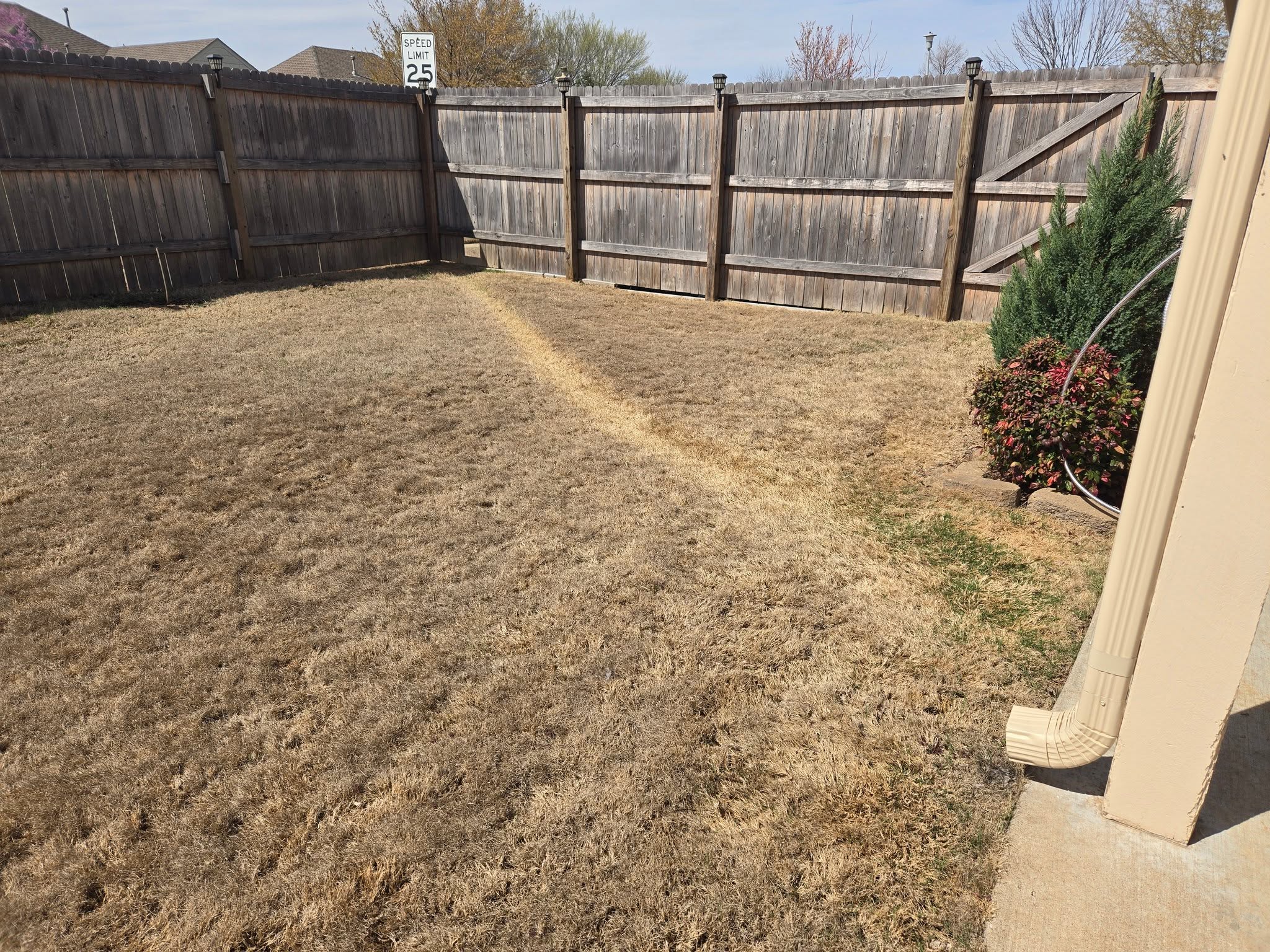
Every dog has a route. Usually along the fence line — the perimeter patrol that happens multiple times a day, every day, year after year. On a small or medium-sized dog this might be a subtle wearing. On a larger breed or a high-energy dog running the same path repeatedly, it becomes a visible track within one season and a bare compacted strip by season two.
The reason this spot fails permanently isn’t the dog’s nails or the physical wear from paws — it’s compaction. Repeated traffic over the same ground, especially on Sudbury’s already-shallow Canadian Shield soil, creates a compaction level that grass roots simply can’t establish in. You can reseed the run path every spring. If the compaction isn’t addressed first, the seed won’t establish properly, the new grass will wear away fast, and you’ll be back to bare ground by August.
What actually stops the cycle: Aeration on the run path specifically — not just the whole lawn, but concentrated passes on the worn track — before any overseeding. Core aeration physically breaks the compacted soil and gives new seed somewhere to root. After aeration, overseed with a high-traffic-tolerant mix — turf-type tall fescue if you can find it, or a quality fescue-bluegrass blend with good wear tolerance. Then accept that the run path will always need more care than the rest of the lawn, because it’s getting more use. Annual aeration on that strip is maintenance, not repair.
Some homeowners eventually switch that strip to a different surface entirely — gravel, pavers, or bark — especially on high-energy dogs that run the same path fifty times a day. That’s a legitimate solution too, and often the most durable one for intense run paths. But if you want to keep it grass, aeration before seeding is non-negotiable.
Spot 2 — The Bathroom Corner
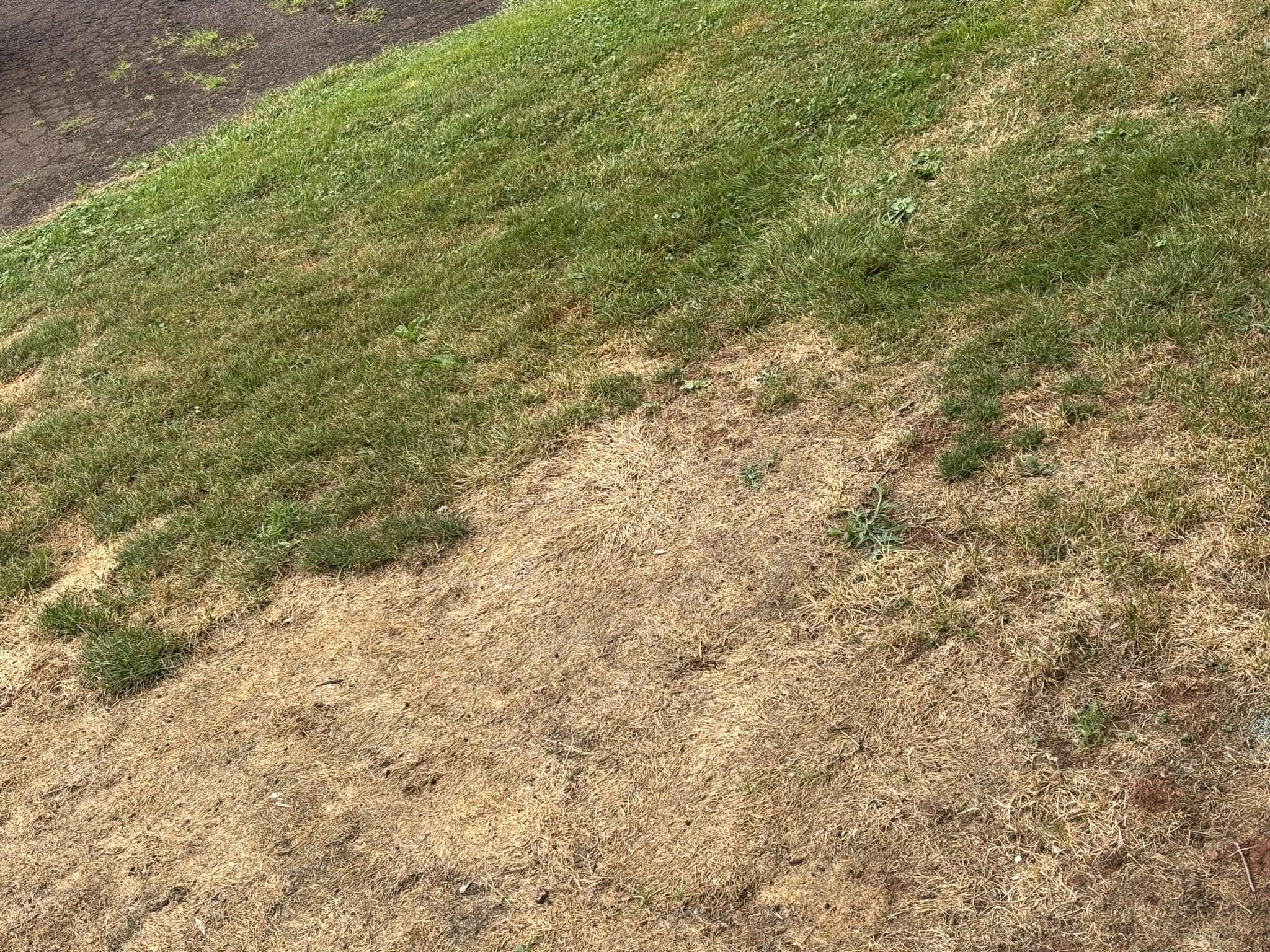
The bathroom section is the most frustrating spot for most dog owners because it looks like a disease or a deficiency — yellow or dead circles, often with a ring of greener grass around the edge — and the instinct is to treat it as a lawn problem rather than a dog problem.
Dog urine contains high concentrations of nitrogen. In small amounts, nitrogen is fertilizer — that greener ring around the outside of the spot is the diluted urine acting as a feed. In the concentrated amount deposited repeatedly in the same spot, it’s nitrogen burn. The grass is essentially being over-fertilized to the point of death in a small area, repeatedly.
Female dogs and male dogs that squat tend to produce more concentrated impact on a single spot. Male dogs that mark tend to spread the impact more, which means more spots but less severe individual damage. Neither is better — just different patterns of the same problem.
What actually stops the cycle: There are two parts to this. First, the recovery: rake out the dead material thoroughly, flush the area with water several times to dilute the nitrogen concentration in the soil, then reseed with a grass mix suited to Sudbury’s conditions after the soil has been opened with a hand aerator or garden fork. The flushing step is the one most homeowners skip — they reseed without diluting the soil nitrogen first, the new seed gets burned, and the spot fails again.
Second, management: the only long-term solution that works consistently is training the dog to use a specific designated area — ideally a mulched or gravel spot at the back of the property. That’s a behavioural change that takes time and isn’t always fully achievable, but it’s the only thing that actually prevents the problem rather than managing the aftermath. Lawn products marketed as “dog urine neutralizers” have limited real-world effectiveness and most experienced lawn care practitioners in Sudbury don’t rely on them as a primary solution.
Spot 3 — The Fence Corner
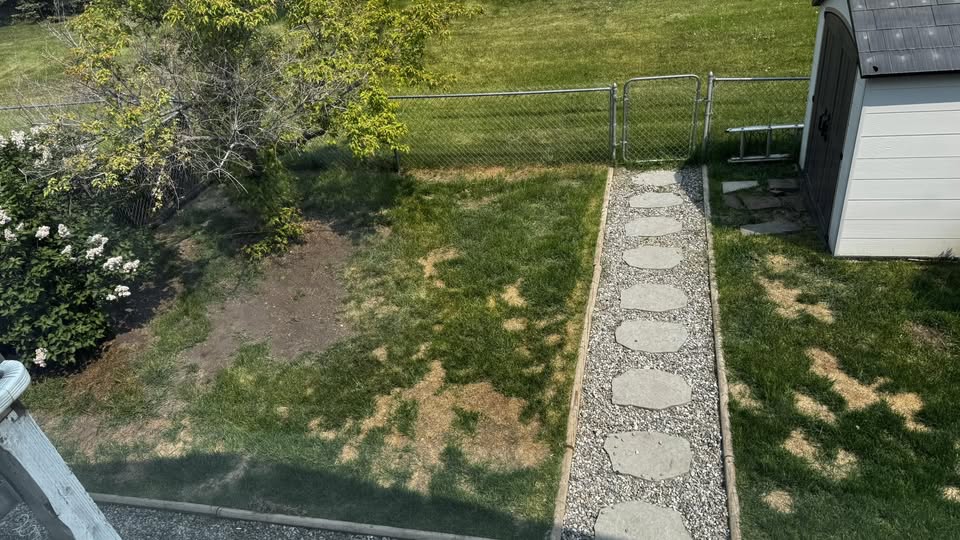
The fence corner — specifically the corners of a fenced yard — is where dogs congregate under excitement, mark repeatedly, dig occasionally, and generally concentrate their activity. On a fenced property with an active dog, the corners are almost always the worst sections of the lawn.
The combination of factors at a fence corner is particularly difficult. You have compaction from repeated pacing and congregating. You have urine burn from repeated marking in the same concentrated area. You often have some physical disturbance from digging. And in Sudbury, those fence corners are frequently the last spots to dry out in spring and the first to get waterlogged after heavy rain — which on its own would stress grass, and combined with the other factors produces persistent failure that’s genuinely hard to maintain as lawn.
What actually stops the cycle: Honestly — for high-use fence corners on active dog properties, lawn might not be the right surface. I’ve told this to homeowners across Greater Sudbury and it’s not what they want to hear, but it’s accurate. If a dog spends significant time in a fence corner every day for ten months a year, that’s a lot of concentrated stress on a small area of grass. The lawn solution requires constant patching and will always look rough relative to the rest of the yard.
The alternatives — a gravel or bark section in the corner, a paver border along the fence line, a flagstone area — handle dog activity better than grass and look deliberate rather than damaged. I’ve seen homeowners make this change and go from that corner being the thing they always apologise for when guests come over, to it being a clean, intentional part of the yard design. A proper spring cleanup that addresses the fence corner area honestly rather than just reseeding again is a good starting point for that conversation.
If you’re committed to keeping it as lawn, the approach is the same as the run path: annual aeration on the corner specifically, quality overseeding with a wear-tolerant mix, and acceptance that it needs more frequent attention than the open sections of the yard. The compounding benefit of consistent aeration is real even in high-traffic dog areas — it won’t eliminate the problem but it reduces how often you’re doing emergency patching.
The One Thing That Changes Everything for Dog Owner Lawns
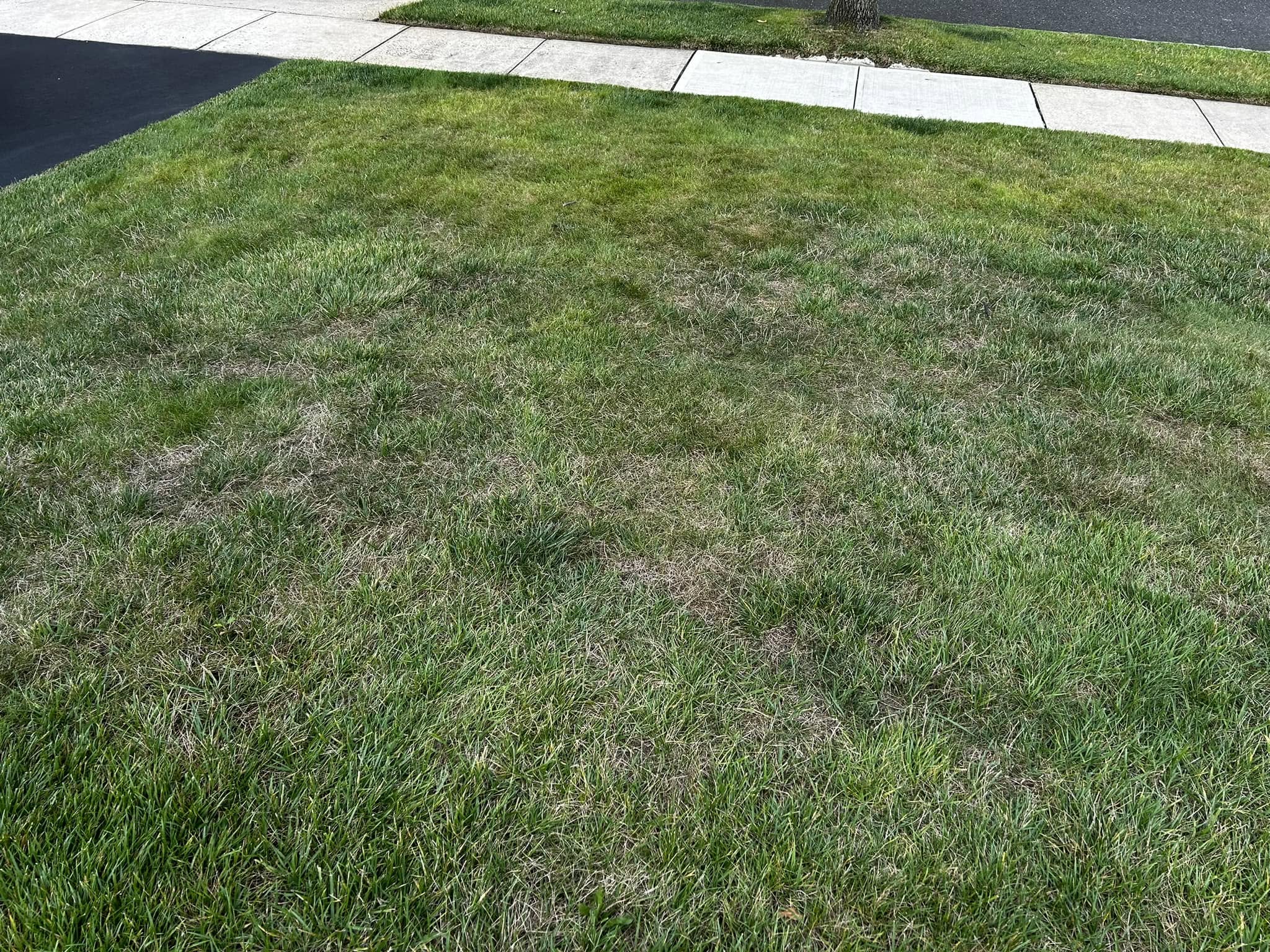
After all the spot-specific advice, here’s the single thing that makes the biggest difference on dog owner properties in Sudbury — across all three problem spots.
Annual aeration in spring, before the season starts.
I know I’ve said this about every lawn problem. But on dog owner properties it’s genuinely the most impactful intervention available. The compaction on these properties is severe — more severe than on properties without dogs, because the traffic is more concentrated and more frequent. A dog running the same path daily puts more compaction stress on those specific areas in one season than most non-dog properties experience in three.
Aeration each spring resets the soil condition in the problem areas before the season of use starts. The grass that establishes in aerated soil after spring overseeding is more deeply rooted and more wear-tolerant going into summer than grass trying to hold on in compacted soil. It doesn’t prevent the problem entirely — the dog is still going to run the path, use the bathroom corner, and congregate at the fence corners. But it changes how quickly the grass recovers from that use rather than progressively declining.
Combined with overseeding after aeration using a quality wear-tolerant mix, this approach has produced noticeably better results on dog owner properties than any amount of emergency patching after the fact. The same principle that applies to recovering neglected lawns applies here — address the soil condition first, and the surface work actually holds.
If you have a dog and a Sudbury lawn that’s been losing the battle in the same three spots every year — reach out. I’ll come take a look and give you a realistic plan for what would actually change the pattern, not just patch it until next summer.
— Ryan Lingenfelter
Cutting Edge Lawn & Landscaping, Garson, Ontario
📞 705-507-6787
Serving all of Greater Sudbury — Garson, Hanmer, Val Caron, Lively, Chelmsford, Azilda, Capreol, and Sudbury proper. We offer core aeration, sod installation, property cleanup, grass cutting, and full lawn maintenance. Free quotes, no pressure.
Get a Free Quote |
Call 705-507-6787
