
There’s a conversation I have with almost every new customer, usually on the first property walk, that I’ve never heard another lawn care company in Sudbury describe having. And I think that says something — not about me specifically, but about how the industry tends to work and why a lot of homeowners end up frustrated after the first season with a new company.
The conversation isn’t long. It doesn’t involve complicated technical explanations. But it requires saying a few things that are awkward to say, that most companies have a business incentive to avoid saying, and that — in my experience — are exactly what new customers need to hear before any work starts.
Here’s what it is, why I have it, and what it changes.
What the Conversation Actually Is
The conversation is this: I tell new customers, honestly, what I think is realistic for their property — not what they want to hear, not what would make them most likely to book, but what I actually believe is achievable given the condition of the lawn and the specific constraints of their property in Sudbury.
Sometimes that sounds like: “This lawn is going to take two full seasons to get where you want it. I can’t make it happen in one.”
Sometimes it sounds like: “The problem in that corner isn’t going to be fixed by anything we do on the surface. There’s something happening in the soil that needs to be addressed first, and until that’s done, seeding or sodding that section is wasted money.”
Sometimes it sounds like: “What you’re describing wanting — a thick, uniform lawn that looks like the ones you see on landscaping websites — is genuinely achievable on this property, but not at the price point you’re thinking. Here’s what it actually takes.”
And sometimes — this is the one that surprises people most — it sounds like: “Honestly, your lawn is in better shape than you think. You don’t need half of what you’ve been told you need. Here’s what I’d actually do.”
The common thread in all of these is that I’m telling the customer what I actually believe rather than what closes the booking. And that’s the conversation most companies avoid, because it sometimes results in a smaller job, a longer timeline, or a customer who decides to wait on certain things rather than doing them all at once.
Why Most Companies Skip This Conversation Entirely
I want to be fair here, because I don’t think the companies that skip this conversation are necessarily doing anything dishonest. The incentive structure just points away from it.
When you’re running a high-volume lawn care operation, the goal on a sales call is to convert the inquiry into a booking. The more comprehensive the package, the better the revenue. The faster you close the booking, the better the efficiency. Telling a customer “your lawn will take two seasons” or “that section won’t respond until we fix the underlying issue” introduces friction — it creates hesitation, it complicates the decision, and it sometimes means the customer books a smaller scope of work than they might have otherwise.
If you’re running that kind of operation, there’s a real business reason to avoid the difficult conversation and focus on selling the package. Not because anyone is trying to deceive the customer, but because the incentive structure doesn’t reward honesty about timelines and limitations in the way it rewards getting the booking confirmed.
The problem — and this is what I’ve seen play out on property after property when I’m brought in after someone else — is that the customer who wasn’t told the truth about what to expect is going to be disappointed. They’re going to call in August wondering why the section that was “going to be fixed” looks the same as it did in May. They’re going to come back the following spring frustrated that the lawn didn’t hold the improvement from the previous year. And eventually they’re going to stop using that company and start looking for someone else.
I’ve written about what it looks like when you’re searching for that someone else in my piece on what “lawn care near me” actually gets you in Sudbury — and one of the things I say there is that how a company answers your direct questions tells you more than their reviews. This conversation is exactly what I mean by that. A company willing to tell you something that complicates the booking is a company willing to tell you the truth about what your property actually needs.
The Three Things I Tell Every New Customer
The difficult conversation isn’t the same every time, but there are three things I make sure every new customer understands before we start any work. These three things are where most lawn care disappointments in Sudbury come from — not from bad work, but from expectations that weren’t set correctly at the start.
One: Sudbury Conditions Are Specific, and Generic Lawn Care Often Doesn’t Work Here
I don’t assume new customers know this. Most don’t, especially if they’ve moved here from elsewhere or if their previous lawn care experience has been with a company that applies the same approach regardless of location.
Sudbury sits on the Canadian Shield. The soil is thin. Compaction happens faster here than in most of Ontario. The freeze-thaw cycles are harder. The seasonal windows for things like aeration and seeding are narrower than generic advice assumes. A lawn that would recover quickly from modest treatment in Toronto or Barrie may take two full seasons of consistent correct treatment in Sudbury to get to the same result.
This matters for setting expectations because it means the timeline for improvement is often longer than people expect — not because the work isn’t effective, but because the conditions are genuinely harder. I’d rather tell someone that upfront and have them trust me when July looks slower than expected than have them wondering what went wrong.
If a lawn has been in the recovery failure cycle — getting worse every spring despite repairs — the explanation is almost always something specific to Sudbury conditions that wasn’t being addressed. Chronic compaction from thin Shield soil, grub damage from European chafer, drainage issues from sideways subsurface water movement along bedrock. These aren’t problems that resolve in one season of standard lawn care.
Two: The Work I Do Is Only Part of What Determines the Result
This is the one that surprises people most, but it’s also the one that has the biggest impact on whether a customer ends up happy or frustrated.
I can aerate correctly, seed with the right variety, apply the right fertilizer at the right time, and do all of it in the right windows. But if the customer doesn’t water the new seed consistently for the first three weeks, those seeded areas don’t establish. If they mow too short through July, the lawn that I helped recover in May loses its resilience by August. If they let the leaves mat on the surface in October without clearing them, the snow mould next spring undoes a significant portion of what we did this year.
I’m not saying this to shift responsibility. I’m saying it because the customer who understands their role in the result is a customer who gets better outcomes — and a customer who doesn’t understand it is one who’s going to wonder why the lawn that looked good in June is struggling again in August, and assume the lawn care didn’t work.
I’ve written about what this looks like from the crew side in five things I’d tell my Sudbury lawn care crew — one of those things is exactly about setting expectations clearly before we leave a property. But that only works if the customer has also been told what their part of the equation is.
Three: Some Problems Cost More to Fix Than You’ve Been Quoted Elsewhere
This is the hardest one to say, and the one I always deliver carefully, because nobody wants to hear that the job is more expensive than they expected.
But I’ve seen what happens when a company quotes low to win the job and then either underdelivers on what was promised or comes back with additions partway through. The customer feels misled — and they should, because they were. The low quote was never going to produce the result being implied.
If a property needs topsoil before sod will hold, the job needs to include topsoil. If there’s a grub problem that needs nematode treatment before any surface repair will last, that’s part of the job. If the drainage issue causing a persistent wet section needs grading work before seeding will work there, that’s not optional — it’s what makes the repair hold.
I’d rather quote correctly the first time and lose a booking to someone who quoted lower than deliver a result that doesn’t hold because the real scope wasn’t included. That approach doesn’t work in the short term for volume, but it does work in the long term for a business built on repeat customers and referrals — which is what Cutting Edge is.
For customers managing a tighter budget, I’ve written honestly about what lawn care on a fixed income actually looks like and how to prioritize. The answer isn’t always “do everything at once.” But when something genuinely needs to be in scope to get the result, I say so upfront rather than finding out halfway through the season.
What Happens When This Conversation Doesn’t Happen
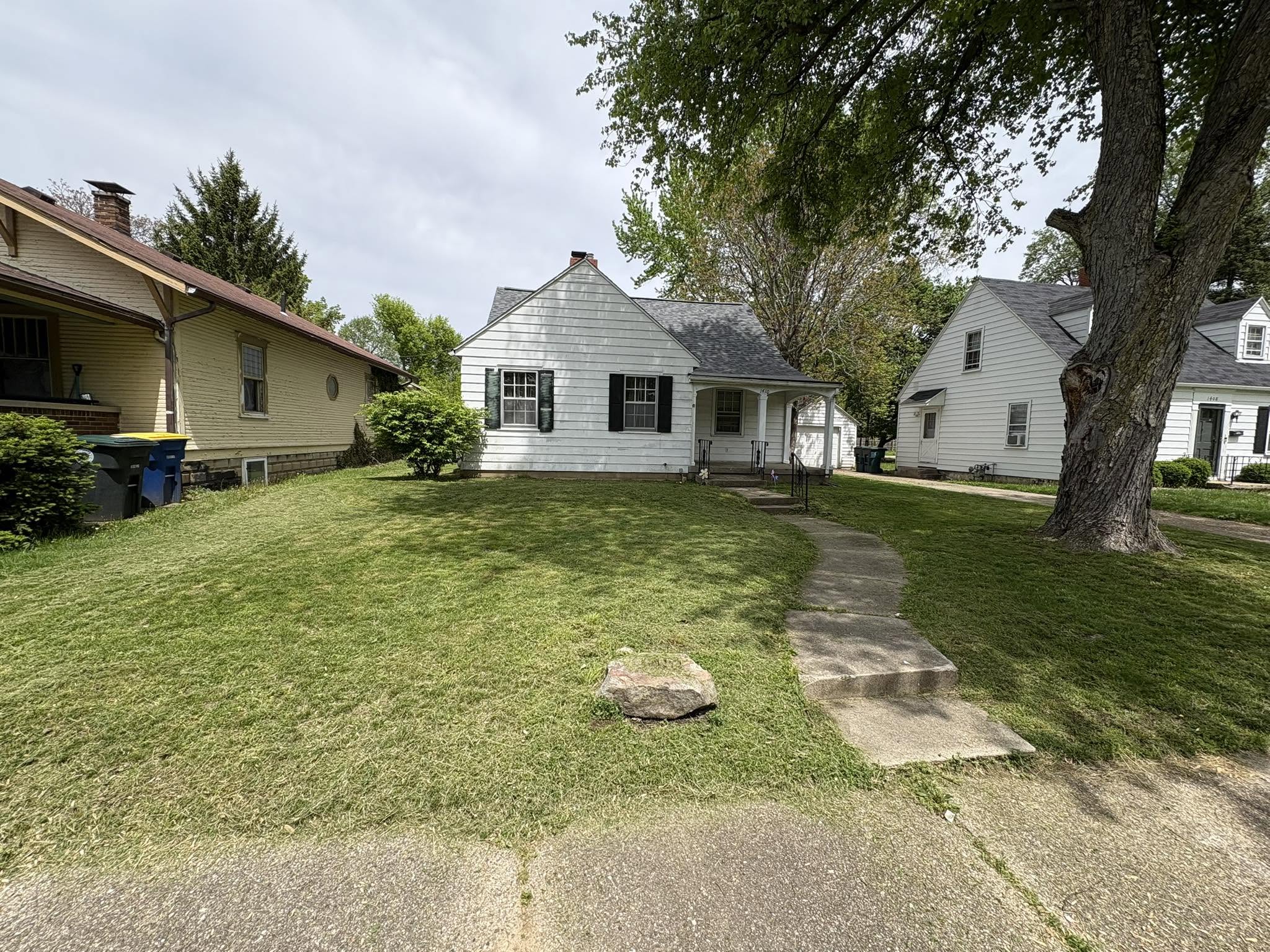
I want to give you a specific picture of what the alternative looks like, because I think it helps explain why I have this conversation even when it’s uncomfortable.
The most common version I see is a customer who had lawn care done the previous season, was satisfied with how it looked immediately after the service, and then came back the following spring to find the lawn in essentially the same state it was the year before — maybe slightly better, maybe the same, but not the trajectory they thought they’d bought into.
They call the company. The company comes back out, does another round of the same service, and the lawn looks better again for a few weeks. By the following spring, same situation. After two or three cycles of this, the customer has spent real money on a lawn that isn’t improving in any durable way, and they’re looking for a different company.
What went wrong isn’t usually the quality of the work. It’s that the conversation that should have happened at the start — about the underlying compaction that needed a two-season aeration program before surface seeding would hold, or about the grub population that was resetting the root system every winter, or about the drainage issue that was keeping a section perpetually stressed — never happened. The company sold a service, delivered it, and the lack of improvement was explained as “lawns take time” rather than diagnosed as a solvable problem with a specific cause.
That’s the cycle I’m trying to break when I have this conversation with new customers. Not because my work is so different from anyone else’s, but because work done with correct expectations and a shared understanding of what will and won’t be achieved in a given timeframe produces better results — and more importantly, produces customers who understand what they’re seeing and can participate in it rather than just hoping it works.
What the Conversation Changes
In practice, here’s what changes when a new customer has heard this conversation before any work starts.
They water the new seed because I told them specifically what happens if they don’t, and they believe me because I’ve been straight with them about everything else. They mow at the right height because they understand why it matters for their specific lawn in Sudbury’s climate, not just because they were told to. They call me in July if something looks unusual because I told them exactly what to watch for and what’s normal versus what needs attention — and when they call, they’re not panicking, they’re asking an informed question.
And at the end of the season, when the lawn looks measurably better than it did in spring, they know why. Not because something mysterious happened, but because the right things were done in the right order with the right understanding of what Sudbury conditions require.
That’s what the conversation is actually for. Not to lower expectations, not to make the booking harder. To make the result make sense — to both of us — before the first job starts.
If you’re looking for lawn care in Sudbury and you want to have this conversation before committing to anything, I’m happy to come out and have it. No charge for the walk, no obligation on either side.
Call or text: 705-507-6787
Or fill out the free quote form on the site.
We cover Garson, Val Caron, Hanmer, Lively, Chelmsford, Azilda, Capreol, and surrounding areas.
— Ryan Lingenfelter
Cutting Edge Lawn & Landscaping
Garson, Ontario
705-507-6787
