One of the most common things I hear from homeowners across Greater Sudbury is some version of: “I never really know what I should be doing with my lawn and when.” They fertilize when they remember. They aerate if someone mentions it. They overseed after a bad summer, maybe.
The result is a lawn that gets random bursts of attention rather than consistent care — and random attention produces inconsistent results.
So here’s what I actually follow — the month-by-month approach I use on properties I service in Sudbury, built around our specific climate, our short growing season, and the things that actually move the needle on lawn health here. Use this as your framework and adjust for your specific property.
May — Lay the Foundation for the Whole Season


May is the most important month of the lawn care year in Sudbury. What you do — or don’t do — in May sets the tone for everything that follows. Don’t rush through it.
Spring cleanup — first priority. Before anything else, get the debris off the lawn. Dead leaves, matted thatch, sticks, salt-affected material near the driveway — all of it comes off first. A thorough spring property cleanup isn’t just about aesthetics. Debris blocking the soil surface traps moisture, encourages snow mould, and prevents the lawn from breathing properly heading into the growing season. Do this before you aerate or seed — not after.
Core aeration — do it every year. Once the ground has dried out enough to work — usually mid to late May in Sudbury — core aeration is the highest-impact thing you can do for your lawn all year. Compacted soil is the root cause of most lawn problems in Greater Sudbury. Aeration breaks it up, opens channels for water and air, and gives roots a path to grow deeper before the heat of summer arrives. On a lawn that’s never been aerated, the first round alone produces noticeable results.
Overseeding thin areas. Right after aeration is the best time to overseed — the holes give seed direct soil contact and protection. Use a cold-hardy mix suited to Sudbury’s climate. Creeping red fescue for shaded areas. A quality bluegrass-fescue blend for open sunny sections. Don’t cheap out on seed — it’s the one input where quality directly determines outcome.
Starter fertilizer. After aeration and overseeding, apply a starter fertilizer with higher phosphorus content to support root development and new seed germination. This is not the time for a high-nitrogen lawn fertilizer — that pushes top growth at the expense of root establishment, which is the opposite of what you want in May.
First mow — at the right height. Set your mower to three inches from the very first cut. Don’t start the season short and plan to raise it later — the habit gets set early and the root depth implications carry through the whole summer.
June — Build on the May Work, Watch for Early Problems
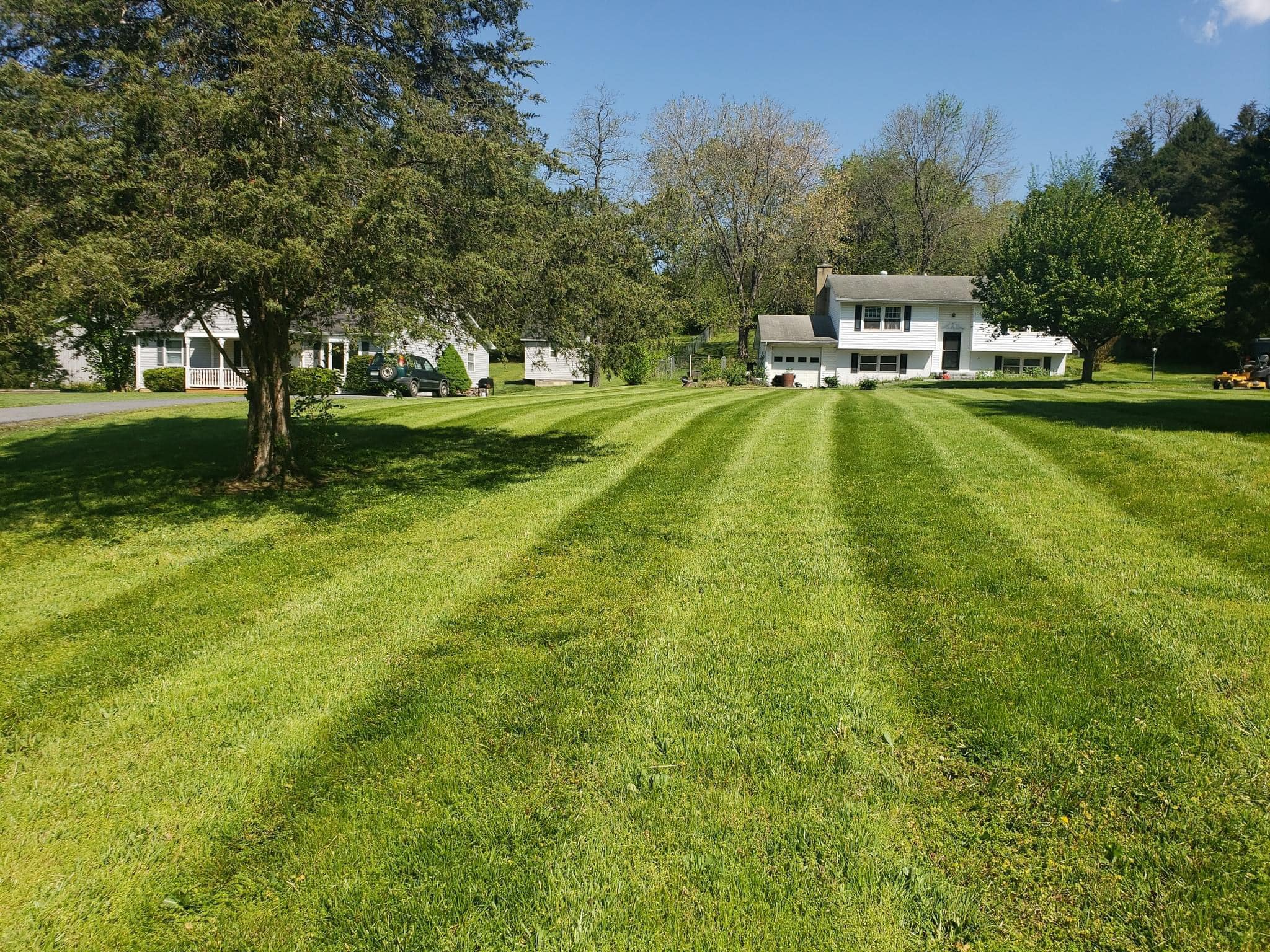

June is when the lawn starts showing you what May’s work accomplished. Growth is strong, the soil is warming up, and the grass is pushing hard. This is also when problems that were seeded in spring start becoming visible — so pay attention.
Consistent mowing schedule. June is the fastest growth month of the Sudbury season. Weekly grass cutting is usually necessary — sometimes every five or six days during the peak flush in early June. The one-third rule matters here: never remove more than a third of the blade in one cut. If the lawn got away on you and is significantly overgrown, bring it down gradually over two cuts rather than scalping it in one visit.
Establish your watering routine. If you’re going to water, start the habit in June the right way — deep and infrequent rather than shallow and daily. Two or three thorough waterings per week, early morning, soaking 4 to 5 inches into the soil. This builds deep roots before July heat arrives. Shallow daily watering in June produces a lawn with shallow roots that’s vulnerable the moment rain stops in July.
Balanced fertilizer application. Mid-June is a good time for a balanced slow-release lawn fertilizer to support the active growing season. Don’t over-fertilize — more is not better. Follow the product rate, and don’t fertilize right before a heavy rain that’ll wash it off.
Watch for early weed pressure. Dandelions, creeping charlie, crabgrass — they establish early. A thick, properly maintained lawn at the right cut height naturally suppresses a lot of weed pressure. Spot treatment for persistent weeds is more effective in June than trying to deal with a full infestation in August.
Check the new seed areas. If you overseeded in May, the new grass should be germinating and showing by now. Keep those areas consistently moist. Don’t mow over them until the new grass is at least 3 inches tall — usually three to four weeks after germination.
July and August — Manage, Don’t Push
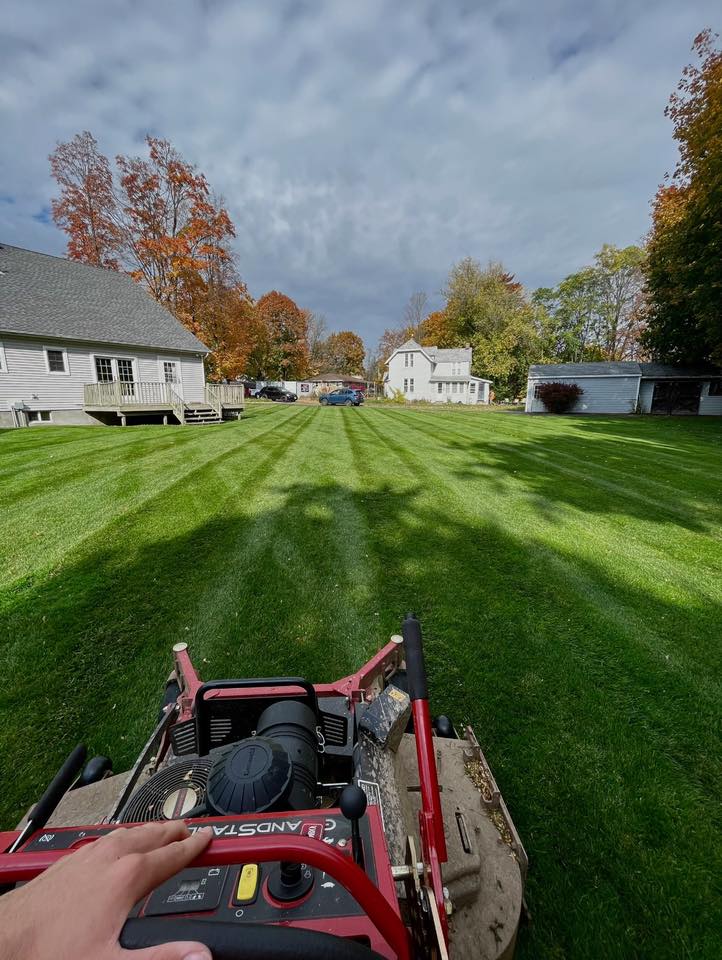

July and August are survival months for Sudbury lawns. The goal shifts from building and growing to protecting and maintaining. This is not the time to push the lawn — it’s the time to get out of its way and let it manage the heat.
Raise the cut height. Move to 3 to 3.5 inches for July and August. Taller grass shades the soil, retains moisture, and manages heat stress better. This is the single most protective adjustment you can make during summer. Don’t mow stressed, dormant grass — if the lawn has gone into drought dormancy and you’re not watering, skip the mow. Cutting dormant grass adds stress without any benefit.
Water deeply if you’re watering at all. If you’re actively watering through summer, keep the deep-and-infrequent habit going. If you’re not watering, accept that some dormancy is normal and okay. Healthy Sudbury lawns handle 2 to 4 weeks of drought dormancy without dying. What kills them is the combination of drought stress and short cut heights and compacted soil — not drought alone.
Don’t fertilize in peak heat. Fertilizing a heat-stressed lawn forces it to try to grow when it doesn’t have the resources to support that growth. It can burn the grass and damage the crowns. Hold off on any fertilizer applications until late August at the earliest, when temperatures start to drop.
Leave clippings on the lawn. In summer heat, grass clippings left on the surface act as a light mulch — shading the soil and returning moisture and nutrients as they decompose. Only bag clippings when they’re heavy and clumping from overgrown or wet grass.
Watch for grub damage. July and August is when grub damage becomes visible in Sudbury — irregular brown patches that feel spongy and lift easily off the soil. Catch it early. Sod that lifts like a mat has had its root zone eaten through from below and won’t recover on its own.
September and October — The Most Underrated Months
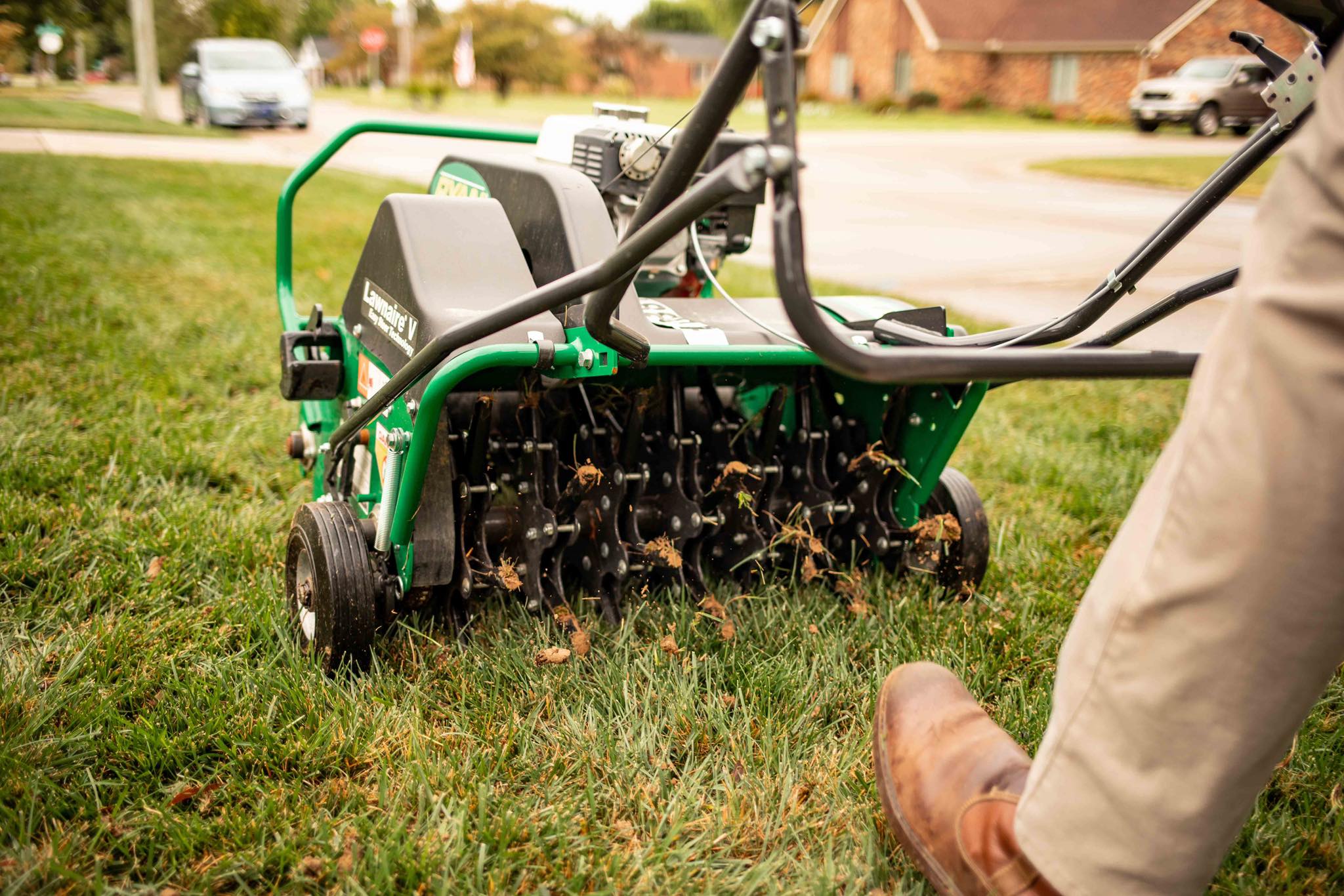

September is my favourite month for lawn care in Sudbury — and it’s the most underused by homeowners. The soil is still warm from summer, air temperatures are cooling, and fall typically brings more reliable rainfall. It’s genuinely the best conditions of the year for grass seed germination and lawn recovery work.
Second round of aeration — seriously consider it. If your lawn took a beating in summer, or if you only did one aeration in spring, September is an excellent time to aerate again. The warm soil temperature means roots establish quickly from newly opened channels before the ground freezes. Two aerations per year — spring and fall — is what I recommend on lawns with significant compaction history.
Overseed everything that thinned. Any bare or thin areas that developed through the summer get overseeded in September. This is the window when seed germinates reliably, has time to establish before freeze-up, and comes back strong in spring. Don’t wait until next May to fix this year’s summer damage — do it now while conditions are right.
Fall fertilizer application. A fall fertilizer with higher potassium supports root hardening and winter hardiness. This application prepares the lawn to survive our Sudbury winters better and green up stronger in spring. Don’t skip the fall feed — it’s one of the most impactful fertilizer applications of the year.
Keep mowing until growth stops. Don’t stop cutting in September just because it feels like fall. Grass keeps growing until the first hard frost, and leaving it too long going into winter increases snow mould risk. Bring the lawn down to about 2.5 inches for the last cut of the season — slightly shorter than your summer height.
Final cleanup before freeze-up. Don’t leave heavy leaf cover on the lawn going into winter. Leaves that sit on grass through freeze-up mat down, block light and air, and create the wet, dark conditions that snow mould thrives in. A thorough fall cleanup in October is as important as the spring one — and a lot of homeowners skip it.
The Simple Version — One Line Per Month
- May: Cleanup, aerate, overseed, starter fertilizer, first mow at 3 inches
- June: Weekly mowing, deep watering habit, balanced fertilizer, watch for weeds
- July: Raise cut to 3.5 inches, stop fertilizing, deep water or let rest — don’t push
- August: Same as July — manage and protect, watch for grub damage
- September: Aerate again, overseed summer damage, fall fertilizer, keep mowing
- October: Last mow at 2.5 inches, thorough leaf and debris cleanup before freeze-up
Follow that through a full season, do it again next year, and again the year after — and the cumulative effect on a Sudbury lawn is significant. This isn’t complicated. It’s just consistent.
If you want help with any part of this — whether that’s a spring cleanup and aeration to start the season right, regular cutting through summer, or fall overseeding to close it out properly — reach out. I’m in Greater Sudbury all season and happy to talk through what makes sense for your specific property.
— Ryan Lingenfelter
Cutting Edge Lawn & Landscaping, Garson, Ontario
📞 705-507-6787
Serving all of Greater Sudbury — Garson, Hanmer, Val Caron, Lively, Chelmsford, Azilda, Capreol, and Sudbury proper. We offer core aeration, grass cutting, property cleanup, sod installation, and full lawn maintenance. Free quotes, no pressure.
Get a Free Quote |
Call 705-507-6787