
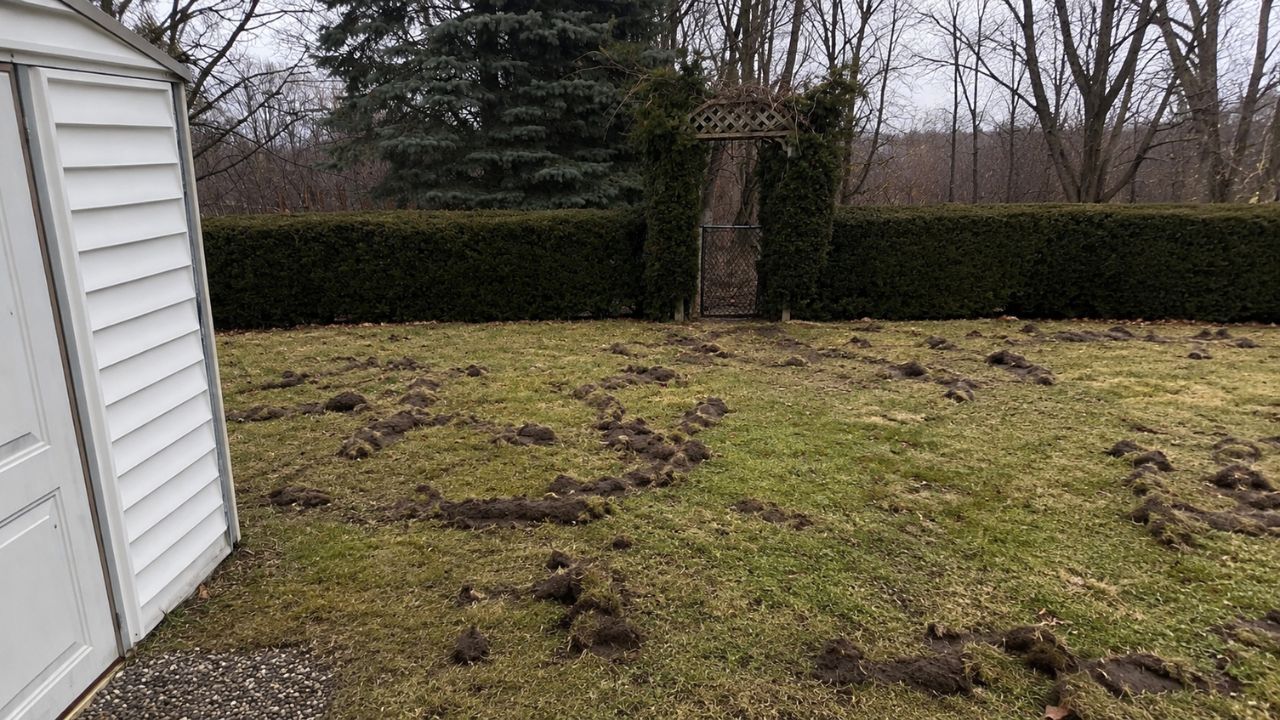
It was a Tuesday morning in late May. My phone rang at 6:58am. I looked at the screen and it was a customer I’d done a spring cleanup for the previous year — I’ll call her Sandra. Good customer, nice property in Val Caron, always paid on time and never gave me any trouble.
I picked up.
“Ryan, I’m sorry to call this early. I went outside this morning and something is really wrong with my lawn. It looks — I don’t even know how to describe it. Like something ate it. Can you come today?”
I told her I’d be there by 9.
What I found when I pulled into her driveway that morning ended up changing the way I approach lawn diagnosis in Sudbury. Not because it was the worst lawn I’d ever seen — it wasn’t. But because the explanation for what happened was so specific to this city, and so many homeowners make the exact same mistake when they see the same symptoms, that I’ve been thinking about it ever since.
Here’s the full story.
What I Found When I Got There
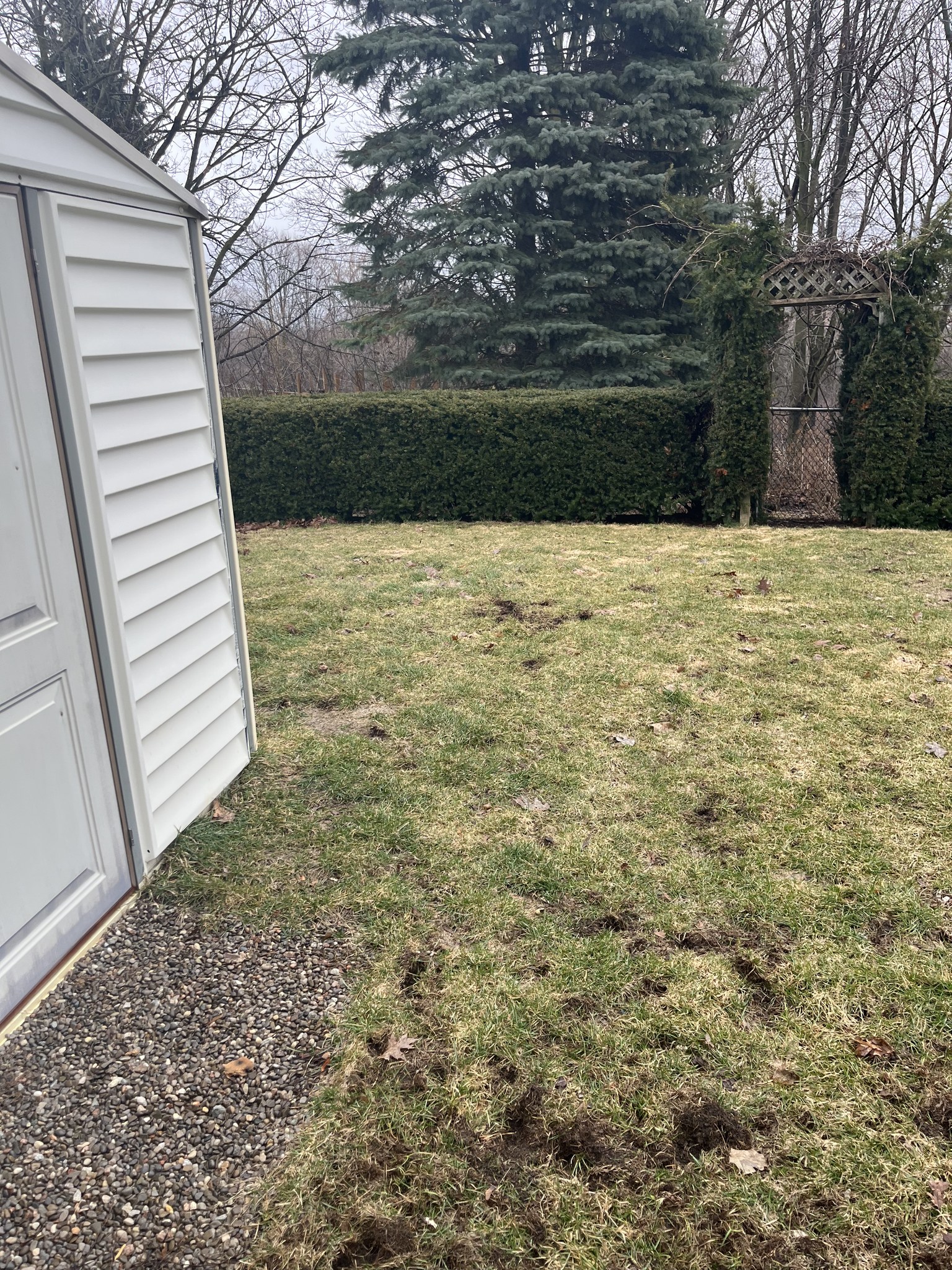
Sandra met me at the front door and walked me around to the backyard. I could see the problem from ten feet away.
Large sections of the lawn — probably 40 percent of the total area — had turned a uniform tan-brown colour. Not the patchy, random brown you get from winter dormancy. This was more complete than that. Whole sections, almost rectangular in shape, just gone.
She pointed to one section near the back fence. “I tried to pull it up to see what was underneath and it just — came up. Like a mat. The whole thing lifted.”
That was the detail that told me everything.
When lawn is dead from drought, compaction, or winter damage, it deteriorates in place. The roots are still in the ground — they’re just dead. The grass doesn’t lift like a carpet. But when Sandra showed me how easily her lawn peeled back — I could grab a corner and roll it back like a yoga mat — I knew immediately what we were dealing with.
Grubs. European chafer grubs, almost certainly.
I pulled back a section about the size of a dinner plate and counted. Twelve grubs in that one small area, curled up just below the surface, pale white with brown heads. They’d been feeding on the grass roots all fall and the damage had fully revealed itself once the snow came off.
Sandra looked at them and said, “Okay so I need all new sod, right? The whole back needs to come out?”
That was the assumption I expected. And two years earlier, I probably would have said yes. But I’d learned enough by that point to slow down and look at the full picture before making that call.
What Was Actually Killing Her Lawn
European chafer is a beetle that’s been spreading across Ontario for years, and Greater Sudbury is well within its range. The adult beetles lay eggs in the lawn in early summer. Those eggs hatch into grubs that spend the fall feeding on grass roots underground — completely invisible to the homeowner. By the time the snow melts in spring, the damage is done. Sections of lawn that look green going into October are gone by May because the root system was eaten through over winter.
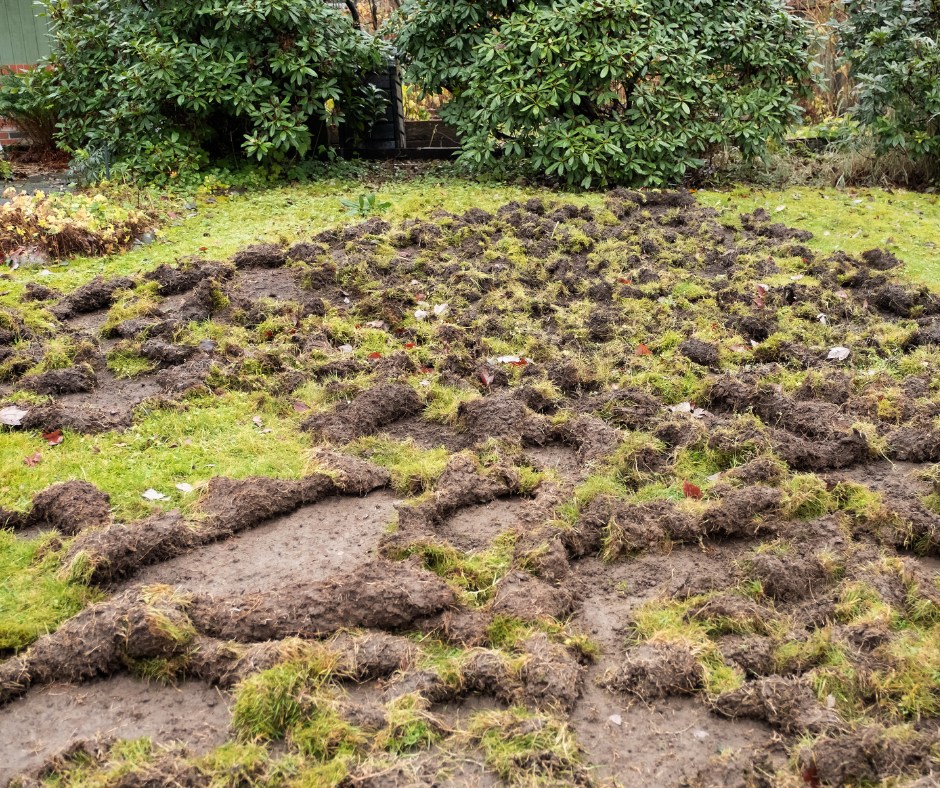
The other symptom Sandra hadn’t connected yet: the crow activity. I asked her if she’d noticed crows digging in the lawn in fall or early spring. She laughed.
“I thought they were just being annoying. There were like fifteen of them out there some mornings.”
Crows, skunks, and raccoons dig for chafer grubs. If you had significant wildlife digging up your lawn in Sudbury last fall or this spring, grubs are almost certainly part of the story.
Here’s the critical thing about grub damage that most homeowners don’t know: if you just sod over grub damage without treating for grubs first, you will have the same problem next year. The adult beetles will lay eggs in your new sod. The new grubs will feed on your new sod’s roots over winter. And you’ll be pulling up carpet again in May.
New sod is not the solution to a grub problem. Treating the grub problem is the solution. The sod question comes after.
What We Did Instead of Full Replacement

After I walked the full property with Sandra, here’s what I told her.
The 40 percent that had rolled up — the sections with complete root destruction — those needed to come out and be replaced. There was nothing to save there. But the other 60 percent of the lawn, while stressed and thin, still had living grass with intact roots. Tearing that out and sodding the whole property would cost her significantly more money and wasn’t necessary.
The plan I recommended had four parts.
First: treat for grubs. Before anything else goes back in the ground, the grub population needs to be addressed. There are effective nematode treatments available — beneficial nematodes are microscopic organisms that target and kill chafer grubs in the soil. Applied in late summer when the new grub generation is young and close to the surface, they’re the most effective non-chemical option. I told Sandra we’d schedule that treatment for August.
Second: remove only the dead sections. We stripped out the areas that had lifted completely — the sections with no viable root system remaining. Those areas got fresh topsoil brought in and raked level.
Third: sod the stripped sections, aerate and overseed the rest. The bare areas got new sod laid properly over the prepared soil. The living sections of the lawn got core aeration to open up the compacted soil, followed by overseeding with a quality ryegrass and Kentucky bluegrass blend to thicken up the thinned areas.
Fourth: a slow-release fertilizer across the whole lawn after the aeration and seeding to feed both the new sod and the existing grass through the growing season.
The total cost was meaningfully less than a full replacement. And because we treated the actual problem — the grubs — instead of just covering it up with new sod, the result was going to hold.
What Her Lawn Looked Like by August
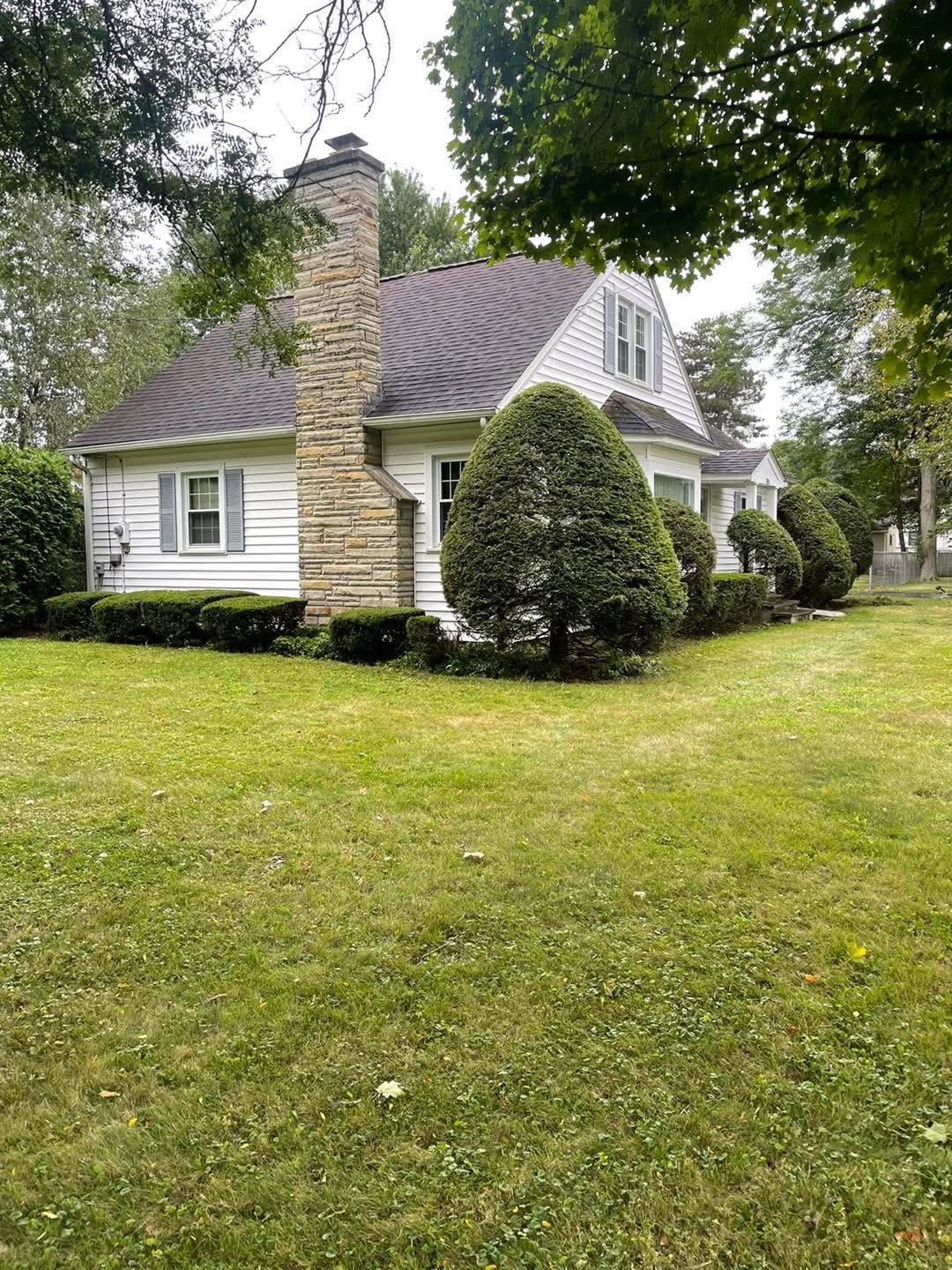
I drove past Sandra’s property in early August that year — I was doing a job two streets over — and I slowed down to look.
Honestly, you couldn’t tell which sections had been sodded and which had been overseeded. The lawn had filled in uniformly. The new sod had rooted properly and matched the colour and texture of the recovered existing grass. The bare sections from May were gone.
She texted me a photo in September and said the neighbours had asked her what she’d done to the lawn because it looked so good.
That’s the outcome you’re working toward. Not just fixing the lawn for right now — fixing it in a way that holds.
The Lesson I Took From This Job
Before that morning in Val Caron, my default approach to a lawn with widespread dead sections was to lean toward full replacement. It’s the clean solution. You strip it, prep the soil, lay sod, done. I’d seen enough botched repair attempts on lawns that needed replacement that I’d become somewhat aggressive about recommending new sod when damage was significant.
What Sandra’s lawn taught me is that the first question isn’t replace or repair. The first question is why. What caused this?
Because the cause completely changes the right answer.
Grub damage that gets sodded without grub treatment fails again. Drainage problems that get seeded without regrading fail again. Compaction that gets new sod without soil prep fails faster than you’d expect. The symptom — dead, patchy, struggling grass — looks similar in all of these cases. But the treatment is different every time.
Now when I get a call like Sandra’s, the first thing I do when I get there is ask why before I ask what. Why is this lawn dying? What’s underneath? What happened here over the last 12 months?
Most of the time that question changes my recommendation. Sometimes it saves the homeowner a significant amount of money. Sometimes it means the fix is more involved than a simple repair — like when grub treatment needs to be part of the plan. But either way, the answer is more accurate and the result holds longer.
What to Do If Your Lawn Looks Like Sandra’s Did
If you’re in Greater Sudbury and your lawn lifted like a mat this spring, or if you’ve got sections of dead grass that are larger and more uniform than normal winter damage — don’t assume you need full replacement and don’t assume a bag of seed will fix it.
Do this first: grab a corner of the dead section and pull gently. If it lifts easily with the roots detached from the soil underneath, dig into that area and look for grubs. Pale white, C-shaped, about the size of your thumbnail. If you find more than five or six per square foot, you’ve got a grub problem and that needs to be part of the solution.
If the grass doesn’t lift — if it’s dead in place with roots still in the soil — that’s a different situation, and the replace vs repair decision is more about how much of the lawn is viable and what the soil conditions are like.
Either way, I’m happy to come out and take a look. I’d rather spend 20 minutes walking a property with you and give you an honest assessment than have you spend money on the wrong fix.
Call or text me at 705-507-6787, or fill out the free quote form on the site. We cover all of Greater Sudbury — Garson, Val Caron, Hanmer, Lively, Chelmsford, Azilda, Capreol.
— Ryan Lingenfelter
Cutting Edge Lawn & Landscaping
Garson, Ontario
705-507-6787
