
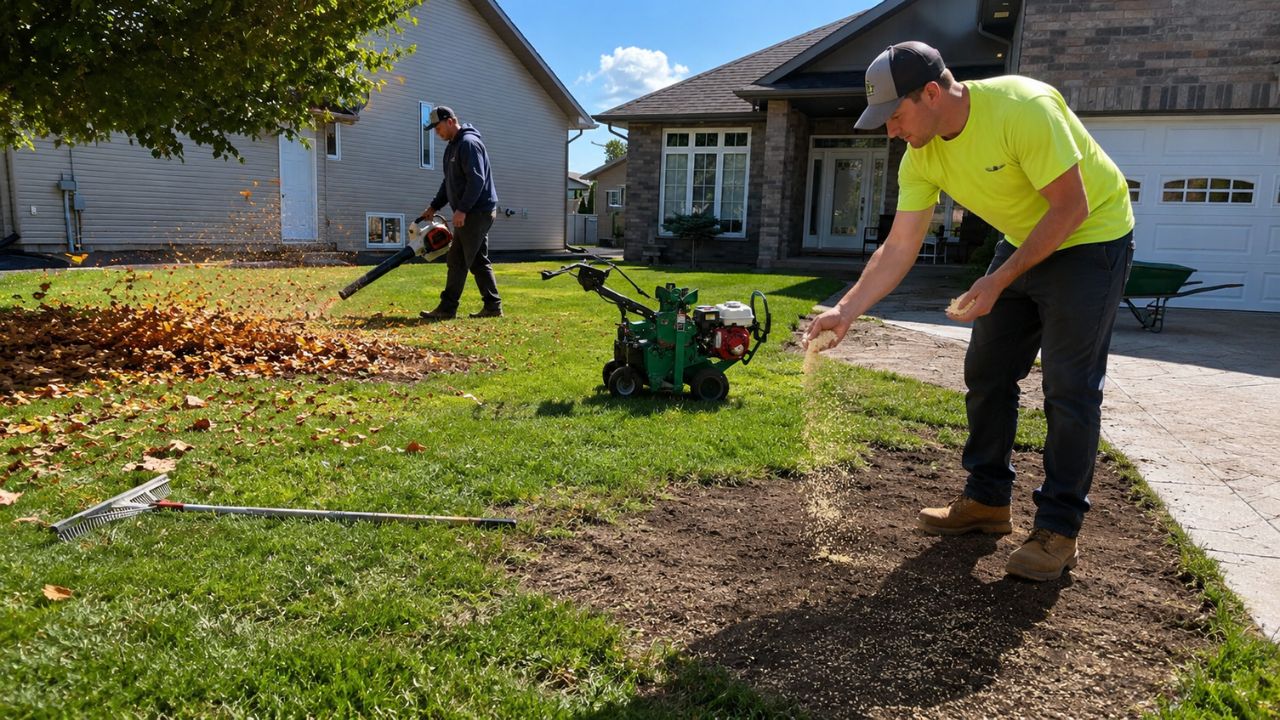
October in Sudbury is the window most homeowners miss.
I get it — by the time fall rolls around, most people are mentally done with the lawn. The summer is over, the grass has slowed down, and it’s easy to just let it go until spring. But what you do — or don’t do — in October has a bigger impact on how your lawn looks next May than almost anything you do during the entire summer.
I’m Ryan Lingenfelter, owner of Cutting Edge Lawn & Landscaping in Garson, Ontario. I’ve been working on residential and commercial lawns across Greater Sudbury since 2020. And every single spring, I can walk a lawn and tell you pretty quickly whether the homeowner did their fall prep or skipped it.
The ones who skipped it have thin, patchy grass in April. The ones who did it right have a lawn that comes out of winter strong and establishes fast before the heat of summer arrives.
Here’s the exact checklist I follow — and recommend to every client — for getting a Sudbury lawn ready for winter.
Why Fall Prep Matters More in Sudbury Than Anywhere Else
Sudbury winters are not gentle. We get real snow load, deep ground freeze, and aggressive freeze-thaw cycles in early spring. A lawn that goes into winter in poor condition — compacted, thatchy, mowed too short or left too long — takes significantly more damage from those conditions than one that’s been properly prepared.
There’s also a timing factor specific to our climate. Cool-season grass — the Kentucky bluegrass and fescue blends that grow here — actually does some of its best root development in fall. The soil is still warm from summer, the air temperature has cooled down, and the grass naturally shifts its energy from leaf growth to root growth. If you aerate and fertilize at exactly the right time in October, you’re feeding that root development directly. The grass goes into winter with a stronger root system and comes out of dormancy faster in spring.
Miss that window and you’ve lost one of the two best opportunities of the year to actually improve your lawn — not just maintain it.
Step 1: Final Mow at the Right Height
Your last mow of the season matters more than most people realize. The height you leave the grass at going into winter directly affects how well it survives the next five months.
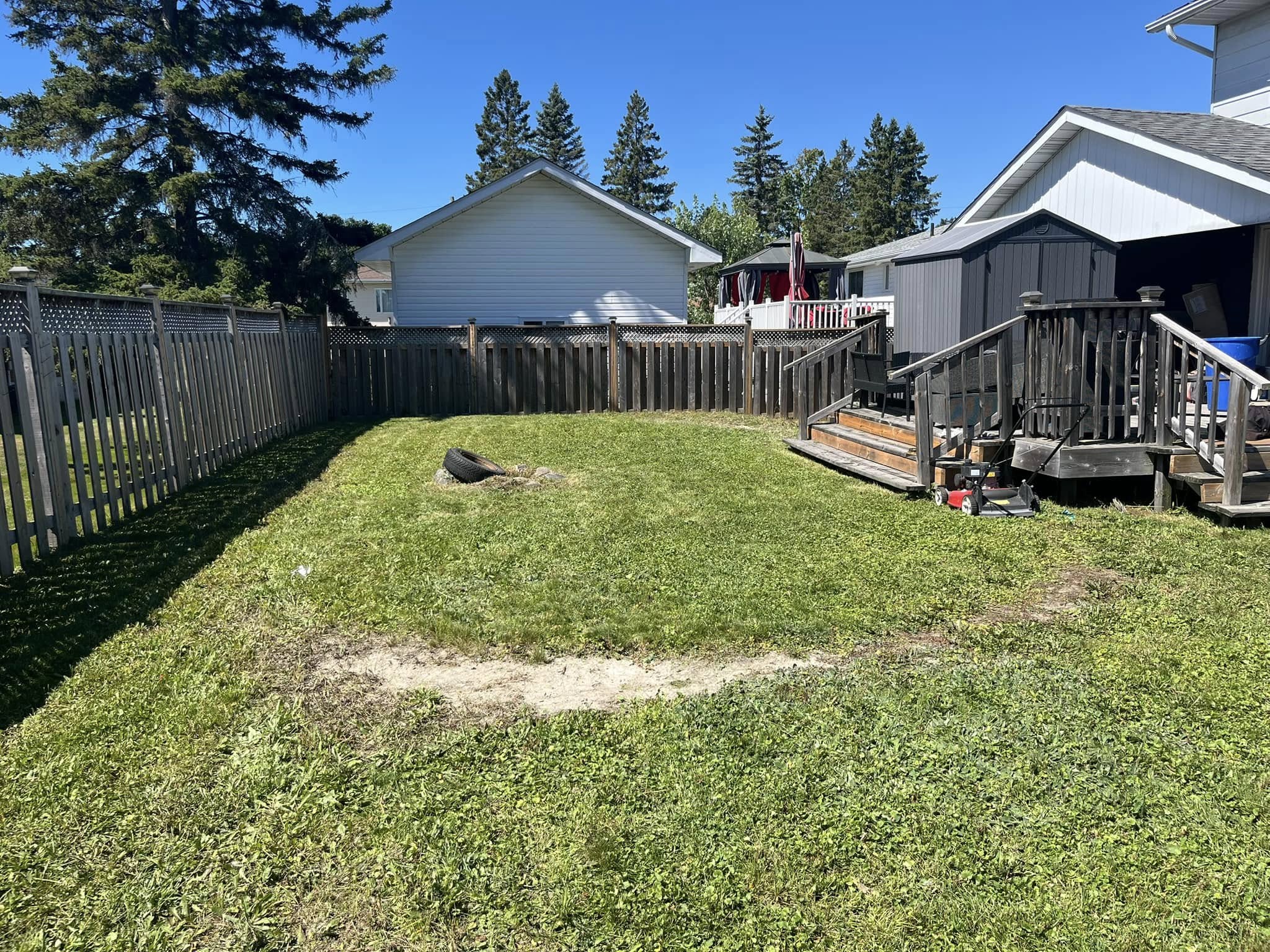
The target height for your final cut in Sudbury is 2.5 to 3 inches. Here’s why both extremes are problems:
Too long (over 4 inches): Tall grass going into winter matts down under snow. Matted grass creates the perfect conditions for snow mould — a fungal disease that thrives under snow cover and leaves dead, circular patches when the snow melts in spring. If you’ve ever seen those grey or pink circular patches in April, that’s what caused them.
Too short (under 2 inches): Short grass has less leaf surface area and therefore less energy stored going into dormancy. It’s more vulnerable to winter desiccation — drying out from cold winter winds — and it has less insulation over the crown of the plant where next year’s growth comes from.
2.5 to 3 inches is the sweet spot. Take your lawn down to that height on your last cut, make sure your blade is sharp so you’re cutting cleanly rather than tearing, and you’re off to a good start.
Timing-wise, you want this done in mid-to-late October in Sudbury — after the main growing season has slowed but before the ground freezes. Don’t cut after the first hard frost if you can avoid it.
Step 2: Fall Core Aeration
If you only do one thing on this list, make it this one.
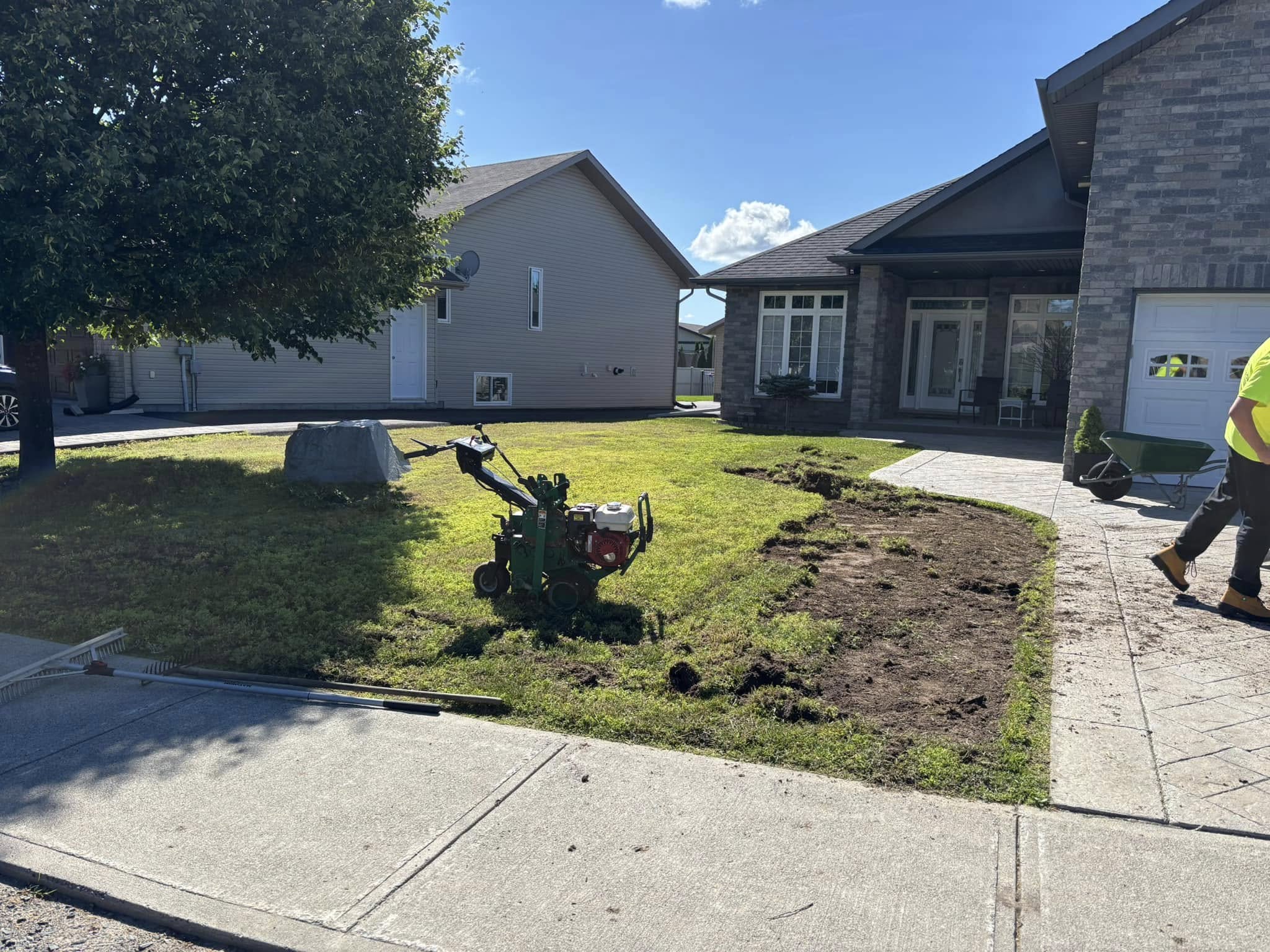
I’ve written about spring aeration before and why it matters for Sudbury lawns — but fall aeration is arguably even more valuable. Here’s why: when you aerate in October, you’re opening up the soil right at the moment the grass is pushing energy into its root system for winter storage. Those aeration holes give the roots direct pathways to grow deeper into loosened soil. The result is a root system that goes into winter significantly stronger than it would be otherwise.
For Sudbury properties specifically — where clay-heavy soil is the norm across most of Greater Sudbury — fall aeration also addresses the compaction that built up over the summer from foot traffic, mowing equipment, and the natural settling of the soil. Compacted soil going into a Sudbury winter gets worse through freeze-thaw cycles, not better. Aeration breaks that cycle.
A few things to know about fall aeration timing:
- Do it while the soil still has some moisture — not during a dry spell. The aerator tines need moisture to pull clean cores.
- Do it before the ground freezes. In Sudbury, that typically means before mid-to-late October depending on the year.
- Aerate before you overseed — the holes give seeds direct soil contact, which dramatically improves germination rates.
The soil cores that get pulled out? Leave them on the lawn. They break down within a few weeks and return organic matter and microbes to the surface. It looks messy for about two weeks and then it’s gone.
Step 3: Overseed and Fertilize
Right after aeration is the best possible time to overseed any thin or bare areas — and to apply your fall fertilizer. Do both immediately after the aerator comes through.
Overseeding
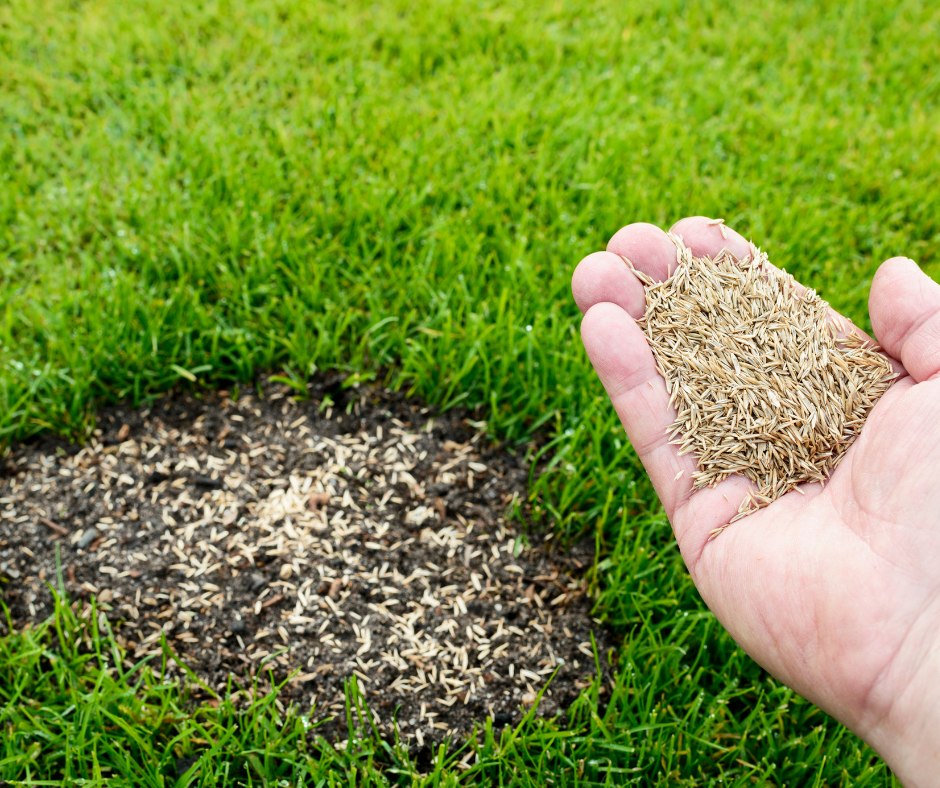
Fall overseeding in Sudbury works better than spring overseeding for one key reason: the soil is warm from the summer. Soil temperature in October in Greater Sudbury is still in the range where cool-season grass germinates well — typically 10 to 15°C in the top few inches. Seed germinates faster in warm soil, and seedlings that establish before freeze-up come out of winter as established plants rather than seeds waiting to germinate.
Use a quality cool-season blend — Kentucky bluegrass, fine fescue, or perennial ryegrass. Don’t go cheap on seed. Spread it over the aerated lawn and work it lightly into the holes with a rake. Keep the seeded areas moist for 10 to 14 days while germination happens.
One thing to manage expectations on: seed sown in October may not fully germinate before freeze-up depending on the year. That’s okay. Seed that doesn’t germinate in fall will often lie dormant through winter and germinate in early spring when soil temperatures rise — this is called dormant seeding and it’s a legitimate strategy. The seed isn’t wasted.
Fall Fertilizer
Fall fertilizer is different from spring fertilizer. In spring you want higher nitrogen for leaf and shoot growth. In fall, you want a formulation that supports root development and carbohydrate storage — what the grass needs to survive winter and come out strong.
Look for a fertilizer marketed specifically as a “fall” or “winterizer” fertilizer. These typically have a lower nitrogen number and higher potassium — something in the range of 12-0-20 or similar. Potassium strengthens cell walls and improves the grass’s ability to withstand cold stress.
Apply after aeration so the nutrients go straight into the root zone through the holes. Water it in if rain isn’t coming within 48 hours.
Step 4: Address Any Drainage Problems Before the Ground Freezes
This is the step most people skip — and the one that causes the most ongoing problems.
If your lawn has low spots that pool water, or areas where grade is directing runoff from neighbouring properties onto your lawn, fall is the time to correct them. Here’s why timing matters: water that sits on your lawn going into winter freezes in place. Ice sitting on grass for extended periods — weeks or months under snow — kills it. The dead patches you see in spring in those low spots aren’t just winter damage, they’re ice damage on top of drainage damage.
Correcting grade problems in fall, when the soil is workable but before freeze-up, gives those corrections time to settle before winter. Bring in quality topsoil to build up low spots, regrade toward natural drainage paths, and reseed those areas right away.
It’s not complicated work but it makes a permanent difference. That corner of your lawn that dies every single winter? Nine times out of ten it’s a drainage issue, not a grass issue. Fix the drainage and the grass problem goes away.
Step 5: Final Cleanup — Leaves Off the Lawn
This is the step that seems obvious but that a surprising number of homeowners either skip or leave too late.

Leaves left on a lawn going into winter mat down under snow and create two problems. First, they block light and air from reaching the grass — the same matting issue I mentioned with grass that’s left too long. Second, wet, matted leaves are the ideal environment for snow mould and other fungal issues that damage lawns over winter.
You don’t need to get every single leaf off in one shot. But by the time the snow is about to fly — late October to early November in most of Greater Sudbury — the lawn needs to be clear.
A few practical notes on fall cleanup:
- Don’t wait for all the leaves to fall before you start. Multiple passes throughout October is better than one massive cleanup in early November when the ground might already be starting to freeze.
- Mulching leaves back into the lawn is fine in moderation. A thin layer of mulched leaves adds organic matter to the soil. A thick layer of mulched leaves is still a problem — it mats down and causes the same issues as whole leaves.
- Clear garden beds too. Dead annual material left in beds over winter harbours disease and pests. Clear it out in fall and your beds will be in better shape come spring.
- Final edging. Do a clean edge pass along driveways, walkways, and bed edges as part of your fall cleanup. It’s the last impression your property makes before winter and the first thing you see when the snow melts.
The Quick October Checklist
If you want to pull this into a simple checklist to follow, here it is:
- ✅ Final mow to 2.5–3 inches — mid to late October, before first hard frost
- ✅ Core aeration — while soil still has moisture, before ground freezes
- ✅ Overseed thin areas immediately after aeration
- ✅ Apply fall/winterizer fertilizer after aeration
- ✅ Fix any low spots or drainage issues with topsoil
- ✅ Clear all leaves and debris before the snow flies
- ✅ Final edge along driveways, walkways, and beds
Do all of this in October and your lawn will go into winter in the best possible condition. Come May, you’ll see the difference immediately — thicker, greener, establishing faster than the neighbours who skipped it.
Need Help With Fall Lawn Prep in Sudbury?
If you’d rather hand this off than do it yourself — or if you want a professional aeration and cleanup done properly — reach out. We handle fall lawn prep across Greater Sudbury every October and spots fill up faster than people expect once the season turns.
Don’t wait until the last week of October to book. By then the schedule is usually full and we’re working against the clock before freeze-up.
📞 Call or text me: 705-507-6787
Or fill out the free quote form here — I get back to everyone same day.
— Ryan Lingenfelter
Owner, Cutting Edge Lawn & Landscaping
Garson, Ontario
Related Articles
- Core Aeration Services in Sudbury
- The 2-Week Window in Sudbury That Makes or Breaks Your Lawn All Summer
- Landscaping Services in Sudbury Ontario — What’s Included and What to Expect
- I Replaced a Sudbury Homeowner’s Dead Lawn in 4 Days
- Grass Cutting Services in Greater Sudbury
