
I didn’t lie the way most people lie.
I didn’t make something up. I didn’t give them a fake number or tell them a service would do something it couldn’t. What I did was give them the easy answer instead of the honest one. I told them what they wanted to hear because the honest answer was harder to deliver, and I was in a rush, and I told myself it was close enough to true that it didn’t really matter.
It mattered.
I’m Ryan Lingenfelter, owner of Cutting Edge Lawn & Landscaping in Garson, Ontario. Since 2020, I’ve maintained properties across Greater Sudbury — Garson, Val Caron, Hanmer, Lively, Chelmsford, Azilda, Capreol. I started writing these articles because I think the lawn care industry in general gives people too many easy answers and not enough honest ones. So it would be pretty hypocritical of me not to apply that standard to myself.
Here’s what happened, what I should have said, and why it matters if you’re dealing with a similar lawn problem right now.
What Happened
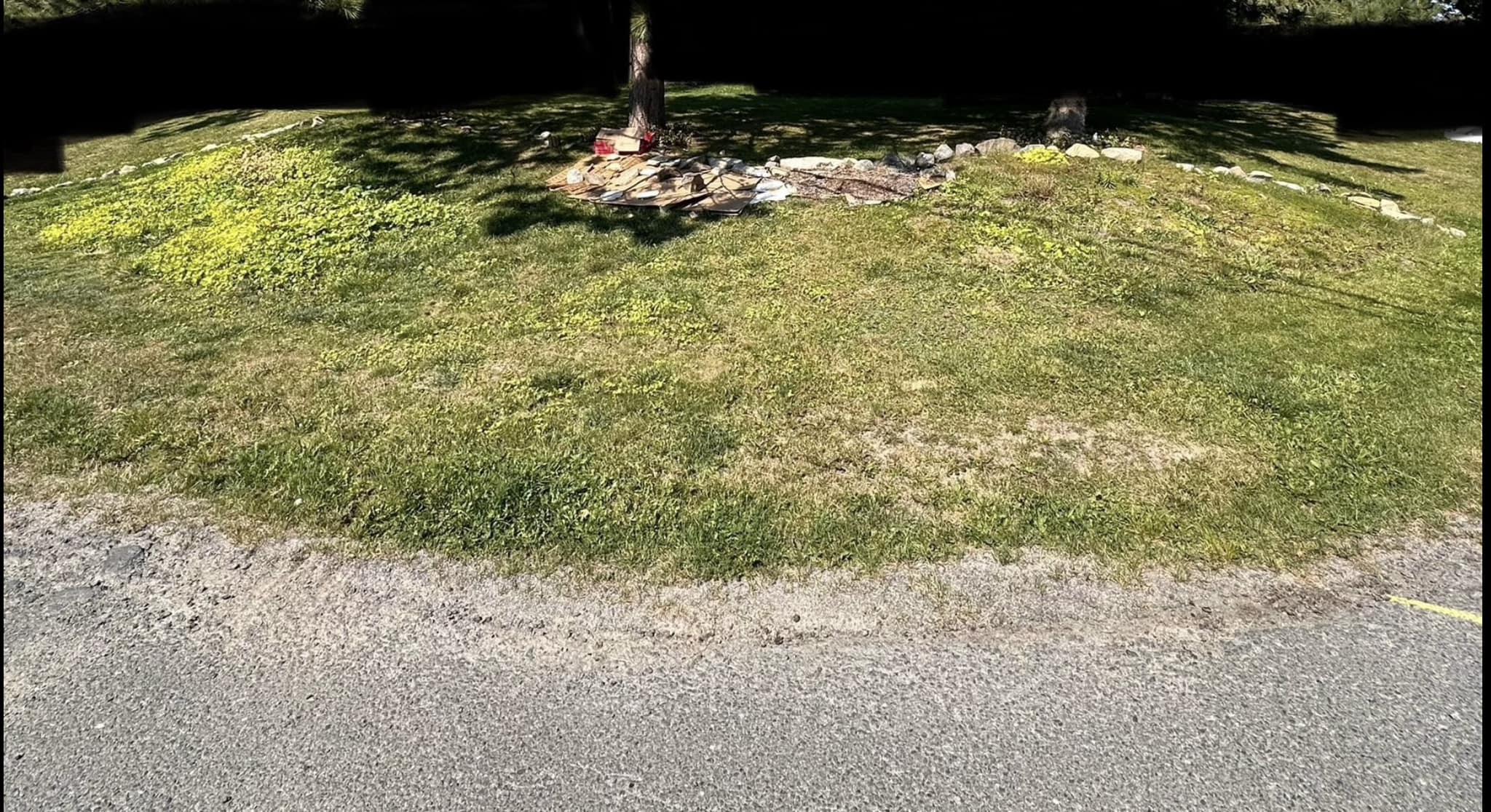
Last summer — late July — I got a call from a homeowner in Val Caron. She’d been a customer for two seasons. Good property, reasonable lot size, nothing unusual. She called because her backyard had a section that had never looked right — thin, yellow, struggling all season, browning out faster than the rest of the lawn every time we hit a dry stretch.
She asked me directly: “Ryan, what’s wrong with that section? We’ve had you cutting it for two years and it still looks bad.”
I knew what was wrong with it. I’d seen it on the first visit two seasons ago. There’s a low area along the back fence line where the grading pushes water toward that corner. In spring it holds water for two to three weeks after the snow pulls back. The grass roots in that section are drowning in April and May every year — the soil is saturated for too long and the root system never fully establishes. By July when everything dries out, those shallow roots have nothing to pull from and the section goes brown faster than everything else.
The honest answer was: “There’s a drainage problem in that corner. The grading is pushing water toward the fence line and it’s sitting there too long in spring. The grass in that section is going to keep struggling until that drainage issue is fixed — and fixing it means bringing in topsoil, regrading, and reseeding. That’s not a one-afternoon job and it’s not free.”
What I actually said was: “It’s probably the soil compaction in that area. We should get it aerated this fall and overseed it. That usually helps.”
Aeration and overseeding wasn’t wrong, exactly. It would help a little. The grass might establish slightly better with looser soil. But it wasn’t going to fix the drainage problem. That section was going to keep drowning in spring and browning in July regardless of how well the seed established, because the root cause — the grading — wasn’t being addressed.
I gave her a partial truth that pointed toward a service we could provide, instead of a full truth that included work she’d need to budget for and plan around. I was in a hurry. The honest answer required a longer conversation. I told myself the aeration would help and she’d see improvement and it would be fine.
She called me again this May. Same section. Same problem. Two years later.
What I Should Have Told Her
I should have told her everything I knew when she first asked.
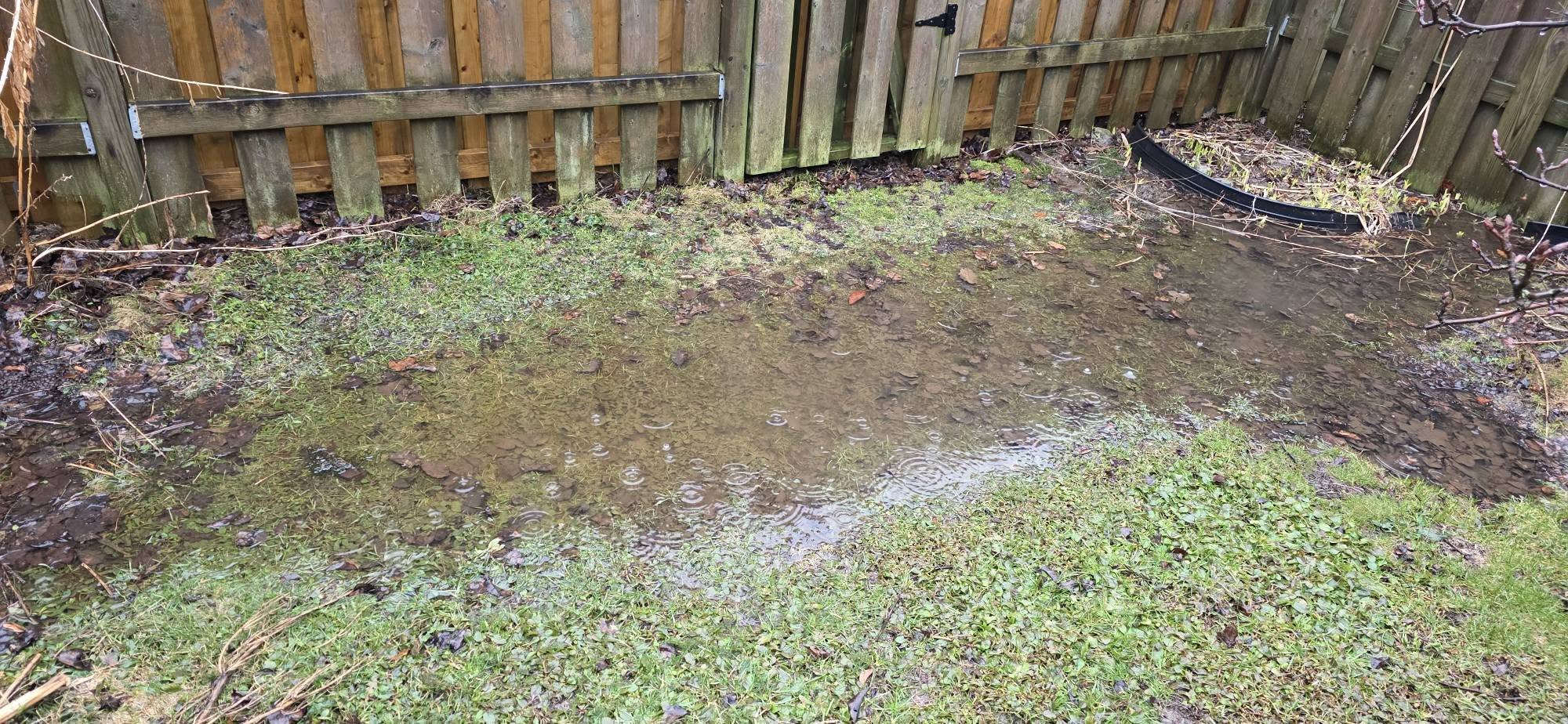
The drainage issue was visible from the first visit. The way that corner of the yard sits, the way water marks showed on the fence posts — it was obvious that section was holding water. I catalogued it mentally and moved on instead of raising it with her directly because it felt like a bigger conversation than the quote call warranted.
The full honest answer would have been this:
“That section is struggling because of a drainage problem, not a soil or maintenance problem. Water from your property’s grading runs toward that back corner and sits there for weeks in spring. The grass roots drown in the saturated soil and never establish properly before summer. By July, those shallow roots dry out faster than the rest of the lawn.
Aeration and overseeding will help a little — looser soil establishes roots better — but it won’t fix the underlying issue. The water will still come back to that corner every spring and the grass will still struggle.
To actually fix it, you’d need to bring in clean topsoil, build up that corner so water drains toward the side of the property rather than pooling there, and then reseed or sod once the grading is done. That’s a half-day job, probably $400 to $700 depending on how much topsoil we need to bring in. It’s not urgent in the sense that the rest of your lawn is fine — but it’s the only thing that actually solves that section permanently.
If you want to hold off on that and just aerate and overseed in the meantime, the section will look marginally better but the problem will still be there. That’s your call to make — I just want you to know what you’re actually dealing with.”
That’s what I should have said. It’s a longer conversation. It includes a cost the customer wasn’t expecting. It means admitting the service I can easily provide right now won’t fully solve the problem.
But it’s the truth. And she deserved the truth two years ago.
Why Lawn Care Companies Give Easy Answers
I want to be honest about why I gave the easy answer — not to excuse it, but because understanding the pattern is useful if you’re ever in that conversation with any lawn care company.
The easy answer points toward a service the company can provide. Aeration, overseeding, fertilizer — these are things every lawn care company offers. Telling a customer they need regrading, or that their lawn needs to be replaced in sections, or that the real problem is something structural that won’t be fixed by any maintenance service — that’s a harder conversation that often leads to a smaller or delayed sale.
I’m not saying every easy answer in the lawn care industry is dishonest. Sometimes the easy answer is the right one. Aeration and overseeding genuinely does fix most thin, struggling Sudbury lawns — because most thin, struggling Sudbury lawns are dealing with compaction, not drainage. The problem is when a contractor knows the easy answer isn’t the full answer and gives it anyway because the full answer is inconvenient.
Here’s how to protect yourself from this. When a lawn care company tells you a specific service will fix your problem, ask one follow-up question: “Is there anything that could cause this problem to come back even after that service?” A contractor who gives you an honest answer to that question is one you can trust. A contractor who tells you the service will definitely fix it without any qualifiers — on a lawn problem that’s been there for years — is one worth being skeptical of.
Your lawn problem has been there for two seasons? Ask why. A good contractor should be asking that question before recommending anything.
What I Did Differently When She Called Again This May
When she called in May to say the section still looked bad after two seasons of aeration and overseeding, I went back out to the property.
I walked the corner. I pushed a screwdriver into the soil. It went in easily — the aeration had helped the compaction. But the water marks on the fence posts were there again. The soil in that corner was still visibly wetter than the rest of the yard even in late May, weeks after the snow had pulled back everywhere else.
I told her what I should have said two years ago. All of it. The drainage problem, why the grading was causing it, what it would actually take to fix it. I also told her I should have said this the first time she asked and I was sorry I hadn’t.
She appreciated the honesty. She was frustrated — reasonably — that two years had gone by without the real answer. But she understood, and we’re scheduling the regrading work for June.
The section will look right by September. It would have looked right in the September two years ago if I’d been straight with her from the start.
The Lawn Problems That Get Easy Answers When They Deserve Honest Ones
The drainage situation I described is the most common case where I see easy answers given instead of honest ones. But it’s not the only one. Here are the others I’ve seen — including from my own past calls.
Shallow soil over rock. On Canadian Shield properties where the bedrock is close to the surface, some areas of a lawn are always going to struggle more than others — there simply isn’t enough soil depth for deep root development. The easy answer is “more aeration, more seed, more fertilizer.” The honest answer is that the section may perform better as a mulched bed than as lawn, or that topsoil needs to be brought in before grass will establish properly there. Both of those options cost more up front than another round of seed.
Shade problems under mature trees. Grass under a heavy tree canopy in Sudbury is fighting three battles at once — not enough light, root competition from the tree, and dry conditions because the canopy intercepts rain. The easy answer is shade-tolerant seed mix. The honest answer is that if the canopy is dense enough, no grass mix will thrive there long-term and the better solution is a mulched bed. Selling seed for a problem spot that won’t support grass is an easy answer that costs the customer money every year.
Lawns that need replacement, not repair. Some lawns are past the point where maintenance and overseeding will produce the result the homeowner wants. When a lawn is more than 60 to 70 percent weeds and bare soil with very little live grass remaining, overseeding into that is not going to give you a lawn — it’s going to give you a better-looking mess for a season before the weeds reassert. The honest answer in that case is full lawn replacement — kill it off, prep the soil properly, lay sod or seed from scratch. That conversation is harder than “let’s overseed it and see how it does.”
Grub damage that will come back. Treating grub damage — reseeding or sodding damaged areas — without addressing the ongoing grub population means the damage comes back. The honest answer includes telling the homeowner to treat the grub population with grub control in early summer when the larvae are near the surface, not just repairing the visible damage. Repair without population control is a repeat customer for the wrong reason.
What This Means for You
If your lawn has had the same problem for more than one season — the same section that struggles every year, the same bare patch that comes back, the same browning in July no matter what you do — ask the question I should have been asked earlier.
“Is there something going on here that a maintenance service won’t fix?”
A contractor who says no to that question without really thinking about it isn’t someone you can fully trust. A contractor who says “actually, let me look at this more carefully before I answer” — that’s someone worth talking to.
I try to be the second kind. I don’t always succeed. But I’m trying to do better than I did last summer.
If you’ve got a lawn problem that’s been getting the easy answer for a while and you want someone to actually figure out what’s causing it — give me a call. I’ll walk the property, tell you what I actually see, and give you the real answer even if it’s not the convenient one.
📞 705-507-6787
🔗 Get a Free Quote
📍 Serving Greater Sudbury, Ontario
— Ryan
Frequently Asked Questions
How do I know if my lawn care company is giving me honest advice in Sudbury?
Ask one follow-up question after any service recommendation: “Is there anything that could cause this problem to come back even after that service?” An honest contractor will tell you about any underlying issues that the recommended service won’t fully address. A contractor who guarantees the service will fix it without any qualifiers — on a problem that’s persisted for multiple seasons — is worth being skeptical of. Persistent lawn problems almost always have a root cause that goes beyond what a single maintenance service addresses.
Why does the same section of my Sudbury lawn struggle every year no matter what I do?
Persistent problem areas on Sudbury properties are almost always caused by one of four things: a drainage issue where water collects in that spot, shallow soil over Canadian Shield bedrock, heavy shade with root competition from a mature tree, or compaction that’s significantly worse in that location than the rest of the lawn. If a section has had the same problem for two or more seasons despite maintenance, the cause hasn’t been identified or fixed — maintenance alone won’t resolve it.
What does a lawn drainage problem look like in Sudbury?
A lawn drainage problem shows up as a section that stays wet longer than the rest of the property in spring, has grass that drowns and fails to establish properly each year, and browns out faster than surrounding areas in summer because the root system never fully develops. The classic sign is a roughly oval or irregular dead zone in the same location every year, often in a low area or near a fence line where grading directs water. Reseeding without fixing the grading produces the same result every spring.
When should a Sudbury lawn be replaced instead of repaired?
When a lawn is more than 60 to 70 percent weeds and bare soil with very little live grass remaining, full replacement — kill the existing growth, prep the soil properly, and lay sod or reseed from scratch — typically produces better long-term results than repair. Overseeding into a lawn that’s mostly weeds improves the appearance temporarily but the weeds reassert quickly. Repair makes sense when there’s a healthy base of grass that’s been stressed or damaged. Replacement makes sense when that base is largely gone. The honest assessment of which situation applies changes the right recommendation significantly.
How much does regrading a low area cost in Sudbury?
Regrading a low area in a residential backyard — bringing in topsoil, building up the low spot, grading it to drain away from the problem area, and reseeding or sodding — typically runs $400 to $700 on a standard residential property depending on the size of the affected area and how much topsoil is needed. It’s a half-day job on most properties. It’s a one-time fix that solves the drainage problem permanently, versus ongoing maintenance costs on a section that will keep failing until the grading is addressed.
Does Cutting Edge Lawn do drainage and regrading work in Greater Sudbury?
Yes — we handle topsoil grading, low area correction, and associated reseeding and sodding across Greater Sudbury. If you have a section of lawn that’s been struggling year after year and you suspect drainage is the cause, call 705-507-6787 or fill out the free quote form. I’ll walk the property, tell you what I actually see, and give you a straight answer on what it would take to fix it properly.
Ryan Lingenfelter is the owner of Cutting Edge Lawn & Landscaping in Garson, Ontario. Since 2020, his crew has provided full lawn care services across Greater Sudbury — Garson, Val Caron, Hanmer, Lively, Chelmsford, Azilda, and Capreol. Cutting Edge is licensed, insured, BBB A+ rated, and ThreeBest Rated for lawn care services in Sudbury.
📞 Phone: 705-507-6787
📍 Service Area: Greater Sudbury, Ontario
🔗 Free Quote: cuttingedgelawn.ca/quote
Helpful Lawn Care Services in Sudbury
- Grass Cutting Services
- Core Aeration for Healthy Lawns
- Property Cleanup Services
- Sod Installation in Sudbury
- Mulch & Decorative Stone
- Hedge Trimming Services
Continue Reading
- I Tried to Fix My Own Lawn for 3 Years — Here’s What Finally Worked
- The Worst Sudbury Lawn I’ve Seen — Restored in One Season
- When Does a Sudbury Lawn Need to Be Replaced?
