
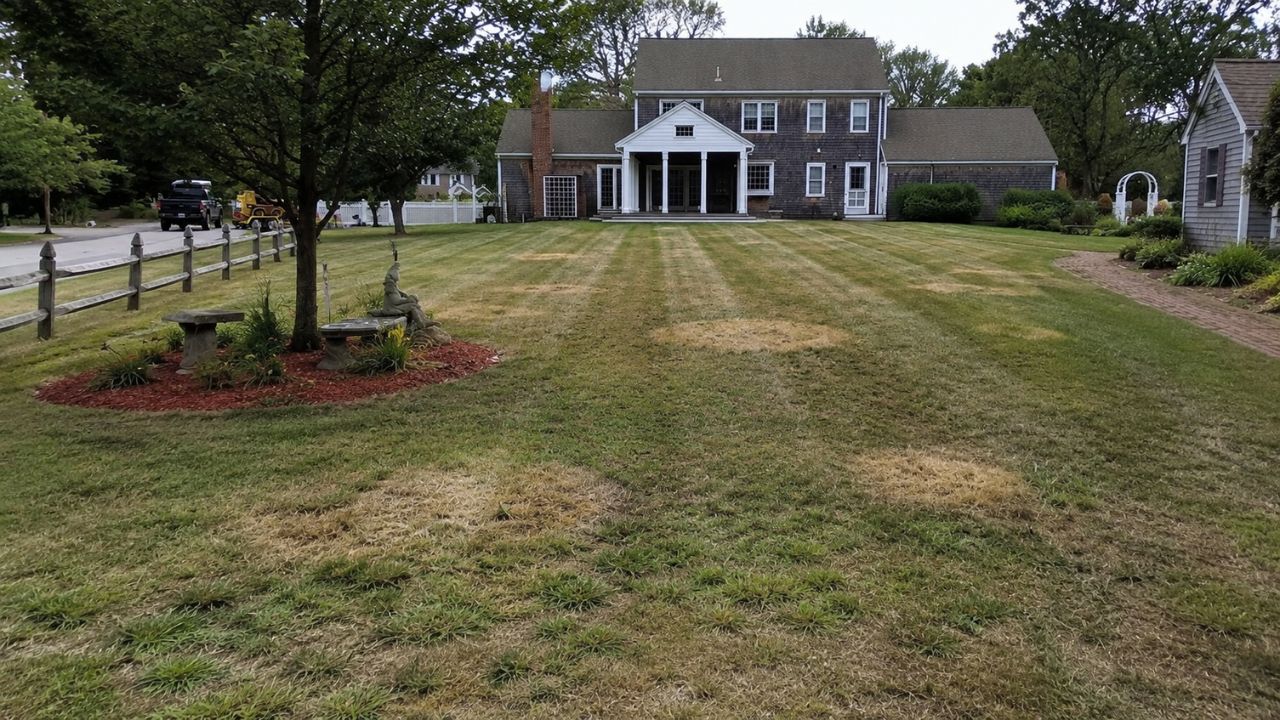
You walk out to your yard on a Saturday morning and there it is. A brown patch. Maybe one. Maybe three. Yesterday it looked fine. Today it looks dead.
I get calls about this every single week from May through August.
I’m Ryan Lingenfelter, owner of Cutting Edge Lawn & Landscaping in Garson, Ontario. Since 2020, I’ve maintained hundreds of residential and commercial properties across Greater Sudbury — Garson, Val Caron, Hanmer, Lively, Chelmsford, Azilda, Capreol. And brown patches are one of the most common things I get asked about, especially in late spring and early summer.
Here’s the thing — brown patches on a Sudbury lawn almost always have a specific cause. And once you know what’s actually causing it, the fix is usually straightforward. The problem is that most homeowners guess wrong, treat the wrong thing, and watch the patch get bigger.
Let me walk you through the most common causes I see on Sudbury properties and how to tell them apart.
Cause #1 — The Lawn Was Cut Too Short
This is the number one cause of brown patches I see on Sudbury lawns between May and July. Bar none.
When grass gets cut too short — below 3 inches — it loses most of its blade surface. That blade is where the plant makes its food through photosynthesis. Cut it too short and the grass goes into stress. The roots stop growing. By the time July hits and the temperature climbs, those shallow roots have nothing to pull from when the top layer of soil dries out.
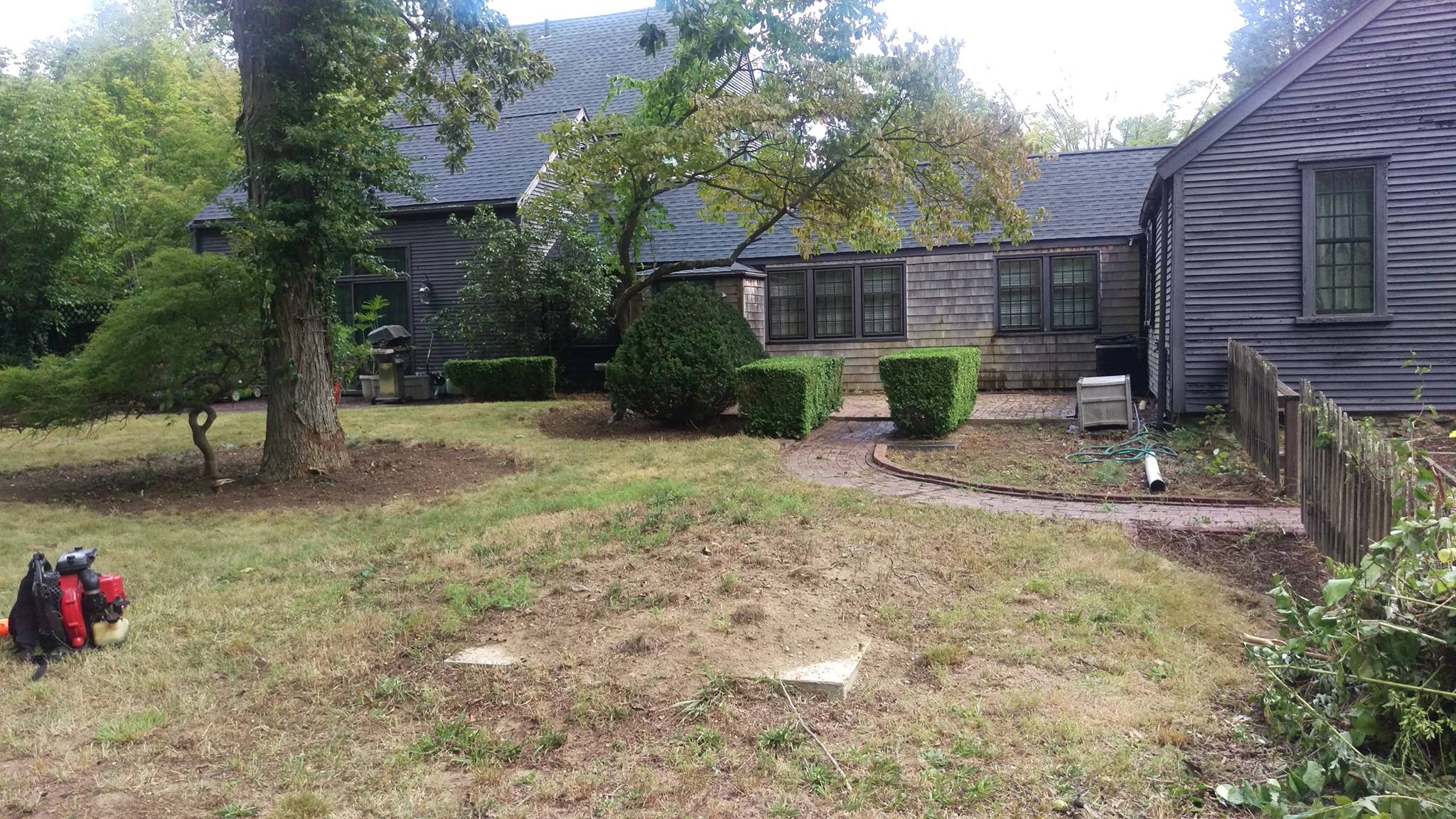
The patch starts yellow. Then it goes brown. Then it looks completely dead.
How to tell if this is your problem: the brown areas are spread evenly across open sections of the lawn — not in shaded spots, not in one corner. The whole lawn looks slightly stressed, not just one isolated area. And if you think back, the lawn was cut pretty short at some point in the last few weeks.
The fix: raise your mower deck to 3 inches immediately and leave it there. Water deeply — long slow watering twice a week rather than a quick daily sprinkle. The lawn can recover from this if you catch it early enough in the season. If it’s already August and the roots are completely gone, you may be looking at overseeding in September.
I wrote a full article about this specific problem — the mowing height mistake that destroys Sudbury lawns — here if you want the full detail.
Cause #2 — Compacted Soil Not Absorbing Water
Sudbury winters are hard on soil. Six months of snow load, freeze-thaw cycles, and frozen ground compacts the soil to the point where water stops absorbing properly. Instead of soaking in, it runs off or sits on the surface and evaporates.
The grass above looks fine in spring when there’s plenty of moisture around. Then we hit a dry stretch in June or July — even a week without significant rain — and the compacted soil has nothing stored. The lawn browns out fast.
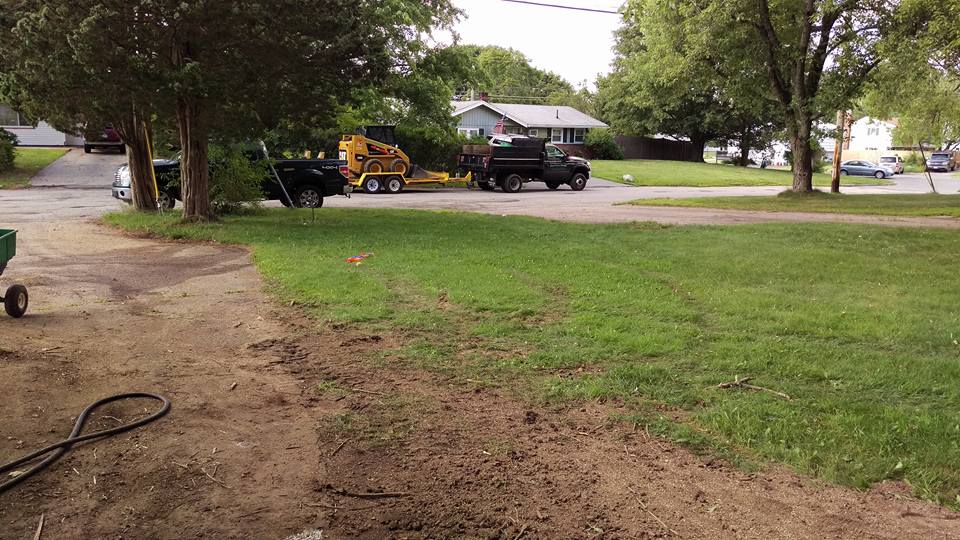
How to tell if this is your problem: pour a glass of water on the brown area and watch what happens. If it soaks in immediately, compaction isn’t the main issue. If it sits on the surface for more than a few seconds or starts running sideways, the soil is compacted.
You can also do the screwdriver test. Push a regular screwdriver into the soil in a healthy part of the lawn — it should go in easily to 6 inches. Then try it in the brown area. If it’s significantly harder to push in, the soil is tighter there.
The fix: core aeration. This is the most direct solution to compaction. It pulls plugs of soil out of the ground, opens channels for water and oxygen to reach the roots, and gives the grass a real chance to recover. Done in late May or early June, it can save a lawn that would otherwise brown out completely by July.
Cause #3 — Dog Urine Spots
If you have a dog — or your neighbours do — this is one of the first things I look for when I see brown patches on a Sudbury lawn.
Dog urine contains high concentrations of nitrogen. In small amounts, nitrogen actually fertilizes grass. In the concentrated amounts that come from a dog repeatedly using the same spot, it burns the grass and kills it. The patch is usually roughly circular, often with a ring of darker green grass around the outside edge — that outer ring is getting a diluted dose of nitrogen that acts like fertilizer.
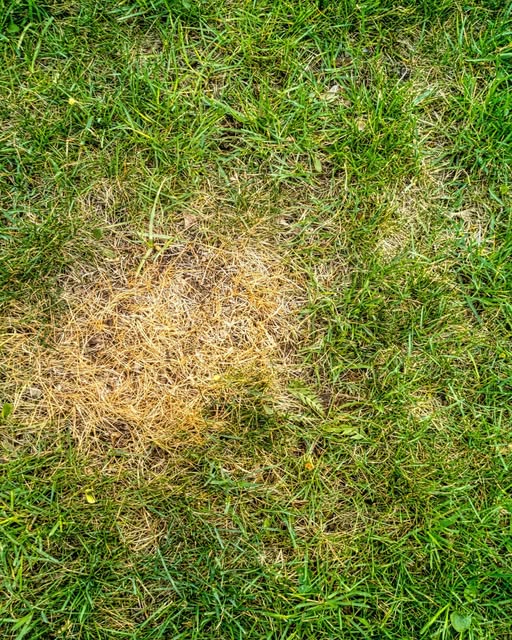
How to tell if this is your problem: the patches are small and roughly circular, scattered in different spots rather than in one large area. There’s often a greener ring around each brown patch. And if you think about it, your dog — or a neighbour’s — uses those areas regularly.
The fix: water the affected spots heavily and immediately after your dog goes. Diluting the urine before it soaks in is the most effective prevention. For existing patches, flush the area with water for several minutes, let it recover, and reseed if the grass doesn’t come back on its own within a few weeks.
Cause #4 — Dry Spots From Uneven Watering
This one is more common than people realize, especially on properties with irrigation systems or sprinklers that haven’t been checked since last season.
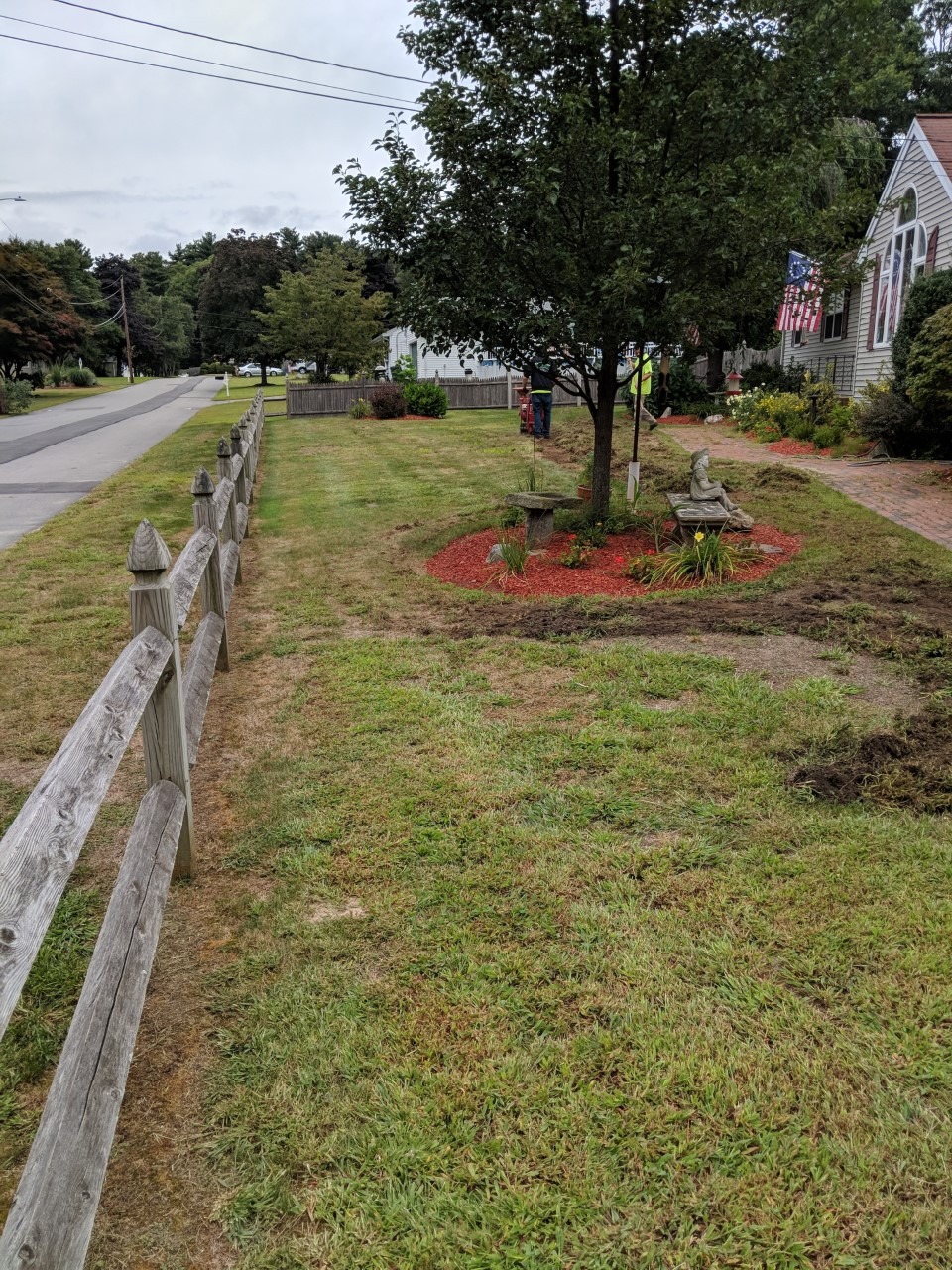
If part of your lawn is getting significantly less water than the rest — because a sprinkler head is blocked, aimed wrong, or not reaching that corner — that section will dry out and brown while the rest of the lawn stays green. The pattern here is usually irregular and tied to specific zones rather than being random.
How to tell if this is your problem: the brown patches are in the same general area every time, often near the edge of a sprinkler’s reach or in a spot that’s consistently missed. If you run your sprinkler system and watch where the water actually lands, you’ll usually spot the gap pretty quickly.
The fix: adjust your sprinkler coverage or water those spots manually until the coverage issue is resolved. For hand watering, water deeply rather than frequently — long slow watering trains roots to grow down looking for moisture, which builds drought resistance.
Cause #5 — Fungal Disease
This is the one people jump to first, but in my experience it’s actually one of the less common causes of brown patches on Sudbury residential lawns. That said, it does happen — and when it does, it looks different from the other causes.
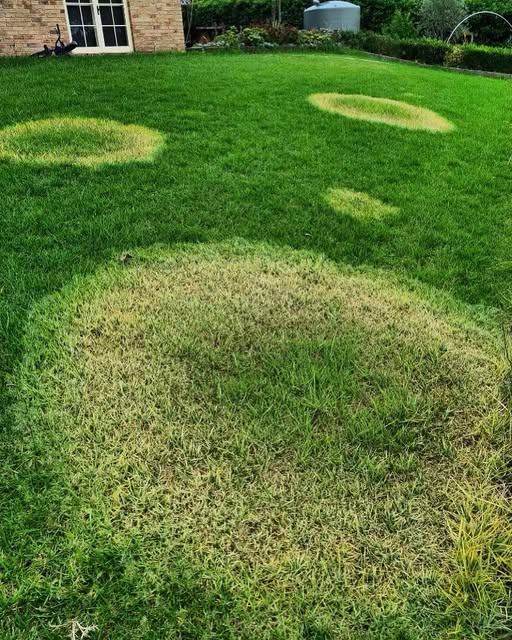
Fungal disease on a lawn usually shows up as patches with irregular edges, sometimes with a ring pattern or a slightly different texture to the affected grass. The patches often appear after a stretch of warm, humid weather — late June into July in Sudbury. The grass blades in the affected area may look matted, discoloured in a specific way, or have a slightly different appearance than just dried-out brown grass.
How to tell if this is your problem: look closely at the grass blades in the brown area. If you see spots, rings, or unusual colouring on individual blades — not just overall browning — fungal disease is more likely. The irregular patch edges and the timing after humid weather are also clues.
The fix: improve air circulation if possible (avoid overwatering, don’t water in the evening), and look into a fungicide appropriate for the specific disease. For persistent or spreading fungal issues, I’d recommend getting a professional diagnosis before treating — using the wrong product wastes money and time.
Cause #6 — Grubs Underground
White grubs are the larvae of beetles — June bugs being the most common in the Sudbury area. They live in the soil and feed on grass roots. If you’ve got a grub problem, you won’t see it until the damage is done — the roots get eaten and the grass above suddenly has nothing anchoring it.
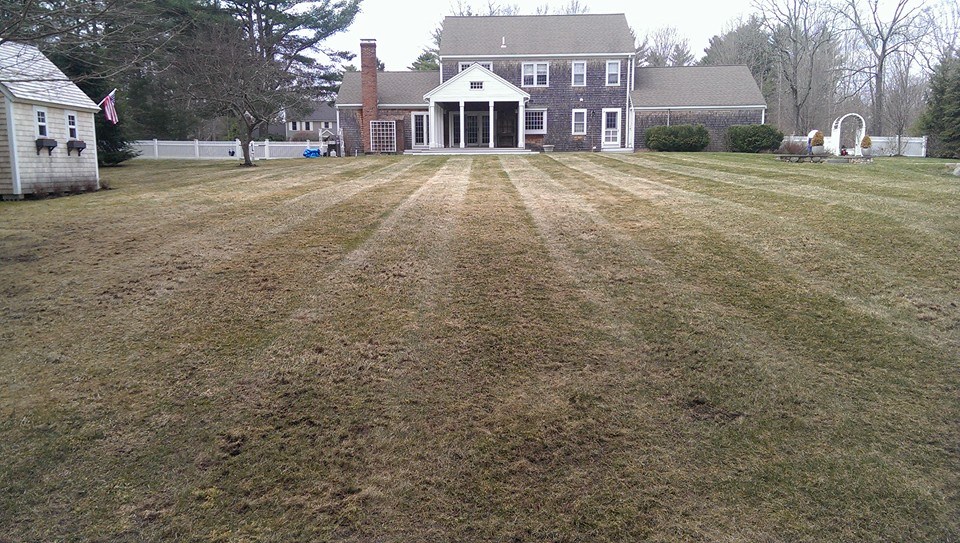
The patches from grub damage look like the turf has just given up. The grass is dead and when you grab it, it pulls up like a loose carpet — no roots holding it in place. That’s the telltale sign.
How to tell if this is your problem: grab a handful of grass in the brown area and pull. If it lifts easily with no resistance, dig down a few inches and look for white C-shaped grubs in the soil. More than five or six per square foot is a sign of a significant infestation.
You may also notice increased bird activity on your lawn — robins and starlings dig for grubs and will work a lawn hard if there’s a population worth eating.
The fix: grub control products are available at most garden centres in Sudbury. Apply in early summer when the young grubs are close to the surface and most vulnerable. Heavily damaged areas will need to be reseeded or resodded once the grub population is under control.
How to Tell the Difference — A Quick Summary
I know that’s a lot of causes. Here’s the fast version to help you figure out which one you’re dealing with.
- Evenly spread browning across open areas, worst in July heat → mowing too short
- Water not absorbing, lawn feels hard underfoot → soil compaction
- Small circular patches with green rings → dog urine
- Brown patches always in the same spot, rest of lawn fine → uneven watering
- Irregular edges, happened after humid weather, spots on blades → fungal disease
- Grass pulls up like carpet, grubs in soil → grub damage
Most of the time, it’s one of the first two. Mowing height and soil compaction account for the majority of brown patch calls I get across Greater Sudbury every summer.
When to Call Someone vs. Handle It Yourself
Honestly, most brown patch situations can be handled by the homeowner once you’ve identified the cause. Raise the mowing height, adjust your watering, flush the dog spots — these don’t require professional help.
Where I’d recommend calling someone:
- The patches are spreading fast and you can’t identify the cause
- You suspect grubs and want a proper assessment before treating
- The damage is extensive enough that you’re looking at sod installation or large-scale reseeding to fix it
- You want core aeration done properly before the summer heat gets worse
If you’re in Greater Sudbury and you want me to take a look, give me a call at 705-507-6787 or fill out the free quote form here. I can usually tell within a few minutes of walking a property what’s going on and what it’ll take to fix it.
Hope this helped narrow it down. If you’ve got a specific situation that doesn’t quite match any of these, just call. Happy to talk it through.
Frequently Asked Questions
Why does my Sudbury lawn have brown patches in summer?
The most common causes on Sudbury properties are mowing too short (which forces shallow roots that can’t survive July heat), soil compaction from harsh winters, and uneven watering. Dog urine, fungal disease, and grub damage are also possible but less common. The fix depends on the cause — identifying it correctly first saves a lot of time and money.
Will brown patches on my lawn grow back on their own?
It depends on the cause and how severe the damage is. Brown patches from mowing height or watering issues can recover if you correct the problem early enough in the season. Dog urine spots often recover with heavy watering and time. Grub damage usually requires reseeding or sod because the roots are gone. Fungal damage can recover if treated properly.
How do I fix brown patches on a Sudbury lawn?
First identify the cause — the fix is different for each one. For mowing issues, raise your deck to 3 inches immediately. For compaction, book core aeration. For dog spots, flush with water. For grubs, apply grub control in early summer and reseed damaged areas in fall. For uneven watering, adjust your coverage and water deeply twice a week.
When should I reseed brown patches on my Sudbury lawn?
Late August to mid-September is the best window for reseeding in Greater Sudbury. The soil is still warm enough for germination but the temperatures are cool enough that new seedlings won’t get cooked. Reseeding in the heat of July almost never works well in this climate.
Is it normal for Sudbury lawns to go brown in summer?
Some summer browning is normal during extended dry stretches — cool-season grasses go semi-dormant in heat and drought as a survival mechanism. That’s different from brown patches caused by compaction, disease, or pests. A lawn that’s properly maintained — correct mowing height, good soil structure, consistent deep watering — will stay green through most of a normal Sudbury summer without going fully brown.
Ryan Lingenfelter is the owner of Cutting Edge Lawn & Landscaping in Garson, Ontario. Since 2020, his crew has provided full lawn care services across Greater Sudbury — Garson, Val Caron, Hanmer, Lively, Chelmsford, Azilda, and Capreol. Cutting Edge is licensed, insured, BBB A+ rated, and ThreeBest Rated for lawn care services in Sudbury.
📞 Phone: 705-507-6787
📍 Service Area: Greater Sudbury, Ontario
🔗 Free Quote: cuttingedgelawn.ca/quote
