

I got a call last summer from a homeowner in Azilda who was confused and frustrated. She’d been watering her lawn every single day since early June — sometimes twice a day during the hottest stretches — and the lawn was getting worse, not better. Patches that had looked thin in spring were now fully bare. A section along the south fence that had been holding green through June was showing a pale, matted appearance she’d never seen before. And the edges where the grass met the driveway were soft and spongy underfoot in a way that felt wrong.
She’d done everything she understood to be right. The lawn looked like it was struggling, so she watered more. The bare patches appeared, so she watered more. The pale section along the fence developed, so she watered more. A full month of daily watering in a genuine effort to save a lawn that was giving her increasingly clear signals that something was wrong.
The problem wasn’t that she hadn’t watered enough. The problem was that she’d never stopped.
What She Was Trying to Do — and Why It Made Complete Sense
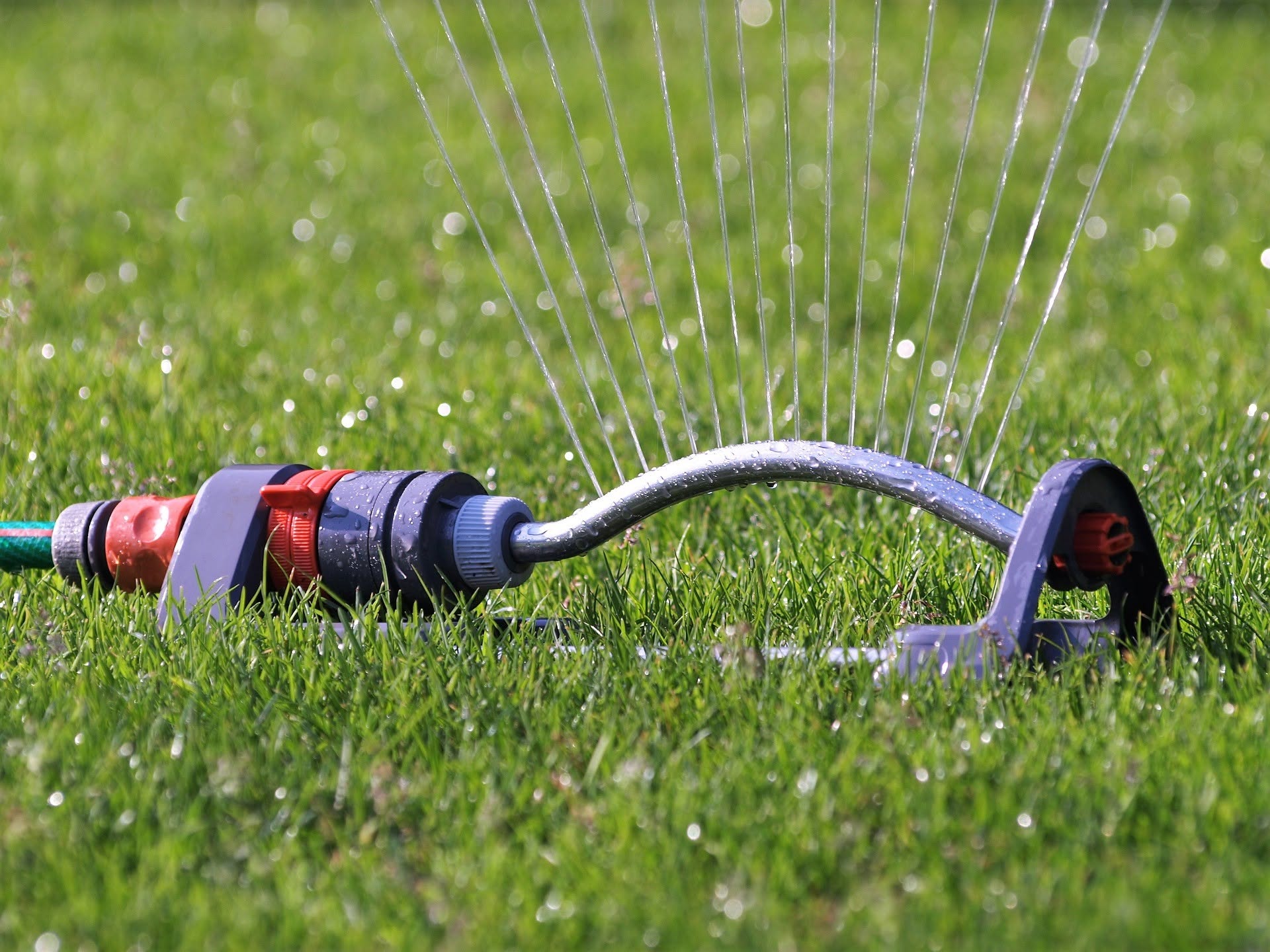
The instinct to water more when a lawn looks stressed is completely logical if you think of grass the way you think of a houseplant. A houseplant that’s wilting needs water. More water fixes the wilt. The lawn looks stressed, so it needs water, so more water should fix the stress. The logic is sound. The problem is that it doesn’t account for what happens to the soil when you never stop watering, and on a Sudbury property the consequences of that show up faster and more severely than they would on a deep-soil property in southern Ontario.
Sudbury’s soil — thin topsoil over Canadian Shield bedrock, often clay-heavy, with limited depth and variable drainage from one section of a property to the next — does not drain the way deep southern Ontario soil does. On a property with six or eight inches of topsoil over well-draining subsoil, daily watering during summer heat creates conditions that are suboptimal but not immediately damaging. The excess water has somewhere to go. On a Sudbury property with three to five inches of topsoil over bedrock or an impermeable clay layer, daily watering creates a waterlogged zone at the bottom of the soil profile with nowhere to drain. The water sits. The roots sit in it. And the conditions that develop in saturated, oxygen-depleted soil are exactly the opposite of what grass needs to survive.
I described the specific way Sudbury’s soil behaves differently from the rest of Ontario in the why Sudbury is different piece. The drainage variation that makes one section of a Sudbury property behave completely differently from the adjacent section is the same variation that makes a single watering schedule applied uniformly across a whole yard produce very different results in different areas — some sections fine, others waterlogged, others dry, all from the same sprinkler running on the same timer every day.
What Daily Watering Does to a Sudbury Lawn Underneath
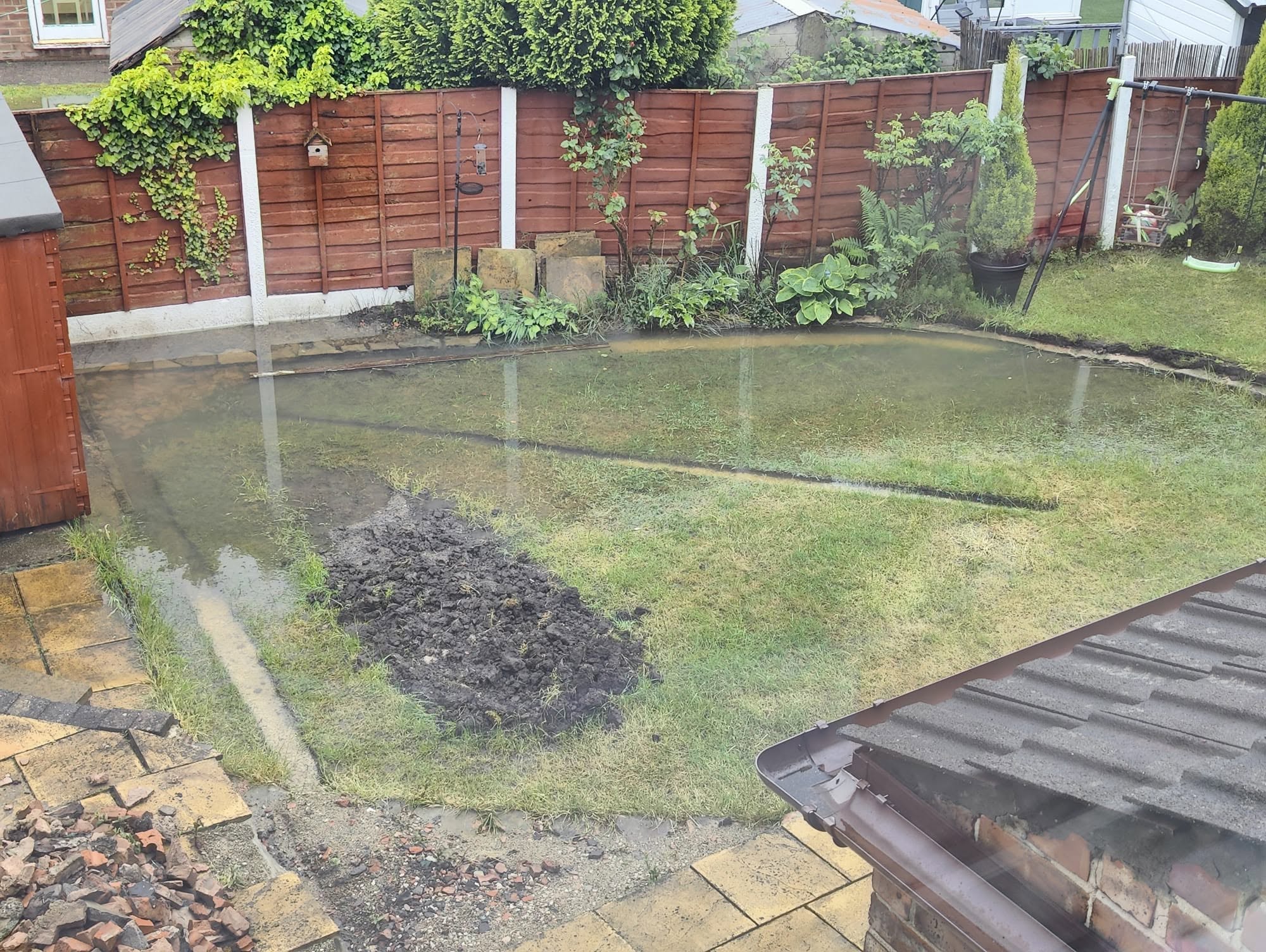
There are two things happening underground when a Sudbury lawn gets watered every day for an extended period, and both of them move the lawn in the wrong direction regardless of how the surface looks.
The root system stops going deep
Grass roots follow moisture. On a lawn that’s watered deeply and infrequently, the moisture at the surface dries between waterings and the roots push deeper into the soil profile to find it, building a root system that reaches through the full available soil depth and draws on the moisture reserve that deeper soil holds. On a lawn that’s watered daily, surface moisture is always present. The roots have no reason to push deeper because what they need is always right at the surface. The root system stays shallow — concentrated in the top inch or two of soil — and the lawn becomes entirely dependent on whatever the daily watering provides with no reserve to draw on when that watering stops or when heat spikes between sessions.
This is why lawns that are watered daily tend to go dormant or brown faster during hot dry stretches than lawns that receive less frequent, deeper watering. The daily-watered lawn has a shallow root system with no buffer. The deep-infrequent lawn has roots reaching through the full soil depth and a moisture reserve to draw on. I described exactly this dynamic in the Sudbury drought survival piece — the lawn that held through two weeks without rain was on a deep infrequent schedule before the dry stretch began. Root depth built before a drought determines drought survival. Daily watering builds the opposite of root depth.
The soil loses oxygen and fungal conditions develop
The second thing daily watering does, specifically on Sudbury’s clay-heavy thin-profile soil, is create persistently saturated conditions at the bottom of the soil layer that eliminate the oxygen roots need to function. Roots breathe. They require oxygen in the soil pore spaces to take up water and nutrients efficiently. Saturated soil — soil where all the pore spaces are filled with water rather than a mixture of water and air — is oxygen-depleted soil, and roots in oxygen-depleted conditions shut down and eventually begin to die even when surrounded by water.
This is the counterintuitive part of overwatering damage: a plant dying in saturated soil looks like a plant that needs water, because the roots have lost their ability to take up water despite being surrounded by it. The surface symptoms — wilting, pale colour, thin growth — are the same as drought stress symptoms. The cause is the opposite. And the treatment is the opposite — which means that a homeowner who responds to overwatering symptoms by watering more is doing exactly the thing that makes the damage worse, which is precisely what happened in Azilda.
The fungal conditions that develop in persistently wet, oxygen-depleted turf are the other consequence. Certain lawn diseases — dollar spot, brown patch, pythium — thrive in the combination of warmth, moisture, and reduced grass vigour that overwatering produces. The pale, matted appearance along the south fence that the Azilda homeowner had noticed was the early presentation of a fungal issue that had developed in the consistently wet conditions along a section where drainage was slower than the rest of the yard and the daily watering had created standing moisture at the soil surface for extended periods.
What the Lawn Actually Looked Like When I Got There
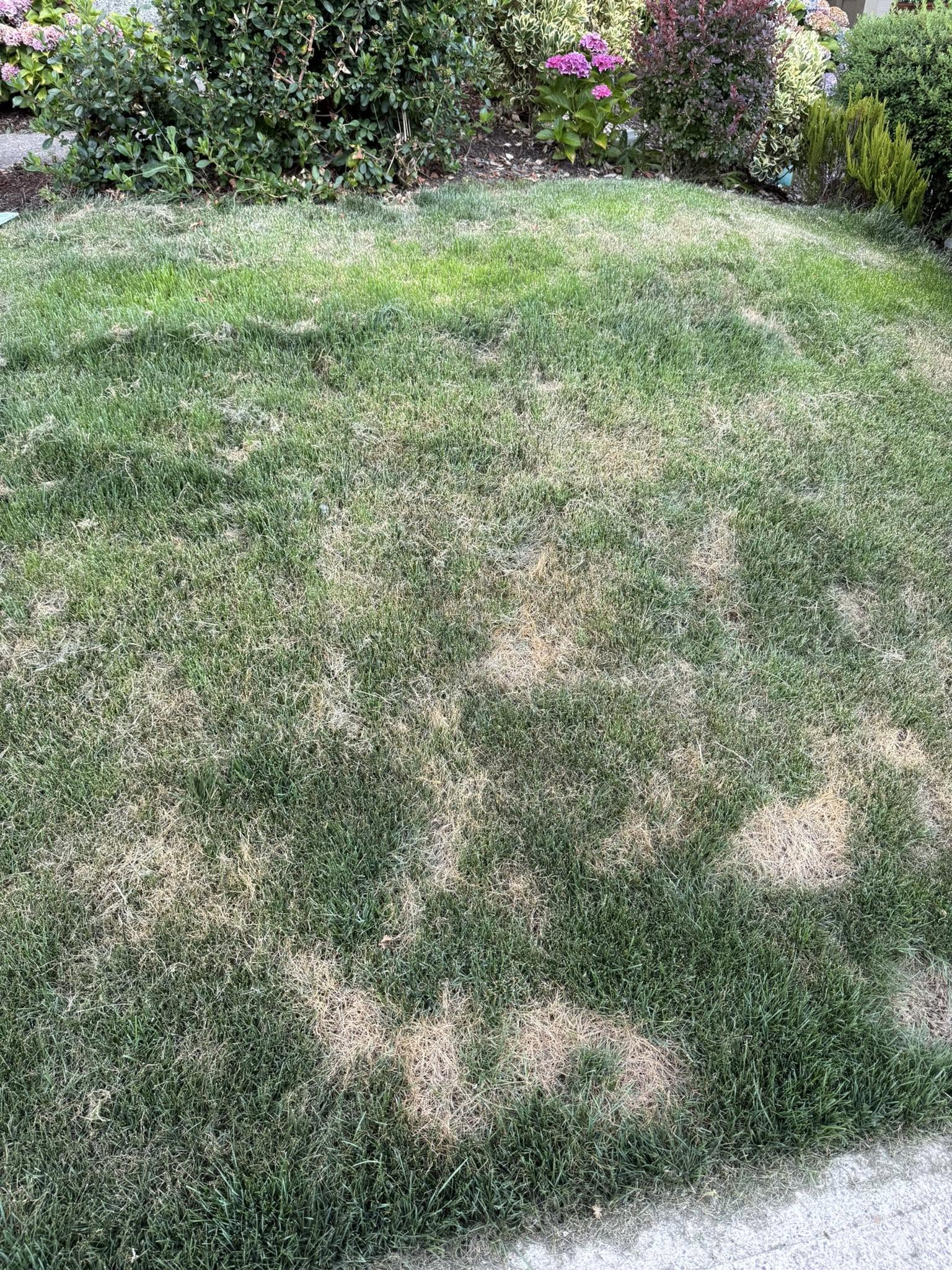
When I walked the Azilda property, the first thing I checked was what I always check first — the three things that tell me the most about a property before I’ve heard the full story. I described that assessment process in the 300 Sudbury quotes piece. The mowing height was set correctly — she hadn’t changed that. The edges were maintained. The persistent problem was clearly the south fence section and the two bare areas that had developed through June and July.
The soil in the bare patches was soft and slightly spongy underfoot — the texture of soil that has been saturated repeatedly without adequate drying time between waterings. When I pulled a handful of grass from one of the bare sections, the roots were short, pale, and soft rather than the firm white roots a healthy lawn produces. Short because they’d never needed to go deep. Soft because they’d been in oxygen-depleted conditions long enough to begin breaking down.
The south fence section had visible fungal patterning — a pale, circular matting that had spread outward from two or three origin points over the previous two to three weeks. That section also had the worst drainage on the property — the fence line creates a shade zone that slows evaporation, and the soil depth in that section was shallower than the main lawn, leaving less soil volume to absorb and hold the daily water before it saturated. The combination of shade, shallow soil, slow drainage, and daily watering had created the ideal environment for the fungal issue to establish.
What the lawn needed was not more water. It needed to dry out, be aerated to reintroduce oxygen to the soil profile, and then be managed on a schedule that allowed the soil to cycle between wet and dry rather than staying permanently saturated. The fungal section needed treatment before the aeration pass so that the aeration cores didn’t distribute the fungal material across the rest of the lawn surface.
What We Changed and How Fast the Lawn Responded
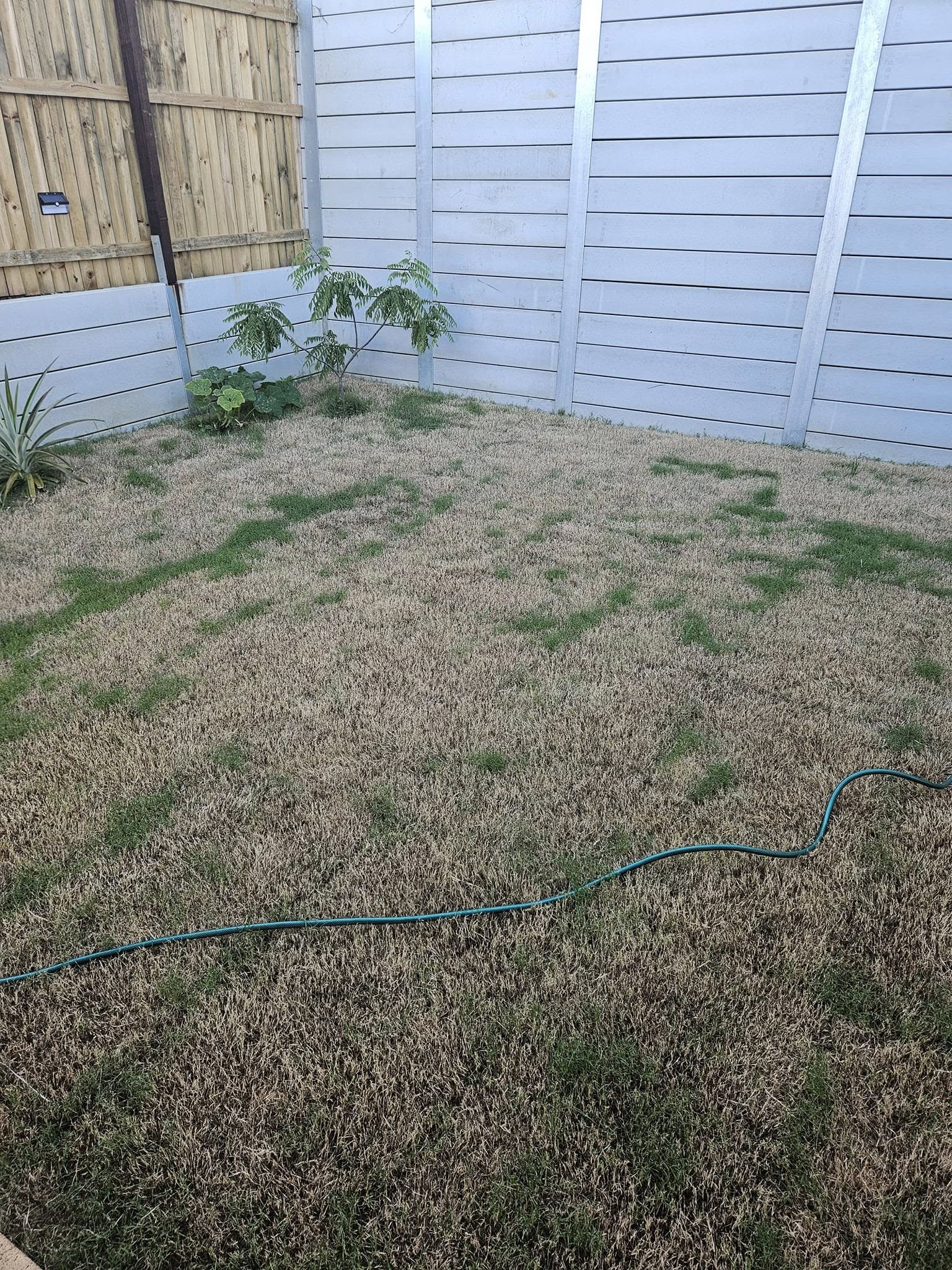
The first change was simple and immediate: stop watering for five days. Let the soil dry enough that the oxygen returns to the pore spaces and the roots begin to recover function. Five days without water on a Sudbury lawn in summer heat is enough to cause surface stress on a shallow-rooted lawn — and this lawn was shallow-rooted — but the surface stress of a brief dry period is recoverable. The root damage from continued saturation is not recoverable at the same rate. The trade-off was clear.
During the five-day dry period, I applied a fungicide treatment to the south fence section to interrupt the fungal spread before the aeration opened the soil. Timing the fungicide before aeration rather than after is important — aerating through active fungal patches moves the problem into the holes and can spread it through the cores as they break down. Treat first, wait for the treatment to work through the surface, then aerate.
After the five days, core aeration across the full property. The aeration served two purposes in this case: it relieved the compaction that had developed in the saturated soil — waterlogged clay-heavy Sudbury soil compacts significantly when walked on repeatedly while wet — and it opened the soil profile to allow oxygen back into the root zone. The core aeration page covers why this is the standard intervention on Sudbury’s clay-heavy soil after any period of sustained compaction, whether from winter or from saturated summer conditions.
After aeration, we moved to a deep infrequent watering schedule: two sessions per week, each one long enough to push moisture through the full available soil depth, with enough time between sessions for the surface to dry and the soil to cycle through wet and dry conditions rather than staying permanently wet. The same schedule that the drought-surviving Hanmer lawn was on before the dry stretch hit — deep roots built by infrequent watering that has to be sought rather than found at the surface every morning.
The bare patches needed overseeding after the aeration. Not immediately — the soil needed to stabilise after the aeration and the shift in watering schedule before new seed went down. We waited ten days after the aeration before overseeding, by which point the soil texture in the bare sections had shifted from soft and spongy to firm — the sign that oxygen had returned to the root zone and the conditions for germination were present.
Two weeks after the watering schedule change, the bare sections were showing new germination and the established grass in the main sections had visibly thickened. The south fence fungal section had stopped spreading within five days of the fungicide treatment and was showing green return through the matted area at the two-week mark. The spongy texture at the driveway edges was gone — the soil had dried and firmed to a normal walking surface.
The homeowner called me at the two-week mark and said the lawn looked better than it had at any point in the summer. Which was true — but the reason wasn’t that we’d added anything. The reason was that we’d stopped.
If your lawn has been watered on a daily schedule and you’re seeing thin growth, pale sections, or soft soil texture underfoot, the diagnosis is worth getting before adding more water or more product. A lot of what looks like a struggling lawn in Sudbury summer is a lawn that’s been given too much of something rather than not enough — and the fix in that case is always to stop before you can start again correctly. For everything we offer, the complete 2026 service breakdown is the right starting point.
If the lawn has already gone brown and you’re not sure whether it’s drought dormancy or overwatering damage, those two conditions look almost identical from the surface but require completely opposite responses. I covered how to tell the difference and what to do about each in the lawn that looked dead in July piece.
Call or text: 705-507-6787
Or fill out the free quote form on the site.
We cover Garson, Val Caron, Hanmer, Lively, Chelmsford, Azilda, Capreol, and surrounding areas.
— Ryan Lingenfelter
Cutting Edge Lawn & Landscaping
Garson, Ontario
705-507-6787
