By Ryan Lingenfelter · Cutting Edge Lawn & Landscaping, Garson, Ontario · June 2026
Every spring when I start walking properties across Greater Sudbury for the first assessment of the season, I find the same category of damage on a significant number of driveways and lawn edges — winter snowplow contact. Some of it is completely normal, cosmetic, and resolves on its own with the first few cuts of the season. Some of it is the kind of damage that, left unaddressed, becomes a more expensive problem by the following winter.
Most homeowners can’t easily tell the difference between the two categories, which means normal wear sometimes gets unnecessary repair spending, and real problems sometimes get ignored because they look similar to the cosmetic stuff. Here’s how I sort it out when I’m assessing properties in spring, and what’s worth your attention versus what isn’t.
What normal snowplow wear actually looks like — the cosmetic stuff that fixes itself
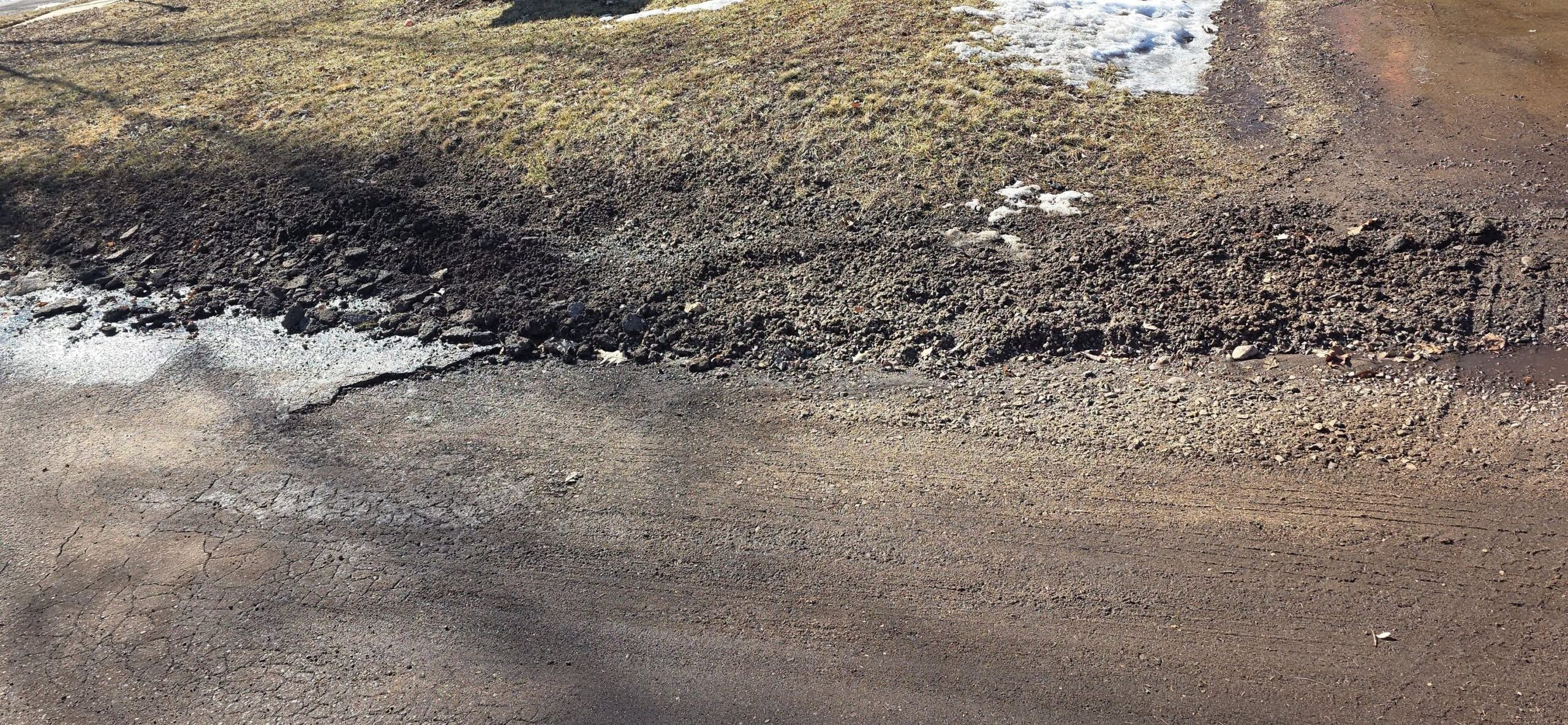
Plowing a driveway in Greater Sudbury winter conditions — whether it’s a municipal contractor, a private plow service, or the homeowner themselves with a plow attachment — involves a steel or polymer blade making contact with the driveway surface and the edges of the lawn adjacent to it, repeatedly, through a season that typically runs from November through April. Some level of contact-related wear is unavoidable and expected. Here’s what falls into the normal category.
Thin scrape marks on asphalt or concrete. Light surface scoring on the driveway surface itself — fine lines or shallow scuff marks where the plow blade has made contact — is cosmetic. It doesn’t indicate structural damage to the driveway material. These marks are most visible right after the snow melts in early spring and become less noticeable as the surface weathers through the season. No action needed.
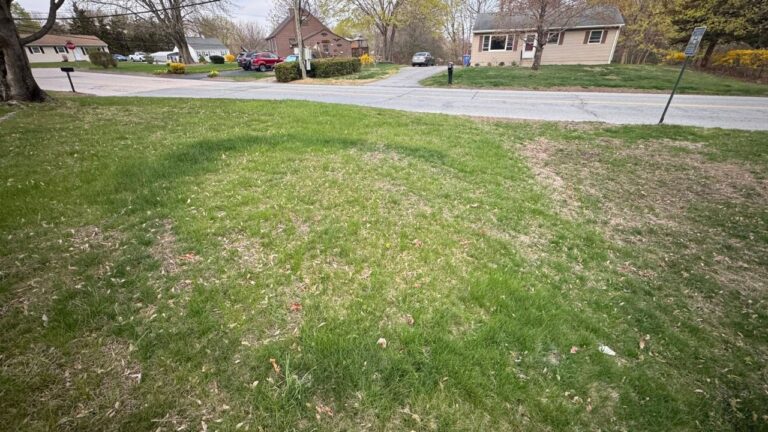
Minor turf disturbance at the lawn edge. A small amount of grass displacement right at the edge where the driveway meets the lawn — blades that have been pressed flat, a slight unevenness in the immediate border — is normal from plow blade overrun during clearing. This typically straightens out and greens up within the first two or three cuts of the spring season as the grass resumes active growth. If the displacement is shallow — the root system is intact, just the above-ground portion was disturbed — it self-corrects without intervention.
Small gravel or sand deposits along the edge. If your municipality or plow contractor uses sand or fine gravel for traction on the driveway or adjacent roadway, some material redistribution onto the lawn edge during plowing is common. A light raking in spring removes the surface material before the first cut. It’s a cosmetic cleanup task, not a damage repair.
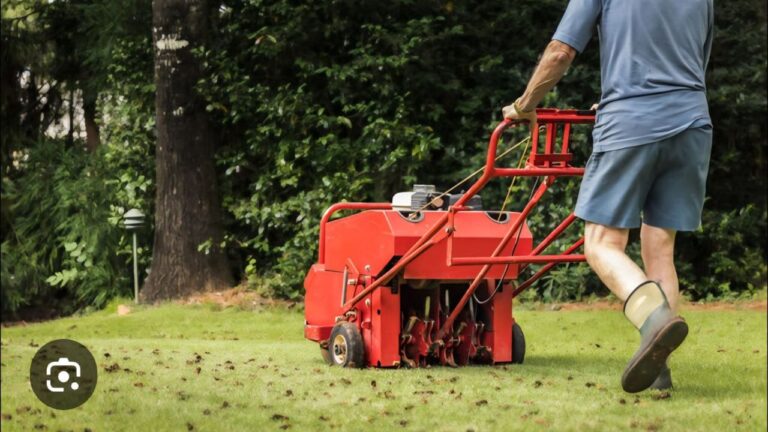
General compression along the plowed edge. The repeated weight of plowing equipment passing along the same line through a winter season produces some soil compression in that specific strip. This is a normal seasonal occurrence and is one of the reasons that the edge along a regularly plowed driveway benefits from being included in the high-traffic compaction zones I check during spring aeration — similar to the foot-traffic compaction patterns I described in the article on what happens to a Sudbury lawn when you skip one year of aeration. It’s addressed through the normal annual aeration process rather than requiring separate repair.
The lawn edge damage that’s a bigger deal than it looks
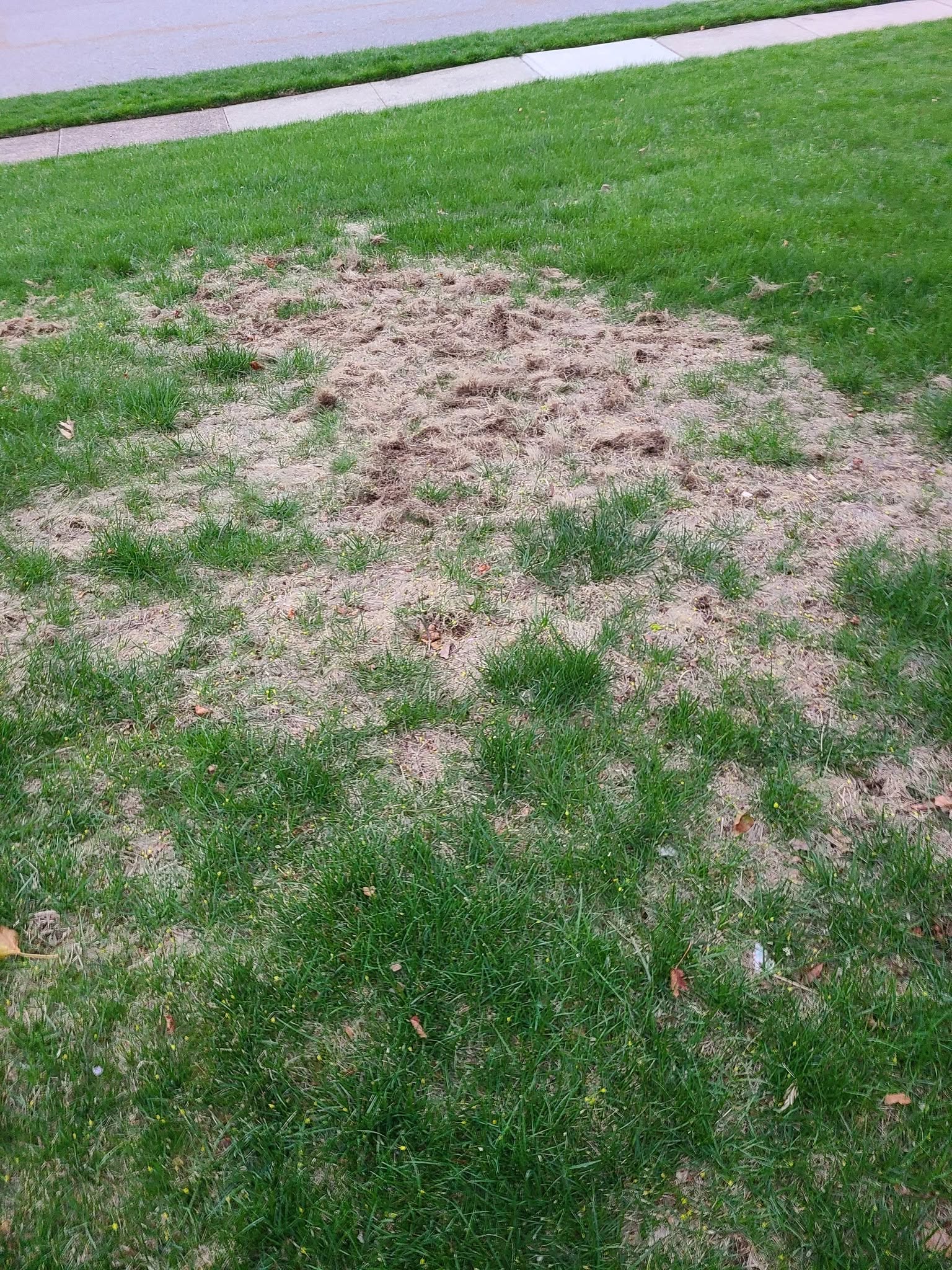
Beyond the cosmetic category, there’s a level of lawn edge damage from plowing that warrants actual repair before it compounds into something more significant.
Torn or gouged turf where soil is visible. If the plow blade caught the edge with enough force to actually tear sod away from the soil — leaving bare soil visible rather than just disturbed grass blades — this is a repair item, not a self-correcting one. Bare soil at a driveway edge in spring is an opportunity for weed establishment and erosion if it’s left untreated through the growing season. The repair is straightforward: clean up the torn area, add a thin layer of topsoil if the soil surface was disturbed, and overseed or patch with sod depending on the size of the bare area. The patching technique and when to use seed versus sod for a repair of this size is covered in the article on lawn repair in Sudbury — when to patch, reseed, or replace.
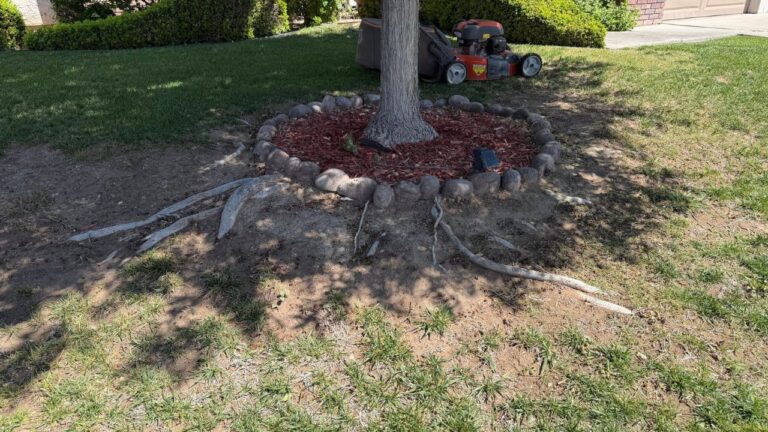
Soil displacement that has created an uneven grade at the driveway edge. If repeated plow contact over multiple winters has pushed soil away from the driveway edge — creating a noticeable dip or trough along the border where the lawn meets the hard surface — this changes how water moves at that location. A trough along the driveway edge collects runoff from both the driveway surface and the lawn, creating a persistently wet strip that can develop the moss and turf decline I described in the article on the 5 things I notice in the first 30 seconds at any Sudbury property. Correcting this requires adding soil back to restore the original grade rather than just patching the grass — patching grass over an uncorrected grade dip just produces grass growing in a wet trough, which fails the same way the previous grass did.
Damaged or displaced edging materials. If your property has a defined hard edge — concrete or stone border, plastic landscape edging, brick or paver border — between the lawn and the driveway, plow contact can crack, displace, or dislodge these materials over a winter season. Unlike grass damage, hardscape edging damage doesn’t self-correct. A displaced edging section that’s left in place through the growing season creates a tripping hazard and an inconsistent border that affects how cleanly you can edge the lawn against it. This is worth addressing in spring before it becomes a season-long annoyance or a liability concern.
Driveway surface damage — what’s cosmetic and what signals a structural problem
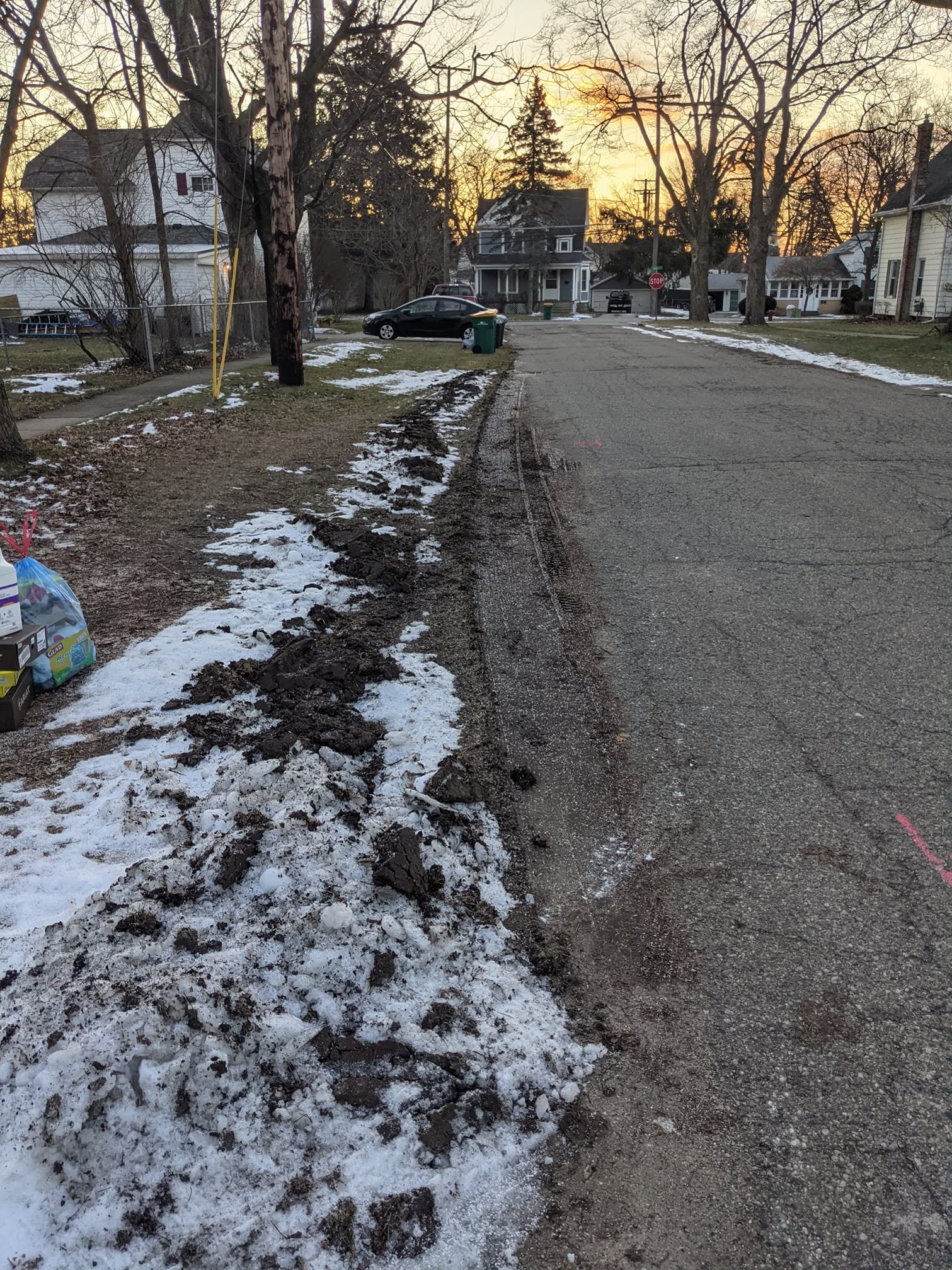
Beyond the lawn edge, the driveway surface itself can show plow-related damage that ranges from purely cosmetic to genuinely structural.
Cosmetic — surface scoring and minor chipping. As mentioned above, light surface scuffing on asphalt or concrete is cosmetic. On asphalt specifically, minor surface chipping at expansion joints or pre-existing small cracks can occur from plow contact, but if the chips are shallow and don’t penetrate through the full depth of the surface material, this is weathering-level damage that doesn’t require structural repair. It affects appearance more than function.
A signal worth investigating — cracks that have widened or deepened since fall. If you have pre-existing cracks in your asphalt or concrete driveway and you notice in spring that they’re visibly wider or deeper than they were before winter, this is worth paying attention to. Greater Sudbury’s freeze-thaw cycle is already hard on driveway surfaces independent of plowing — water infiltrates cracks, freezes, expands, and widens the crack incrementally through the winter. Plow contact can accelerate this process if the blade is catching the edge of an existing crack repeatedly through the season, chipping away at the edges and widening what started as a hairline fracture.
Cracks that have grown meaningfully over one winter season are worth sealing before the next winter to slow the freeze-thaw degradation process. Asphalt crack sealant is a relatively inexpensive DIY product for minor cracks, and for more significant cracking, a professional asphalt repair assessment is worth getting before the damage progresses to the point of requiring a full resurfacing.
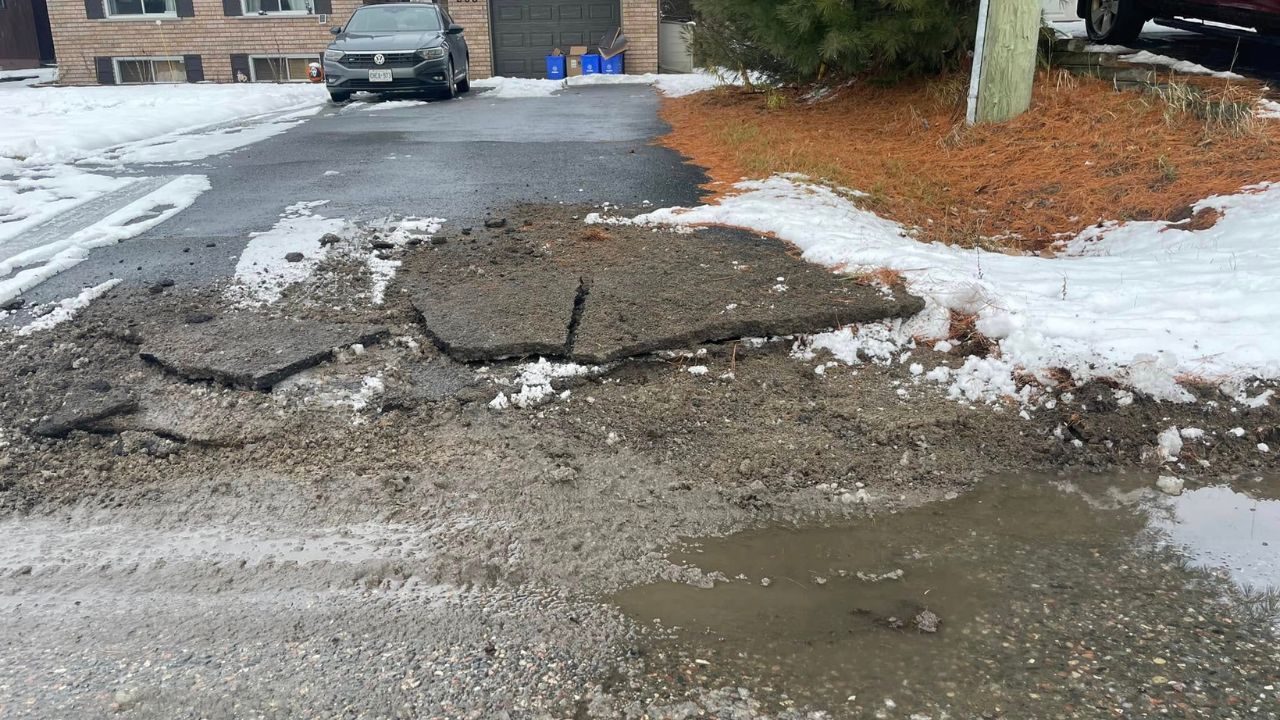
A genuine concern — heaving or settling sections. If a section of your driveway has visibly heaved upward or settled downward relative to the surrounding surface — creating a noticeable lip or dip that wasn’t there in fall — this typically indicates a sub-base issue rather than surface-level plow damage. Frost heave from inadequate sub-base drainage, settlement from poor compaction during original installation, or root intrusion from nearby trees are common causes in Greater Sudbury. Plow contact on an already-heaved section can accelerate surface cracking at that point, but the underlying cause is structural, not the plowing itself. This level of damage typically requires professional driveway assessment rather than a cosmetic fix, because patching the surface without addressing the sub-base movement produces a temporary fix that fails again.
What to check and fix before the spring lawn season starts
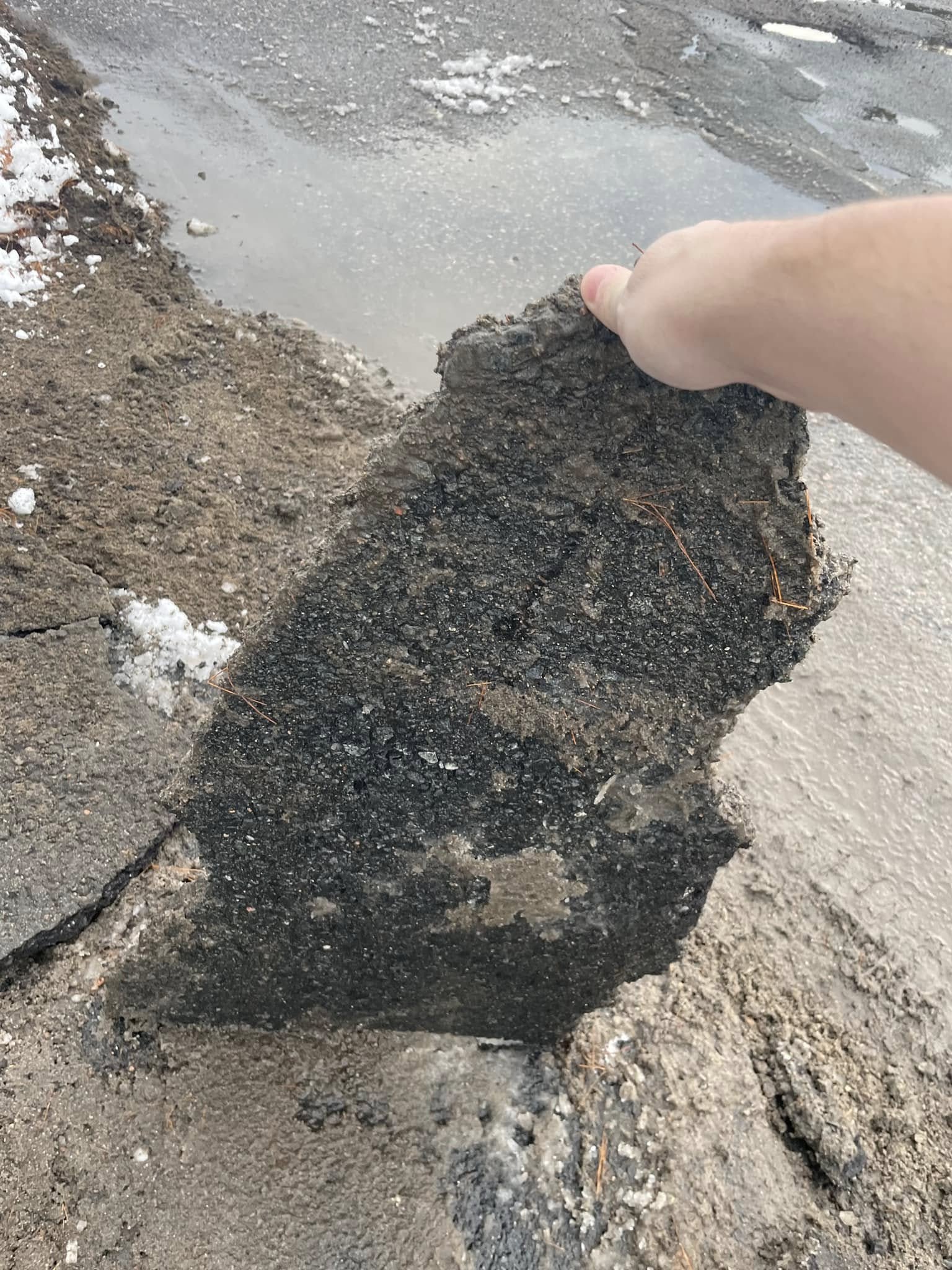
Here’s the practical checklist I work through on every property in early spring, before the first cut of the season, specifically for winter plow-related damage.
Walk the full driveway edge on both sides. Look for the difference between minor turf disturbance — flattened grass that will straighten on its own — and actual torn turf with bare soil exposed. Mark any bare soil sections for spring repair. If the area is under fifty square feet, a patch repair with topsoil and seed or small-format sod is usually sufficient. Larger areas may need a more involved approach.
Check the grade along the entire plowed edge with a level eye. Walk the length of the driveway and look for any sections where the lawn surface has clearly dropped relative to the driveway edge compared to the rest of the border. A consistent grade along the full edge is what you’re looking for. Any section that dips noticeably is worth correcting with topsoil addition before it becomes a persistent wet strip.
Inspect any hardscape edging for displacement or cracking. Concrete or stone borders, plastic landscape edging — check that everything is still aligned and intact. Reset or replace anything that’s been displaced before it becomes a trip hazard or a recurring nuisance through the mowing season.
Look at the driveway surface itself for crack progression. Compare what you’re seeing this spring to what you remember from fall, if you can. Cracks that have visibly widened or deepened are worth addressing with sealant before next winter, while they’re still manageable repairs rather than structural concerns.
Note any heaving or settling for professional assessment. If you find sections of the driveway surface that have moved relative to the surrounding area in a way that goes beyond surface cracking, that’s outside the scope of what lawn care addresses and worth a call to a paving or driveway contractor before it progresses further.
Most of what shows up after a Greater Sudbury winter is in the normal-wear category and resolves on its own through the first few weeks of the growing season. The repair-worthy items — torn turf, grade dips, displaced edging, growing cracks — are worth catching in spring rather than letting them carry through another season, because each of these issues compounds with another winter’s plow contact if left unaddressed. The spring cleanup visit, which I covered as part of the seasonal sequence in the article on the complete 2026 Sudbury lawn care homeowner reference, is the natural point in the season to do this assessment alongside the general property cleanup.
If you want a proper spring assessment that includes checking for winter plow damage along with the standard lawn evaluation — give me a call. I’ll walk the full property, including the driveway edges, and tell you what’s cosmetic and what’s worth addressing this season.
📞 705-507-6787 | Get a free quote online
— Ryan Lingenfelter
Owner, Cutting Edge Lawn & Landscaping
Garson, Ontario · 705-507-6787