
By Ryan Lingenfelter · Cutting Edge Lawn & Landscaping, Garson, Ontario · June 2026
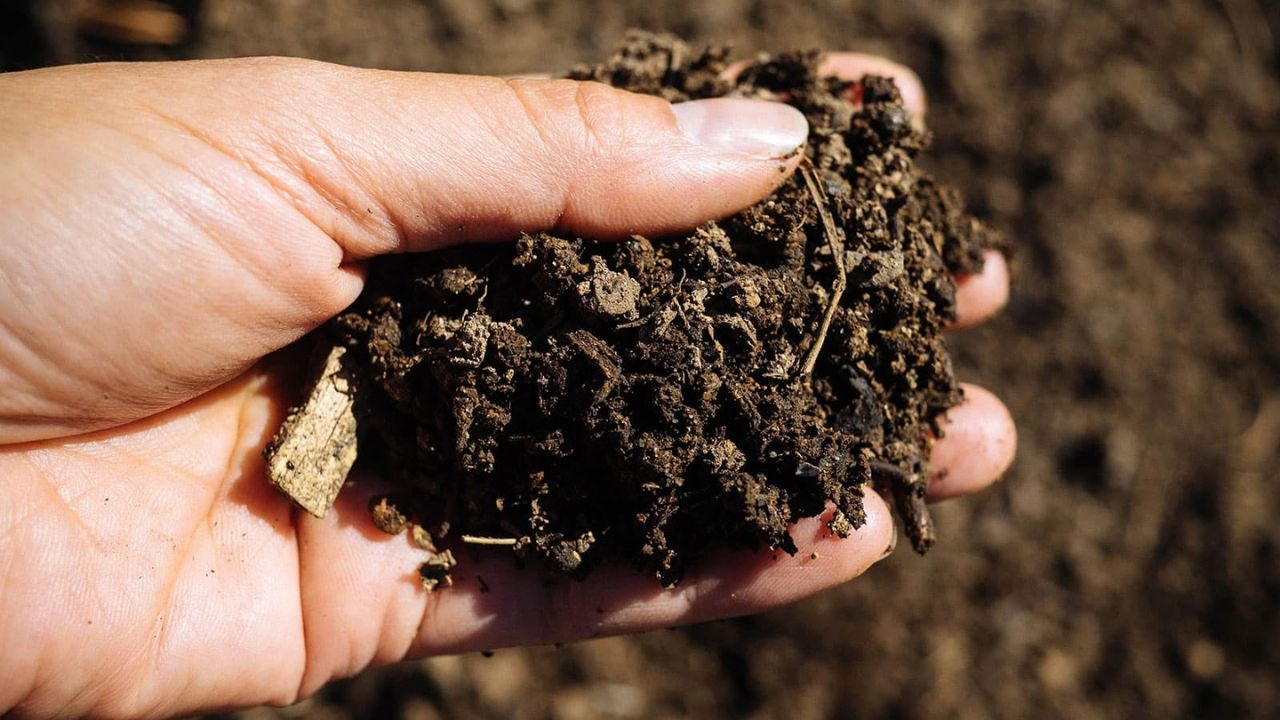
I’ve run soil tests on dozens of Greater Sudbury properties over the past six seasons. pH readings, macro-nutrient levels, organic matter percentages — the standard panel that tells you what the soil actually contains versus what you’re assuming it contains. Most results confirm what the visual read already suggested. Compacted clay with moderate acidity and depleted organic matter. Or sandier soil with lower pH than expected. Occasionally a property that surprises you by being in better shape than the surface suggested.
One result surprised me more than any of them. Not because it revealed something I’d never encountered before — but because of how extreme it was, and because the property it came from looked like a lawn that should have been producing perfectly acceptable results. It wasn’t. And the soil test explained exactly why, in a way that changed how I approach the first conversation with every new client in Greater Sudbury.
The property — what made me run the test in the first place
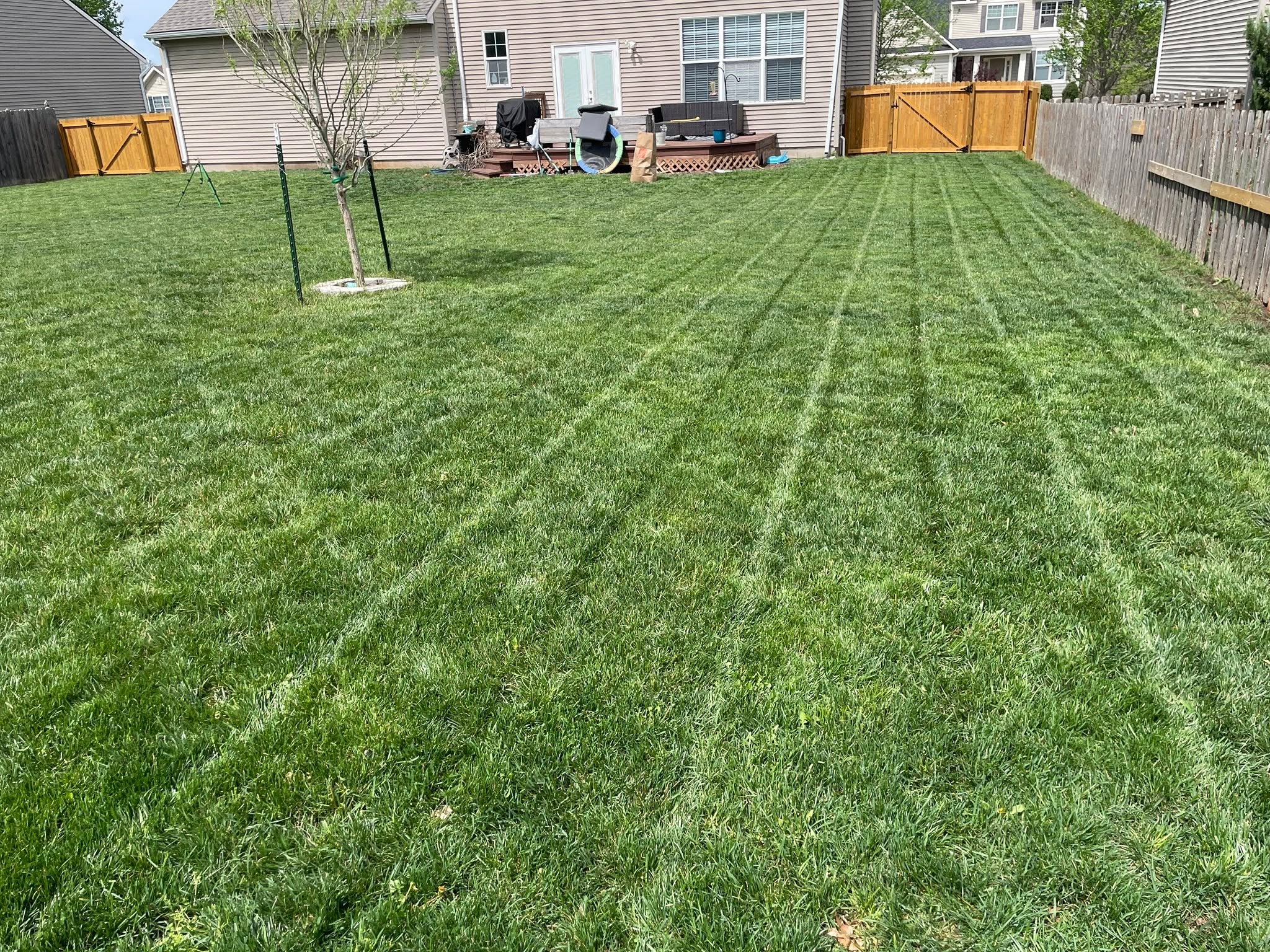
The property was in an established neighbourhood in Greater Sudbury — older streets, mature trees, houses that had been there for decades. The homeowner had lived there for twelve years. In those twelve years, the lawn had never looked the way he wanted it to. Not dramatically bad — not dead, not completely overrun with weeds — just consistently underwhelming. Pale, thin in the open areas, slow to respond to anything he put down.
He’d tried the standard progression of things homeowners try when a lawn isn’t performing. Fertilizer programs — he’d run the same four-step seasonal bag program for at least four years. Overseeding — twice, with reasonable technique and timing, and the seed had taken in a thin, unsatisfying way each time. He’d had the lawn aerated by a local company two seasons before I arrived. It had helped slightly but not as much as the company had suggested it would.
When I walked the property, what I found was roughly what he’d described. Pale mid-green at best, pale yellow-green in the open sections. Thatch at about three quarters of an inch — manageable but worth addressing. Compaction that was moderate — the previous aeration had helped but hadn’t fully resolved it. Root depth at about two inches. Nothing catastrophic. Nothing that fully explained the consistent underperformance over twelve years despite reasonable effort.
The absence of a clear explanation was what prompted me to run the soil test. When the visible indicators don’t fully account for the degree of underperformance, the soil chemistry is usually where the answer is hiding. I told him I wanted to test before recommending a restoration program, because I didn’t want to recommend inputs without knowing whether the soil could actually process them. He agreed.
I took four samples from different sections of the property — a sunny open section, a partially shaded section near the fence, the worst-performing open section, and the area near the house foundation that seemed to be doing slightly better than the rest. I combined them into a composite sample and sent it to the testing lab.
The result — and why it stopped me
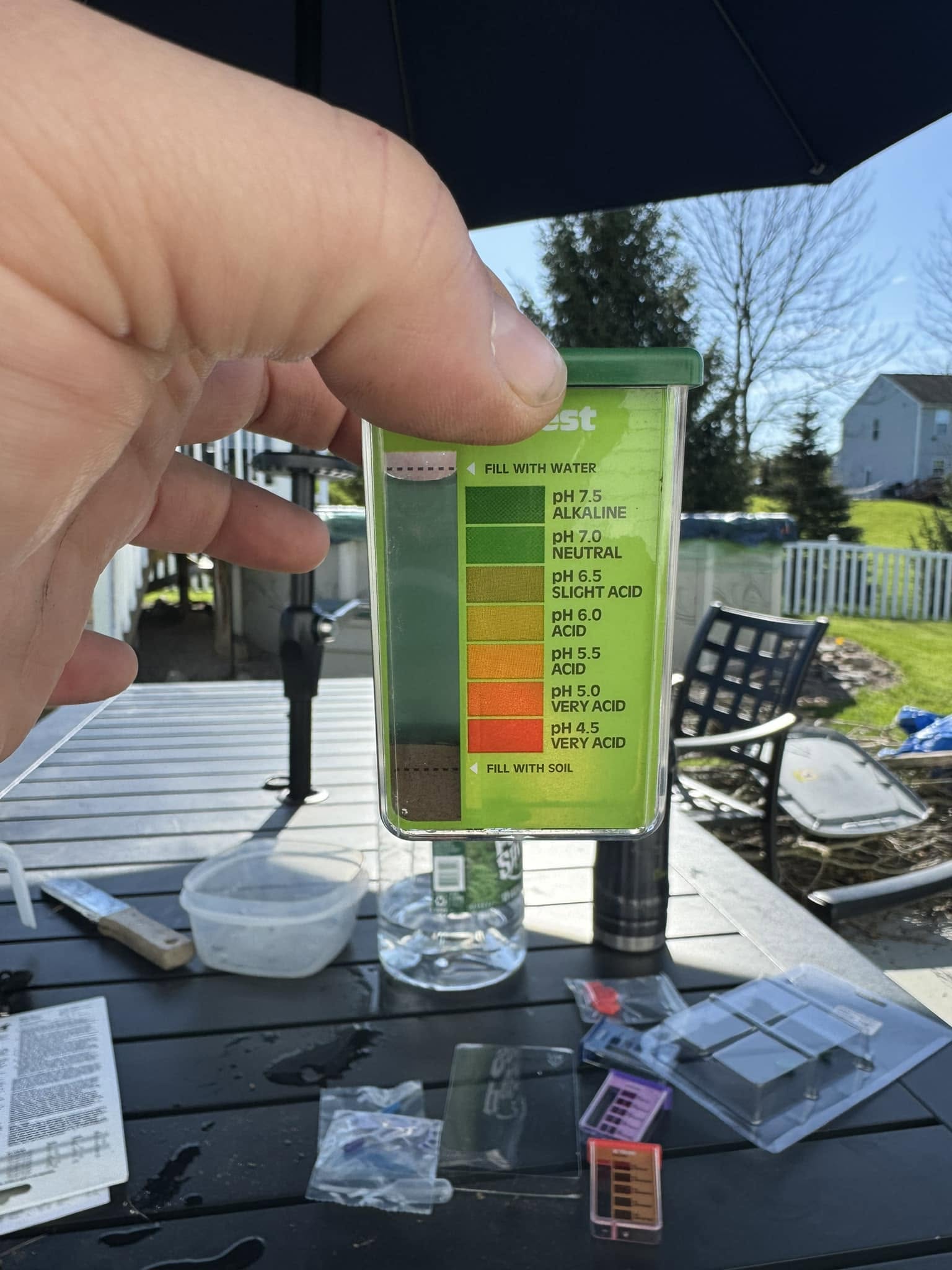
The pH reading came back at 4.2.
I read it twice. Then I read the individual section results, because a composite can sometimes mask a very low reading from one area being averaged with higher readings from others. All four sections were within two tenths of a point of each other. The property as a whole was running at pH 4.2 to 4.4.
For context: cool-season lawn grasses in Greater Sudbury — Kentucky Bluegrass, creeping red fescues, the varieties I covered in the article on the 2 grass types that work in Sudbury and the 3 that don’t — perform optimally at a soil pH of 6.0 to 7.0. They tolerate conditions down to about 5.5 with reduced performance. Below 5.5 the performance degradation is significant and measurable. Below 5.0 it becomes severe. At 4.2, the soil is so acidic that the grass is effectively unable to access most of the nutrients present in the soil regardless of how much fertilizer has been applied.
To put a number to the significance: pH is a logarithmic scale. A reading of 4.2 is not slightly lower than 6.0 — it’s ten times more acidic than 5.2, and one hundred times more acidic than 6.2. The soil at this property wasn’t moderately acidic. It was extremely acidic. At pH 4.2, phosphorus availability drops to near zero — the nutrient that supports root development and establishment is essentially locked out of the system. Calcium and magnesium are deficient because they leach at high rates in very acid conditions. The microbial activity that makes organic matter and nutrients available to plants operates at a fraction of its normal rate. And the grass plant expends energy dealing with the stress of the acid environment rather than putting that energy into growth.
Four years of a fertilizer program. Two overseedings. One aeration. All of it applied to soil that was physically incapable of making most of those inputs available to the grass. The money he’d spent and the effort he’d put in had been producing the return you get from watering a plant through a sealed container. Some got through. Most didn’t.
What caused a pH of 4.2 on an established residential property? Several factors can contribute, and in this case it was likely a combination. The natural tendency of Greater Sudbury’s Canadian Shield-influenced soil toward acidity — which I covered in the article on what Sudbury soil actually looks like and why it matters — creates a starting point that’s already acidic relative to the optimal range for lawn grasses. Twelve years of nitrogen fertilizer applications without any pH correction — nitrogen fertilizers have an acidifying effect on soil over time as they process. Mature needle-dropping coniferous trees on the property boundary contributing acidic organic matter to the surface soil. And potentially the original soil condition of the property, which may have started acidic and been compounded by everything since.
What an extreme result like this does to a lawn — the science in plain language
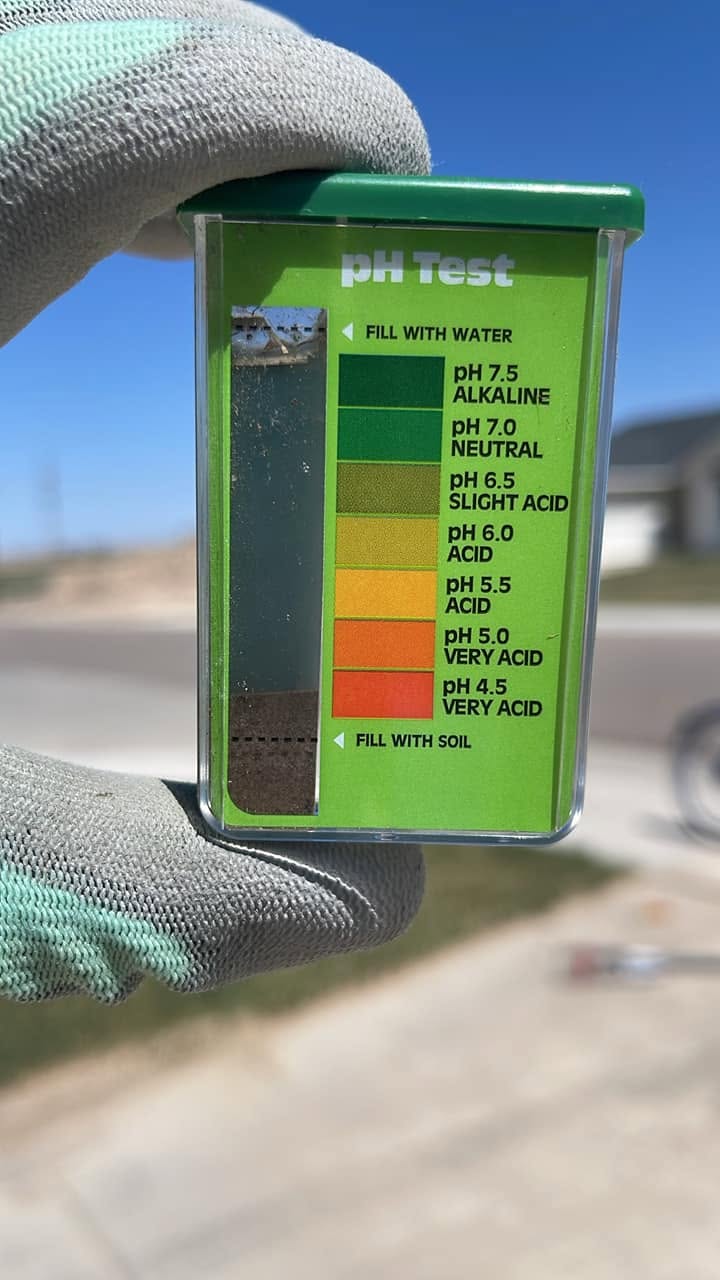
Understanding what pH 4.2 actually does to a lawn helps explain why twelve years of effort had produced such limited results — and why the same situation might exist on other properties in Greater Sudbury without anyone having identified it.
Nutrient lockout. Most nutrients that grass needs are available in soil across a wide pH range, but their availability changes dramatically at the extremes. At pH 4.2, phosphorus — the nutrient most directly tied to root development and seedling establishment — is almost completely unavailable to plant roots. It’s present in the soil. The fertilizer programs had been adding more of it. But in extremely acidic conditions, phosphorus binds chemically to aluminium and iron in the soil and becomes insoluble. The grass can’t access it. Four years of fertilizer programs had been adding phosphorus to a system that couldn’t release it. The overseedings had been landing in a root environment where the plants couldn’t develop the root systems they needed because the nutrient that drives root development wasn’t available.
Aluminium and manganese toxicity. In very acidic soil, aluminium and manganese dissolve into the soil solution at concentrations that are directly toxic to grass roots. These elements are present in most soils but harmless at normal pH levels. At pH 4.2, they’re soluble enough to inhibit root elongation, damage root cell membranes, and interfere with the plant’s ability to take up the nutrients that are available. The grass at this property wasn’t just nutrient-deprived. It was growing in a low-level chemical stress environment that its root system was fighting every day.
Reduced microbial activity. The soil biology that makes organic matter available as plant nutrition — the bacteria and fungi that break down complex organic compounds into forms grass roots can absorb — functions poorly at pH 4.2. Most beneficial soil microbes operate optimally between pH 6.0 and 7.5. At 4.2, the microbial community is dramatically reduced in both diversity and activity. Organic matter accumulates rather than cycling. The thatch that was present on this property had been accumulating partly because the soil biology that should have been decomposing it — the process that aeration supports by introducing soil microbes into the thatch layer — was operating at a fraction of normal capacity because the pH wasn’t supporting microbial life.
The fertilizer paradox. Nitrogen fertilizers — which the homeowner had been applying consistently — have an acidifying effect on soil over time. As nitrogen compounds process through the soil, they release hydrogen ions that lower pH. In normal soil that starts at pH 6.0 to 6.5, the acidifying effect of nitrogen fertilizers over multiple seasons is modest and manageable — a periodic lime application corrects it. On a soil that was already extremely acidic, four years of nitrogen application without pH correction had been compounding the problem that was producing the poor results the homeowner was trying to fix. The fertilizer meant to help the lawn was making the underlying condition worse.
What we did about it — and what I now tell every Sudbury client before we start
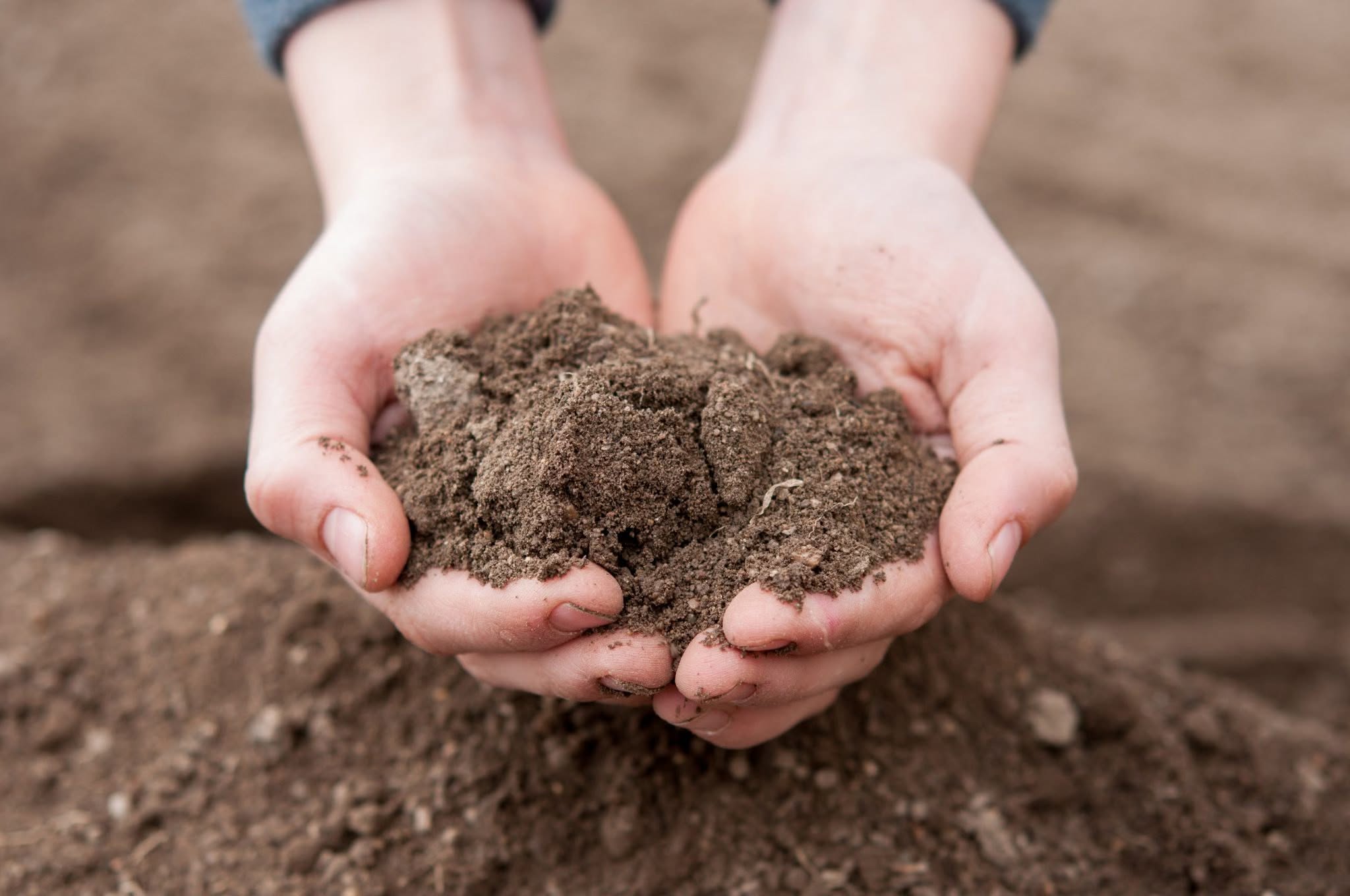
The correction for pH 4.2 soil is lime — agricultural limestone, applied at a rate calculated to raise the pH to the target range of 6.0 to 6.5. The calculation is not simple math because the rate needed depends on the soil texture as well as the current pH. Clay soils have higher buffering capacity than sandy soils — they require more lime to shift the same number of pH units. On this property’s clay-influenced Greater Sudbury soil, the correction from 4.2 to 6.0 required a significant lime application, more than a standard annual lime treatment would provide.
Lime works slowly. Applied in spring, it typically takes three to four months to produce a measurable pH shift — longer for the full correction to complete. This means the correction program on this property was a multi-year process, not a single-season fix. First year: significant lime application in spring, followed by aeration and overseeding in late May with the understanding that results would be improved but not fully corrected. A second lime application in fall. Soil test at the end of season one to confirm the direction of movement. Second year: aeration, overseeding, and a maintenance lime application based on the updated test result. By season two, the pH was at 5.4 — still below optimal but dramatically better than 4.2. By season three, we were at 5.9 and the lawn was performing in a way that was visibly, substantially different from what it had done in any of the previous twelve years.
The homeowner had spent money on fertilizer, overseeding, and one aeration over four years and seen marginal results. The lime correction cost less in total than the fertilizer he’d been applying and produced results within two seasons that the fertilizer alone could never have produced. The pH correction was the only intervention that actually changed the system the lawn was operating in. Everything else — the fertilizer, the overseeding, the aeration — became effective once the soil could actually use what was being put into it.
What I now tell every new client in Greater Sudbury before we start:
I tell this story. Not always in the detail I’ve told it here, but the core of it. I tell it because the situation at that property — consistent effort, good technique, repeated investment in the right services, and dramatically underperforming results — is not unique. The specific severity of pH 4.2 is unusual. But soil pH problems that are limiting lawn performance without anyone having identified them exist across Greater Sudbury, and the most common reason they persist is that nobody ran a test.
A soil test in Greater Sudbury costs $15 to $25 at most garden centres and takes about two weeks to return results. It tells you pH, major nutrient levels, and organic matter content. Those three numbers, combined with what I find in the physical assessment of the lawn, tell me whether the inputs I’m recommending will actually be available to the grass or whether something in the soil chemistry is intercepting them before they get there.
Before I recommend a fertilizer program on any property in Greater Sudbury, I now ask whether there’s a recent soil test. If there isn’t, I recommend getting one before we spend money on inputs that the soil may not be able to process. The $20 soil test has saved clients significantly more than $20 in fertilizer that wouldn’t have worked — and in one case, it explained twelve years of frustration in a single number.
The full context for why pH matters so specifically in Greater Sudbury’s geology is in the article on what Sudbury soil actually looks like and why it matters — the Canadian Shield parent material and the historical acidification from decades of industrial emissions create starting conditions that make pH more relevant here than in many other parts of Ontario. And the fertilizing approach that makes sense once pH is understood is covered in the article on what I tell Sudbury homeowners about fertilizing — pH correction is the prerequisite that the fertilizer article assumes but that many homeowners have never addressed.
If your lawn has been performing below your expectations despite consistent maintenance effort, and you’ve never had a soil test done, it’s the first thing I’d suggest before trying anything else this season.
📞 705-507-6787 | Get a free quote online
— Ryan Lingenfelter
Owner, Cutting Edge Lawn & Landscaping
Garson, Ontario · 705-507-6787
