People ask me all the time what’s actually possible with a Sudbury lawn in one season. Not a lawn that’s been professionally managed for five years. Not a fresh sod installation on perfect topsoil. A real property — compacted soil, a few bare patches, maybe some thatch buildup — that gets the full treatment from May through October with every step done in the right order at the right time.
I want to answer that question properly. Not with vague promises, not with cherry-picked photos — but with an honest walk through what actually happens, month by month, when you do this right in our specific climate.
I’m going to use a property I worked on in Garson last season as the example. It started average. By October it was the best-looking lawn on the street. Here’s exactly what that looked like.
May — What We Started With and What We Did First

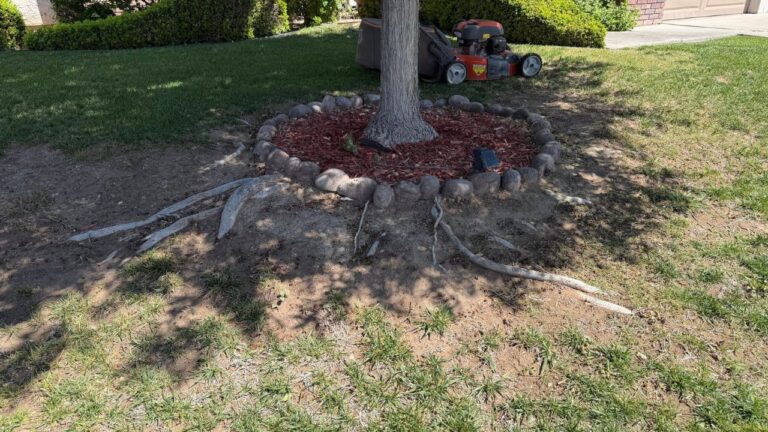
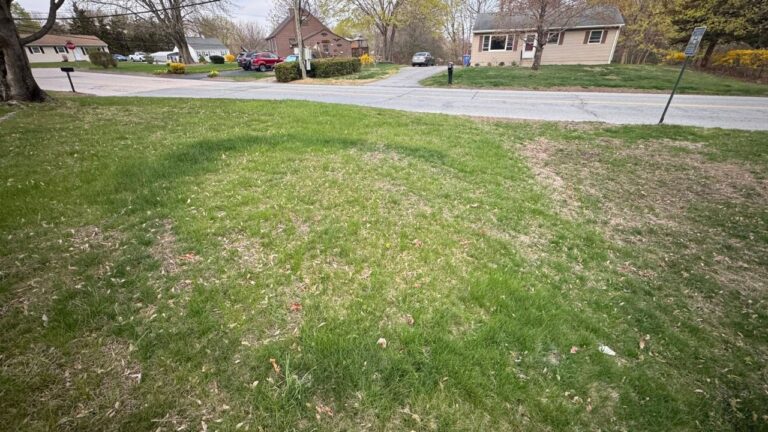
When I first walked this property in early May, here’s what I found. The lawn was about 60 percent grass — decent coverage but with noticeable bare patches along the south-facing side and near the back fence. The soil was compacted — pressing my heel in, there was almost no give. There was a moderate thatch layer, maybe half an inch, built up from a few seasons without cleanup. And the previous owner had clearly been cutting it short — maybe two inches — based on how it looked coming out of winter.
The homeowner hadn’t done anything wrong, exactly. The lawn just hadn’t had the foundation work it needed. So that’s where we started.
Week one: a thorough spring property cleanup. All the winter debris out, the thatch layer lifted with a light rake, edges cleaned along the driveway and fence line. The lawn already looked better just from this — it could breathe again.
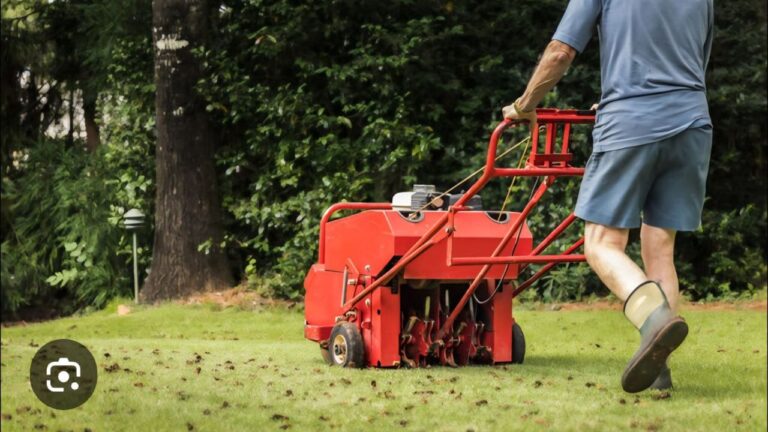
Week two: core aeration, two passes across the whole property. The difference in how the soil felt underfoot after aeration was noticeable — the plugs pulled out showed us exactly how compacted things had been.
Immediately after aeration: overseeding the bare patches with a quality cold-hardy fescue-bluegrass mix. Seed going directly into the aeration holes — best germination setup you can give new seed. Then a starter fertilizer application across the whole lawn to support root development and get the new seed off to a strong start.
First mow of the season: set at three inches. Not two. Three. I held that line for the whole season.
By the end of May the lawn was showing new growth in the overseeded patches. The soil was already responding differently to rain — soaking in instead of running off. Foundation work done.
June — The Month Most People Underestimate

June is when the investment from May starts paying visible dividends — and it’s also when the habits you build either set you up for summer or expose you to problems later.
On this property, grass cutting was happening weekly through June. The growth was strong — peak spring growth flush — and we were staying within the one-third rule on every cut. No scalping, no taking off too much because we missed a week. Consistent, weekly, at three inches.
The overseeded patches were filling in. By mid-June you had to look closely to find where the bare spots had been. The new grass was still tender — I kept the mower off those areas for the first three weeks after germination — but it was establishing properly.
Watering routine established: deep, twice a week, early morning. Not ten minutes every evening — long enough to soak four to five inches down, on a consistent schedule, in the morning so the surface dried during the day. This is the habit that pays off in July when the heat arrives. You’re building root depth in June before you need it.
Mid-June: a balanced slow-release fertilizer application. The aerated, improving soil could actually use it now — nutrients getting where they needed to go rather than running off compacted surface.
By the end of June, this lawn looked noticeably better than it had in May. Denser, greener, more even. The bare patches were essentially gone. The homeowner mentioned that a neighbour had already commented on it.
If you want to understand the full month-by-month approach, I’ve written it all out in the Sudbury lawn calendar — worth reading alongside this.
July and August — Where Most Sudbury Lawns Fall Apart

This is the test. Every Sudbury lawn gets tested in July. The heat arrives, the rain stops, and you find out pretty quickly whether the foundation work from May actually did what it was supposed to do.
On this property, we raised the cut height to three and a half inches for the hot stretch. Taller grass, more shade over the soil, less evaporation, less heat stress on the plant. We kept the deep watering twice a week going — and because we’d been doing it since June, the roots were already deeper than they’d be on a lawn that had been watered lightly all spring.
The neighbours’ lawns started going yellow around the third week of July. This one didn’t. It slowed down, it lost a little of the deep June green, but it held its colour through the dry stretch in a way that was clearly visible from the street.
This is what mowing at the right height and building deep roots in spring actually looks like in practice. It’s not dramatic — it’s a lawn that stays green while others go brown. But that’s the whole point.
We didn’t fertilize in July or August. Fertilizing heat-stressed grass forces growth the plant doesn’t have resources to support. We left the clippings on the lawn — free mulch, shading the soil slightly, returning nutrients. We skipped a mow during the driest week when the grass had nearly stopped growing. No point cutting dormant grass.
By late August when temperatures started dropping and rain returned, the lawn recovered quickly. Deep roots, healthy crowns, well-prepared soil — it greened back up in days rather than the weeks it takes a poorly managed lawn to recover from summer.
September and October — The Finish That Sets Up Next Year

September is when a well-managed Sudbury lawn looks its absolute best. The heat stress is gone, the soil is still warm, fall rains are coming — and everything you built from May through August shows up in the lawn’s density and colour in September.
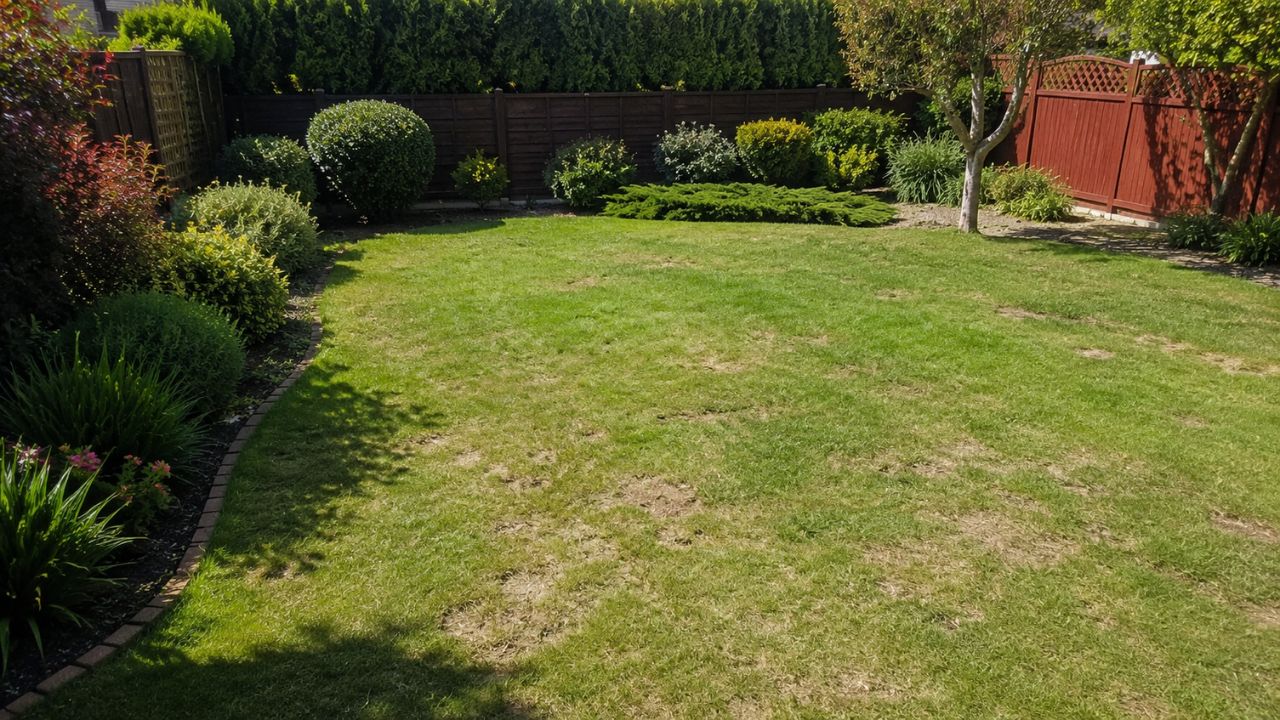
On this property, September looked like this: thick, even, dense coverage across the whole yard. The bare patches from May were completely gone. The colour was consistent. The grass was growing steadily but not aggressively — the right pace for the time of year.
We did a second aeration in early September. Not all properties need two aerations per year, but on a lawn that had been heavily compacted and was in its first proper season, the second round consolidated the soil improvement from spring. The soil was visibly different from what I’d found in May — more workable, better drainage, darker from the improving organic matter.
Overseeding again in September — any sections that had thinned through summer, which on this property was minimal, got a light overseed to top up the density heading into winter. Fall overseeding in Sudbury works well because the soil is warm and germination is reliable.
Fall fertilizer application — higher potassium to support root hardening and winter resilience. This is the feed that carries the lawn through our Sudbury winter and sets it up to green up strong in spring.
Last mow of the season: brought it down to two and a half inches. Slightly shorter than the summer height, which reduces snow mould risk over winter. Thorough fall cleanup — all the leaves off before freeze-up, nothing sitting on the lawn surface going into the cold months.
By mid-October when I finished the season on this property, the homeowner said something that stuck with me. He said: “This is the first year I’ve actually been proud of this lawn.” Not just satisfied — proud. Proud enough to notice it every time he pulled into the driveway.
That’s what one full season done right actually looks like. Not magic. Not expensive products. Not a complete renovation. Just the right steps, in the right order, done consistently from May through October — with a foundation of good soil work making everything else actually work.
The approach I followed on that property is the same one I use across Greater Sudbury. If you want to know what it would look like on your specific yard, I’m happy to come take a look. That conversation is always free.
— Ryan Lingenfelter
Cutting Edge Lawn & Landscaping, Garson, Ontario
📞 705-507-6787
Serving all of Greater Sudbury — Garson, Hanmer, Val Caron, Lively, Chelmsford, Azilda, Capreol, and Sudbury proper. We offer core aeration, grass cutting, property cleanup, sod installation, and full lawn maintenance. Free quotes, no pressure.
Get a Free Quote |
Call 705-507-6787