

Val Caron comes up on my schedule multiple times a week through the growing season. I’ve been maintaining properties here since 2020 — same streets, same yards, season after season — and after five years of it I know these lawns the way you know a neighbourhood you’ve lived in for a long time.
I’m Ryan Lingenfelter, owner of Cutting Edge Lawn & Landscaping in Garson, Ontario. This article is specifically about Val Caron — what I actually see on properties here, what problems come up most consistently, and what it takes to maintain a lawn in this community well. Not general Sudbury lawn advice. Val Caron specifically.
If you live here or are thinking about it, this is the ground-level picture from someone who works these properties every week.
What Val Caron Properties Actually Look Like — The Baseline

Val Caron is an established community. The housing stock here is older on average than the newer subdivisions on the east end of Garson, and the lots reflect that — more variation in size and shape, more mature trees, more defined yard character. You’re not dealing with the cookie-cutter subdivision layout where every lot is 40 by 120 feet and the topsoil is two inches deep over pure clay.
Lot sizes in Val Caron vary significantly. Some properties I maintain here are standard residential — a manageable front and back that takes 45 minutes with a push mower. Others are notably larger, with side yards, defined garden areas, mature hedging, and enough square footage that a riding mower or commercial walk-behind is the only practical option. That variety means the maintenance conversation is different property by property here more than in some of the more uniform Sudbury neighbourhoods.
The tree coverage in Val Caron is real. Mature maples, birches, and ash trees are common across the neighbourhood. They give the community its character — Val Caron yards have a different feel from newer development areas, more established and settled. But mature trees mean shade challenges, leaf volume in fall, and root competition in areas under tree canopies. These are things you manage, not problems you solve once and forget.
Soil quality in Val Caron is generally better than in newer Sudbury subdivisions where topsoil was scraped during development. Older established properties have had decades of organic matter building up. That said — it’s still Sudbury. Clay is still the base layer on most Val Caron properties I work on, and it still compacts hard every winter without aeration.
The Drainage Issue — Why It’s More Pronounced Here
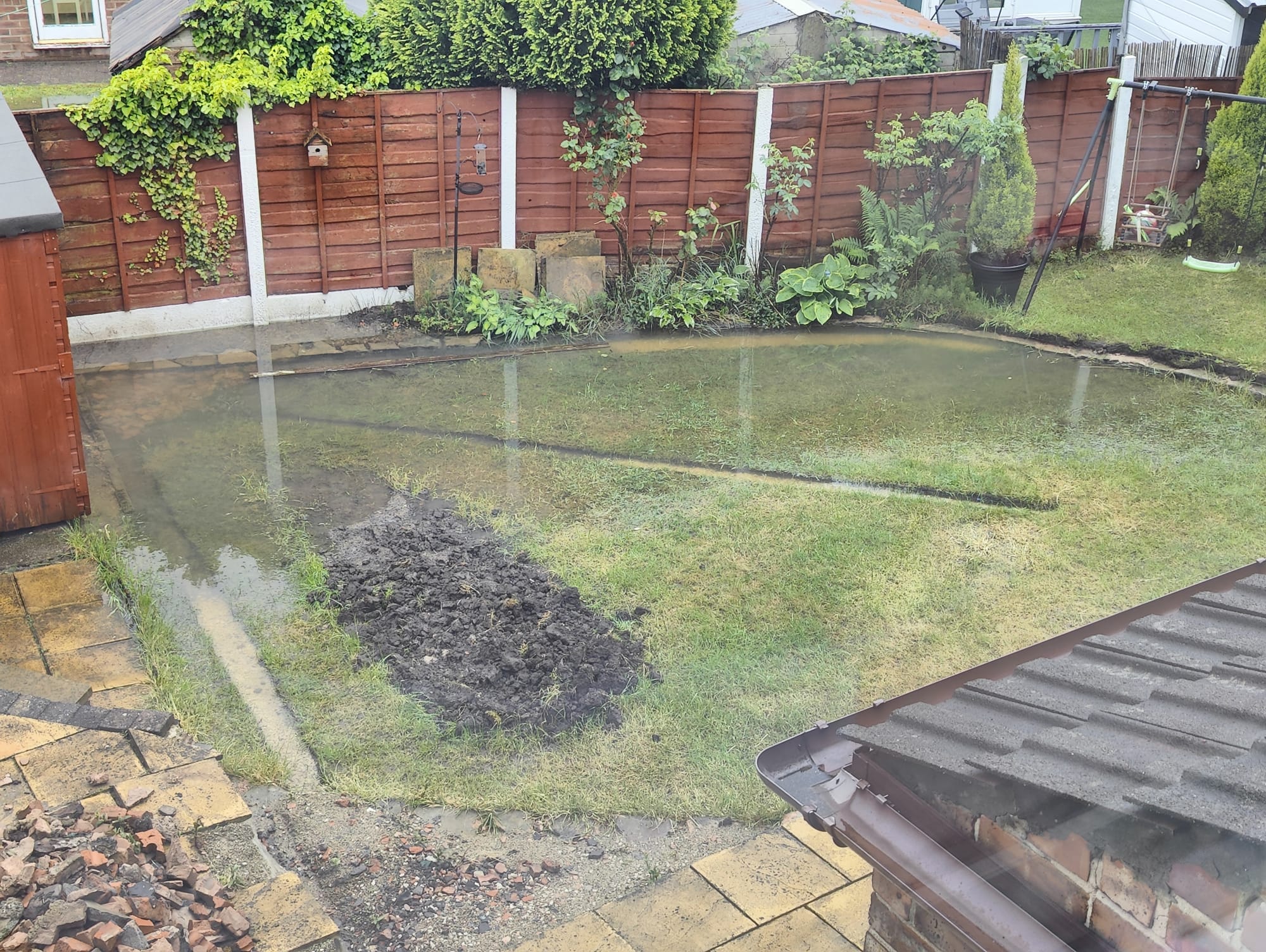
If there’s one thing that distinguishes Val Caron lawn maintenance from other Sudbury communities I work in, it’s drainage.
A higher proportion of Val Caron properties I maintain have low areas that collect water than I see in Garson or Hanmer. I don’t know the full reason for this — it’s probably a combination of lot topography, older grading that’s settled over decades, and how water moves through the neighbourhood. But it’s consistent enough that it’s the first thing I look for on a new Val Caron property.
What a drainage problem looks like on a Val Caron lawn: an oval or irregular low spot, usually in the back or side yard, where water collects after rain or snowmelt and sits for hours or days. The grass in that spot is perpetually stressed — too wet in spring and fall, potentially dry in the centre of the low spot in summer when the water evaporates and the clay dries hard. The grass in those areas is almost always thinner than the rest of the property, and it’s often where the worst weed coverage shows up because the turf is weakened.
The characteristic sign I see every spring: a roughly oval dead zone in the back yard, same spot every year, where water pooled under the snow all winter and the grass died. The homeowner has reseeded it two or three times. It comes back thin, struggles through summer, and dies again the following winter. Because nothing has changed about where the water goes.
The fix for a drainage problem isn’t reseeding. It’s grading — bringing soil into the low area to raise the surface level and redirect water flow away from that spot, ideally toward a side yard or the street. Once the grading is corrected, grass will establish and hold in that area. Before that, you’re spending money on seed that’s going to fail in the same spot every time.
On Val Caron properties where drainage correction isn’t practical — sometimes the lot configuration makes grading difficult — a decorative stone or gravel treatment in the persistently wet area is a smarter long-term solution than fighting grass in a spot where grass won’t thrive. I’ve recommended this to a number of Val Caron homeowners and the result is always better than another round of reseeding.
Weed Pressure in Val Caron — Why It’s Higher Than You’d Expect
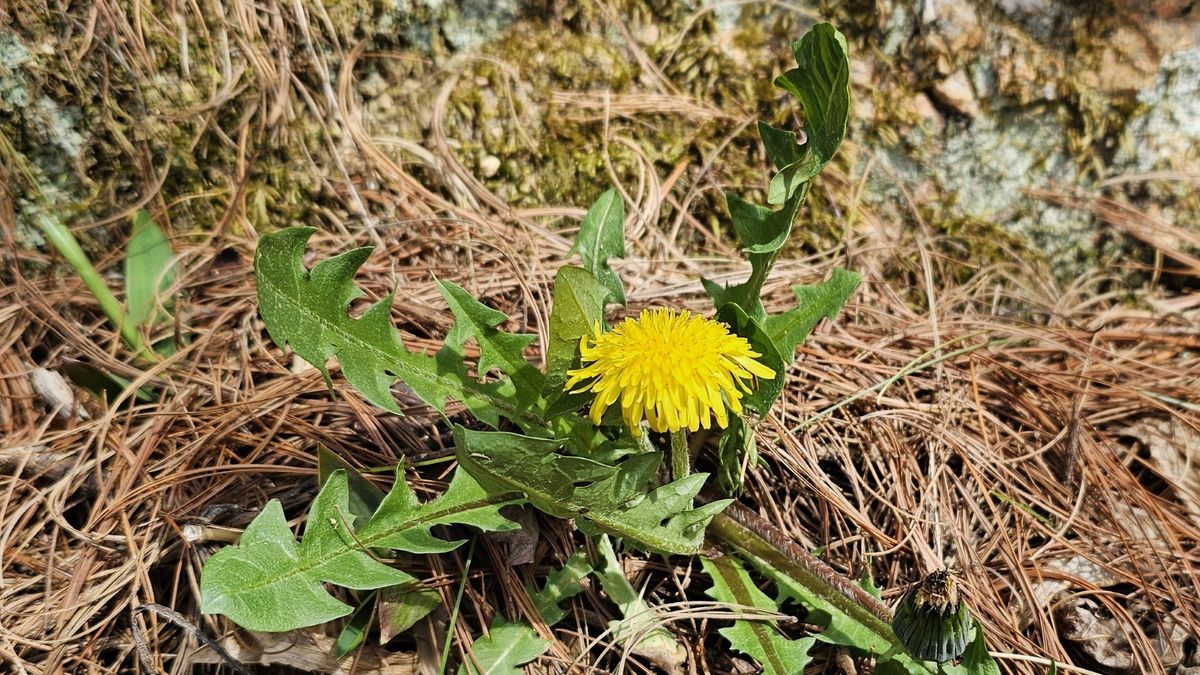
Established neighbourhoods carry established weed seed banks. That’s the reality on most Val Caron properties I work on, and it’s worth being direct about.
Decades of dandelion, plantain, and creeping Charlie going to seed on neighbouring properties means the soil in this neighbourhood has a deep reservoir of weed seed. Even a lawn that’s been well maintained will face consistent weed pressure from seeds blowing in from adjacent properties. This isn’t a problem unique to Val Caron — it’s an established neighbourhood reality — but it’s more pronounced here than on newer developments where the seed bank hasn’t had as long to build.
What this means practically: weed management on a Val Caron lawn is ongoing, not a one-time fix. You treat the existing weeds, you keep the grass thick enough through proper mowing height and annual aeration to prevent new germination, and you stay on a consistent schedule. A lawn that gets aerated, mowed at 3 inches all season, and treated for broadleaf weeds annually will get noticeably better year over year — the weed pressure decreases as the turf thickens. But it requires consistency.
The Val Caron properties with the least weed pressure are the ones on regular maintenance schedules. Not the ones that get the most product applied — the ones that have thick, healthy grass that crowds out weed germination naturally. That’s how it works everywhere in Sudbury, but the seed bank pressure in Val Caron makes consistency even more important here than in newer neighbourhoods.
Creeping Charlie specifically is more common in Val Caron than anywhere else I work in Greater Sudbury. It shows up in shaded damp areas — under trees, along fence lines, in spots that stay moist. It spreads by runners and is harder to control than dandelions. Iron-based herbicide with repeated applications manages it, but the shaded conditions that favour it in a mature-treed neighbourhood like Val Caron mean it needs to be watched every season.
What Good Lawn Maintenance Actually Looks Like in Val Caron

After five years of working Val Caron properties, here’s what the well-maintained lawns in this neighbourhood have in common.
Annual core aeration, every year without fail. Val Caron soil compacts hard. The older established properties have better organic matter than new subdivisions, but the clay base is still there and it still needs to be opened up annually. The Val Caron lawns I maintain that are aerated every late May or early June look noticeably different from those that aren’t — thicker, deeper colour, holding up through July heat better. On a mature Val Caron lot with established tree root competition, aeration is even more important because tree roots compete with grass for the same soil volume. You can read more about what core aeration does here.
Mowing at 3 inches, every cut. This applies everywhere in Sudbury, but the shaded areas under Val Caron’s mature trees make it especially important here. Grass in shade is already working harder to get adequate light — it needs every advantage it can get. Cutting it short removes the blade surface it needs for photosynthesis and the result is thin, pale grass that barely survives through summer. The shaded areas that hold up best in Val Caron are almost always the ones being mowed at 3 inches or higher.
Dealing with drainage before trying to establish grass. I’ve said this above but it’s worth repeating because I see homeowners skip it consistently. If your Val Caron property has a low area that collects water, fix the grading before spending money on seed or sod in that spot. One grading correction is worth more than five rounds of reseeding.
Fall leaf cleanup taken seriously. Mature trees mean significant leaf volume. A Val Caron property with three or four mature maples in the backyard can have every inch of lawn covered two or three times over by November. Leaves left on the lawn under Sudbury’s snowpack create snow mould conditions and smother new spring growth. A thorough fall property cleanup on a Val Caron property isn’t optional — it’s what the lawn needs to come through winter intact.
A realistic approach to shade areas. Some spots under dense tree canopies in Val Caron are not going to grow thick turf grass regardless of what you do. Too little light, too much root competition. The homeowners who spend the least time fighting their lawn are the ones who’ve accepted this and treated those spots accordingly — decorative stone, mulch, shade-tolerant ground cover, or a defined garden bed under the tree rather than struggling grass. It’s not giving up, it’s working with the property instead of against it.
If You’re in Val Caron and Want Help
We maintain properties across Val Caron throughout the season — regular grass cutting, core aeration, spring and fall cleanups, weed management, and hardscaping work for the drainage and shade issues that come up on these properties.
If you want someone to walk your specific property and tell you what it actually needs — not generic lawn advice but a look at your drainage situation, your soil, your tree coverage, your specific weed pressure — that’s exactly what a quote call is for.
📞 705-507-6787
🔗 Get a Free Quote
📍 Serving Greater Sudbury — Garson, Val Caron, Hanmer, Lively, Chelmsford, Azilda, Capreol
— Ryan
Frequently Asked Questions
What makes lawn care in Val Caron different from other parts of Sudbury?
Three things stand out consistently on Val Caron properties: drainage issues in low areas that collect water, higher weed pressure from an established neighbourhood seed bank, and significant leaf volume from mature trees in fall. The lot sizes here also vary more than in newer subdivisions — some Val Caron properties are notably larger than a standard residential lot and require different equipment and more time per visit. The fundamentals of good lawn care are the same as anywhere in Sudbury, but these neighbourhood-specific conditions mean Val Caron lawns need consistent attention to specific problems that don’t show up the same way in newer development areas.
Why does my Val Caron lawn have a dead spot in the same place every year?
Almost certainly a drainage issue — a low area that collects water and doesn’t drain properly. Grass in standing water dies. The spot gets reseeded, grows thin, and dies again the following year because nothing changed about the drainage. The fix is grading — raising the low spot with topsoil and redirecting water flow away from it. Once the drainage is corrected, grass will establish and hold there. Reseeding without addressing the drainage is a temporary fix that repeats the same result every season.
How often should I aerate my lawn in Val Caron?
Every year. Val Caron’s clay-heavy soil compacts hard under Sudbury’s freeze-thaw cycles and without annual aeration the root zone closes up and grass slowly thins. On Val Caron properties with mature trees, aeration is even more important because tree roots compete with grass for the same soil space — aeration keeps that space open and accessible. Late May to mid-June is the best window for spring aeration in Val Caron.
Why is creeping Charlie so common in Val Caron?
Creeping Charlie thrives in shaded, moist conditions — exactly what you find under the mature trees that are common in Val Caron yards. It spreads by runners and establishes quickly in areas where grass is thin or struggling. In a neighbourhood with significant tree coverage and an established weed seed bank, creeping Charlie is a recurring management challenge rather than a one-time fix. Iron-based herbicide with repeated applications manages it, combined with improving grass thickness in the affected areas through aeration and proper mowing height.
Does Cutting Edge Lawn service Val Caron?
Yes — Val Caron is one of our regular service areas. We maintain residential properties throughout the community for grass cutting, core aeration, spring and fall cleanups, and other services. Call 705-507-6787 or fill out the free quote form for a property walk and straight number before anything is scheduled.
What should I do about shaded areas in my Val Caron yard where grass won’t grow?
First, make sure the shaded area is being mowed at 3 inches or higher — shade-stressed grass needs every blade surface it can get for photosynthesis. If the area is getting adequate water and the grass still won’t establish despite proper mowing height, the light levels are likely too low for turf grass to compete with tree root systems. In those cases, a defined garden bed with mulch or decorative stone under the tree is a better long-term solution than fighting grass in a spot that won’t support it. It’s working with the property’s conditions rather than against them.
Ryan Lingenfelter is the owner of Cutting Edge Lawn & Landscaping in Garson, Ontario. Since 2020, his crew has provided full lawn care services across Greater Sudbury — Garson, Val Caron, Hanmer, Lively, Chelmsford, Azilda, and Capreol. Cutting Edge is licensed, insured, BBB A+ rated, and ThreeBest Rated for lawn care services in Sudbury.
📞 Phone: 705-507-6787
📍 Service Area: Greater Sudbury, Ontario
🔗 Free Quote: cuttingedgelawn.ca/quote
Helpful Lawn Care Services in Sudbury
- Grass Cutting Services in Sudbury
- Core Aeration for Healthy Lawns
- Property Cleanup Services
- Sod Installation in Sudbury
- Mulch & Decorative Stone
- Hedge Trimming Services
Continue Reading
- Garson vs Val Caron vs Hanmer: What Each Neighbourhood’s Yards Actually Look Like
- My Sudbury Lawn Has Weeds Everywhere — Here’s What I Actually Do About It
- How Much Does Lawn Care Actually Cost in Sudbury?
