

By Ryan Lingenfelter · Cutting Edge Lawn & Landscaping, Garson, Ontario · May 2026
I’ve been cutting grass and doing landscaping work in Hanmer since 2020. That’s five full seasons on properties spread across different parts of the community — older streets near the centre, newer subdivisions on the edges, larger rural lots on the outskirts where the yard starts to blend into the bush.
After five years of showing up to the same area week after week, you start to notice things. Not just about individual properties, but about the place itself — the soil, the drainage, the way the grass behaves here compared to Garson or Lively or Chelmsford. Every part of Greater Sudbury has its own character when it comes to lawns. Hanmer has a few things that are worth knowing if you own property here.
This is what I’ve picked up.
The soil in Hanmer is different — and it matters
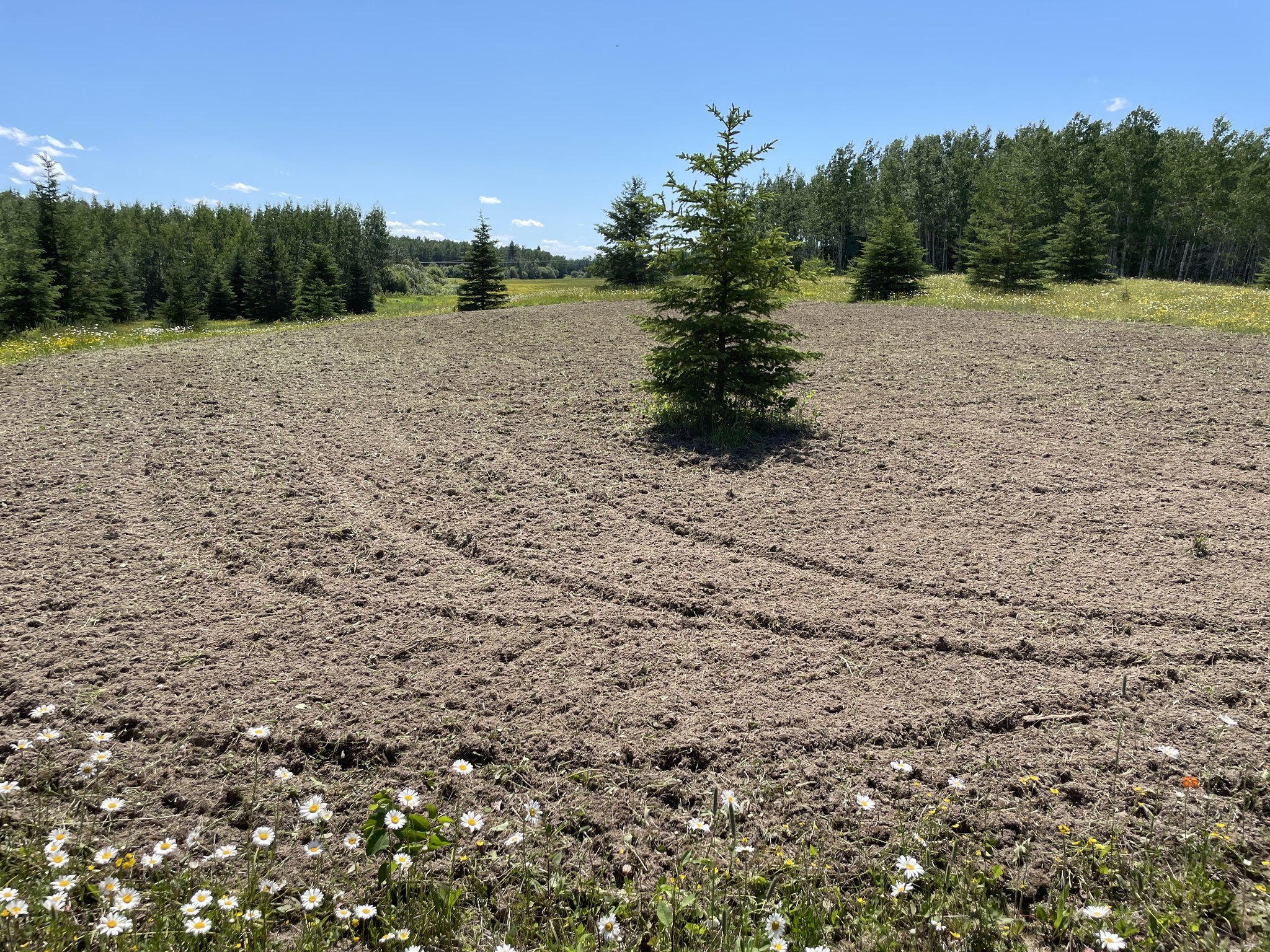
The first thing I noticed when I started working in Hanmer regularly was the soil. A lot of properties here — especially on the older streets and the lots that back onto lower-lying land — have a heavier clay content than you find in parts of Garson or Val Caron. Not every property, and not uniformly across the whole yard, but often enough that it’s the first thing I think about when I’m assessing a new lawn here.
Clay soil holds water longer than sandy or loamy soil. That sounds like a good thing until you realize what it also does — it compacts more easily, drains more slowly, and when it dries out after a wet period, it can get hard enough that grass roots genuinely struggle to push through it. I’ve pressed a screwdriver into dry clay-heavy soil on Hanmer properties in August and had it barely go in an inch. That’s not a lawn that’s going to thrive no matter how much you water or fertilize it, because the roots simply can’t move through the ground the way they need to.
The practical consequence of this is that aeration matters more here than in a lot of other parts of Sudbury. On a clay-heavy Hanmer lawn, skipping aeration for two or three years means compaction builds up to the point where the grass starts thinning out — not because of disease or drought, but because the roots have nowhere to grow. I’ve taken over lawns here that looked like they needed to be completely replaced and had them looking significantly better within a single season just from aeration, overseeding, and consistent cuts at the right height. The grass was always there. It just needed the soil loosened up enough to let it do what it naturally wants to do.
If you’re in Hanmer and your lawn has been looking thin or patchy for a few years, the soil is the first thing I’d look at before assuming you need new sod.
Drainage is the issue nobody talks about

The second thing I’ve noticed consistently in Hanmer is drainage. Parts of this community sit in and around lower terrain — there are sections where the natural water table is closer to the surface than you might expect, and where properties collect runoff from neighbouring lots or from roads that don’t have adequate ditching.
I’ve worked on properties here where one corner of the backyard stays soft and wet from snowmelt in April right through to late June. Some of those homeowners had just accepted it as normal — they’d owned the house for years and assumed a wet corner was just a wet corner. In several cases it wasn’t. It was a grading issue, a failed drainage line, or a simple problem with how water was directed off the roof and away from the foundation.
Wet soil in the same spot every year does a few things to a lawn. It kills the grass roots in that area because grass roots need oxygen as well as water, and waterlogged soil pushes all the oxygen out. It creates the perfect conditions for moss, which most homeowners don’t want but which will absolutely take over a persistently wet patch. And it tends to get worse over time as the soil structure breaks down in that area.
The fix depends on what’s causing it. Sometimes it’s as simple as extending a downspout so roof runoff discharges further from the problem area. Sometimes it requires a French drain or a small amount of regrading to redirect surface water. Sometimes — as I wrote about in another post — it’s something underground that needs to be found before the surface work makes any sense.
What I’d say to any Hanmer homeowner: if you have a wet spot that comes back every year, don’t resod it. Resodding a poorly drained area is expensive and temporary. Figure out where the water is coming from first. Once the drainage is right, the grass usually sorts itself out.
What I see most homeowners getting wrong here
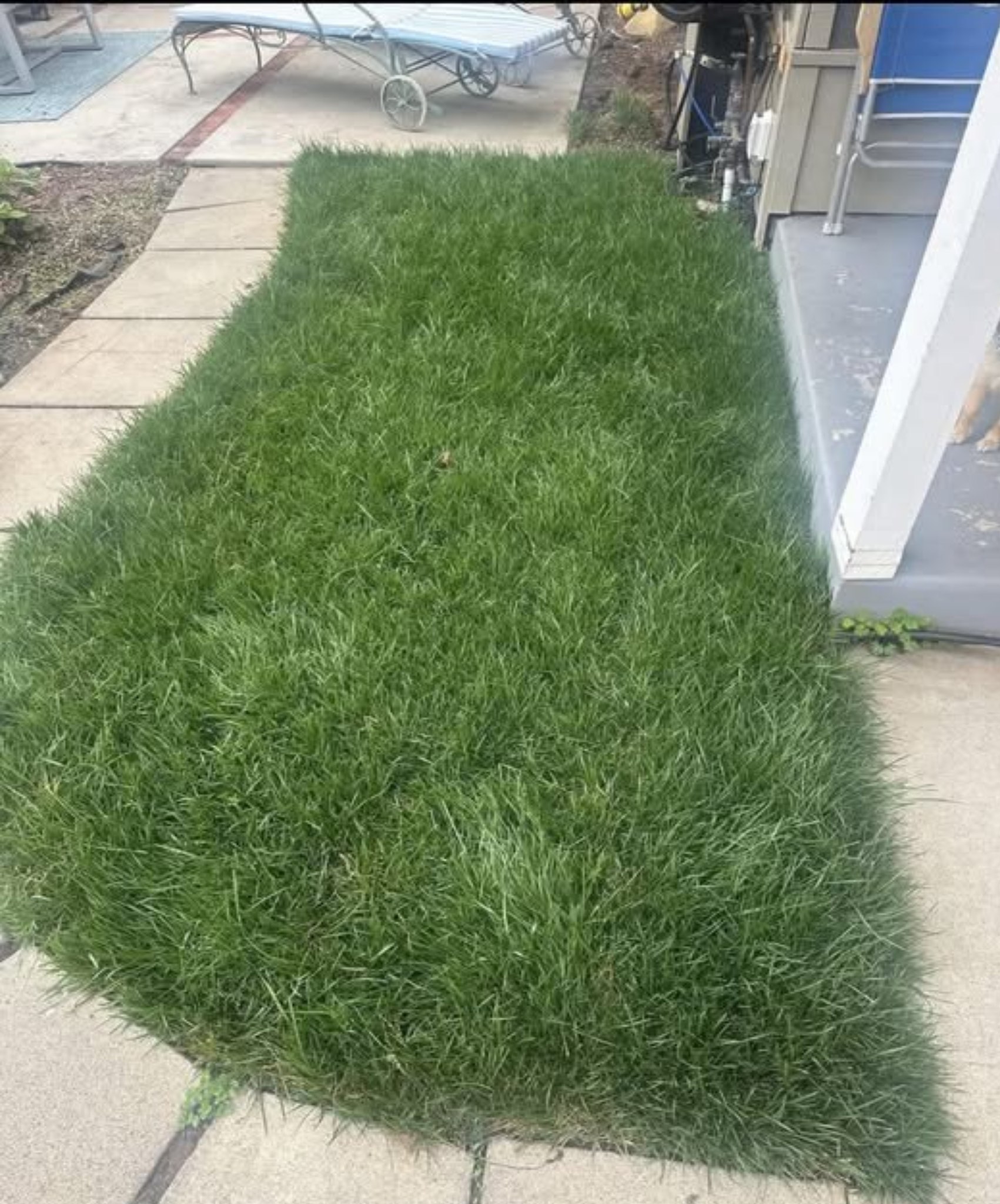
Five years in, the most common mistake I see Hanmer homeowners making with their lawns is cutting too short too early in the season.
Spring in Greater Sudbury comes fast and then stalls. You’ll get a warm week in May that makes it feel like summer is here, and a lot of people respond by getting their lawn cut right down — short and clean, the way it looked at the end of the previous October. The problem is that the grass is just coming out of dormancy. The root system is still establishing. The soil is still cold in the morning. Taking the grass down to an inch and a half or two inches in early May when the nights are still dropping to near zero is one of the most stressful things you can do to a lawn that’s trying to wake up.
What I do on every Hanmer property I manage in spring is hold the cutting height at three and a half inches for the first three or four cuts of the season. I let the grass come in properly, let the roots strengthen, let the whole plant establish itself before I start adjusting height. By late May or early June when the soil is reliably warm and the grass is growing hard, I’ll bring it down to three inches if that’s what the homeowner wants. Not before.
The other thing I see often is people fertilizing too early. A heavy nitrogen application when the ground is still cold doesn’t feed the grass — it mostly feeds whatever weed seeds are waiting to germinate. I’ve taken over lawns in Hanmer that had been fertilized aggressively every spring for years and were full of dandelions and creeping charlie while the actual turf grass was thin. Timing on fertilizer matters as much as the product itself.
And the third mistake — watering too much in spring and not enough in July. Spring in Hanmer is usually wet enough that supplemental watering isn’t needed at all in April and May. But when the heat comes in July and the clay soil starts to bake and crack, that’s when consistent deep watering makes a real difference. Most people have it backwards. They water in spring when the rain is already doing the job and let the lawn go dry in the summer stretch that actually stresses it.
What actually works for lawns in Hanmer
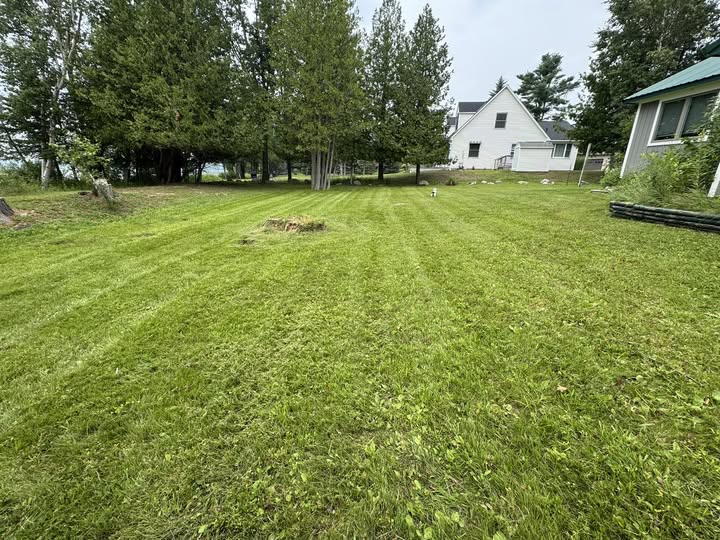
After five seasons here, this is the routine that I’ve seen produce consistently good results on Hanmer properties:
- Aerate every year, late May to mid-June. Clay soil compacts. There’s no way around it. Annual aeration keeps the root zone open and makes every other input — water, fertilizer, seed — work significantly better. If your lawn has never been aerated or hasn’t been done in more than two years, this is the single highest-return thing you can do.
- Overseed after aeration. Hanmer lawns tend to thin out over time because of the soil compaction and the drainage stress some properties deal with. Overseeding right after aeration gives you the best possible seed-to-soil contact and fills in the thin spots before weeds take advantage of them.
- Never cut below three inches. On clay soil that compacts and stresses easily, keeping the grass a bit longer helps it shade the soil, retain moisture, and maintain root depth. I cut most Hanmer lawns at three to three and a half inches through the season and only bring it down slightly in the fall for the last cut of the year.
- Water deeply and infrequently in summer. When dry stretches hit in July and August, one long deep watering per week does more good than light daily watering. You want the moisture getting down to the root zone — six to eight inches — not just wetting the surface. Light frequent watering encourages shallow roots that can’t handle any heat stress at all.
- Deal with drainage problems before doing anything else. If you have a wet spot, a soft area, or a section that just won’t grow properly no matter what you do, investigate the drainage before you spend money on sod, fertilizer, or anything else. Fix the underlying problem first. Everything else follows.
None of this is complicated. But it is specific to what Hanmer lawns actually deal with — the soil weight, the drainage conditions, the spring and summer patterns in this part of Greater Sudbury. Generic lawn care advice written for lawns in southern Ontario doesn’t always translate here. You need someone who’s worked this ground long enough to know what it does.
If you’re in Hanmer and you want a second opinion on your lawn — or you’re just tired of putting money into it without seeing results — give me a call. I’ll come out, walk the property, and tell you exactly what I think is going on and what I’d do about it. No sales pitch, just a straight conversation.
📞 705-507-6787 | Get a free quote online
— Ryan Lingenfelter
Owner, Cutting Edge Lawn & Landscaping
Garson, Ontario · 705-507-6787
