
Every spring I get calls from homeowners across Sudbury who tried to fertilize their own lawn, spent $80 on product from Canadian Tire, applied it at the wrong time, and ended up with burned patches or grass that barely responded. Then they call me. I’ve seen it more times than I can count.
Fertilizing a lawn in Sudbury isn’t complicated — but it’s also not as simple as just spreading some granules and walking away. Our short growing season, heavy clay soil, and cold springs mean timing and product choice matter a lot more here than they do in Southern Ontario.
In this guide I’m going to walk you through exactly what lawn fertilization costs in Greater Sudbury in 2026, what those prices include, and how to know whether you’re getting good value or getting taken for a ride. I’ll also share what I’ve learned from fertilizing lawns in Garson, Val Caron, Hanmer, Cheney Manor, and across the city over the past 6 years.
No fluff. Just real numbers and honest advice.
What Lawn Fertilization Actually Costs in Sudbury in 2026
Let me give you the real numbers first, then I’ll explain what drives the price up or down.
| Service | Typical Price Range (2026) |
|---|---|
| Single fertilization application (average lot) | $75 – $130 |
| 3-visit seasonal program (spring, summer, fall) | $210 – $360 |
| 4-visit full season program | $280 – $480 |
| Fertilization + weed control combo (per visit) | $110 – $175 |
| Fertilization + core aeration combo | $200 – $320 |
| Large lot (over 5,000 sq ft) | Custom quote |
These are Sudbury-specific prices based on what we charge and what I know other local companies are charging right now. Toronto or Hamilton prices you find online will be different — usually higher for the service, but they also have longer growing seasons so the math works out differently.
The biggest variable is lot size. A small 2,500 sq ft lawn in Garson costs less to treat than a sprawling corner lot in Hanmer. Always get a quote based on your actual property, not a generic price from a website.
Tip you can use today: Before you call anyone for a quote, measure your lawn roughly. Pace it out — one step is about 2.5 feet. Length x width gives you square footage. It takes 3 minutes and helps you have a smarter conversation with any company you call.
Why Fertilizing in Sudbury Is Different From the Rest of Ontario
I always chuckle when I see fertilization schedules from companies based in Toronto. They’re telling people to start their first application in early April. Up here in Sudbury, your grass is still frozen or barely thawed in early April. If you apply fertilizer to frozen or waterlogged soil, you’re basically throwing product away — it runs off, doesn’t absorb, and can even cause nitrogen burn when the soil finally warms up.
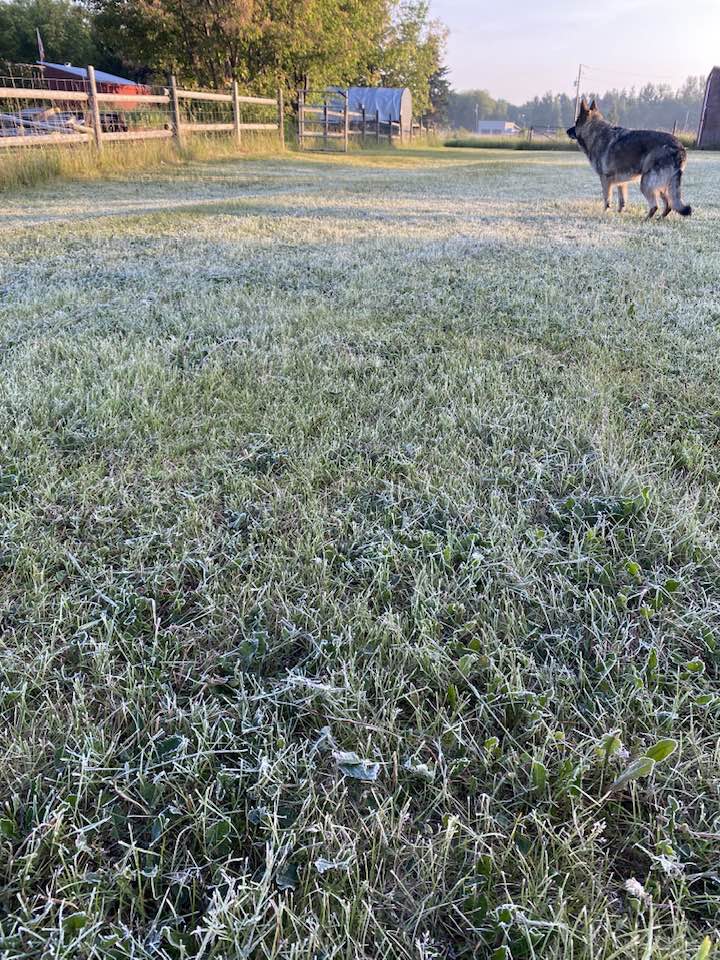
In Sudbury, our first fertilizer application should go down no earlier than mid-May, once soil temperatures are consistently above 8°C and the grass has started actively growing. I typically start spring applications on my customer routes around May 15 to May 25 depending on the year.
We also have to deal with Sudbury’s clay-heavy soil. Clay holds nutrients longer than sandy soil, which sounds like a good thing — but it also means it’s easier to over-fertilize. Too much nitrogen on clay soil in our climate leads to fast, weak top growth and shallow roots. That kind of lawn looks green for a few weeks, then gets hammered by summer heat or disease.
After 6 years working on lawns across this city, I’ve learned to use lower nitrogen rates in spring on clay-heavy properties and shift to a more balanced fertilizer by mid-summer. It’s a small adjustment that makes a real difference in how the lawn holds up through August.
One homeowner in Cheney Manor hired me after two years of applying the same big-bag fertilizer from a hardware store on the same schedule. His lawn looked okay in June but was thin and brown by late July every single year. We switched his program to match Sudbury’s actual growing calendar and his lawn hasn’t looked back since.
DIY Fertilizing vs. Hiring a Pro — Honest Breakdown
I’m going to be straight with you here, even though it might cost me some business. For a simple, average-sized lawn in decent condition, a homeowner who does their research can get reasonable results fertilizing themselves. The products are available, the spreaders are cheap to rent or buy, and it’s not rocket science.
That said, here’s where hiring a pro actually pays off:
- Soil testing. Most homeowners skip this. I’ve done soil tests on lawns in Val Caron that showed severe phosphorus deficiency — no amount of off-the-shelf fertilizer was going to fix that without targeting the right nutrient. A soil test costs about $30 and changes everything.
- Product quality. Commercial-grade slow-release fertilizers perform significantly better than retail bags. The nitrogen releases over 8 to 12 weeks instead of 3 to 4, which means steadier growth and far less risk of burning.
- Timing across the season. Knowing when to switch from a high-nitrogen spring formula to a balanced summer feed to a root-building fall formula is where experience really shows up on the lawn.
- Combination treatments. Pairing fertilization with weed control or core aeration at the right time multiplies the benefit of both. Aeration before fertilization increases nutrient uptake significantly — especially on Sudbury clay.
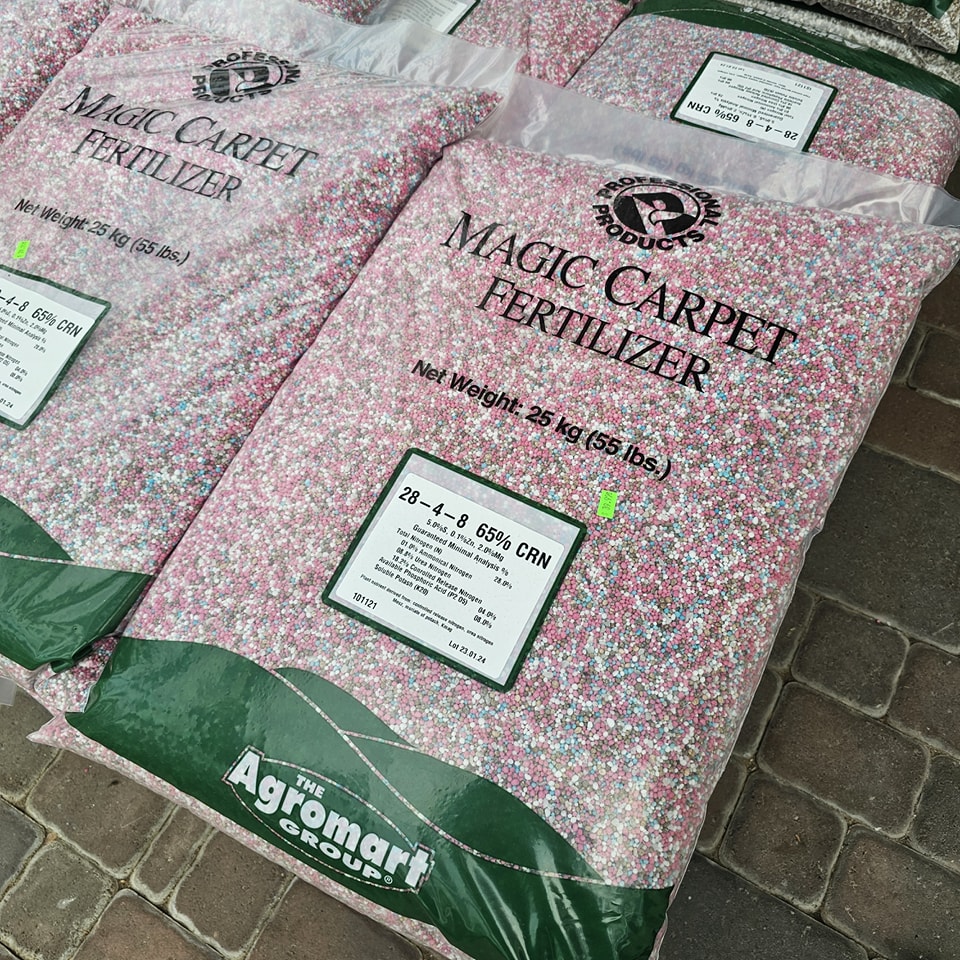
Today’s tip: If you’re going DIY, at minimum pick up a slow-release granular fertilizer — look for “slow release” or “controlled release” on the bag. Avoid anything that promises fast green-up in 3 days. That’s a salt-heavy product that burns more than it feeds.
What a Full-Season Fertilization Program Looks Like in Sudbury
When customers ask me what they should be doing for fertilization across a full season, here’s the program I recommend and run for most of my Sudbury customers:
| Visit | Timing | What We Apply | Goal |
|---|---|---|---|
| Visit 1 | Mid to late May | Balanced slow-release + pre-emergent weed control | Kickstart growth, suppress early weeds |
| Visit 2 | Late June to early July | Low-nitrogen balanced feed | Sustain growth through summer heat |
| Visit 3 | Mid August | Balanced feed + spot weed treatment | Recover from summer stress |
| Visit 4 | Late September | High-potassium winterizer fertilizer | Root strengthening before freeze-up |
That fourth visit — the fall winterizer — is the one most Sudbury homeowners skip, and it’s actually the most important one. Potassium helps roots store energy through the winter so the lawn comes back stronger in spring. I’ve seen side-by-side comparisons on the same street where one lawn got a fall feed and the neighbour didn’t. The difference in spring green-up is obvious.
A homeowner in Hanmer signed up for our 4-visit program two seasons ago after years of a 2-visit approach. By the following spring his lawn came out of winter noticeably thicker and greener than his neighbours’. He renewed the program without hesitation.
If your lawn has significant bare patches or thin areas, no fertilization program will fully fix that on its own. You might want to look at whether overseeding combined with your fertilization makes sense — it’s something I pair together for a lot of customers with patchy lawns.
What’s Actually Included in a Fertilization Quote — and What’s Extra
This is something I wish more companies were upfront about. When you get a fertilization quote, make sure you know exactly what’s included. I’ve heard from customers who signed up with other companies in Sudbury expecting a full program and got a single granular application with no follow-up, no weed control, and no soil assessment.
Here’s what a solid fertilization service should include at minimum:
- A walkthrough of the lawn before application — checking for bare patches, disease, or soil issues
- Calibrated spreader application (not hand-spreading or guessing)
- Edging and cleanup of any product on driveways or walkways
- A note of what was applied and when the next treatment should happen
- Advice on watering after application (you should water within 24 hours of a granular application)
What’s typically extra: weed control, grub treatment, soil amendments, and aeration. These are often worth adding, but make sure you know the price upfront.
I always leave a service sheet on the door after every visit — what we applied, what we noticed, and what I’d recommend next. It sounds small but customers tell me all the time that nobody else they’ve hired has ever done that.
Tip: Ask any company you’re considering: “What fertilizer brand and formula do you use?” A company that can answer that question specifically is a company that knows what they’re doing. Vague answers like “professional grade product” without specifics should make you ask more questions.
Is a Fertilization Program Worth the Cost in Sudbury?
Honestly? Yes — if your lawn has any issues, or if you want it to look consistently good without putting in hours of work yourself. But I also think a lot of companies oversell fertilization as a magic fix. It’s not.
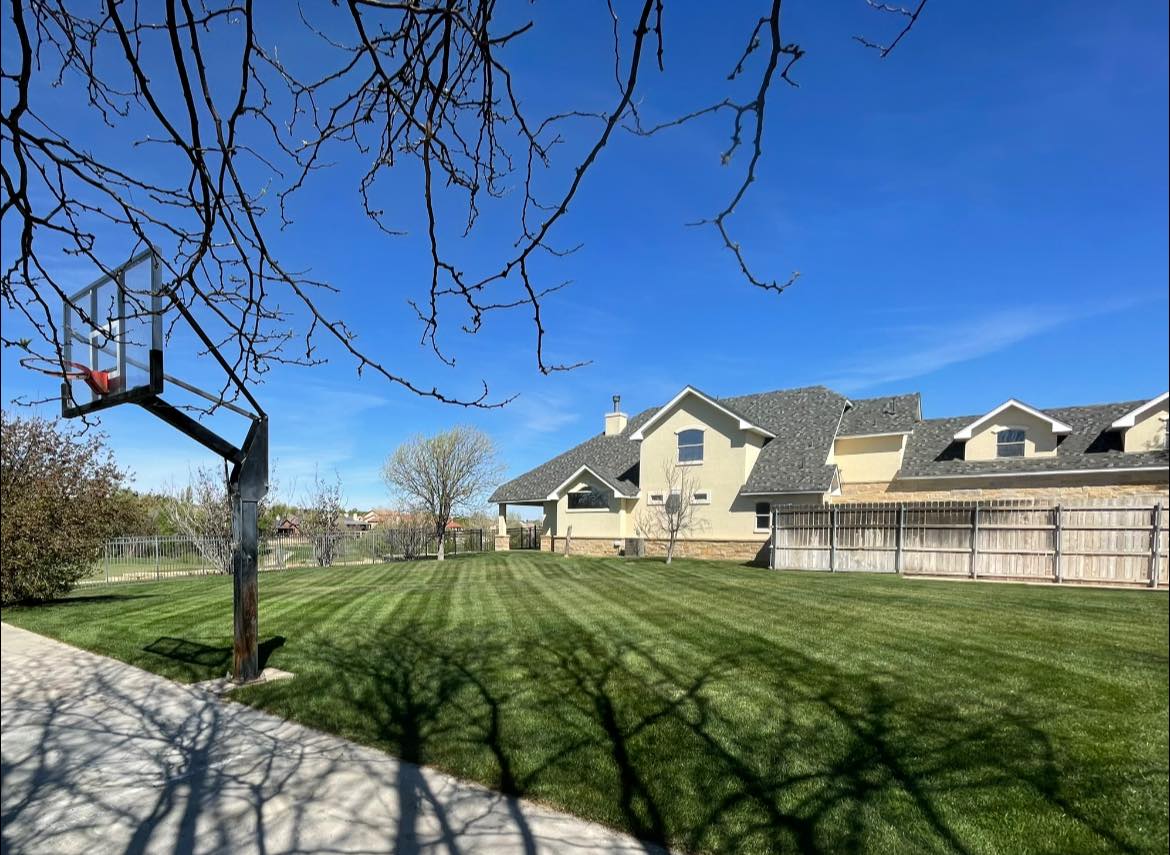
Fertilization works best as part of a broader lawn care approach. It won’t fix compaction. It won’t fill in bare patches by itself. It won’t kill a heavy weed infestation. What it will do is make a healthy lawn healthier, help it recover from stress faster, and build the root system that gets your grass through Sudbury winters.
For a typical Sudbury home — average lot, decent existing grass, no major problems — a 3 or 4 visit program running $250 to $400 for the season is money well spent. Compare that to what it costs to re-sod or re-seed a lawn that’s been neglected for a few years. I’ve priced out full lawn restorations in Sudbury that run well over $2,000. Regular fertilization is cheap insurance against getting to that point.
If you’re curious about what a full lawn restoration actually costs when things have gone too far, I walked through a real project breakdown in our Sudbury lawn restoration cost breakdown — it gives you a realistic picture of what neglect actually ends up costing.
For most homeowners, the math is simple: spend a few hundred dollars a year on fertilization, or spend a few thousand every few years starting over.
Ready to Get Your Lawn on a Proper Program?
I’ve been taking care of lawns in Greater Sudbury since 2020 and I still enjoy walking a property, figuring out what it needs, and watching it respond over a season. There’s something satisfying about a lawn that looks noticeably better in September than it did in May.
If you want a straight answer about what your lawn needs and what it’ll cost, give me a call or send a message. I’ll come out, take a look, and give you a quote with no pressure and no upsell on stuff you don’t need.
Call or text: 705-507-6787
Free quote online: cuttingedgelawn.ca
We serve Sudbury, Cheney Manor, Garson, Val Caron, Hanmer, Lively, Chelmsford, and Azilda.
Related reading:
