
By Ryan Lingenfelter · Cutting Edge Lawn & Landscaping, Garson, Ontario · June 2026
I’ve been doing this work in Greater Sudbury since 2020. In that time I’ve been asked a lot of questions. Some technical — what’s wrong with my soil, why won’t my sod take, is this grub damage or disease. Some practical — how much does this cost, how long will it take, when can you start. Some that seem simple but aren’t — why does my neighbour’s lawn look better when we do the same things.
I answer questions for a living. I’m good at it. I’ve got enough experience now that most questions produce a fairly quick and confident answer, even if the answer is “I need to look at the property before I can tell you.”
Last season, a homeowner in Greater Sudbury asked me something that I couldn’t answer on the spot. Not because I didn’t know enough. Because the question was harder than it looked, and a fast answer would have been the wrong one.
I thought about it for about a week before I called her back.
The visit — who asked it and why it caught me off guard
Her name was Carol. She’d called me for a quote on full-season grass cutting — she’d been doing it herself for years and wanted to hand it off. Her husband had passed away the previous fall. He’d been the one who looked after the lawn. She’d been managing it through the winter and spring on her own and was finding it more than she wanted to deal with on top of everything else.
I walked the property with her. It was a well-maintained lawn — you could see years of careful attention in it. The edges were sharp. The grade was good. The thatch was managed. The soil had give to it, which told me it had been aerated regularly. This was a lawn that had been genuinely cared for over a long period of time by someone who knew what they were doing.
She told me about her husband as we walked — how he’d been particular about the lawn, how he’d researched the right seed for this part of Sudbury, how he’d aerated every May without fail for fifteen years. She said she didn’t know much about lawn care herself but she’d watched him do it long enough to know he’d done it right.
We finished the walk and I gave her my standard summary — what I’d observed, what I’d recommend, what the service would include and cost. She listened to all of it. Then she was quiet for a moment, looking at the lawn.
Then she asked me the question.
The question — exactly what she asked
She said: “If you take over the lawn — if I hire you — will it still look like his lawn? Or will it look like yours?”
I stood there.
Not because I didn’t understand what she was asking. I understood exactly what she was asking. The lawn was the last thing her husband had actively taken care of. It looked the way it looked because of fifteen years of his specific choices — the seed blend he’d researched, the aeration schedule he’d kept, the cutting height he’d preferred, the way he’d handled the bare patch near the back fence. It was, in a real sense, still his. And she was asking whether hiring me meant losing that.
The honest answer was that I didn’t know yet. And I knew that saying something quick and reassuring — “of course it’ll look the same, don’t worry” — would be easier in that moment but would be a promise I hadn’t actually thought through.
So I told her I needed to think about it. That I’d call her in a few days with a real answer. She said that was fine.
I drove away and thought about it for most of the week.
Why I couldn’t answer it on the spot — and what I thought about for a week
The surface version of her question was a practical one: would my methods produce the same results as his? That part I could have answered fairly quickly. His methods — based on what I saw on the property — were sound. Annual aeration, correct seed blend for this part of Sudbury, proper cutting height, careful edge work. My approach is built on the same principles. The lawn was in good condition because he’d done the right things. If I did the right things, the lawn would stay in good condition. Different hands, same principles, similar outcomes.
But that wasn’t really what she was asking.
What she was asking underneath that was whether the lawn would still feel like something he’d made and maintained, or whether it would become something else — something generic, something that belonged to a service company rather than to the specific person who’d built it over fifteen years. Whether hiring me meant the lawn stopped being his.
That question is harder. And I found myself genuinely uncertain about the right answer.
On one hand, lawns don’t carry memory the way objects do. A lawn is a living system — it doesn’t know whose hands have been in it. The grass that was growing the day her husband passed away was replaced by new growth within weeks. The soil that he aerated in May was already starting that cycle of renewal. There’s a sense in which a lawn is always becoming something, always changing, and the version of it that existed in any particular person’s care is real but not permanent.
On the other hand — the choices that make a lawn look the way it looks are accumulated over years. The seed blend he chose fifteen years ago produced the specific variety mix that’s in the ground now. The aeration schedule he kept produced the soil structure and root depth I found when I walked it. The cutting height he preferred produced the density and colour that was there when I arrived. His choices are in that lawn in a real and measurable way. They’re not gone. They’re expressed in what the lawn is today.
What I realised by the end of the week was that the answer depended on what I meant by “taking over the lawn.” If I took over the lawn and brought my preferences without asking about his — changed the seed blend because I had a different preference, adjusted the schedule to fit my convenience, made choices based on what I’d do by default rather than what had produced this specific result — then yes, it would stop being his lawn over time. Not immediately. But progressively, as my choices replaced his.
If I took over the lawn and tried to understand what he’d done and why — learned the specific blend he’d used, kept the aeration schedule he’d kept, made my decisions in service of maintaining what he’d built rather than expressing my own preferences — then the lawn could stay his lawn, in the sense that mattered to her, even with different hands on it.
That was the answer. But getting there required being honest about something that most service companies don’t say out loud: that taking over a well-maintained property from someone who knew what they were doing isn’t just about applying the right techniques. It’s about understanding the specific history of that property and respecting it.
The honest answer I eventually gave — and what it says about how I work
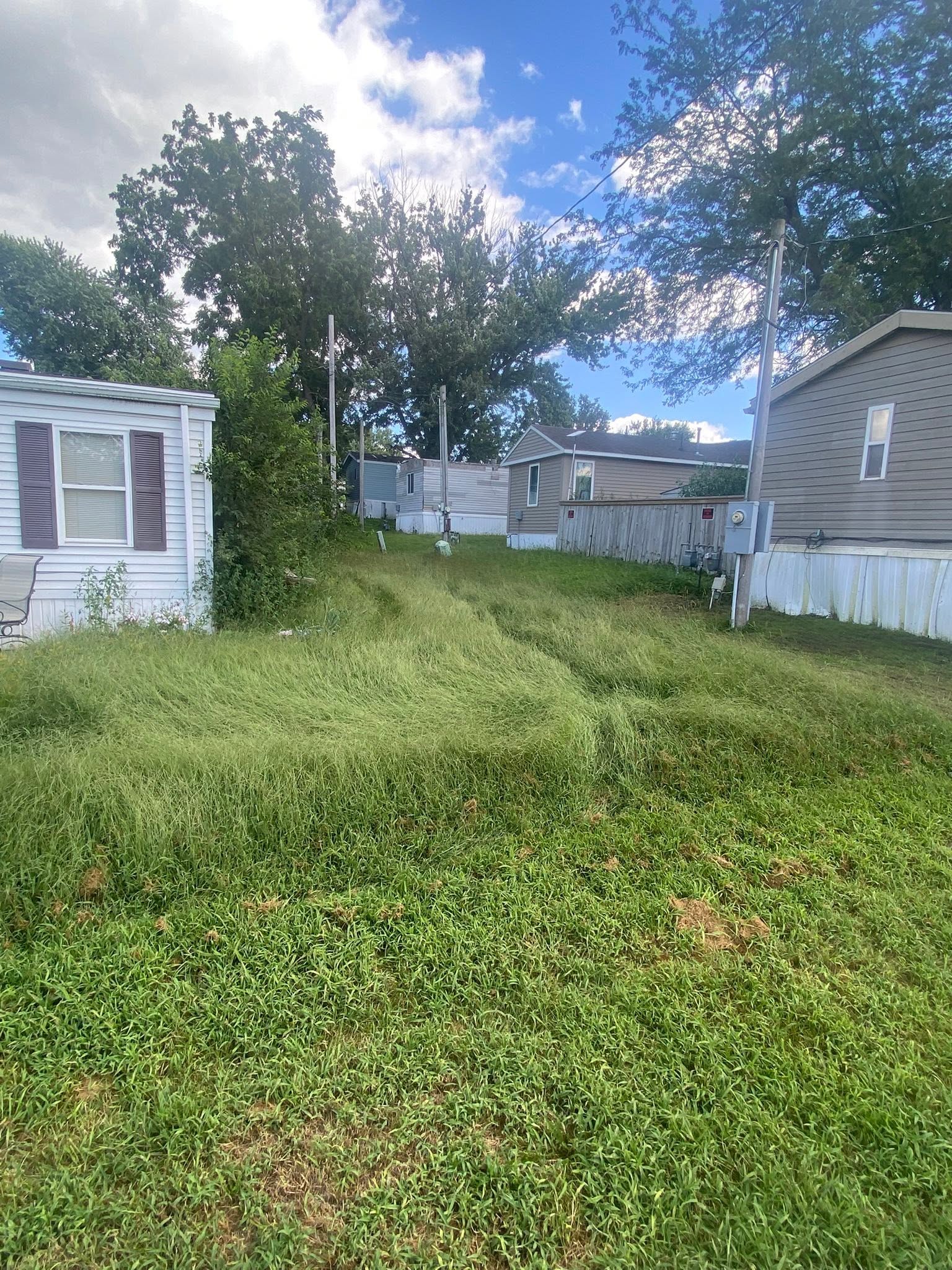
I called Carol back six days after the visit. Here’s what I told her.
I told her that the lawn she had was genuinely good — that her husband had made sound choices over fifteen years and that the result of those choices was visible in the soil condition, the variety composition, and the overall health of what I’d walked. I told her I hadn’t seen many lawns in Greater Sudbury in that kind of shape, and that wasn’t an accident. It was the product of consistent, attentive care from someone who took it seriously.
I told her that if she hired me, my first job wasn’t to manage the lawn the way I’d manage a new property. It was to understand what he’d done and keep doing it — to be a good steward of something that was already working rather than arriving with my own agenda. I’d need to know the seed blend he’d used. I’d need his aeration schedule. I’d need to understand the specific things he’d done about the bare patch near the back fence, because there was a history there that I couldn’t see just from walking the property once.
I told her that there was one thing I couldn’t promise: I couldn’t promise it would look exactly the same forever, because lawns change. But I could promise that the changes would happen because of what the lawn needed, not because of what was convenient for me or because I hadn’t asked the right questions about its history.
She was quiet for a moment after I said all of that. Then she said: “He would have asked you the same things before he hired you. He would have wanted to know if you’d looked at it carefully enough to know what was there.”
I took that as a yes.
We’ve been maintaining Carol’s lawn for one full season now. The aeration happened in the last week of May — the window her husband kept, which I’ve learned is exactly the right timing for the variety mix he chose and the soil conditions on that specific property. The bare patch near the back fence turned out to have been treated with a specific overseeding approach for three consecutive years because of a drainage adjustment he’d made — something I only learned when I asked her to walk me through what she remembered of his routine. It’s a detail I would have missed if I’d just looked at it as a problem to fix rather than a history to understand.
The lawn looks like his lawn. Not because I’m recreating something artificially, but because I understood what produced it and made decisions that maintained those conditions. His choices are still in that ground. My job has been to not undo them.
That’s the honest version of what taking over a well-maintained property should look like. And it’s the approach I try to bring to every property I manage in Greater Sudbury — understanding what’s actually there before deciding what to do with it. I described the practical version of that assessment approach in the article on what I notice in the first 60 seconds on any Sudbury property and in the article on the one thing I check before accepting any new customer. But the question Carol asked me is why those checks matter — because a lawn isn’t just a square footage number. It’s a history. And treating it like one produces better results than treating it like a blank slate.
If you’re looking for lawn care in Greater Sudbury and you want someone who will actually look at what’s there before deciding what to do — give me a call. I’ll come walk the property, ask the questions that matter, and tell you honestly what I see.
📞 705-507-6787 | Get a free quote online
— Ryan Lingenfelter
Owner, Cutting Edge Lawn & Landscaping
Garson, Ontario · 705-507-6787
