

Every spring I drive past at least a dozen lawns in Garson and Val Caron where someone has already fired up the mower in early May and scalped their grass down to an inch. The lawn looks tidy for about four days. Then it turns yellow. Then it struggles through June trying to recover from a cut it wasn’t ready for.
I’m Ryan Lingenfelter, owner of Cutting Edge Lawn & Landscaping in Garson, Ontario. Since 2020 I’ve maintained properties across Greater Sudbury — Garson, Val Caron, Hanmer, Lively, Chelmsford, Azilda, Cheney Manor. I’ve mowed a lot of lawns up here, and I’ve made some of these timing mistakes myself in my first season. This guide is what I’ve actually learned about when to start mowing in Sudbury, how often to cut through the season, and the height settings that make the difference between a lawn that looks good all summer and one that struggles by July.
No generic advice. Just what works in our specific climate.
Why Sudbury Mowing Timing Is Different From the Rest of Ontario
If you follow general lawn care advice from a Toronto blog or a national home improvement site, you’ll see recommendations to start mowing in early to mid-April. Up here in Sudbury, that advice will get you into trouble almost every year.
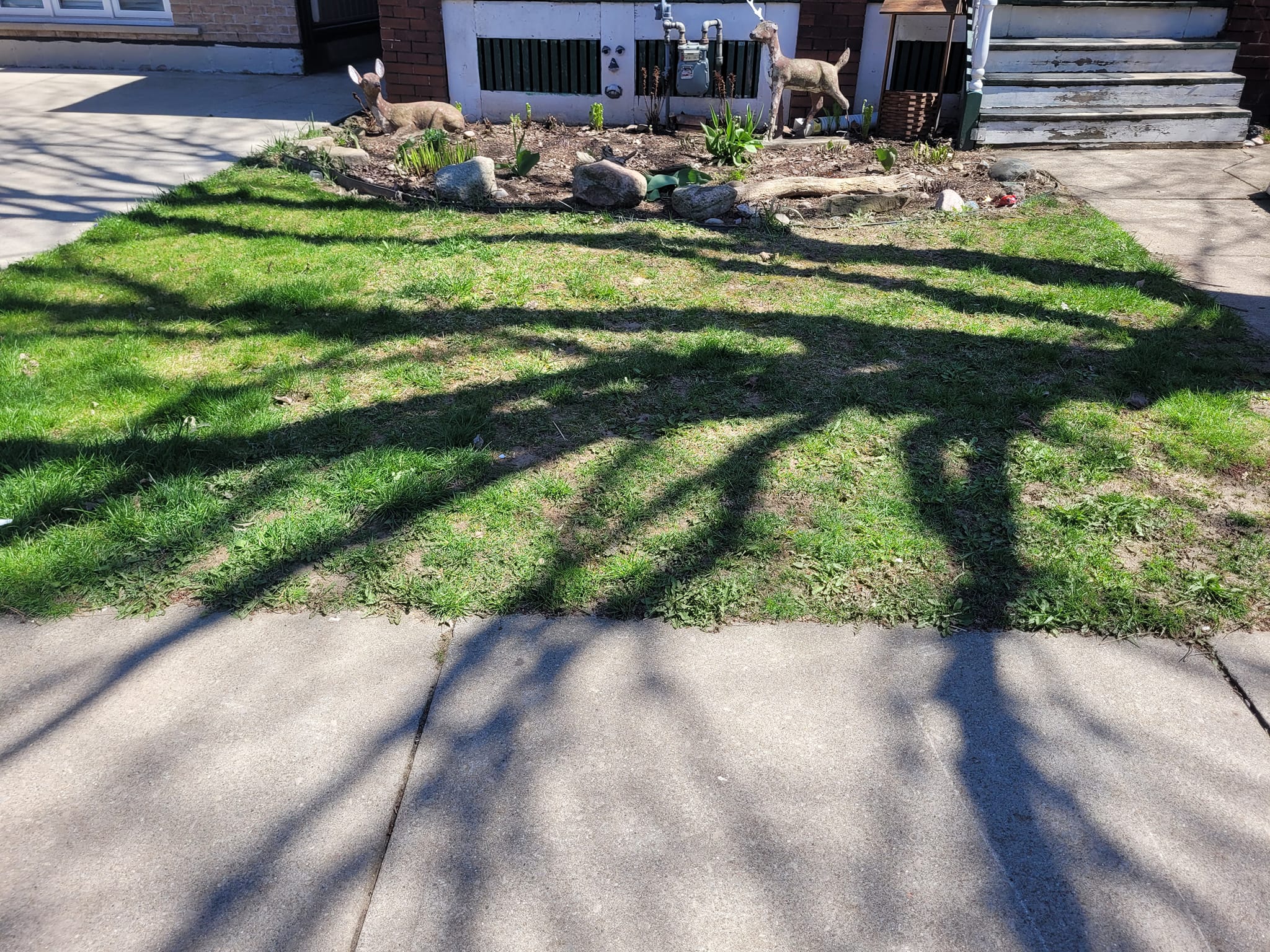
Our last frost regularly runs into mid-May. The ground stays cold longer because of our clay-heavy soil — clay holds cold the same way it holds moisture, and it releases both slowly. Grass that looks like it’s growing in early May is often still in a fragile recovery state from winter. The root system hasn’t re-established properly yet. Mowing it at that stage stresses the plant before it has the reserves to handle it.
After six years working on lawns across this city, the earliest I’ll mow a Sudbury lawn in spring is May 10th — and only if the grass is actively growing and the ground isn’t soft from snow melt or recent rain. Most years, my spring mowing routes don’t start in earnest until May 15 to May 20.
I had a customer in Cheney Manor who called me in early May two years ago — she’d already cut her lawn twice. By mid-June her front lawn had thin, weak patches that took all summer to recover. We hadn’t done anything wrong with fertilization or watering. The early cutting had just hit the grass before it was ready to handle it.
Tip you can use today: Before the first mow of spring, walk your lawn and push your heel into the soil. If it sinks noticeably, the ground is still too soft. Wait another week. Mowing on soft, wet Sudbury clay compacts the soil and tears roots rather than cutting cleanly.
The First Cut of the Season — What I Actually Do
The first mow of spring is different from every other cut of the year, and treating it the same way you treat a mid-July cut is a mistake I see constantly.
Over winter, Sudbury lawns accumulate matted dead grass, debris from freeze-thaw cycles, and a layer of material that sits on top of the soil surface. Before the first mow, that needs to come off — either with a light rake or a dethatching pass. Mowing over a layer of matted dead material doesn’t cut grass. It just shreds the mat and spreads it around.
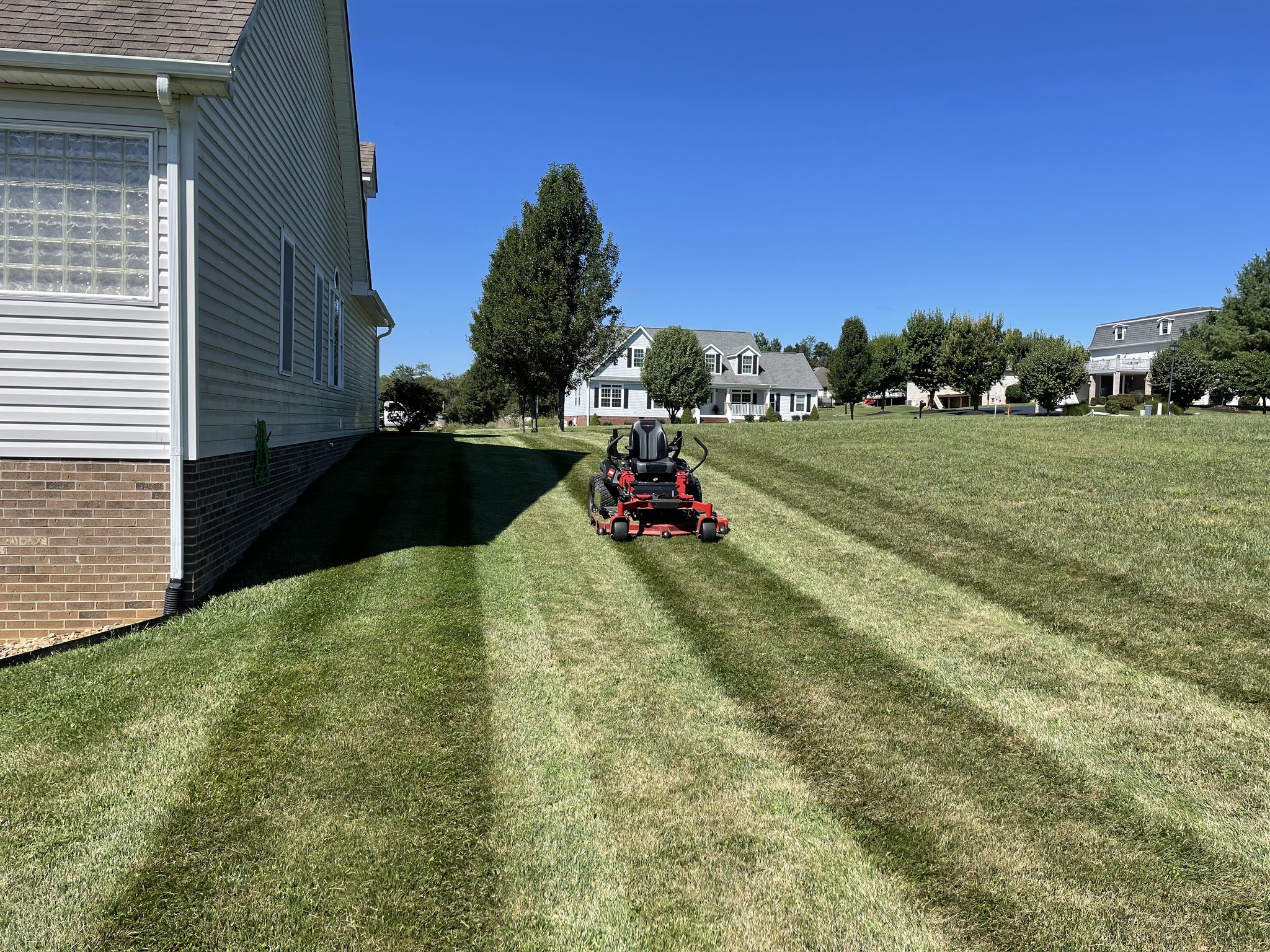
For the first cut, I set the deck higher than normal — around 3.5 inches. The goal isn’t to make the lawn look its shortest. The goal is to remove the top growth that accumulated since the last fall cut without stressing a plant that’s still getting its root system back online for the season.
I never cut more than one-third of the grass blade in any single mow — this is the rule that matters most in spring. If your grass came out of winter at 5 or 6 inches, don’t cut it to 2 inches in one pass. That’s a shock the plant doesn’t recover from quickly. Come down gradually over two or three cuts spaced a week apart.
Last spring I took over a property in Hanmer from a homeowner who’d been cutting it himself. First visit I found grass that was 7 inches tall from a winter of no maintenance. We took it to 5 inches on the first cut, 4 inches a week later, then settled into the regular 3-inch maintenance height. By June it looked completely normal. Rushed down in one pass and it would have looked rough for weeks.
Tip: Check your mower blade before the first cut of the season. A dull blade tears grass rather than cutting it cleanly. Torn grass tips turn brown and create entry points for disease — especially on Sudbury’s clay-heavy soil where moisture sits and fungal conditions develop faster. A blade sharpening costs $10 at most small engine shops in Sudbury. Worth doing every spring.
Mowing Height — The Number That Changes Everything
I get asked about fertilizer brands, seed types, and watering schedules all the time. The question I don’t get asked nearly enough is: what height are you cutting at?
On Sudbury lawns, I cut at 3 inches year-round — spring, summer, and fall. Not 2 inches. Not 2.5. Three inches, every time.
Here’s why this matters specifically for our climate. Sudbury has a short growing season and clay-heavy soil. Grass cut at 3 inches develops deeper roots than grass cut at 2 inches — the extra leaf surface drives more photosynthesis, which feeds deeper root growth. Deeper roots reach into cooler, moister soil during July dry stretches. Shallow roots on compacted Sudbury clay have nowhere to go when the surface dries out.
The side-by-side evidence I’ve seen on the same street is hard to argue with. A lawn cut at 2 inches and a lawn cut at 3 inches will look nearly identical in May and June. By the third week of July, the lawn cut at 3 inches is noticeably greener. The shallow-cut lawn is starting to show heat stress.
| Cutting Height | Root Depth | July Performance on Sudbury Clay |
|---|---|---|
| 1.5 – 2 inches | Shallow (1–2 inches) | Browns quickly, heat stress by mid-July |
| 2.5 inches | Moderate | Holds okay but struggles in dry weeks |
| 3 – 3.5 inches | Deep (3–5 inches) | Holds green significantly longer |
One homeowner in Val Caron had been cutting at 1.5 inches — “I like it to look like a golf course,” he told me. His lawn was brown by July 10th every year without fail. We raised the deck to 3 inches and paired it with proper core aeration to address the underlying compaction. That was two seasons ago. His lawn hasn’t gone brown in July since.
Tip: Measure your actual cut height by placing your mower on a hard flat surface and measuring from the ground to the blade. Most mower deck markings are approximate. Know your actual height, not the number on the dial.
How Often to Mow Through the Sudbury Season
Mowing frequency should follow the grass growth rate — not the calendar. This sounds obvious but most homeowners mow on a fixed schedule regardless of what the grass is actually doing.
In Sudbury, the growth cycle looks like this:
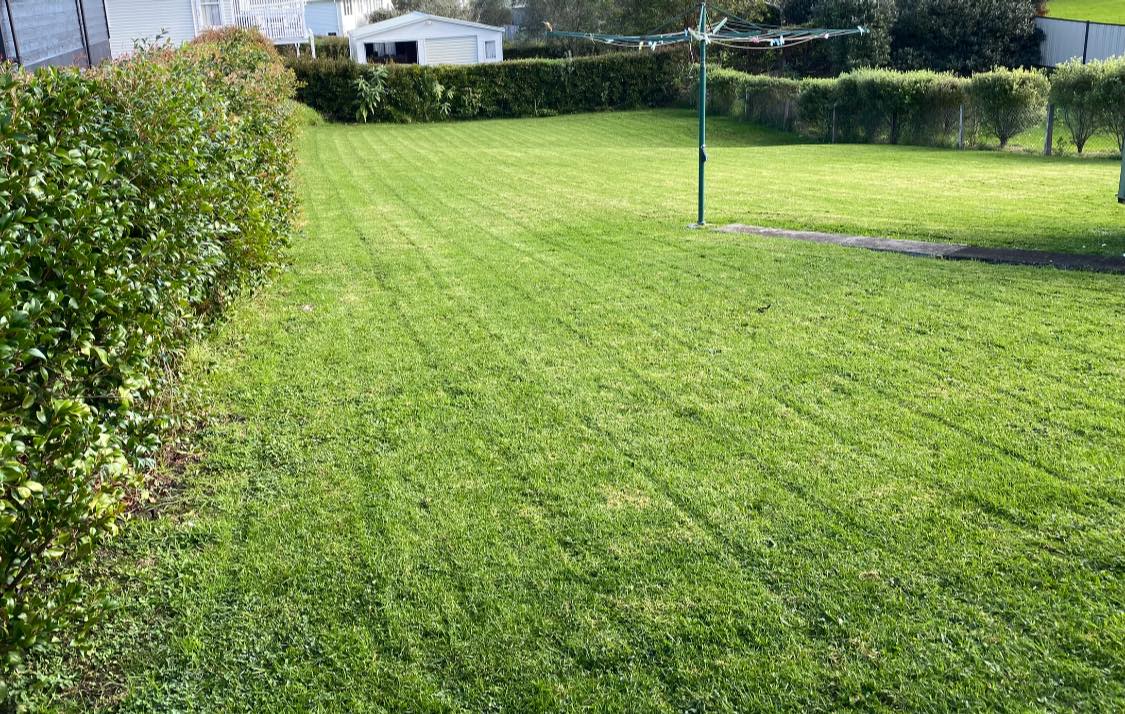
- Mid-May to late June: Fast growth. Warm soil, long days, often good moisture. Most lawns need cutting every 5 to 7 days. Some properties in sheltered areas or with good fertility are pushing growth every 4 to 5 days during peak spring flush.
- July to mid-August: Growth slows significantly, especially during dry stretches. Many Sudbury lawns only need cutting every 10 to 14 days in a dry July. Mowing on a fixed weekly schedule during a dry July means you’re cutting grass that barely grew since the last pass — unnecessary stress on a plant that’s already dealing with heat.
- Late August to October: Growth picks back up as temperatures cool. Weekly mowing resumes for most properties through September. By mid-October, most Sudbury lawns are slowing toward dormancy.
I run maintenance routes across Greater Sudbury and I adjust frequency based on what I’m actually seeing on each property. A lawn in a sheltered, well-fertilized Garson backyard grows faster than an exposed front lawn in Azilda during the same week. Fixed schedules ignore that.
One homeowner in Lively was on a strict every-Saturday mowing schedule. In a dry July, that meant cutting 1.5 inches of growth off a stressed lawn every week. We shifted him to a growth-based schedule and his lawn handled July significantly better that season.
Tip: Use the one-third rule as your trigger. When the grass reaches 4 to 4.5 inches, it’s time to cut back to 3 inches. That rule automatically adjusts your frequency to match actual growth rather than the calendar.
The Last Cut of the Season — Don’t Make This Mistake
The fall finale matters more than most homeowners realize. I see this mistake every October in Sudbury — someone drops their deck for the last cut of the year to “tidy up” and goes over the lawn at 1.5 or 2 inches. The thinking is usually that a short cut prevents matting under snow.
On Sudbury clay, this is exactly wrong. Here’s what actually happens.
Grass cut short going into winter has less leaf material to protect the crown of the plant from freeze-thaw damage. Sudbury’s winters are hard on lawns not because of sustained cold — the snow cover actually insulates well — but because of the aggressive freeze-thaw cycles in November and early spring. A crown with some leaf protection handles those cycles better than one that’s been cut to the dirt before winter.
The actual risk of matting under snow is real but it’s addressed by keeping the last cut at 3 inches, not by going shorter. A 3-inch lawn going into winter doesn’t mat under snow the way a 5 or 6-inch lawn would. You get the protection without the matting risk.
Last fall I walked a property in Chelmsford in early April. The previous owner had scalped it in late October. The lawn came out of winter thin and pale with visible crown damage in the lower areas where cold air pooled. The neighbor’s lawn — same street, same soil, same winter — was cut at 3 inches going in and came out noticeably better. Same conditions, different last-cut decision.
If you also want to set your lawn up properly for spring, pairing the fall cut with the right fertilization timing makes a real difference — I walk through the full seasonal program in our Sudbury lawn fertilization guide.
Tip: Time your last cut for when the grass has stopped actively growing — in Sudbury that’s typically late October, around the same time as the first consistent overnight frosts. Don’t force a late cut on dormant grass. If it’s not growing, it doesn’t need cutting.
Mowing Around Sudbury’s Clay Soil — What Changes
Clay soil affects more than just seeding and fertilization. It directly impacts how you should approach mowing, and most generic mowing advice doesn’t account for it.
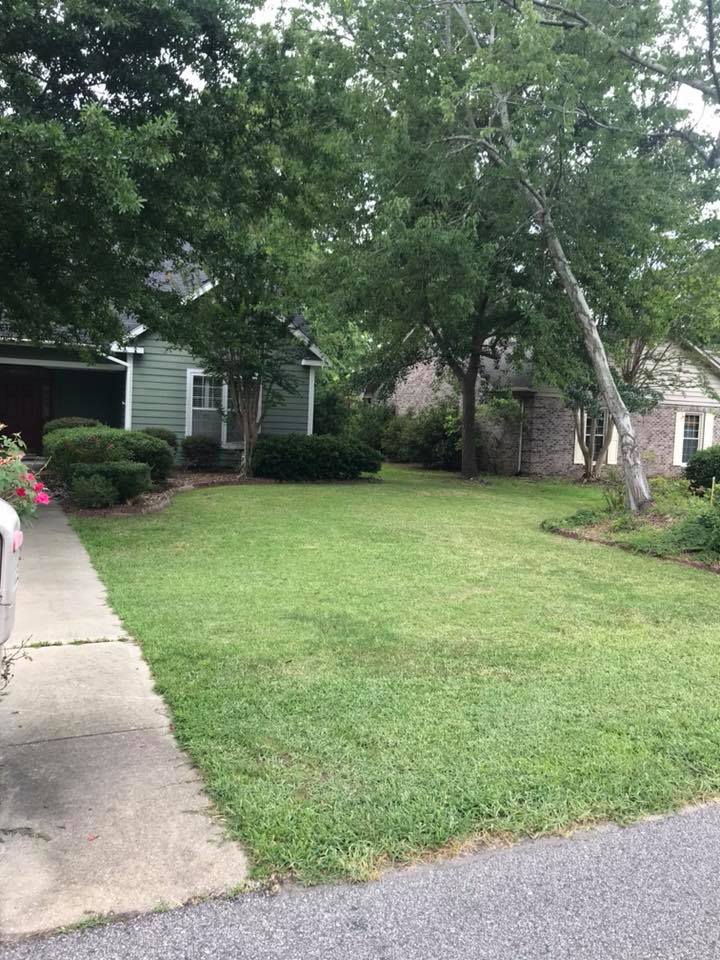
Never mow wet clay. This is the rule I push hardest on Sudbury properties. Mowing on saturated clay compacts the soil under the mower wheels, especially on the turning points at the end of each pass. Over a season of wet mowing, those wheel tracks become visibly harder and denser than the surrounding soil. Grass over compacted wheel tracks thins out and browns faster in summer.
After a significant rain in Sudbury — we get some heavy May storms — I wait at least 24 hours before mowing clay-heavy properties. On some of the heavier clay lots in Cheney Manor, I wait 36 to 48 hours. The grass might get a bit longer than ideal, but the soil structure you preserve is worth it.
Alternate your mowing pattern. On clay soil, running the mower in the same direction every cut creates ruts and compacts the soil in consistent lines. I alternate direction on every visit — north-south one week, east-west the next, diagonal occasionally. It makes a visible difference in soil health over a full season.
If your lawn is dealing with compaction issues alongside the mowing challenges, it might be worth reading about how seeding timing and soil prep work together on Sudbury clay — the same compaction that affects mowing also affects how well new seed establishes.
Tip: If you see wheel tracks staying visible in your lawn after mowing, that’s a compaction signal. Annual core aeration is the fix — it breaks up those compacted lines and lets the soil breathe again.
Quick Mowing Calendar for Sudbury 2026
| Month | Typical Growth Rate | Recommended Frequency | Notes |
|---|---|---|---|
| Early May | Slow / starting | Not yet — wait for soil | Check soil firmness first |
| Mid to late May | Picking up fast | Every 7 days | First cut at 3.5 inches |
| June | Fast | Every 5–7 days | Peak spring growth period |
| July | Slow (dry stretches) | Every 10–14 days | Follow growth, not calendar |
| August | Moderate, picking up late | Every 7–10 days | Growth resumes late August |
| September | Active again | Every 7 days | Good growing conditions return |
| October | Slowing to stop | As needed — final cut at 3″ | Don’t scalp for winter |
What Professional Grass Cutting Costs in Sudbury in 2026
A lot of homeowners ask me what they should expect to pay if they want someone else handling the mowing. Here are real numbers for Greater Sudbury:
- Standard residential cut (up to 5,000 sq ft): $45 – $75 per visit
- Larger lots (5,000 – 10,000 sq ft): $75 – $120 per visit
- Bi-weekly service: Slightly higher per cut than weekly — grass grows longer between cuts and takes more time
- Full season contract (weekly, May–October): $900 – $1,600 depending on lot size
Every cut we do at Cutting Edge includes edging along driveways and sidewalks, trimming around obstacles, and blowing clippings off hard surfaces. Edging isn’t an add-on — it’s part of what makes the difference between a lawn that looks maintained and one that just looks mowed.
If you’re comparing quotes in Sudbury, ask specifically whether edging is included. A $39 cut that doesn’t include edging is a different product than a $55 cut that does. I wrote about exactly what that price difference means in practice — worth reading before you book anyone.
I’ve been mowing lawns in Greater Sudbury since 2020 and the timing questions never get old, because every spring is a little different. A warm May means earlier starts. A cold, wet May — like 2025 — means waiting longer than you want to. The calendar is a guideline. What the grass and soil are actually doing is the real signal.
If you want your lawn cut properly all season — right height, right timing, edging included every visit — give me a call.
📞 705-507-6787
🔗 Get a Free Quote at cuttingedgelawn.ca
📍 Serving Sudbury, Cheney Manor, Garson, Val Caron, Hanmer, Lively, Chelmsford, and Azilda
— Ryan
Frequently Asked Questions
When should I start mowing my lawn in Sudbury in spring 2026?
The safe start window for mowing in Sudbury is mid-May — typically May 15 to May 20 in most years. Before that, the ground is often still cold, soft, or recovering from snow melt. Mowing on soft, wet clay soil compacts it and can tear roots. Wait until the ground is firm, the grass is actively growing, and overnight temps are consistently above freezing. Check soil firmness by pressing your heel in — if it sinks noticeably, wait another week.
What height should I cut my Sudbury lawn?
3 inches, all season. On Sudbury’s clay-heavy soil, cutting at 3 inches develops deeper roots that reach into cooler, moister soil during July dry stretches. Lawns cut at 1.5 to 2 inches have shallow roots that brown out quickly when surface soil dries. The first cut of spring should go to 3.5 inches — slightly higher than the maintenance height — to avoid stressing grass that’s still establishing its root system after winter.
How often should I mow my lawn in Sudbury?
Follow growth, not the calendar. In May and June — Sudbury’s fast-growth period — most lawns need cutting every 5 to 7 days. In July, growth slows significantly and many lawns only need cutting every 10 to 14 days. September picks up again with weekly mowing. The trigger is the one-third rule: when grass reaches 4 to 4.5 inches, cut back to 3 inches. That automatically adjusts your frequency to match actual growth.
Should I mow my lawn before or after rain in Sudbury?
After — but wait at least 24 hours after significant rain on clay-heavy Sudbury soil. Mowing on wet clay compacts the soil under mower wheels, creating ruts and hard lines that thin the grass over time. If you must mow after rain, wait until the soil feels firm underfoot and grass blades are dry enough that they stand upright rather than lying flat.
What should I do for the last mow of the season in Sudbury?
Keep the final cut at 3 inches — don’t drop the deck to scalp the lawn before winter. Short grass going into a Sudbury winter has less protection for the crown of the plant against freeze-thaw damage. A 3-inch final height protects the crown without creating a matting risk under snow. Time the last cut for when growth has genuinely stopped — in Sudbury that’s typically late October, around the time of the first consistent overnight frosts.
Ryan Lingenfelter is the owner of Cutting Edge Lawn & Landscaping in Garson, Ontario. Since 2020, his crew has provided full lawn care services across Greater Sudbury — Garson, Val Caron, Hanmer, Lively, Chelmsford, Azilda, and Capreol. Cutting Edge is licensed, insured, BBB A+ rated, and ThreeBest Rated for lawn care services in Sudbury.
📞 Phone: 705-507-6787
📍 Service Area: Greater Sudbury, Ontario
🔗 Free Quote: cuttingedgelawn.ca/quote
Helpful Lawn Care Services in Sudbury
- Grass Cutting Services in Sudbury
- Core Aeration for Healthy Lawns
- Lawn Seeding and Overseeding
- Sod Installation in Sudbury
- Property Cleanup Services
- Mulch & Decorative Stone
Continue Reading
- How to Edge Your Lawn Like a Pro in Sudbury
- How Much Does Lawn Fertilization Cost in Sudbury? (2026 Guide)
- How to Fix Clay Soil in Your Sudbury Lawn (Without Replacing It)
