
By Ryan Lingenfelter — Owner, Cutting Edge Lawn & Landscaping · Garson, Ontario · Serving Greater Sudbury since 2020
I walk onto a property and I can usually tell within two minutes what’s wrong with the lawn.
Not because I have some special talent. Because lawns communicate. The colour, the texture, the pattern of where it looks good versus where it doesn’t — all of it is telling you something specific. Most homeowners just don’t know how to read it yet.
I’m Ryan Lingenfelter, owner of Cutting Edge Lawn & Landscaping in Garson, Ontario. Since 2020, I’ve walked properties across Greater Sudbury — Garson, Val Caron, Hanmer, Lively, Chelmsford, Azilda, Capreol. And one of the most useful things I can do for a homeowner isn’t spray something or aerate something — it’s just explain what they’re actually looking at.
That’s what this article is. A field guide to reading your Sudbury lawn. What each symptom means, what’s causing it, and what to actually do about it.
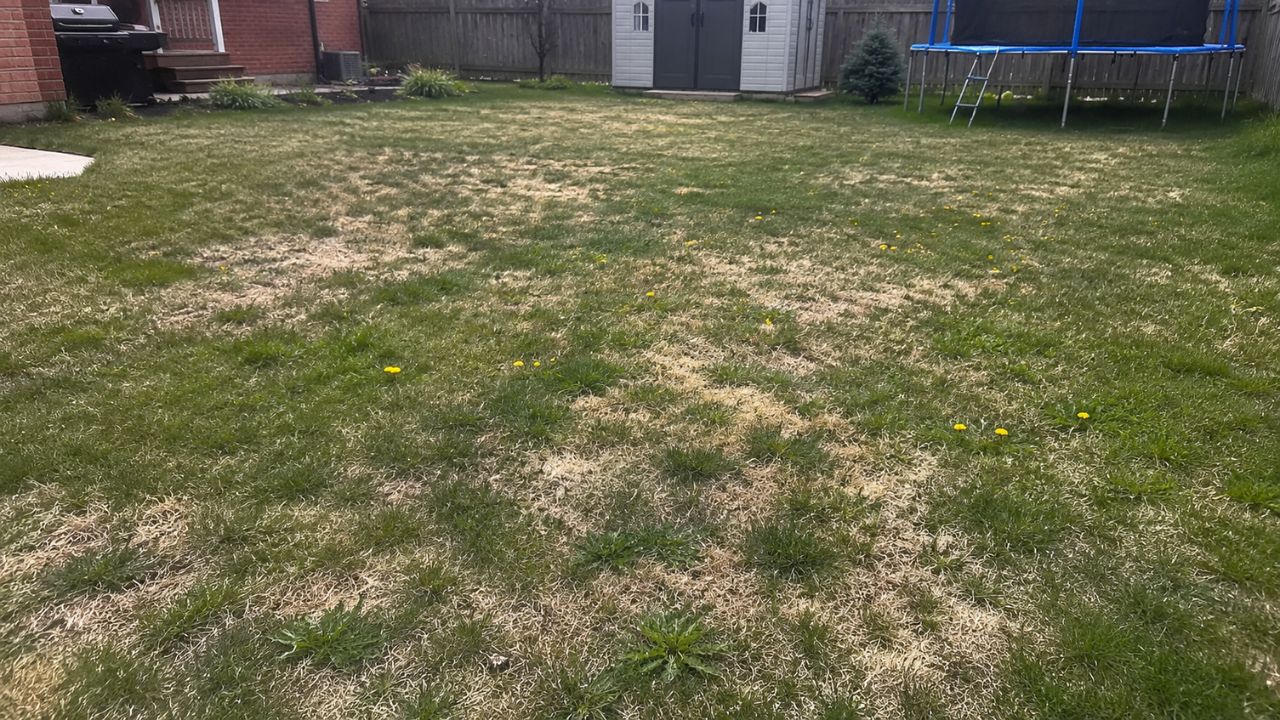
The Whole Lawn Is Yellow or Pale Green
This is the one I get called about most in July and August. Homeowner walks outside, the whole lawn has gone from green to yellow or a washed-out pale colour, and they assume something is dying.
Usually it’s one of three things.
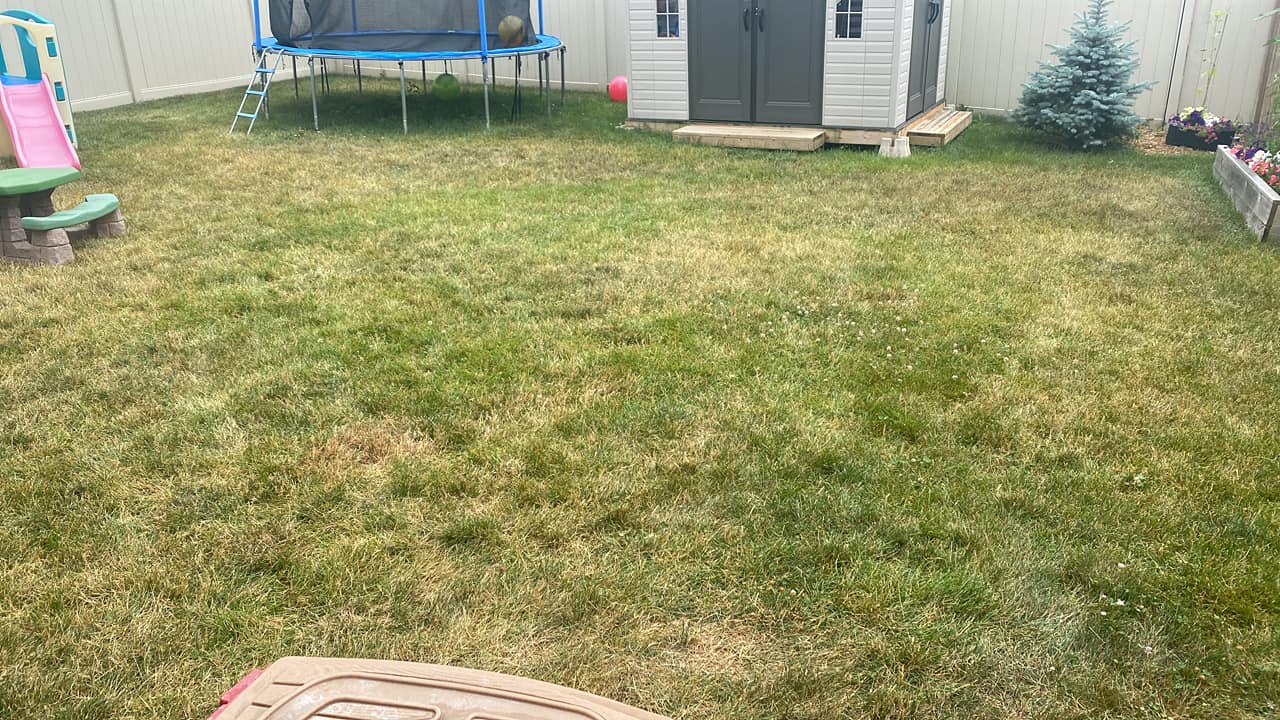
Drought stress. When Sudbury hits a dry stretch in summer and temperatures push past 28-30°C, cool-season grasses like Kentucky bluegrass and fine fescue slow way down. They’re not dying — they’re conserving. The colour fades, growth nearly stops, and the lawn looks rough. This is normal. Water deeply every two to three days and the colour comes back within a week or two.
Heat dormancy. If the dry spell goes long enough, the grass will go fully dormant — uniformly tan or straw-coloured across the whole lawn. Again, not dead. Cool-season grasses can survive four to six weeks of full dormancy. As long as the crowns don’t completely dry out, the lawn recovers when temperatures drop and rain returns. One deep watering every two weeks is enough to keep a dormant lawn alive without forcing it out of dormancy prematurely.
Nitrogen deficiency. Pale yellow-green that persists even when you’re watering consistently often means the lawn isn’t getting enough nitrogen. This is a fertilizer timing issue. If you haven’t fertilized since spring, a mid-season application of slow-release fertilizer — applied when temperatures are below 25°C — will bring the colour back within two to three weeks. Don’t apply fertilizer during a heat wave. It’ll burn.
How to tell the difference: if the whole lawn went yellow during a hot dry stretch and your soil feels dry an inch down, it’s drought stress or dormancy. If temperatures are moderate, you’re watering properly, and it’s still pale — it’s likely a nutrient issue.
Yellow or Brown Patches — But Not the Whole Lawn
Patches are different from whole-lawn yellowing. Patches tell you something specific is wrong in that location.
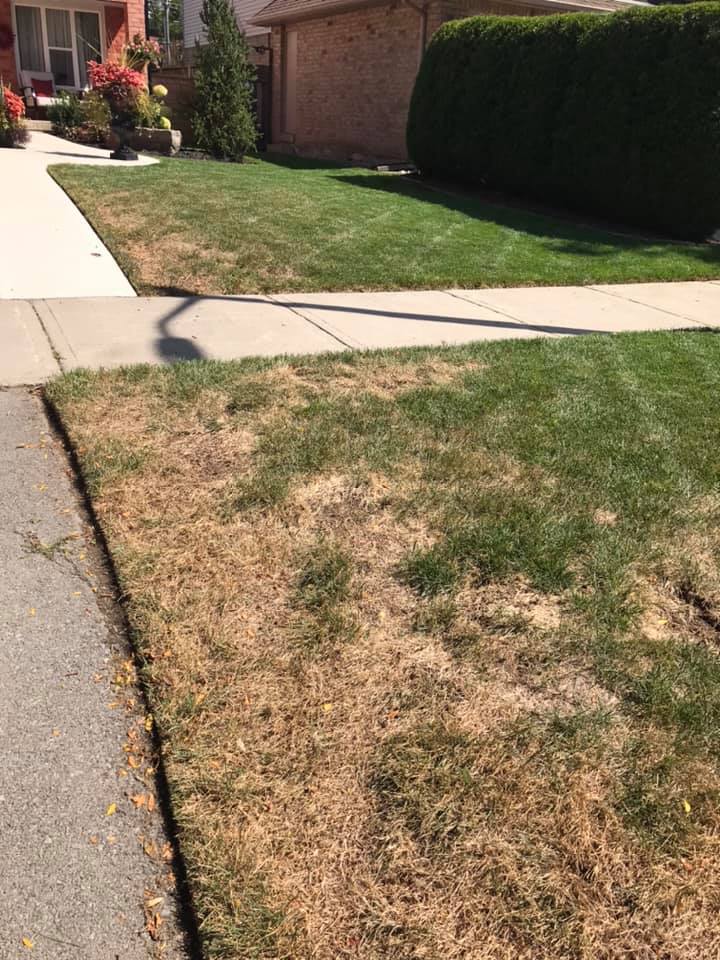
Dog urine spots. Small circular patches, usually 6 to 12 inches across, bright yellow or brown in the centre with a ring of dark green grass around the outside. The dark green ring is the giveaway — urine is high in nitrogen, and the edge of the splash zone acts like fertilizer while the centre concentration burns. If you have a dog and you’re seeing these, that’s what it is.
Grub damage. Irregular patches that feel spongy underfoot and pull up easily — like lifting a carpet with no roots attached underneath. White grubs from June bugs feed on grass roots through July and August from underneath. The grass looks dead because it literally has no roots left. If you can roll back a patch like sod, check the soil underneath — white C-shaped grubs about the size of your thumbnail are the cause. I’ve written about this in more detail in the lawn grubs article here.
Fungal disease. Irregular patches with a bleached or straw colour, sometimes with a dark border or a reddish tint at the edge of the affected area. Often appears in humid conditions after warm nights — especially in low spots where air circulation is poor. Common fungal issues on Sudbury lawns include red thread (pink-red threads visible on the grass blades in morning light) and dollar spot (small bleached circles, roughly the size of a dollar coin). Fungal issues are made worse by watering in the evening and by cutting grass when it’s wet.
Compaction hot spots. Thin, pale patches in specific locations — along the edge of the driveway, in a path people walk regularly, near the gate. These spots are compacted harder than the rest of the lawn. The grass roots can’t breathe, water runs off instead of soaking in, and the turf slowly gives up. Targeted aeration in those spots makes a real difference.
Shallow soil over rock. On Sudbury’s Canadian Shield properties, some patches go dry and brown faster than the rest simply because there’s less soil depth in that spot. The rock underneath is closer to the surface. Water drains through faster, roots can’t go deep, and the grass suffers more in heat. If this patch has always been the problem spot no matter what you do, that’s likely what you’re dealing with.
Brown Leaf Tips — But the Grass Itself Looks Okay
Brown tips on grass blades — where the top quarter inch or so is brown but the rest of the blade is green — is almost always one of two things.
Dull mower blade. This is the most common cause and most people never think of it. A sharp mower blade cuts the grass cleanly. A dull blade tears it. Torn grass fibres dry out and go brown at the tip within a day or two of cutting. The lawn looks like it has a grey-brown haze over it a few days after mowing. Run your finger along a blade — if the tip feels ragged and frayed rather than clean-cut, your blade needs sharpening. I sharpen our blades regularly specifically because of this.
Watering in the evening. Grass blades that stay wet overnight are more susceptible to fungal issues, and the early signs often show up as browning at the tips. Water in the early morning — before 9am — so the blades dry out during the day. Evening watering is one of those habits that seems harmless but causes slow ongoing damage.
Thin Grass That Never Seems to Thicken Up
You mow it, you water it, you’ve even put down seed — and the lawn stays thin and patchy no matter what you do. This is one of the most frustrating lawn problems because the fix isn’t obvious.
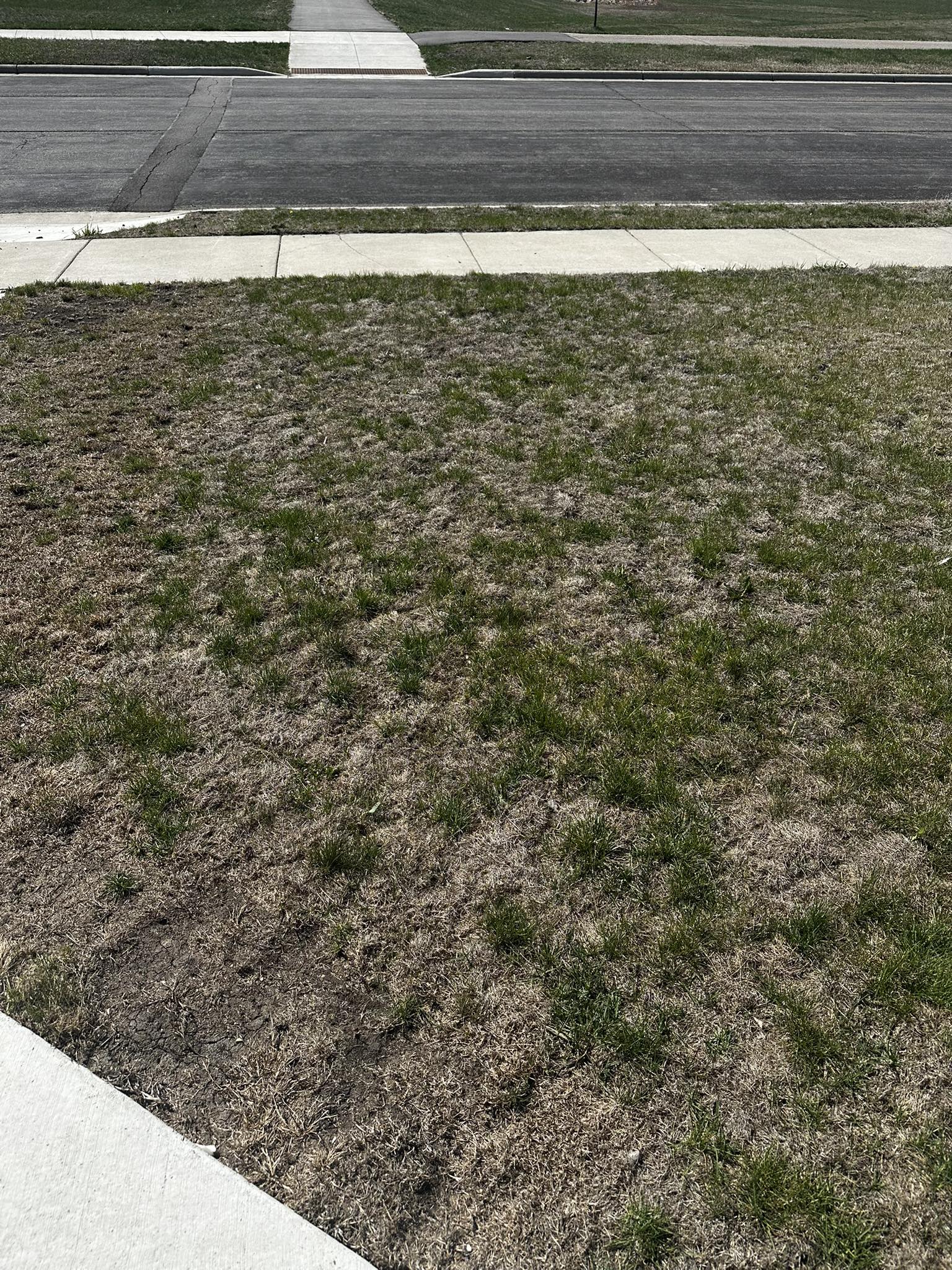
Compacted soil. This is the number one cause of chronically thin Sudbury lawns. When the soil is packed hard — from years of foot traffic, our heavy snow load, and no aeration — grass roots simply can’t establish properly. The grass germinates, grows for a bit, then struggles because it can’t get the oxygen, water, and nutrients it needs deep in the soil. You can seed all you want, but if the soil is compacted, most of it won’t establish. Core aeration is the fix — it opens the soil so everything else can actually work.
Cutting too short. Short grass means shallow roots. Shallow roots mean a thin, stressed lawn that can’t handle heat, drought, or competition from weeds. If you’ve been cutting at 1.5 or 2 inches, raise it to 3 inches and leave it there. The lawn will look different within two to three cuts — thicker, greener, more resilient. This is the single easiest thing most Sudbury homeowners can do to improve their lawn immediately.
Shade. Cool-season grasses need sun to thrive. A lawn under a mature tree canopy is fighting an uphill battle — not enough light, root competition from the tree, and dry conditions because the tree canopy intercepts rainfall. Fine fescue varieties handle shade better than Kentucky bluegrass, so reseeding shaded areas with a shade-tolerant mix helps. But if the canopy is dense enough, grass may not be the right answer — a mulched bed under heavy tree cover often looks better and requires less ongoing maintenance than a perpetually struggling patch of turf.
Wrong grass for the conditions. Some areas of a Sudbury lawn are consistently wet, some are consistently dry, some are in full sun, some are shaded half the day. A single grass mix doesn’t perform equally in all of those conditions. Overseeding problem areas with a variety suited to that specific condition — shade-tolerant fescue under trees, drought-tolerant varieties in dry sun-baked spots — makes a noticeable difference over time.
Bare Patches That Keep Coming Back
You seed a bare patch. It fills in. By the following spring, it’s bare again. This cycle is one of the most common frustrations I hear from Sudbury homeowners.
The cause wasn’t fixed. Bare patches come back because whatever killed the grass in that spot is still there. If it’s a drainage problem — water pools there after rain and the roots drown — seeding over it every spring is just delaying the inevitable. Fix the drainage first, then seed. If it’s compaction, aerate before seeding. If it’s shallow rock, you may need to bring in topsoil before grass will establish properly in that spot.
Seed quality or germination conditions were off. Cheap seed, seed thrown on top of dry hard soil, seed that wasn’t kept moist during germination — all of these produce poor results. Quality seed needs direct soil contact (which is why overseeding right after aeration works so well), consistent moisture for 14 to 21 days, and the right temperature window. In Sudbury, late May to mid-June and late August to mid-September are the best overseeding windows.
Vole damage. After a Sudbury winter, you sometimes see trails of dead grass running in lines across the lawn — voles tunnel under the snow and eat the grass crowns along their runs. Those trails can look like bare patches in spring. The good news is most of them fill in on their own once the lawn starts growing. Light raking and overseeding the worst runs speeds it up.
The Lawn Is Spongy or Feels Soft Underfoot
A lawn that feels bouncy or spongy when you walk on it — not in a good way, but almost like walking on a mattress — usually has one of two things going on.
Excessive thatch. Thatch is the layer of dead organic material between the grass blades and the soil surface. A thin layer — under half an inch — is normal and actually beneficial. When it builds up past an inch, it becomes a problem. Water can’t penetrate through it properly, roots start growing in the thatch instead of the soil, and disease pressure increases. Thatch builds up faster when grass is cut too short and clippings accumulate. Light dethatching or power raking in spring, followed by aeration, addresses this.
Grub damage. As mentioned above, a spongy lawn that pulls up like carpet is a grub sign. The roots are gone and you’re essentially walking on disconnected turf. Check underneath for white grubs.
Weeds Are Taking Over Specific Areas
Where weeds concentrate tells you something about what’s wrong in that spot.
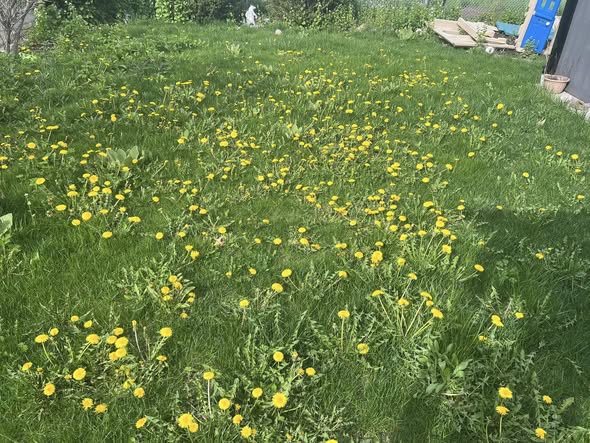
Dandelions and plantain in the same areas every year — compacted soil. These weeds thrive in conditions where grass struggles. The location of the weeds is telling you exactly where the compaction is worst.
Crabgrass in thin, sunny areas — bare or thin turf in warm spots. Crabgrass needs exposed, warm soil to germinate. Where you see it concentrated is where the lawn is thinnest and most exposed.
Clover throughout the lawn — low soil nitrogen. Clover fixes nitrogen from the air, so it thrives when turf grass is nitrogen-deficient. Consistent fertilization on a proper schedule reduces clover pressure over time.
Creeping Charlie in shaded, damp areas — exactly what it sounds like. Ground ivy loves moisture and shade. It’s telling you that grass isn’t the right plant for that spot, or that drainage needs to be improved.
What to Do With This Information
The point of all of this isn’t to overwhelm you. It’s to give you a framework for looking at your lawn the way I look at it when I walk a property.
Start with the pattern. Is it the whole lawn or specific spots? Whole lawn problems are usually about maintenance — mowing height, watering schedule, fertilizer timing. Specific spot problems are usually about conditions in that location — drainage, compaction, shade, soil depth.
Then ask what changed. Did a problem appear suddenly or has it been getting worse gradually? Sudden problems — patches that appeared fast, areas that pulled up — are often pest or disease related. Gradual decline is almost always a maintenance or soil issue.
And if you’re not sure, give me a call. Walking a property and reading what the lawn is telling me is genuinely one of my favourite parts of this job. It’s usually not as complicated as it seems from the outside.
When to Call Someone
If you’ve read through this and you’re still not sure what’s going on with your lawn — or if you know what the problem is but don’t want to tackle it yourself — that’s exactly what a quote call is for. I come out, walk the property, tell you what I’m seeing, and give you a straight number before anything gets scheduled.
We service all of Greater Sudbury — Garson, Val Caron, Hanmer, Lively, Chelmsford, Azilda, Capreol, and Sudbury itself. Licensed and insured.
— Ryan Lingenfelter
Cutting Edge Lawn & Landscaping, Garson, Ontario
📞 705-507-6787
Want someone to walk your property and tell you exactly what it needs? Free quotes, no obligation.
Get a Free Quote |
Call 705-507-6787


