

Every July and August, the same question comes up a few times a week — either directly, as a question before someone leaves, or indirectly, as a description of what they came home to.
“We were away for two weeks. The lawn is a mess. What do I do?”
Or the pre-departure version: “We’re leaving for two weeks. Should I do anything before we go? What’s going to happen while we’re away?”
The honest answer to both versions of this question is more specific than “your lawn will be fine” or “your lawn will be ruined.” What happens to a Sudbury lawn in two weeks depends on when you leave, what the weather does while you’re gone, and what condition the lawn was in before you left. Here’s the full picture.
The Week-by-Week Reality — What Actually Happens
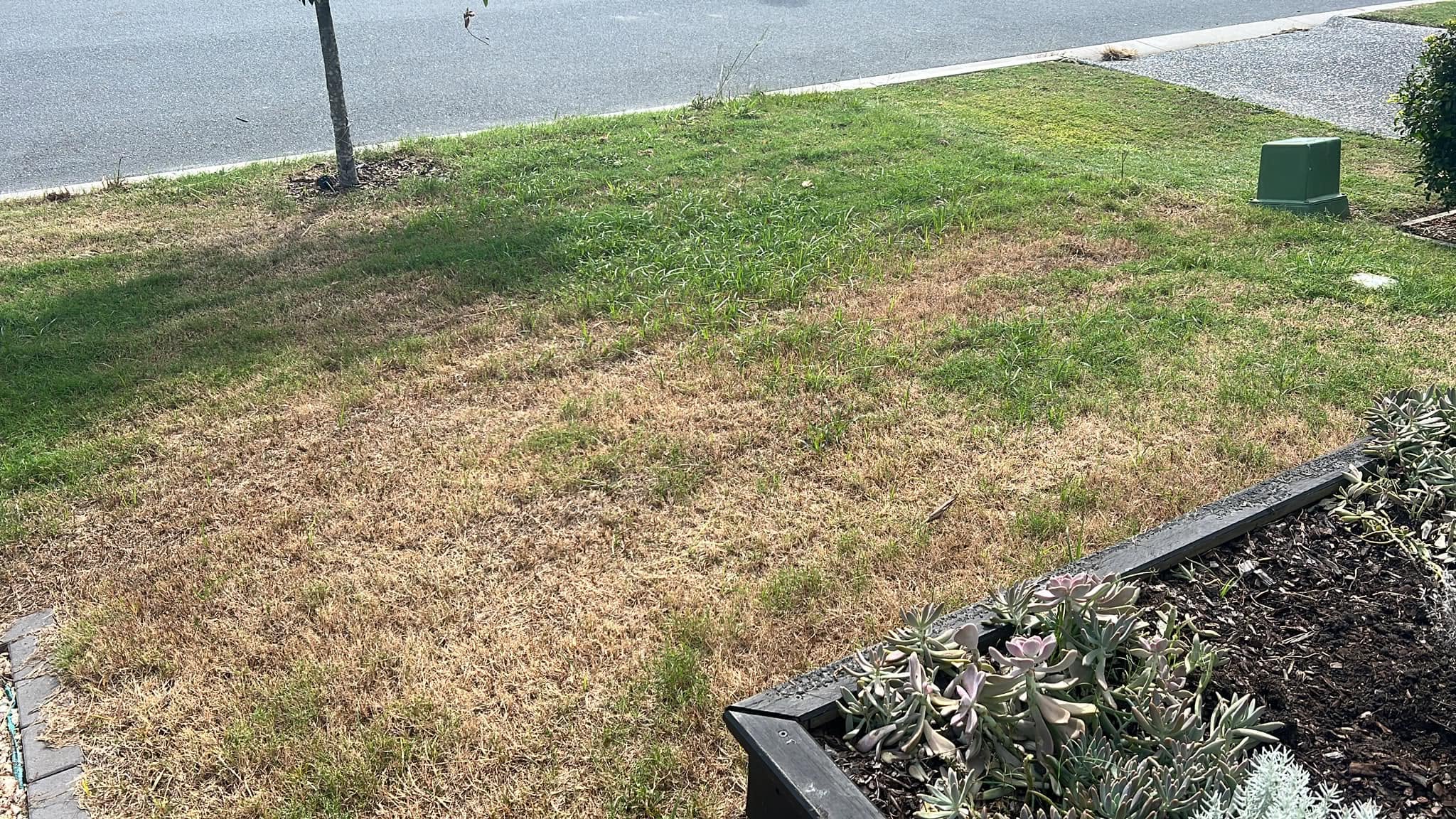
Let me walk through what the lawn is actually doing during a standard two-week summer absence in Sudbury, assuming no irrigation and no mowing.
Days 1 to 5: The Lawn Is Fine
In the first five days, almost nothing visible changes. If the lawn was in reasonable shape when you left — mowed at the right height, adequate soil moisture from recent rain or watering — it will continue to look essentially the same. Grass growth is happening but not enough to be particularly noticeable yet. The soil moisture from the last watering or rainfall is still present at root depth.
The only exception is if you left during or immediately before a dry stretch. Sudbury lawns with shallow roots — which is a significant portion of lawns across the city, because of our compaction-prone Shield soil — can start showing stress within 5 to 7 days in hot, dry conditions. If the forecast showed a week of hot and dry when you left, day 5 on a shallow-rooted lawn may already show colour shift and footprint persistence.
Days 6 to 10: Where It Goes One of Two Ways
This is the period where the weather diverges the outcomes significantly.
If it’s rained: The lawn has probably continued growing at a normal rate and may be getting noticeably longer — perhaps 1.5 to 2 inches above where you left it. Tall but not problematic. The moisture has kept the root zone adequately supplied and the lawn is essentially just overdue for a mow rather than stressed.
If it’s been dry and hot: By day 8 to 10 in a July or August dry stretch without watering, a Sudbury lawn with typical shallow root development is showing visible stress. The colour shift I described in the July warning signs article — the blue-grey tinge that precedes browning — will be visible in the sections that dry fastest. South-facing sections, areas near heat-reflecting pavement, and sections over thin Shield soil will be the first to show it.
A lawn with proper root depth — developed through annual aeration and good soil management — handles a 10-day dry stretch significantly better than one that hasn’t had that treatment. The difference between a well-prepared Sudbury lawn and one that hasn’t been aerated consistently is most visible exactly in this 8 to 10 day window without water.
Days 11 to 14: The Mowing Problem Compounds
By day 14, the mowing issue has become the primary concern regardless of rainfall.
Sudbury grass in peak growing conditions — late June through mid-July — grows roughly half an inch to three-quarters of an inch per week under normal conditions. Two weeks without mowing means 1 to 1.5 inches of growth above the normal cut height. If you left with the lawn at 3 inches, you’re coming home to 4 to 4.5 inches — longer than ideal but completely manageable with one careful mow.
If conditions were particularly good for growth — warm temperatures, regular rain — you might come back to grass at 5 or 6 inches. At that length, you can’t cut to 3 inches in a single mow without removing more than a third of the blade length, which shocks the grass. You’ll need two mows separated by a few days to bring it back to the right height.
If conditions were dry, the grass may have slowed its growth as a stress response and not gotten as long as you’d expect for two weeks. This sounds like a benefit but it means the lawn was stressed rather than thriving — so while the mowing problem is smaller, the recovery problem is larger.
What Makes It Worse or Better — Sudbury Specific Factors

Here’s where Sudbury conditions specifically determine how a two-week absence plays out.
Timing Within the Season
A two-week absence in mid-June is significantly less damaging than the same absence in late July or early August. In June, soil moisture is typically higher coming out of spring, temperatures are more moderate, and the grass is in its strongest active growth phase where it can recover from stress quickly. In late July, the soil moisture reserves are depleted from a summer of heat, temperatures are at their peak, and the grass has less resilience to a two-week drought stress period.
If you have flexibility in when you take your summer vacation and you care about the lawn, early summer absences are gentler than late summer ones.
Root Depth Going In
This is the factor that matters most for the drought component of a two-week absence. A lawn that’s been receiving proper care — annual aeration in the right window, mowed at the correct height, not over-watered in ways that kept roots shallow — has root depth of 6 inches or more. That lawn can go 12 to 14 days in dry conditions before showing serious stress.
A lawn with shallow roots — 2 to 3 inches, which is common on Sudbury properties that haven’t been aerated regularly — runs out of accessible moisture significantly faster. The shallow-rooted lawn is the one that comes back from vacation looking burned in the spots that dried first.
I’ve written at length about the sprinkler timer in the irrigation piece — one of the things I describe there is that shallow watering contributes to shallow roots. A property that’s been watered lightly and frequently has concentrated the root system in the top 2 inches. That’s the worst possible starting point for a two-week absence without irrigation.
Whether You Have Irrigation and Whether It’s Set Correctly
An irrigation system set to run while you’re away solves the drought stress component entirely — with one important caveat. As I’ve described in detail, if the timer is set to a schedule that’s wrong for the current season, it may be over-watering in cool conditions or under-watering in a heat stretch. The timer needs to reflect the actual conditions, not a fixed schedule set in spring.
The most effective approach for a vacation absence with irrigation: check the 14-day forecast before you leave. If it shows regular rainfall, turn the system off or set it to rain-sensor mode so it skips when natural precipitation is adequate. If it shows dry conditions, set the timer to deep, infrequent watering — 45 to 60 minutes per zone every 2 to 3 days — and ensure the timing is morning-only. Don’t set it and forget it on the same schedule you’ve been running since May.
The Weed Opportunity Window
Two weeks without mowing in peak growing season is a meaningful opportunity for opportunistic weeds. Crabgrass and certain broadleaf weeds establish faster in unmowed lawn than in regularly cut grass, because the competition from the taller lawn grass is reduced and the seed-to-soil contact improves as the lawn gets long enough to mat in places.
This is not usually a dramatic problem from a single two-week absence, but if the lawn already had some weed pressure before you left, you’ll see it has progressed when you return. And if the drought stress has thinned the grass in some sections, those thinned areas will have weed establishment that needs to be addressed rather than just mowed off.
What to Do Before You Leave — The 30-Minute Pre-Vacation Lawn Prep

Here’s the specific pre-departure sequence I’d suggest for a Sudbury homeowner leaving for two weeks in summer.
Mow the Day Before You Leave — At the Right Height
Mow as close to your departure as possible — ideally the day before or morning of departure. Cut to 3 to 3.5 inches, not lower. Leaving the lawn slightly on the taller end of the right range gives it more resilience through the absence. Do not cut short thinking it will “last longer” — short grass in summer heat is more vulnerable, not more durable.
If you normally mow at an incorrect height, don’t correct it dramatically right before you leave. A large height change right before an absence adds stress to the lawn at exactly the wrong time. Leave it at whatever height you’ve been maintaining and adjust gradually when you return.
Water Deeply the Day Before Departure
Whether or not you have an irrigation system, do a deep manual watering the day before you leave. Run the sprinkler long enough that the soil is moist to 5 to 6 inches depth — check with a screwdriver or by lifting a corner of turf. You’re topping up the soil moisture reservoir before the absence, which gives the lawn maximum buffer for the first days without care.
The depth principle from the sod watering article applies here too: a light surface wetting before you leave accomplishes almost nothing. A deep soaking that reaches root depth buys the lawn significantly more time.
Arrange a Mow for Day 10 to 12 If You’re Gone More Than 10 Days
If you’re going to be gone exactly two weeks, the mowing problem on return is manageable. If you’re going to be gone 15 days or more, or if the forecast shows ideal growing conditions while you’re away, having someone mow at the 10 to 12 day mark prevents the grass from reaching a length that requires the gradual correction approach on your return.
This doesn’t have to be a professional service. A trusted neighbour with a mower and five minutes of instruction about the right height is adequate. But if you’d prefer someone to handle it properly and don’t have that arrangement, I can set up a one-time mow for the mid-absence date — just mention when you call that you’re booking it in advance for while you’re away.
I’ve written about the value of continuity in the switching companies piece — a company that knows your property handles the mid-vacation mow better than a one-time service that doesn’t know the gate code or which section needs extra care.
If You Have New Sod — This Changes Everything
If you’ve had sod installed this summer — especially in the last month — a two-week absence without irrigation is high-risk for the sod. New sod in its establishment period cannot tolerate 14 days without water in Sudbury summer conditions. The edges will fail within the first week of a dry stretch. This is exactly the scenario I described in the sod installation watering article.
If you have new sod and a vacation is coming up: either have a reliable irrigation system set to deep, regular watering before you leave, or arrange for someone to water manually every day during the first two weeks of establishment. There’s no workaround here — new sod without water in summer is new sod that fails.
Coming Home — What to Do in the First 48 Hours Back

You’re back. You walk out the door and look at the lawn. Here’s how to read what you’re seeing and what to do about it.
If It’s Long But Green
Good news — the rainfall cooperated and the lawn is healthy, just long. Don’t mow it all the way to normal height immediately. If it’s 5 inches or more, take it to 4 inches in the first mow, wait three to four days, then bring it to 3 to 3.5. The gradual approach avoids the shock of removing too much at once. After two mows it will look normal.
If It’s Showing Stress or Brown Sections
Before you do anything, do the diagnostic walk from the read a lawn like a pro article. Footprint test in the brown sections. Crown check — pull the affected grass and feel for resistance. If the crown is firm and slightly green, it’s drought-dormant, not dead. Water deeply, wait three to four days, and it should start showing recovery. If the crown is dry and brittle, those sections are dead and need attention.
Don’t mow drought-stressed sections immediately. The grass blade is already stressed — cutting it before moisture has been restored adds more stress. Water first, wait for visible recovery signs, then mow.
If Soft Spots Have Appeared
A soft spot that wasn’t there before you left is almost always grub damage that progressed while you were away. The grubs were feeding before you left — the two-week absence just meant nobody noticed the soft spot developing until it was more established. Don’t delay on this: probe the affected area and count. If the grub population is significant, get the nematode treatment scheduled. Late July to August is the window when it’s most effective.
The First Mow Back
Wait until the lawn has recovered from any drought stress before the first mow. Mowing stressed grass makes it more stressed. If everything looks healthy, mow as described above — gradually if the grass is long. Cut clean, dispose of clippings if they’re thick enough to mat, and then resume your normal mowing schedule.
Welcome home. The lawn is more resilient than it looks from the driveway.
For everything we offer across the full season — including one-time mows, mid-vacation service, and ongoing care — the complete service breakdown covers it all.
Call or text: 705-507-6787
Or fill out the free quote form on the site.
We cover Garson, Val Caron, Hanmer, Lively, Chelmsford, Azilda, Capreol, and surrounding areas.
— Ryan Lingenfelter
Cutting Edge Lawn & Landscaping
Garson, Ontario
705-507-6787
