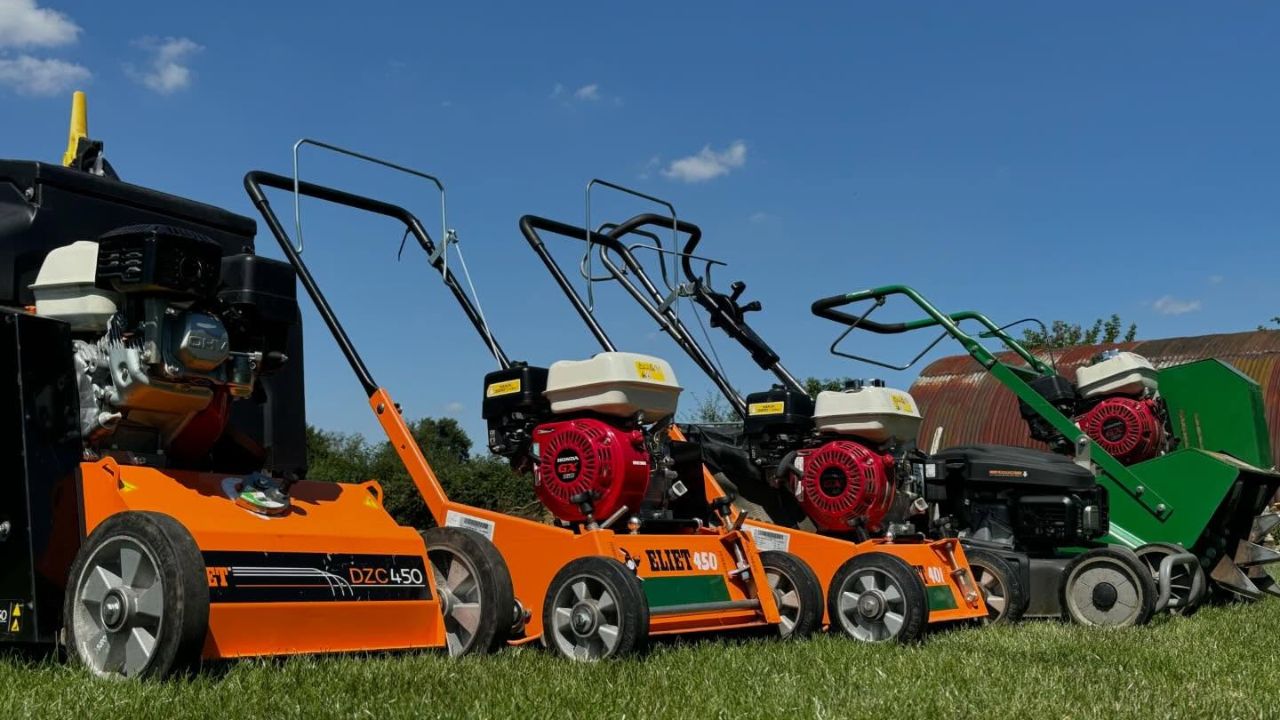
People are sometimes surprised by how little equipment I actually pull out when I walk a property for a quote.
They’re expecting something complicated — soil testing kits, moisture meters, maybe a tablet running some diagnostic app. What I actually use to figure out what’s wrong with most Sudbury lawns fits in one hand, costs less than dinner for two, and tells me almost everything I need to know within five minutes of walking the property.
I’m Ryan Lingenfelter, owner of Cutting Edge Lawn & Landscaping in Garson, Ontario. Since 2020, I’ve diagnosed and treated lawn problems across Greater Sudbury — Garson, Val Caron, Hanmer, Lively, Chelmsford, Azilda, Capreol. After five years of doing this, I’ve narrowed down to three tools that, between them, identify or solve the overwhelming majority of what goes wrong on a Sudbury property. Here’s what they are and why they work so consistently.
Tool 1 — The Screwdriver (Diagnoses Compaction in 30 Seconds)
This is the tool I reach for first on almost every property, and it’s not even a lawn care tool — it’s a regular flathead screwdriver from any hardware store, probably the same one you’ve got in a kitchen drawer right now.

Here’s what it tells me. Push it straight down into the lawn in several spots. On healthy, uncompacted soil, it should go in 4 to 6 inches without much resistance. On most struggling Sudbury lawns, it stops at an inch or two — sometimes less. That single piece of information explains more lawn problems than almost anything else I check.
Compacted clay soil is behind the majority of what I see go wrong on Sudbury properties — thin grass that won’t thicken, brown patches in July, weeds that keep winning, water that pools instead of soaking in. All of these trace back to soil that’s packed too tight for roots, water, and nutrients to move through properly. Sudbury’s clay-heavy ground compacts hard every winter through our freeze-thaw cycles, and without annual aeration, that compaction just keeps building year over year.
The screwdriver test takes thirty seconds and immediately tells a homeowner whether they’re dealing with a compaction problem before they spend money on fertilizer or seed that won’t work properly until the soil underneath is fixed. I walk through exactly what compacted soil does to a Sudbury lawn and how to address it in the clay soil guide here. Once compaction is identified, the fix is straightforward — which brings me to the second tool.
Tool 2 — The Core Aerator (Fixes What the Screwdriver Finds)
If the screwdriver diagnoses the problem, the core aerator is what actually fixes it. This is the piece of equipment that produces the most visible, consistent improvement on Sudbury lawns of any single service I offer.
A core aerator pulls hollow plugs of soil — typically 3 to 4 inches deep — out of the lawn, spaced a few inches apart across the whole property. Each plug removed creates a channel that lets air, water, and nutrients reach the root zone directly, and gives grass roots somewhere to actually grow downward instead of hitting a wall of packed clay.
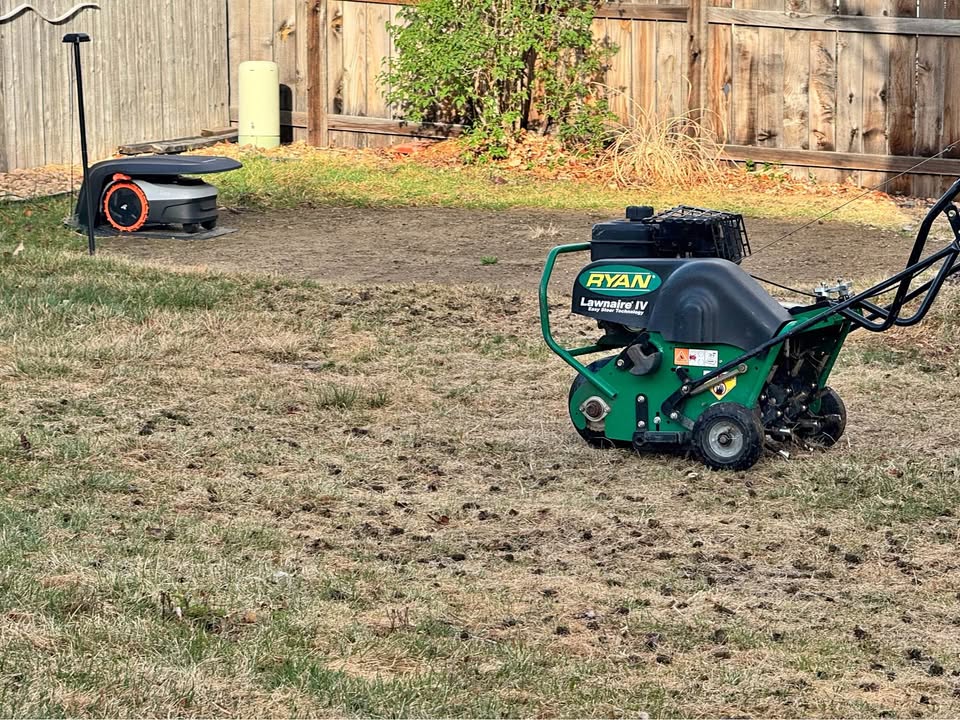
I’ve aerated over 200 properties across Greater Sudbury, and the pattern is consistent. Lawns that haven’t been aerated in years come back the most dramatically — the screwdriver that was stopping at an inch and a half goes in three or four inches within one season of annual treatment. Lawns that get aerated every year stay ahead of Sudbury’s winter compaction instead of fighting an uphill battle each spring.
The reason this tool solves so much beyond just compaction is that it makes every other lawn treatment work better. Fertilizer reaches the root zone instead of sitting on a compacted surface. Seed gets direct soil contact through the aeration holes instead of sitting on top of hard clay where it can’t germinate properly. Watering actually penetrates instead of running off. Aeration doesn’t replace those other treatments — it’s what makes them effective in the first place. The full timing breakdown for when to use this tool in Sudbury specifically is in the aeration timing guide here — late May is the window I recommend for most properties in this climate.
For a standard Sudbury residential lot, professional core aeration runs $80 to $180 depending on size. Rental units are available at most equipment rental places in the city if you want to do it yourself, though commercial machines pull deeper, more consistent plugs than most consumer rentals.
Tool 3 — The Sharp Mower Blade (The One Everyone Already Owns and Ignores)
This is the tool that surprises people most, because almost every homeowner already owns it — they just don’t maintain it the way it needs to be maintained.
A sharp mower blade cuts grass cleanly. A dull blade tears it. That distinction sounds minor but it has real consequences on a Sudbury lawn through the season. Torn grass fibres dry out and turn brown at the cut edge within a day or two, giving the whole lawn a dull, slightly grey-brown haze a few days after mowing. Torn tissue is also more vulnerable to fungal disease than a clean cut, because the ragged edge is a wider entry point for pathogens.
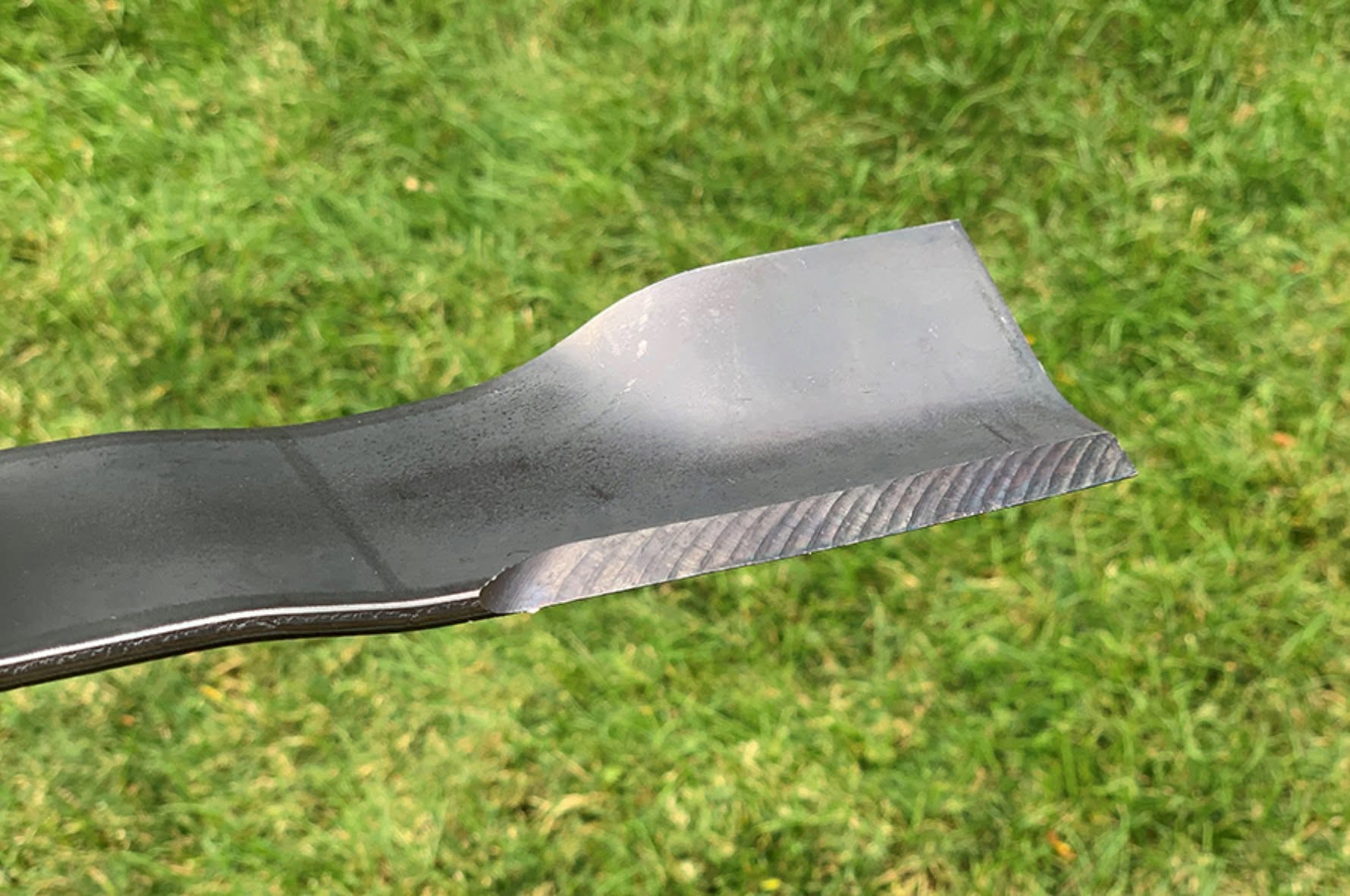
Most homeowners run the same mower blade for an entire season, sometimes longer, without sharpening it. A blade that’s been cutting through a full Sudbury season — including whatever it hits along driveway edges, small stones kicked up by clay soil, and the general wear of dozens of cuts — is significantly duller by August than it was in May, even if nobody’s noticed.
I sharpen our blades regularly throughout the season specifically because of this. The difference in how a lawn looks two days after a cut with a freshly sharpened blade versus a dull one is visible if you know what to look for — clean, crisp colour versus a slightly hazy, stressed appearance across the whole lawn.
For a homeowner cutting their own lawn, the practical takeaway is simple: sharpen or replace your mower blade at least once mid-season, and check it more often if you’re mowing weekly through Sudbury’s fast May and June growth. A sharpening service costs $10 to $20 at most hardware stores and small engine shops in the area, and it’s one of the cheapest improvements available for how a lawn actually looks week to week.
What These Three Tools Have in Common
None of these are exotic. None of them cost much. And that’s actually the point — the three things that solve the majority of Sudbury yard problems aren’t expensive products or complicated treatments. They’re a thirty-second diagnostic, an annual mechanical service, and basic equipment maintenance that most people skip without realizing the cost.
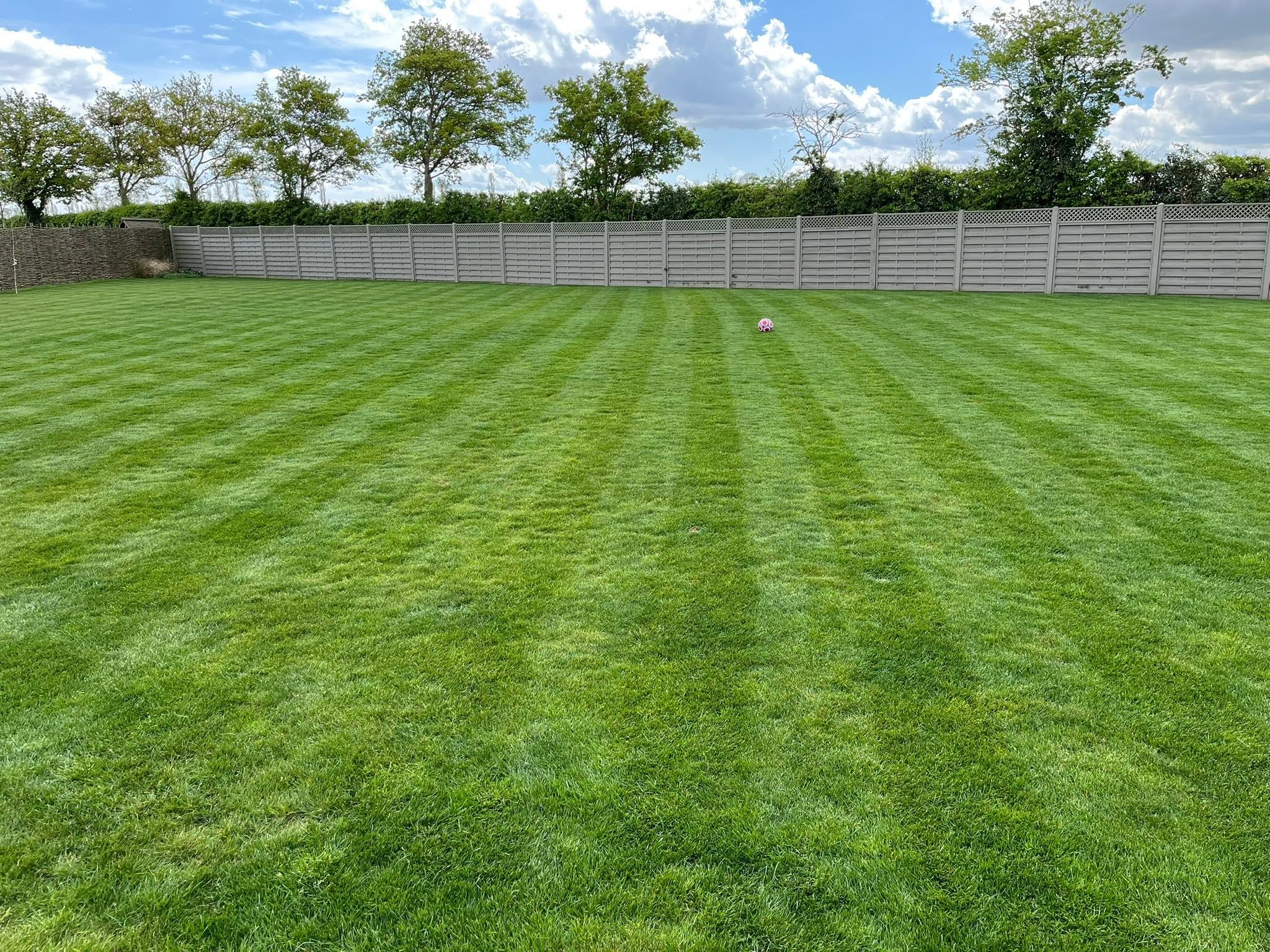
What they also have in common is that they address causes, not symptoms. A struggling Sudbury lawn usually gets treated with fertilizer, weed killer, or more frequent watering — all of which feel productive but don’t touch the underlying compaction or maintenance issue actually driving the problem. The screwdriver tells you whether compaction is the cause. The aerator fixes it if it is. The sharp blade prevents the kind of stress that opens the door to disease and a tired-looking lawn regardless of what’s happening underground.
I’ve walked properties where a homeowner has spent hundreds of dollars on lawn products over several seasons without addressing any of these three things, and the lawn looks the same as it did when they started. I’ve also walked properties where the only change was annual aeration and a properly maintained mower blade, and the transformation over one or two seasons is significant. The expensive solutions aren’t usually the missing piece. These three are.
What to Do With This If Your Lawn Isn’t Cooperating
Start with the screwdriver. It costs nothing if you already own one, and it tells you within thirty seconds whether compaction is part of your problem. If it stops well short of 4 inches, you’ve found a major piece of the puzzle.
If compaction is confirmed, book core aeration — late May is the ideal window for most Sudbury properties, though it can still help later in the season on a struggling lawn. This is the service I’d prioritize above almost anything else if a homeowner is only going to do one thing for their lawn this year.
Check your mower blade. If it’s been more than a few months since it was sharpened, get it done. It’s a small cost that affects how the entire lawn looks every single week.
If you want me to walk your property with these same three things in mind and tell you exactly what’s going on — that’s exactly what a quote call is for.
📞 705-507-6787
🔗 Get a Free Quote
📍 Serving Greater Sudbury — Garson, Val Caron, Hanmer, Lively, Chelmsford, Azilda, Capreol
— Ryan
Frequently Asked Questions
What is the screwdriver test for lawn soil compaction?
Push a standard flathead screwdriver straight down into the lawn in several spots. On healthy, uncompacted soil, it should go in 4 to 6 inches without much resistance. If it stops at 1 to 2 inches, the soil is significantly compacted — a common problem on Sudbury’s clay-heavy properties, especially those that haven’t been aerated in several years. The test takes about thirty seconds and is the quickest way to identify whether compaction is contributing to a struggling lawn.
How often should I aerate my lawn in Sudbury?
Annually, ideally in late May. Sudbury’s freeze-thaw cycles compact clay soil significantly every winter regardless of what was done the previous season, so annual aeration is maintenance rather than an occasional treatment. Properties that have never been aerated typically show the most dramatic improvement in the first season, while properties on a consistent annual schedule maintain better soil structure year over year instead of losing ground each winter.
Why does my lawn look hazy or grey a few days after mowing in Sudbury?
This is usually a sign of a dull mower blade. A sharp blade cuts grass cleanly, while a dull blade tears the fibres. Torn grass dries out at the cut edge within a day or two, producing a dull, slightly grey-brown haze across the lawn. The fix is sharpening or replacing the mower blade, which most homeowners should do at least once mid-season given how much wear a blade accumulates through Sudbury’s fast spring growth and the general debris in clay soil.
What’s the most cost-effective lawn service in Sudbury?
Core aeration is consistently the highest-return service for Sudbury properties with compacted soil, which describes most lawns in this region given the clay-heavy ground and annual freeze-thaw compaction. At $80 to $180 for a standard residential lot, it produces visible improvement within one season and makes every other treatment — fertilizer, seed, watering — significantly more effective by giving them a way to actually reach the root zone.
Can I diagnose lawn problems myself before calling a professional in Sudbury?
Yes, to a meaningful degree. The screwdriver test identifies compaction in thirty seconds. Checking your mower blade for sharpness and your sprinkler coverage for gaps covers two more common causes. Together these three checks identify the majority of what causes Sudbury lawns to struggle, and they cost nothing beyond a few minutes of your time. More complex issues — drainage problems, grub infestations, disease — are harder to self-diagnose accurately and benefit from a professional walkthrough.
Ryan Lingenfelter is the owner of Cutting Edge Lawn & Landscaping in Garson, Ontario. Since 2020, his crew has provided full lawn care services across Greater Sudbury — Garson, Val Caron, Hanmer, Lively, Chelmsford, Azilda, and Capreol. Cutting Edge is licensed, insured, BBB A+ rated, and ThreeBest Rated for lawn care services in Sudbury.
📞 Phone: 705-507-6787
📍 Service Area: Greater Sudbury, Ontario
🔗 Free Quote: cuttingedgelawn.ca/quote
Helpful Lawn Care Services in Sudbury
- Core Aeration for Healthy Lawns
- Grass Cutting Services
- Property Cleanup Services
- Sod Installation in Sudbury
- Mulch & Decorative Stone
- Hedge Trimming Services
Continue Reading
- How to Fix Clay Soil in Your Sudbury Lawn (Without Replacing It)
- The Real Reason Sudbury Lawns Look Patchy by August
- Spring or Fall — When Should You Actually Aerate Your Sudbury Lawn?
