People sometimes expect me to show up with something more impressive than what’s actually in my back pocket on a first property walk. No moisture meter, no soil probe kit, no app. A standard flathead screwdriver, the kind sitting in most garages already or available for under $15 at any hardware store in Garson or Val Caron.
It tells me more in 30 seconds than 10 minutes of just looking at the grass ever could.
I’m Ryan Lingenfelter, owner of Cutting Edge Lawn & Landscaping in Garson, Ontario. Since 2020, I’ve walked properties across Greater Sudbury — Garson, Val Caron, Hanmer, Lively, Chelmsford, Azilda, Capreol. If you own a lawn in this city, here’s why that one cheap tool is worth having in your garage before July, and exactly how to use it yourself.
Why a Screwdriver, Specifically

A standard flathead screwdriver, ideally one with a reasonably long shaft, gives a fast and remarkably reliable read on soil compaction. Push it into the ground with moderate, consistent pressure and pay attention to how far it goes before you have to push genuinely hard.
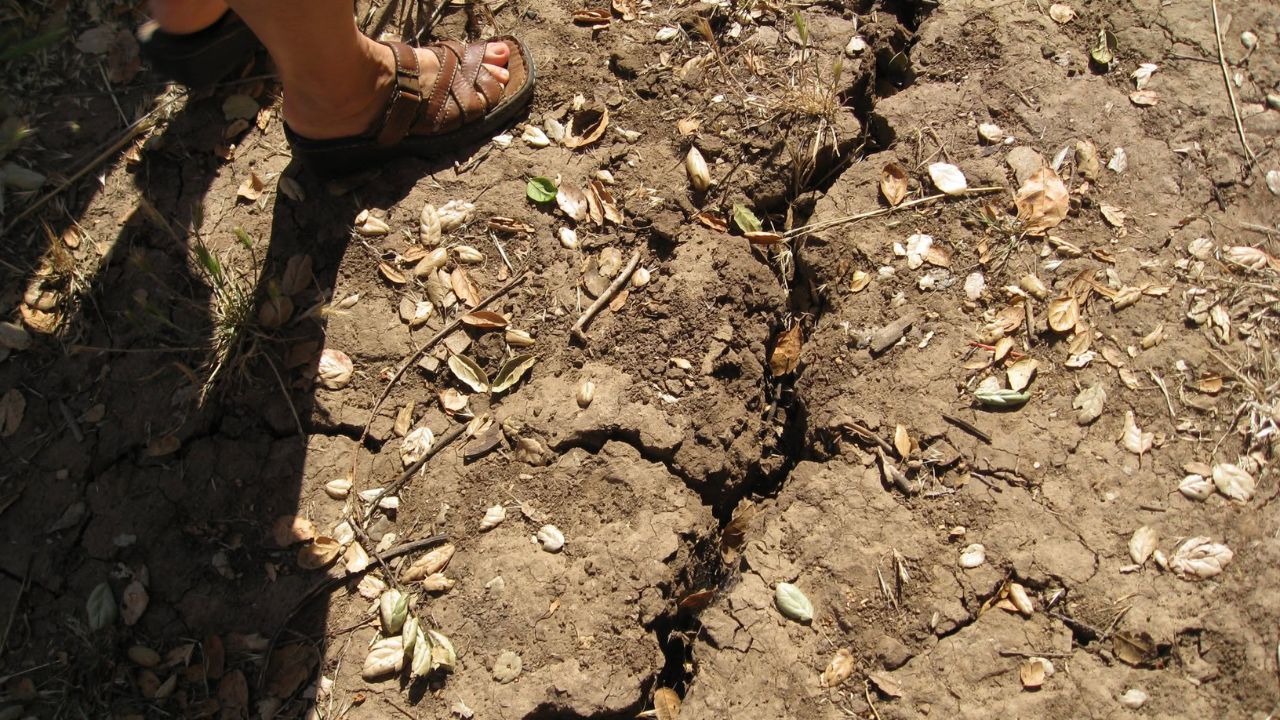
On soil that’s in reasonably good shape — open, not compacted, with decent organic content — it should go in several inches without much resistance. On soil that’s compacted from years without aeration, foot traffic, or Sudbury’s freeze-thaw cycle working it tighter every winter, it stops fast. Sometimes within an inch.
This matters specifically because compaction doesn’t always show up on the surface the way other lawn problems do. A lawn can look reasonably green from the porch while the soil underneath it has compacted to the point where roots genuinely can’t grow deeper than an inch or two — exactly the kind of gap between appearance and reality I’ve described in the walk-it-together article here, where a homeowner’s confident “it’s fine” turned into something different once we were standing in the middle of the yard with a screwdriver in hand.
Why Knowing This Before July Specifically Matters in Sudbury
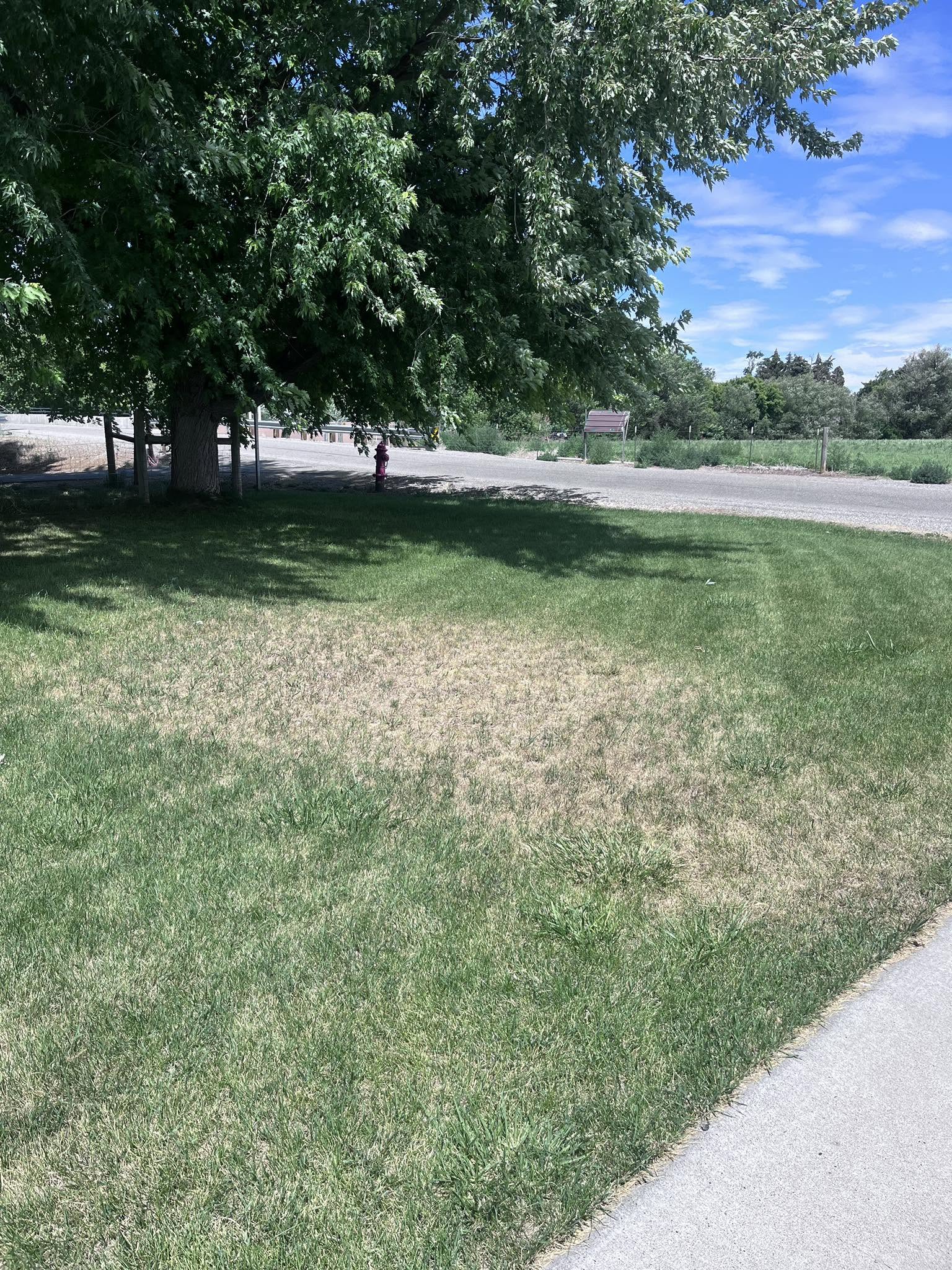
Compacted soil and shallow roots are a quiet problem all spring. The grass has enough surface moisture from snowmelt and spring rain to look fine regardless of how deep the roots actually go. It’s the first real dry stretch of summer — usually sometime in July around here — that exposes the difference between a lawn with adequate root depth and one without.
By the time a homeowner notices browning patches in late July, the compaction that caused it has often been building for two or three years already. Catching it in May or June with a quick screwdriver check gives you the entire growing season to address it — aeration, overseeding, a mowing height adjustment — before the heat actually arrives and makes the underlying problem visible and painful.
I’ve gone into more detail on why Sudbury’s clay-heavy soil and our specific freeze-thaw winters compact more aggressively than soil in milder Ontario climates in the climate and soil article here — and it’s exactly why I’d recommend doing this check before July rather than after the lawn has already gone patchy and the damage is harder to reverse quickly.
How to Actually Do This Test Yourself
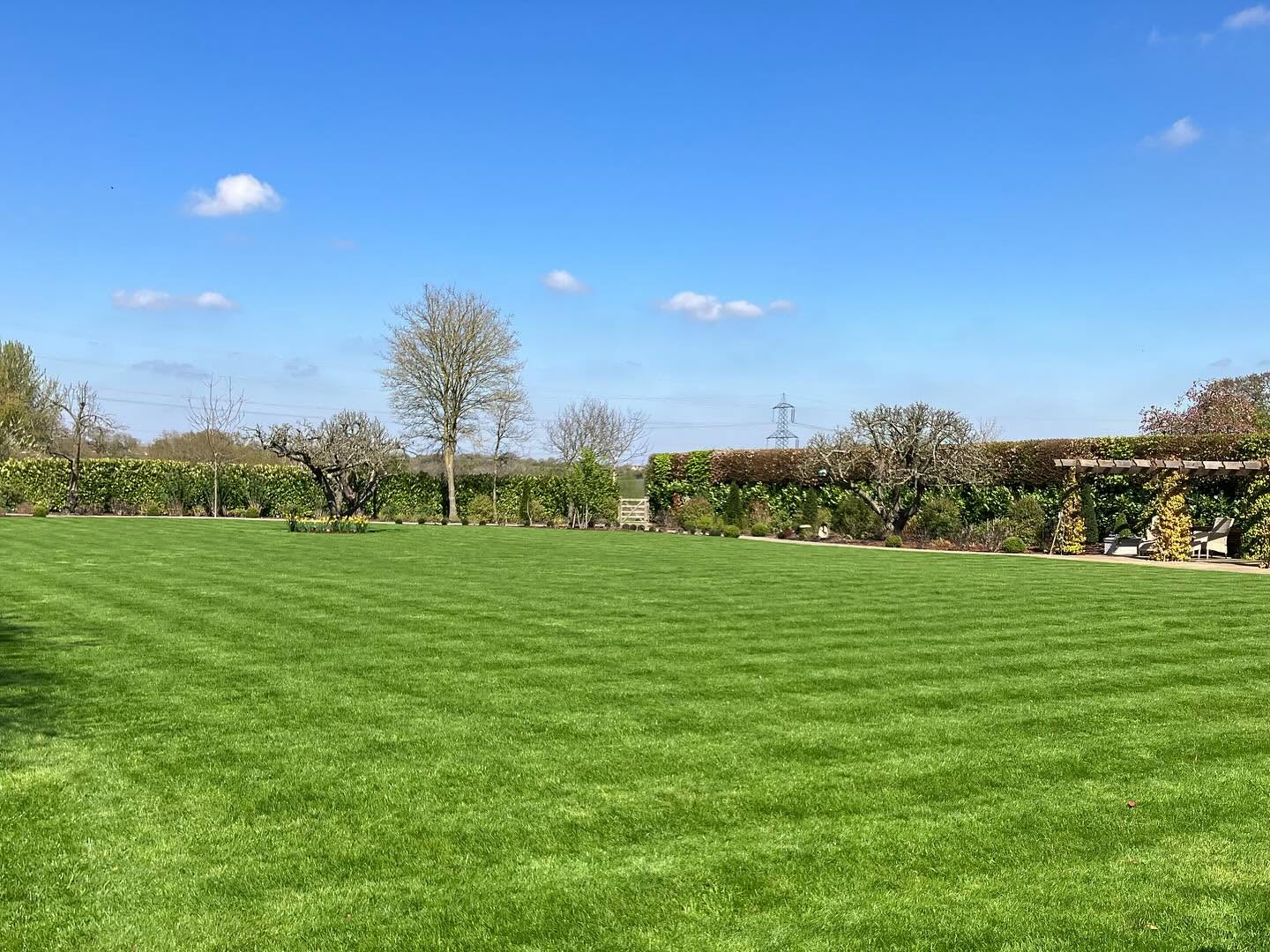
Pick a handful of spots across the lawn — somewhere near a high-traffic path, somewhere out in the open middle of the yard, and somewhere along a fence line or near a garden bed. Soil condition often varies more across a single property than people expect, so checking a few different areas matters more than checking just one.
Push the screwdriver in with moderate, steady pressure — don’t force it past what would be reasonable hand pressure. If it sinks in 4 to 6 inches relatively easily, that’s a good sign. If it stops within an inch or two, you’re looking at meaningful compaction in that spot, even if the grass above it looks perfectly normal right now.
Do this in a few different spots and you’ll start to see a pattern — maybe the high-traffic path is noticeably more compacted than the open middle of the lawn, which tells you something useful about where attention is needed first. If most of the property tests poorly, that’s a signal the whole lawn would benefit from aeration rather than just a specific section.
What to Actually Do With the Result
If the test comes back fine across the property — soil goes in easily everywhere you checked — you’re in good shape and the main thing worth protecting going forward is keeping the mowing height correct and watering deeply rather than lightly, both of which keep root depth where it should be.
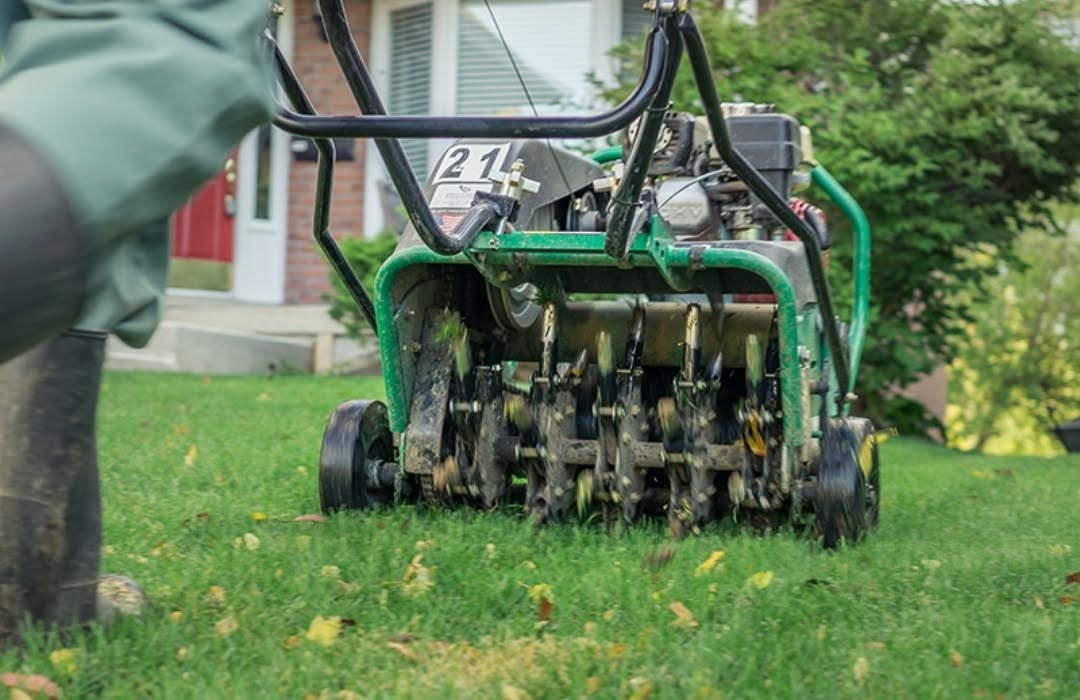
If the test shows compaction, especially across multiple spots, this is the moment to book core aeration before the season gets fully underway, rather than waiting until the lawn shows visible stress in July. Aeration mechanically opens up exactly the compacted channels this test is detecting, giving roots somewhere to actually grow before the heat arrives. If the compaction is severe or has clearly been building for several years, it might be worth combining aeration with overseeding the same visit — I can walk through what makes sense for your specific result if you give me a call.
📞 705-507-6787
🔗 Get a Free Quote
📍 Serving Greater Sudbury — Garson, Val Caron, Hanmer, Lively, Chelmsford, Azilda, Capreol
— Ryan
Frequently Asked Questions
What is the screwdriver test for lawn soil compaction?
It’s a simple at-home test using a standard flathead screwdriver to check how compacted your soil is. Push it into the ground with moderate, steady pressure — if it sinks in several inches easily, the soil is in reasonably good shape. If it stops after an inch or two, the soil is likely compacted, which restricts how deep grass roots can grow.
Why is checking for soil compaction before July important in Sudbury?
Compacted soil doesn’t always show visible symptoms in spring, since snowmelt and spring rain keep grass looking fine regardless of root depth. The first real dry stretch of summer, usually sometime in July in Greater Sudbury, is when shallow-rooted grass on compacted soil starts browning and struggling. Checking earlier gives time to aerate and address the issue before the heat exposes it.
What should I do if my lawn fails the screwdriver compaction test?
If a screwdriver stops within an inch or two across multiple spots on your lawn, core aeration is the most direct fix — it mechanically opens compacted soil and gives roots room to grow deeper. If the compaction has clearly been building for several seasons, pairing aeration with overseeding in the same visit often produces better results than aeration alone.
Does soil compaction vary across the same lawn in Sudbury?
Yes, often significantly. High-traffic areas like paths to a shed or gate tend to compact more than open sections of lawn that see less foot or equipment traffic. Testing a few different spots across a property — rather than just one — gives a more accurate and useful picture of where attention is actually needed.
Why does compaction happen faster on Sudbury lawns than in other Ontario climates?
Sudbury’s clay-heavy soil base, combined with repeated freeze-thaw cycles through winter, compacts more aggressively than the sandier or loamier soils common in parts of southern Ontario. This means compaction can become a meaningful problem within just one or two seasons of skipped aeration here, compared to a longer tolerance window in milder climates.
Ryan Lingenfelter is the owner of Cutting Edge Lawn & Landscaping in Garson, Ontario. Since 2020, his crew has provided full lawn care services across Greater Sudbury — Garson, Val Caron, Hanmer, Lively, Chelmsford, Azilda, and Capreol. Cutting Edge is licensed, insured, BBB A+ rated, and ThreeBest Rated for lawn care services in Sudbury.
📞 Phone: 705-507-6787
📍 Service Area: Greater Sudbury, Ontario
🔗 Free Quote: cuttingedgelawn.ca/quote
Helpful Lawn Care Services in Sudbury
- Core Aeration for Healthy Lawns
- Grass Cutting Services in Sudbury
- Property Cleanup Services
- Sod Installation in Sudbury
Continue Reading
- A Greater Sudbury Homeowner Said the Lawn Was Fine — I Asked Him to Walk It With Me
- Sudbury Climate and Soil: Why Lawn Care Is Harder Here Than Anywhere in Ontario
- Sudbury Yard Transformation: My First Year Fixing the Worst Lawn