
By Ryan Lingenfelter · Cutting Edge Lawn & Landscaping, Garson, Ontario · June 2026
Most of what I talk about in lawn care is about the grass itself — what it needs to grow, how to manage it through Sudbury summers, what goes wrong when the basics aren’t right. But there’s a landscaping principle I bring up on almost every quote visit that has nothing to do with grass health. It has to do with foundation health.
It’s called the 12-inch rule, and most homeowners in Greater Sudbury have never heard of it. A significant number of them are violating it right now without knowing it. And the consequences of violating it over time aren’t a lawn problem — they’re a structural problem that can cost significantly more to address than anything I talk about in the rest of this site.
Here’s what it is, why it matters in this specific climate, and what to do if your property isn’t compliant.
What the 12-inch rule actually is — and where it comes from
The 12-inch rule refers to the clearance that should exist between the finished grade of your lawn or garden beds and the top of your foundation wall — specifically, the point where the foundation transitions from below-grade to above-grade.
In simple terms: when you stand at the edge of your house and look down at the ground where it meets the foundation, there should be at least 12 inches of visible foundation wall above the soil or mulch level. The soil, grass, and any landscaping material should not be within 12 inches of where your siding or structure begins.
The rule comes from building science — specifically from the principle that wood-framed structures, siding materials, and the moisture-sensitive components of a typical Canadian residential build need protection from sustained ground contact moisture. When soil or organic material like mulch sits against a foundation at or near the siding level, it creates a persistent moisture bridge between the ground and the building envelope. That moisture leads to rot, mould, and in freeze-thaw climates like Sudbury, freeze damage to framing and foundation components over time.
The 12-inch clearance provides a buffer — a zone of exposed foundation wall that allows that section to drain and dry between moisture events rather than staying perpetually damp from ground contact. Most building codes in Ontario incorporate foundation clearance requirements, and the 12-inch figure represents the practical minimum for a properly maintained site.
On a new construction this clearance is typically achieved by the builder — the finished grade is set to slope away from the foundation with the required clearance maintained. On an existing property, years of lawn maintenance, garden bed additions, mulch topdressing, and natural soil settlement can gradually close that clearance without the homeowner noticing. The foundation doesn’t change. The grade around it rises — slowly, incrementally — until one day there’s two inches of clearance instead of twelve, and the moisture bridge has been established long enough that the damage it causes is already underway.
Why this matters more in Sudbury than in most of Ontario
The foundation clearance issue exists everywhere. It matters more in Greater Sudbury for two reasons specific to this region.
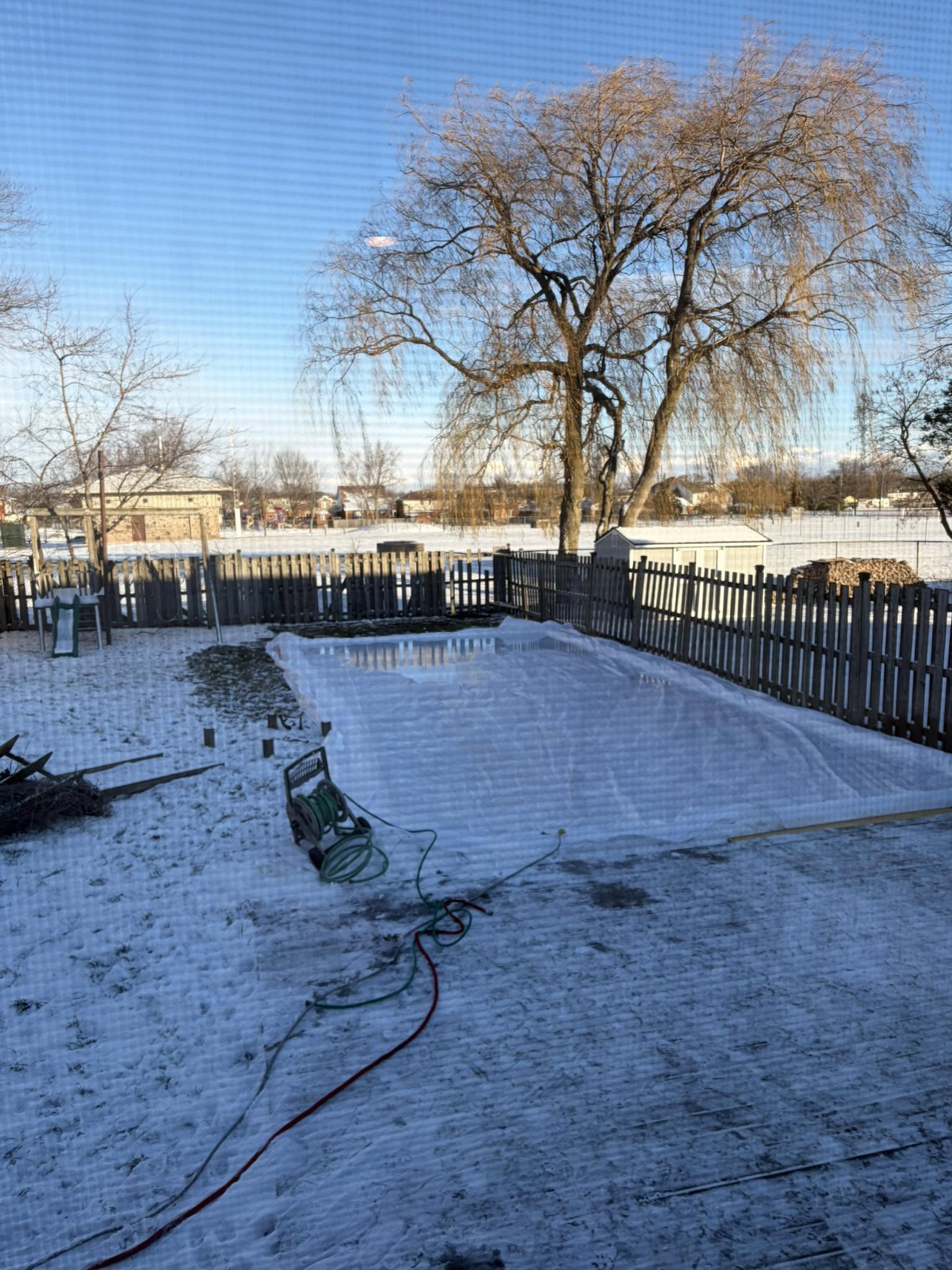
The freeze-thaw cycle. Greater Sudbury’s winters are hard. The ground freezes deep, stays frozen for months, and then thaws in cycles — sometimes multiple freeze-thaw events within a single late-winter or early-spring week. This freeze-thaw cycle is one of the most physically destructive forces that acts on building foundations and the soil around them. Water expands approximately nine percent when it freezes. Water that has infiltrated into the soil directly against a foundation wall, or that has been drawn into micro-cracks in the foundation material, expands during freezing and contracts during thawing. Over multiple cycles, over multiple years, this process produces progressive damage — hairline cracks that become larger cracks, small separation points that become water infiltration pathways, foundation materials that progressively weaken from mechanical stress.
The moisture source for that freeze-thaw damage comes, in significant part, from the soil that’s in contact with the foundation. When the clearance is compromised — when the grade has risen to the point where soil or organic material is sitting against the foundation — the moisture from that material is the starting point for the freeze-thaw damage cycle. Maintaining clearance reduces the moisture available to that cycle.
The clay soil moisture dynamics. I’ve written about the clay-influenced soil in parts of Greater Sudbury — the way it holds water longer than lighter soils, the drainage dynamics that vary across different parts of the region. That same clay soil against a foundation holds moisture in contact with the foundation material for significantly longer than sandy soil would. A rain event that leaves clay soil wet for a week in Chelmsford or Hanmer gives that moisture a week of contact with the foundation before it drains. Sandy soil drained faster would reduce that contact time. The higher clay content of soil in significant parts of Greater Sudbury makes the foundation contact issue more persistent and more damaging than it would be in a lighter-soil region. The soil science behind these differences is covered in the article on what Sudbury soil actually looks like and why it matters — the same clay characteristics that affect lawn care also affect foundation moisture dynamics.
What I find when I check foundations on Sudbury properties — the honest picture
On every new property assessment I do in Greater Sudbury, I walk the full foundation perimeter as part of the check I do before accepting any new maintenance customer. What I find on the majority of properties — even well-maintained ones — is foundation clearance that has been partially or fully compromised.
The most common situation: garden beds around the foundation that have had mulch added every one or two years for a decade. Each mulch application adds an inch or two. After ten years of topdressing without removing old material, the mulch level has risen four to six inches above where it started, and the foundation clearance has been reduced by the same amount. The homeowner hasn’t done anything wrong in their intent — mulch around the foundation is standard landscaping. But the accumulation over time, without periodic removal of the old layer before adding new material, closes the clearance incrementally until it’s gone.
The second most common situation: lawn grass that has grown up to and against the foundation wall. In some cases the sod itself was laid right to the foundation edge when the property was landscaped, and the grade between the lawn surface and the foundation top is less than 12 inches from the beginning. In others, the original clearance was adequate but the grade has shifted — soil settlement, frost heave over multiple winters, or gradual organic matter accumulation — and the clearance that existed five years ago no longer does.
The third situation, which I see less often but which produces the most significant damage when I do find it: mature shrubs or perennials planted directly against the foundation, their root systems holding soil at foundation level, their stems creating a moisture bridge from ground to siding, and their presence making it difficult to see the foundation condition underneath them. When I pull the shrubs back and check what’s below, I sometimes find foundation material that has been in sustained contact with organic matter and moisture for long enough that surface damage is already visible.
None of these homeowners intended to create a foundation moisture problem. They were gardening, mulching, and maintaining what looked like a normal residential landscape. The problem is that the landscaping convention of planting close to the foundation and adding mulch every year, without maintaining the clearance requirement, produces exactly the condition that causes foundation damage over time.
I mentioned earlier that I do a drainage and grade check before accepting any new maintenance customer — the one thing I check that most lawn companies skip entirely. Foundation clearance is part of that check. If I find a compromised clearance and the homeowner isn’t aware of it, I tell them before anything else is discussed. Because a lawn care contract on a property where the foundation is being damaged by a grading problem that I noticed but didn’t mention is not a service I’m willing to deliver. The article on the one thing I check before taking any new lawn customer covers the drainage assessment in detail — foundation clearance is assessed in the same walkthrough.
How to fix it — what the correction actually involves
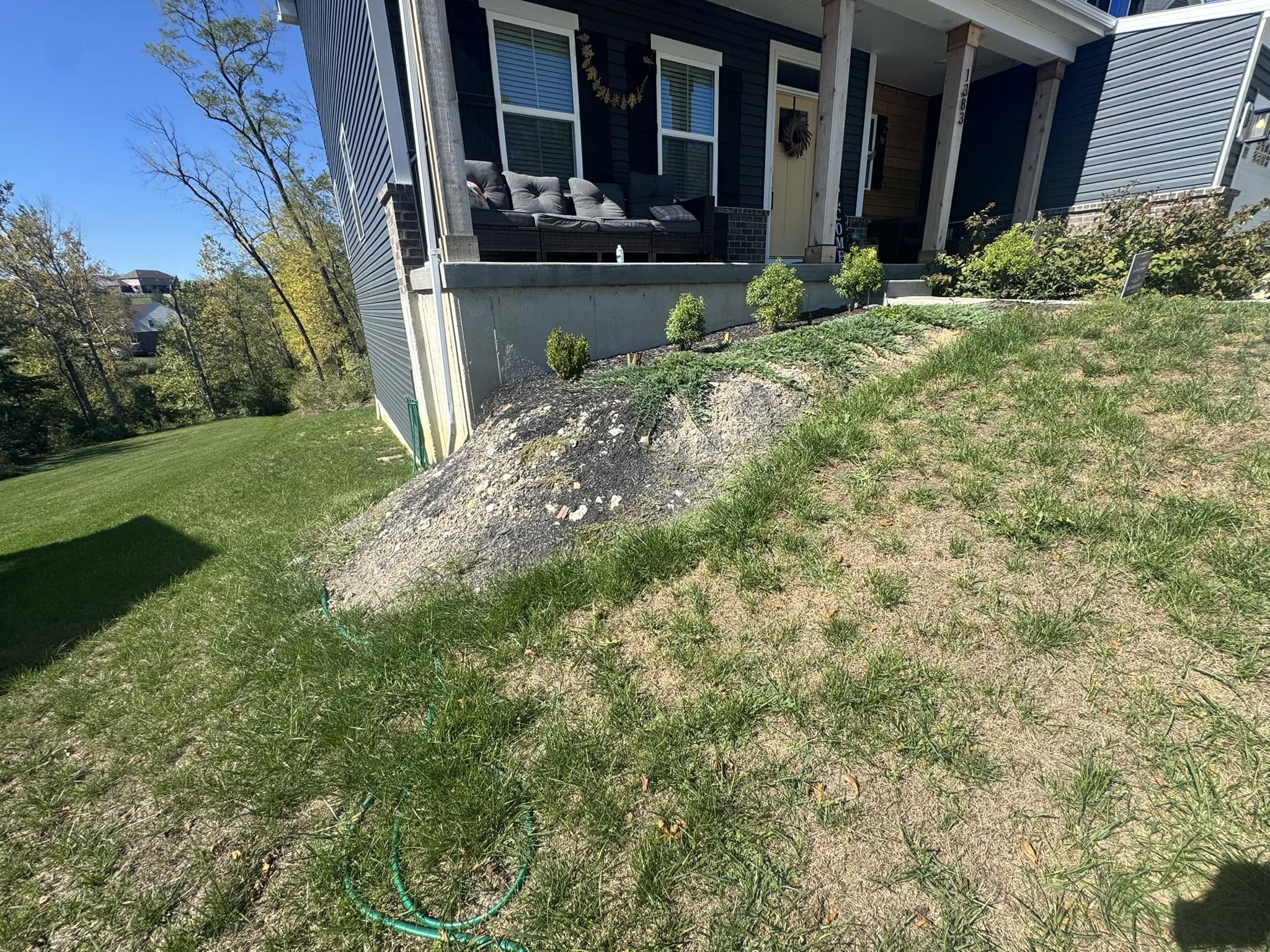
The good news about foundation clearance problems is that most of them are correctable without major intervention. Here’s how I approach the correction depending on what’s causing the clearance loss.
For mulch accumulation — removal and reset. If the clearance has been lost because of mulch buildup over years, the correction is to remove the accumulated old mulch back to the original grade level, reestablish the 12-inch clearance measurement, and then replace with fresh mulch at an appropriate depth — two to three inches, no more, applied over a cleared base rather than on top of old material. When the old mulch is removed, take the opportunity to check the foundation surface in that area. Surface staining, soft material, or any organic growth on the foundation face indicates moisture contact that has been ongoing long enough to have an effect. If anything structural is visible, a foundation inspection is worth having before reapplying mulch.
For grade elevation from soil settlement or frost heave — regrading. When the soil level has risen to the point where the clearance is compromised, the fix is physical regrading — removing soil from the perimeter to drop the finished grade back to the required clearance, then ensuring the grade slopes away from the foundation at roughly 6 inches per 10 feet of horizontal distance (the standard drainage grade recommendation). On properties with clay-heavy soil — where this problem is most common because of frost heave — the regraded zone should be backfilled with slightly coarser material than the surrounding soil if possible, to improve drainage away from the foundation rather than retaining moisture against it.
After regrading, the area can be seeded or sodded back to the appropriate grade. The connection between proper grade and sod installation is something I covered in the article on buying sod in Sudbury — the soil preparation requirements before sod installation include establishing the correct grade, and foundation clearance is part of that grade assessment on any property where sod will run close to the building perimeter.
For shrubs and perennials at the foundation — selective removal or relocation. If the clearance problem is being caused or maintained by established plantings directly against the foundation, the correction involves either removing those plants or relocating them to a position that maintains the clearance. I understand this feels drastic when the plants are established and the homeowner values them. But a mature shrub planted against the foundation isn’t protecting the foundation — it’s holding a moisture problem in place while making it harder to monitor what’s happening to the foundation underneath it.
If the plants are valuable and worth keeping, relocating them two to three feet away from the foundation and replacing the cleared perimeter with a properly graded and maintained mulch bed — at the correct depth and clearance — achieves the landscaping intent without the foundation contact. If the plants are removed and the foundation is exposed, inspect the foundation face in that area carefully before replanting anything. Surface damage or staining that was hidden by the plantings may need professional assessment before the perimeter is re-landscaped.
Annual maintenance to keep clearance intact. Once the clearance is established correctly, maintaining it is a matter of not letting the same accumulation happen again. Check the foundation perimeter clearance in spring as part of your standard property walkthrough — the same walkthrough I described in the article on the 5 things I notice in the first 30 seconds at any Sudbury property. Measure the clearance at three or four points around the building. If it’s dropped below 12 inches, address it before adding mulch or doing any other perimeter work. When adding mulch, remove enough of the old layer first that the total depth stays at two to three inches and the clearance stays at 12 inches. It takes five minutes. It protects a foundation that would cost tens of thousands to repair if the moisture problem it prevents were allowed to develop.
If you want me to check the foundation clearance on your property as part of a full assessment — or if you’ve noticed something around your foundation that you want a second set of eyes on before deciding whether it’s a concern — give me a call. I’ll tell you what I see and what, if anything, needs to be done about it.
📞 705-507-6787 | Get a free quote online
— Ryan Lingenfelter
Owner, Cutting Edge Lawn & Landscaping
Garson, Ontario · 705-507-6787
