
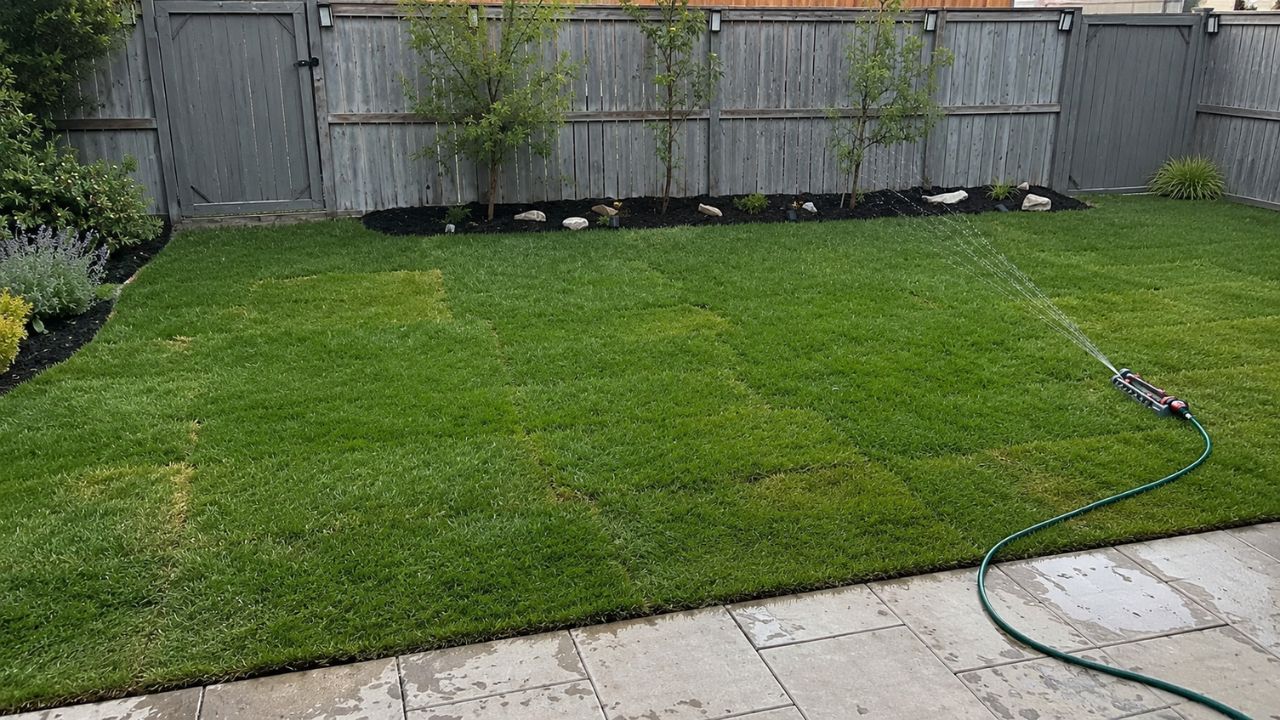
After every sod installation we do in Greater Sudbury, the first question I get — usually within a day or two — is some version of: “How long until it’s rooted? When can we walk on it? Is it supposed to look like this?”
All fair questions. New sod is an investment and people want to know it’s going to take. So let me give you the real answer — not a vague “it depends” but an actual timeline with the context that makes it useful.
The Basic Timeline for Sod Rooting in Sudbury

Here’s the honest timeline for sod installed in Greater Sudbury under normal conditions:
Days 1 to 14 — Initial contact and early rooting. In the first two weeks, the sod is knitting its roots into the soil beneath it. You won’t be able to see this happening, but it is. The sod should feel firm against the ground and shouldn’t pull up easily by the end of this period. This is the most critical window — consistent watering every day is non-negotiable here. Miss watering during a hot stretch in this phase and you can lose sections.
Weeks 2 to 4 — Roots pushing deeper. By the end of the first month, the sod should be reasonably anchored. You can do the tug test — grab a corner and pull gently. If there’s real resistance and you can feel roots holding, that’s a good sign. The lawn will still be fragile though. Light foot traffic is okay; heavy use, dogs running on it, or anything concentrated in one spot is still too much.
Weeks 4 to 8 — Full establishment. By six to eight weeks under good conditions, the sod should be fully rooted and behaving like an established lawn. This is when you can resume normal use — kids playing, dogs out, furniture on the grass. The lawn should be green, growing consistently, and responding well to mowing by this point.
For Sudbury specifically, I’d say the six-week mark is the realistic target for “this lawn is established.” Some installations come in faster — cooler temperatures and good soil preparation can accelerate things. Some take a bit longer — hot dry spells, rocky or poor soil, or late-season installs can stretch the timeline.
What Sudbury’s Climate Does to That Timeline

Our climate here in Greater Sudbury creates some specific rooting conditions that are worth understanding — because what works in southern Ontario doesn’t always translate directly to what works up here.
Spring installations root well but slowly. Sod laid in May or early June benefits from cooler soil temperatures and more consistent rainfall. The cooler temps mean the sod doesn’t dry out as fast between waterings, which is forgiving if you miss a day. The tradeoff is that cooler soil also means slightly slower root growth. Expect the full six to eight week timeline in spring.
Summer installations are faster but need more attention. Sod laid in July roots faster because warm soil encourages root growth — but the heat also means it dries out much faster. During a hot July in Sudbury, new sod can show stress within hours if it’s not being watered. Summer installs can establish in four to six weeks, but they require more diligent watering, especially in the first two weeks.
Late summer and early fall is actually a good window. August and into September is often underrated for sod installation. The soil is still warm from summer, the air temperatures are cooling down which reduces stress on the sod, and fall typically brings more rainfall. Sod laid in late August can root well before the ground freezes — as long as it goes in before mid-September to give it enough time.
Our freeze-thaw cycles matter for fall installs. If sod is laid too late in the season and doesn’t get fully rooted before freeze-up, the frost heaving that happens through a Sudbury winter can disrupt the root-soil contact. It doesn’t always kill the sod, but it can set establishment back and create uneven sections in spring. This is why I won’t install sod in October — the risk isn’t worth it.
How to Know If Your Sod Is Actually Taking
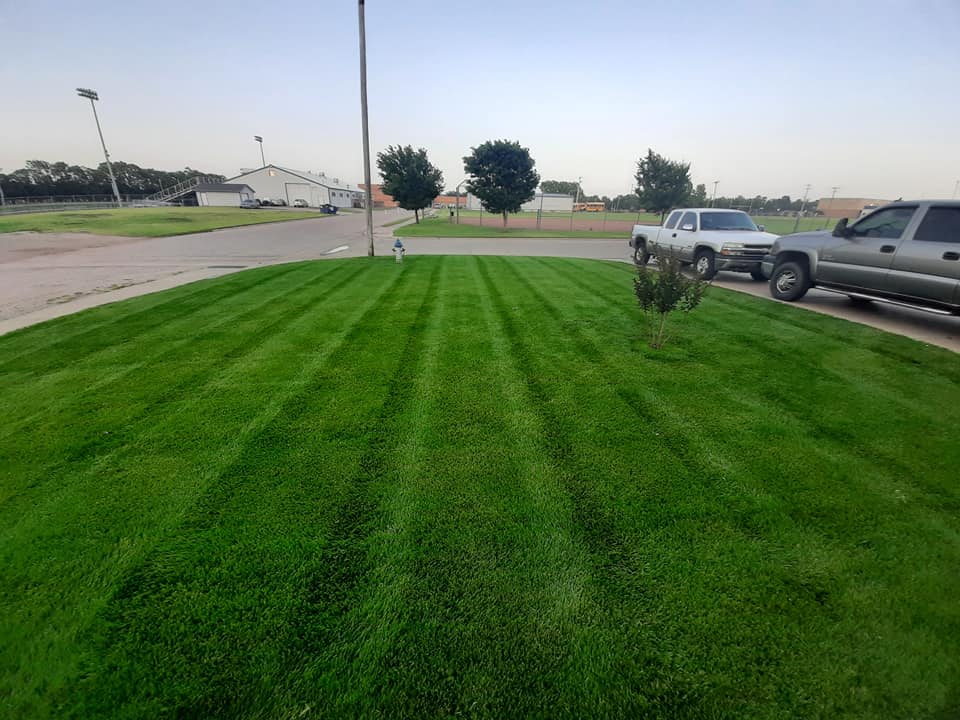
This is what people actually want to know — not just a timeline, but how to read what’s happening in their specific yard.
The tug test. Around the two-week mark, grab a corner of the sod and pull gently upward. In the first few days, it’ll lift easily — the roots haven’t had time to knit in yet. By two weeks, you should feel meaningful resistance. By four weeks, it should feel firmly anchored. If it’s still lifting easily at four weeks, something isn’t right — usually it’s a watering issue or a soil contact problem.
Colour. Healthy rooting sod stays consistently green. If you’re seeing yellowing or browning in patches, that’s usually a sign of uneven watering — some areas are getting too much or not enough. Uniform yellowing across the whole lawn usually means it’s not getting enough water overall. A bit of lighter colouring around the seams between sod pieces is normal in the first week or two.
Growth. New sod should start showing visible top growth within two to three weeks. If it’s greening up and growing, the roots are doing their job. If it’s sitting static and looking pale after three weeks of consistent watering, dig up a small corner and check the root-soil contact — sometimes the sod wasn’t pressed firmly enough to the soil during installation and there’s an air gap underneath.
Seams. The joints between individual sod pieces should start to become less visible as the grass fills in. By four to six weeks, seams should be mostly knitted together. If you’re still seeing obvious lines between pieces at six weeks, it’s usually a sign that the edges dried out in the first few days — those edges are the most vulnerable and need watering attention.
The Biggest Mistakes People Make During the Rooting Period

I’ve seen a lot of new sod installations go well and a few go sideways. The ones that go sideways are almost always because of one of these things:
Inconsistent watering in the first two weeks. This is the number one reason new sod fails or establishes poorly. The roots need consistent moisture to push into the soil. Missing a day of watering during a hot stretch — especially in July — can stress or kill sections before they’ve had a chance to root. I tell every customer: for the first two weeks, watering is your job and nothing is more important than that.
Walking on it too soon. I understand it’s hard to avoid — it’s your yard and you want to use it. But concentrated foot traffic in the first two to three weeks pulls the sod up, breaks the early root connections, and creates dead or bare patches. Stay off it. Keep dogs off it. Keep kids off it. It’s two weeks, and the lawn will be there for years if you protect it now.
Mowing too early or too short. Wait until the sod is firmly rooted before the first mow — usually around three to four weeks. When you do mow, don’t take off more than a third of the blade height. Cutting too short too soon stresses newly established grass and can set back the rooting process.
Assuming it’s fine if it looks green. Sod can look green while sitting on top of the soil without actually being rooted. The tug test tells you more than the colour does in the first few weeks. Do the test around day 10 to 14 — it’ll tell you exactly where you’re at.
If you’ve got questions about sod that was recently installed — or you’re thinking about having it done this season — reach out. I’m happy to talk through your specific situation and tell you what to expect.
— Ryan Lingenfelter
Cutting Edge Lawn & Landscaping, Garson, Ontario
📞 705-507-6787
Thinking about sod installation in Greater Sudbury this season? We handle sod installation, core aeration, property cleanup, and full lawn care across Garson, Hanmer, Val Caron, Lively, Chelmsford, Azilda, Capreol, and all of Sudbury. Free quotes, no pressure.
Get a Free Quote |
Call 705-507-6787
