
I’m Ryan Lingenfelter, owner of Cutting Edge Lawn & Landscaping in Garson, Ontario. Since 2020, I’ve installed sod on residential and commercial properties all across Greater Sudbury — Garson, Val Caron, Hanmer, Lively, Chelmsford, Azilda, Capreol. I’ve seen fresh sod laid perfectly and I’ve seen sod that was too far gone before it ever touched the ground.
Here’s the honest answer to how long sod actually survives after delivery — and what you can do to buy yourself more time if you’re not ready to install it.
The Short Answer — And Why It’s Not Simple
If you want a number: 24 to 48 hours is the window before sod starts degrading seriously. In ideal conditions — cool weather, shade, kept moist — you might stretch it to 72 hours. In Sudbury’s summer heat, you might have less than 24.
But here’s why that number doesn’t tell the whole story. Sod isn’t dying the moment it’s cut — it’s a living plant that’s been separated from its primary water and nutrient source. How fast it deteriorates depends on temperature, whether it’s rolled or stacked, how dry the conditions are, and whether you’re keeping it watered while it sits.
The sod isn’t dead at 25 hours and alive at 23. It’s a gradual process. What matters is understanding what’s happening inside that roll so you can make the right call about whether yours is still viable — and what to do about it either way.
What’s Actually Happening to Sod After It’s Cut
When sod gets cut at the farm, the grass is separated from the soil it’s been growing in. The roots are still attached — that’s the thin layer of soil and root mat on the bottom of the roll — but the plant can no longer pull water from a deep root system the way it would in the ground.
Everything the plant needs to survive is now limited to what’s in that thin root mat and whatever moisture you’re providing from the outside.
At the same time, the grass blades on top are still transpiring — still losing moisture to the air the way plants do. In cool, cloudy, humid conditions, that moisture loss is slow and the sod can survive reasonably well for a day or two. In full sun and heat, the moisture loss is rapid and the sod starts going into serious stress within hours.
The rolled or stacked format makes this worse. When sod is rolled up tight, the grass blades on the inside are pressed against the root mat of the roll above them. Heat builds up. Air circulation drops to almost nothing. The temperature inside a tightly rolled pallet of sod on a hot day can reach 50 degrees Celsius or more — hot enough to kill the grass quickly.
That’s why sod left sitting on a pallet in direct sun during a Sudbury July afternoon can be past saving within a few hours — even if it looked perfectly green when it arrived.
How to Tell If Your Sod Is Still Viable
Before you install sod that’s been sitting for any length of time, do this check. It takes two minutes and it tells you whether you’re laying living sod or wasting your time and money.
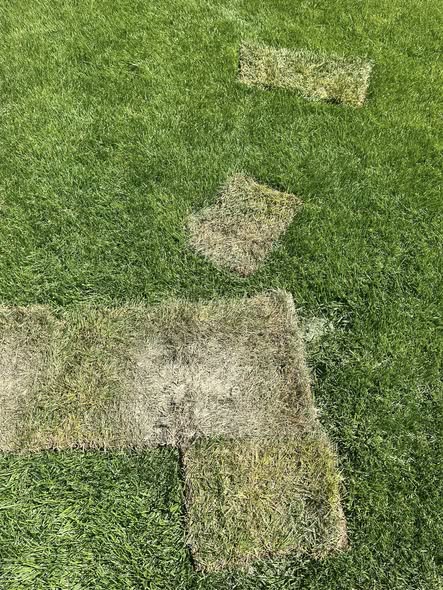
Unroll a section and look at the grass blades. Fresh viable sod is green, upright, and the blades have some tension to them. Sod that’s in serious stress will have blades that are yellowing, limp, or starting to turn straw-coloured. If the blades look dull grey-green or are lying completely flat and lifeless, the sod is in bad shape.
Check the root mat. The bottom of the sod — the soil and root layer — should be moist and dark. If it’s dried out and pulling away from itself, the roots are drying out. If it’s slimy, hot, and has a strong fermenting smell, heat damage has already occurred and you’re likely looking at dead sod.
The pull test. Unroll a piece, lay it on the ground, and try to pull the grass blades out of the root mat. Healthy sod has roots that hold — the blades don’t pull out easily. Sod that’s been heat-killed or severely dried out will have roots that release easily because the plant tissue is dead.
If the sod passes all three checks, install it as soon as possible and water immediately. If it fails one or two, install it anyway but understand you may have patchy establishment and some replacement to do. If it fails all three — it smells wrong, the roots are coming apart, and the grass is straw-coloured — call me before you spend a day installing sod that isn’t going to root.
Sudbury-Specific Timing — Why Our Climate Changes Everything
The 24 to 48 hour survival window I mentioned is based on average conditions. In Greater Sudbury, average conditions in May and June are actually reasonable for sod — temperatures are mild, humidity is higher, and the risk of rapid heat stress is lower than it would be in mid-July.
Here’s how timing breaks down by season in our area:
Late May to mid-June: This is the best window. Temperatures are cool enough that sod can survive 48 hours on a pallet if you keep it watered and out of direct sun. Morning deliveries with same-day installation are ideal, but a one-day delay is manageable with proper care.
Late June through July: The window shrinks significantly. If the sod arrives on a 28-degree day and sits in the sun, you may have six to eight hours before serious damage sets in — not 48. Same-day installation becomes non-negotiable. If you can’t install it the same day, you need to have a plan for keeping it shaded and moist.
August: Similar to late June and July. The heat is the enemy. Same-day installation is the only safe plan.
Early September: The window opens back up. Cooler temperatures make sod more forgiving on the pallet. This is actually a great time to install sod in Sudbury — the grass establishes well in the fall conditions and goes into winter with a solid root system.
If you’re ordering sod in Sudbury, coordinate the delivery date with your installation date. Don’t order for Friday and plan to install on Sunday. Order for Saturday morning and install Saturday. The closer those two things are together, the better your result.
How to Keep Sod Alive Longer If You’re Not Ready to Install
Sometimes things don’t go according to plan. The ground prep takes longer than expected. It rains and the soil is too wet to work. Something comes up. Here’s what I tell people when they call me in that situation.
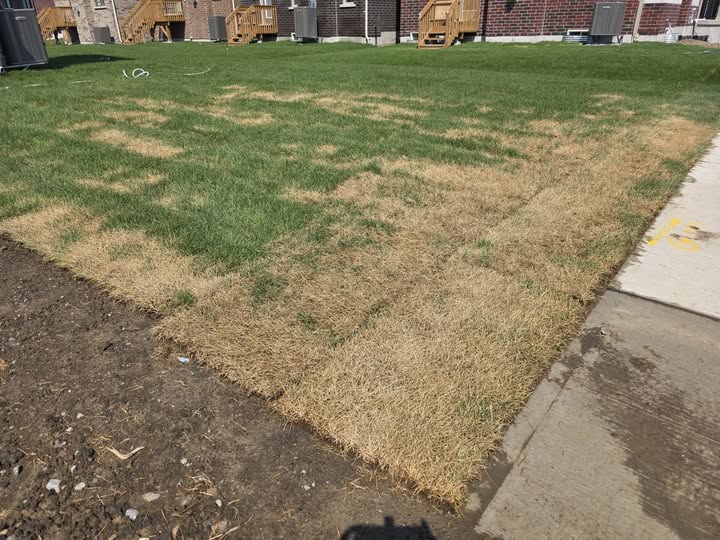
Get it out of direct sun immediately. Move the pallet to a shaded area or cover it with a tarp propped up to allow some air circulation — not tight against the sod, which traps heat. Direct sun on a rolled pallet is the fastest way to kill sod. Shade buys you time.
Unroll it if you can. If you have a flat area where you can unroll the sod pieces — on your driveway, on a tarp, anywhere flat — do it. Unrolled sod dissipates heat, gets air circulation to the roots, and can be watered much more effectively than a tight roll. Sod that’s been unrolled and laid flat in the shade, kept moist, can survive significantly longer than sod left on the pallet.
Water the root side, not just the top. When people think about watering sod to keep it alive, they water the green side. The roots are on the bottom. Flip a few pieces over and water the root mat directly, then flip them back. If the sod is still on the pallet, water from the bottom layers up — try to get moisture into the center of the stack, not just the outside pieces.
Install in the coolest part of the day. If you’re doing an emergency install on sod that’s been sitting, do it in the early morning or evening — not in the middle of the afternoon. Giving the sod its best chance at establishing means minimizing stress right from the moment it goes in the ground.
Water immediately after install — and don’t stop. The first 72 hours after installation are critical. The sod’s root system is not connected to the soil yet — it’s surviving on what moisture is in the root mat. You need to keep that mat moist continuously until the roots knit into the soil below. In Sudbury summer conditions, that means watering twice a day in the first week. Morning and evening, long slow watering that soaks the sod and the top few inches of soil.
When Sod Is Too Far Gone — What to Do
Sometimes you’re looking at a pallet and you know it’s not going to work. The smell is wrong. The roots are coming apart. The grass is yellow or brown.
Here’s what I’d do in that situation.
First, call where you bought the sod. If it was delivered in poor condition — or if the farm cut it too long before delivery — that’s a supplier issue and you may have recourse. Reputable sod farms stand behind their product.
Second, don’t install it hoping it’ll come back. Dead sod doesn’t establish. You’ll spend a full day laying it, watering it, waiting — and then spend another day tearing it out and starting over. If it’s gone, it’s gone. Replacing the sod is faster and cheaper than the alternative.
Third, don’t let this put you off sod installation entirely. When sod is delivered fresh and installed the same day on properly prepared soil, the success rate is excellent. The failure cases almost always come down to sod that sat too long, soil that wasn’t prepared properly, or establishment care that wasn’t followed. Get those three things right and you’ll have a lawn that looks great within two to three weeks.
If you’re in Greater Sudbury and you’re not sure whether your sod is still viable — or you want to get a fresh delivery scheduled and installed the same day — give me a call. We handle sod installation across all of Greater Sudbury and we can coordinate delivery and installation together so you’re not caught in this situation.
The Bottom Line
Fresh sod survives 24 to 48 hours after delivery under reasonable conditions. In Sudbury summer heat, you may have significantly less. The faster it gets in the ground and watered, the better your result.
If something delays your installation, get the sod out of direct sun, unroll it, water the root side, and install in the coolest part of the day. That buys you time without guaranteeing it — nothing does once sod is off the ground.
And if you want to avoid this situation entirely, coordinate your delivery date with your install date. Same day is always the right answer.
— Ryan
📞 705-507-6787
🔗 Get a Free Quote
📍 Serving Greater Sudbury, Ontario
Frequently Asked Questions
How long can sod survive after delivery in Sudbury?
Under average late spring or early fall conditions in Greater Sudbury, sod can survive 24 to 48 hours after delivery if kept moist and out of direct sun. In summer heat — late June through August — that window shrinks to 12 to 24 hours or less. Same-day installation is always the safest approach.
What happens to sod if it sits too long before installation?
The grass dries out, heat builds up inside the rolled pallet, and the root system begins to die. Sod that’s been sitting too long in heat will yellow, develop a fermenting smell, and the roots will start to separate from the mat. Once this happens, the sod won’t establish properly even if you install it immediately.
Can I water sod to keep it alive before installation?
Yes — watering helps extend the survival window. Focus on the root side of the sod, not just the green top. If possible, unroll the sod and lay it flat in a shaded area so it can be watered more effectively and heat can dissipate. A tightly rolled pallet holds heat and is harder to water evenly.
What’s the best time of year to install sod in Greater Sudbury?
Late May to mid-June and late August to early September are the two ideal windows. Both offer temperatures and conditions that support fast, healthy establishment. Mid-July through August is the most challenging period — the heat increases stress on new sod and the watering requirement during establishment is significant.
How do I know if my sod is still good after sitting on the pallet?
Unroll a section and check three things: the grass blades should be green and have some tension, not yellow or completely limp; the root mat should be moist and intact, not dry and crumbling or slimy and hot; and the roots should hold when you try to pull a blade out. If the sod smells strongly of fermentation, that’s a sign of heat damage and you should call your supplier before installing.
Do you offer sod installation in Sudbury?
Yes — Cutting Edge Lawn & Landscaping handles sod installation across all of Greater Sudbury, including Garson, Val Caron, Hanmer, Lively, Chelmsford, Azilda, and Capreol. We coordinate delivery and installation together so your sod goes in the ground the same day it arrives. Call 705-507-6787 or fill out the free quote form to get started.
Ryan Lingenfelter is the owner of Cutting Edge Lawn & Landscaping in Garson, Ontario. Since 2020, his crew has provided full lawn care services across Greater Sudbury — Garson, Val Caron, Hanmer, Lively, Chelmsford, Azilda, and Capreol. Cutting Edge is licensed, insured, BBB A+ rated, and ThreeBest Rated for lawn care services in Sudbury.
📞 Phone: 705-507-6787
📍 Service Area: Greater Sudbury, Ontario
🔗 Free Quote: cuttingedgelawn.ca/quote
Helpful Lawn Care Services in Sudbury
- Sod Installation in Sudbury
- Grass Cutting Services
- Core Aeration for Healthy Lawns
- Property Cleanup Services
- Mulch & Decorative Stone
- Hedge Trimming Services
Continue Reading
- When Does a Sudbury Lawn Need to Be Replaced? (And When Can It Be Saved)
- My Sudbury Lawn Has Brown Patches — Here’s Exactly What’s Causing It
- Spring or Fall — When Should You Actually Aerate Your Sudbury Lawn?
