
Someone called me last summer after pulling up a tarp they’d left on their backyard lawn for about three weeks. They wanted to know if the yellow, flat, matted grass underneath was going to come back on its own — or if they’d killed it for good.
It’s a question I get more often than you’d think. Tarps, pool liners, lumber piles, trailers, plywood sheets, kiddie pools, heavy debris after a storm — things end up on lawns and sometimes they stay there longer than planned. And the damage they cause depends on a few things: what’s doing the covering, how long it’s been there, and what time of year it happened.
I’m Ryan Lingenfelter, owner of Cutting Edge Lawn & Landscaping in Garson, Ontario. Let me give you a straight answer on this — what’s actually happening to your grass when it gets covered, how long it can survive, and what to do when you pull that cover up and don’t like what you find.
What Actually Happens to Grass When It Gets Covered

Grass needs three things to survive: sunlight, air exchange, and water. Cover it with something and you cut off at least one — usually two or all three. Here’s what happens at each stage:
Days 1–3: Stress begins. The grass goes pale almost immediately without light. Photosynthesis stops. The plant starts drawing on whatever energy reserves it has stored in the crown and roots. At this point, nothing is dead. Remove the cover now and the lawn bounces back within a few days.
Days 4–7: Etiolation sets in. The grass blades go yellow or white, grow weak and spindly as the plant reaches desperately for light that isn’t there. The crown — the growing point at the base of the plant at soil level — is still alive, but it’s burning through reserves. Grass removed from cover at this stage usually recovers fully within one to two weeks with sunlight and water.
Days 8–14: The critical window. Beyond a week, you’re into territory where recovery becomes uncertain. Warm-season grasses tend to hold on a little longer. Cool-season grasses — like the Kentucky bluegrass and fescue blends most Sudbury lawns are seeded with — start showing real crown damage in this window. Some plants make it. Some don’t. It depends on the health of the lawn going in, the time of year, and whether heat has been building up under the cover.
Beyond 14 days: Likely dead. Two weeks or more under an opaque cover, especially in warm weather, and you’re almost certainly looking at dead grass in that area. The crown has exhausted its reserves. Without the crown, the plant can’t regenerate — it’s gone and needs to be replaced.
Heat makes everything worse. A dark tarp on a sunny July day can reach temperatures underneath that cook the soil and the crown directly. What might take two weeks of coverage in cool spring weather can kill grass in four or five days in midsummer heat.
Does the Type of Cover Change How Fast Grass Dies?
Yes — significantly. Not all covers do the same damage at the same speed.
Dark tarps and black plastic are the worst. They block all light, trap heat, and prevent any air exchange. Grass dies fastest under these. In July or August in Sudbury, I’ve seen grass under a black tarp die in as little as five days.
Clear plastic is actually worse in some ways. It lets light through but creates a greenhouse effect — temperatures underneath can exceed 50°C on a hot sunny day. It essentially cooks the grass from the roots up. Don’t mistake a clear cover for a safe one.
Plywood or solid lumber blocks light completely but allows some air movement at the edges. Recovery time is slightly better than tarps, but the outcome beyond two weeks is the same.
Fabric covers, weed barrier, or landscape fabric — these block light and limit air. Grass under landscape fabric will die, but it typically takes longer than under solid plastic because there’s some minimal gas exchange happening.
Leaves and organic debris — a thin layer doesn’t do much harm short term. A thick, compacted layer of wet leaves sitting for weeks is a different story. Wet leaves block light, trap moisture, and promote fungal growth. This is essentially how snow mould develops under winter snowpack — the same principle applies to deep leaf accumulation in fall.
Snow is the interesting one. Snow is actually insulating rather than purely damaging — it keeps the soil temperature relatively stable and protects the crown from the worst freeze-thaw damage. The danger with snow isn’t the coverage, it’s the ice sheeting that develops when snow melts and refreezes, and the extended ice cover that cuts off gas exchange — which is one of the main ways Sudbury lawns get killed over winter.
How to Check If the Grass Under a Cover Is Still Alive
Before you do anything else, take fifteen minutes to actually assess what you’ve got. Don’t assume it’s dead — and don’t assume it’ll come back on its own either.
Here’s how I read covered grass when I get called out to assess it:
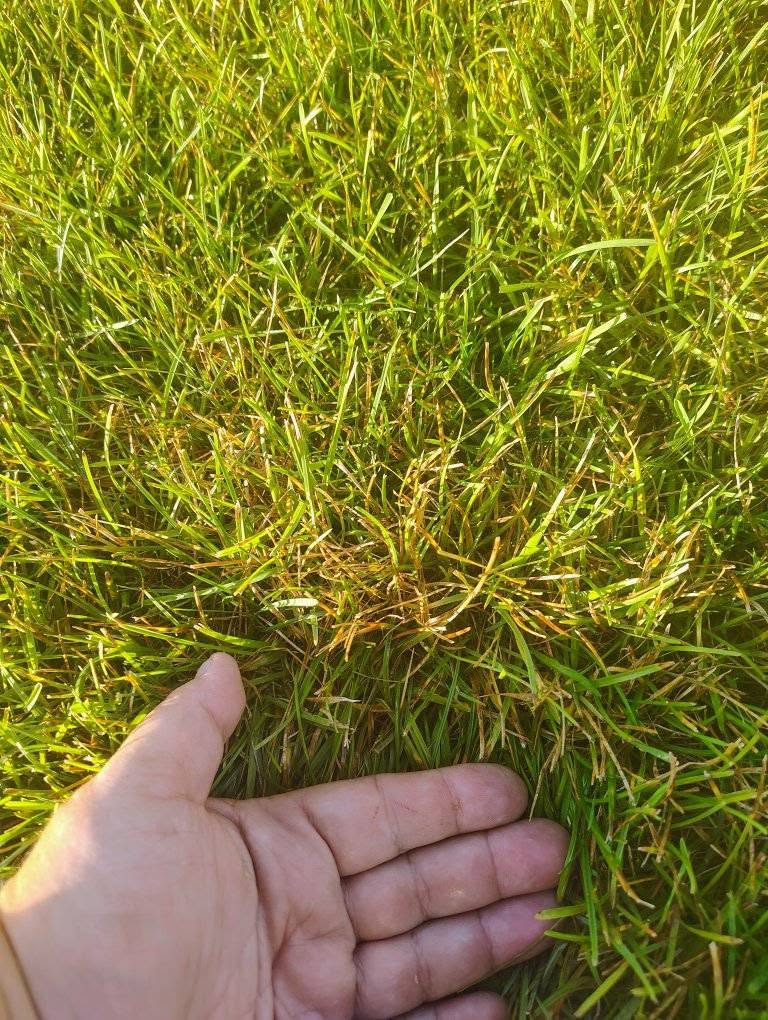
Crown check first. Get down to soil level and look at the base of the grass plants. Scratch the crown with your fingernail — right at or just below the surface. If it’s green or creamy-white inside and has some firmness to it, there’s life in the plant. Brown, dry, and crumbling means it’s gone. This is the single most reliable test and it takes about thirty seconds per patch.
Colour of the blades. Yellow grass that’s been in the dark for under a week almost always recovers. Pure white, translucent blades suggest longer deprivation but may still have a live crown. Black or brown and slimy — especially if there’s a smell — means heat damage or fungal rot has set in. That grass is not coming back.
Tug test. Grab a handful and pull. Live grass with intact roots resists. Dead grass with severed or rotted roots pulls up with almost no effort, often bringing a mat of slime or dead material with it.
Wait and watch. If the crown check shows life, expose the area to sun and water normally for five to seven days before making any decisions. Grass that’s been in the dark will look rough for a few days as it readjusts. I’ve seen lawns that looked nearly dead under a cover come back surprisingly well once the sun hit them for a week.
If the crown is dead and the grass pulls up easily, you’re past the recovery window. Now it’s a repair job — and the approach depends on how large the area is. Understanding what dead grass actually looks like versus dormant or stressed grass matters here, because the fix is completely different depending on what you’re dealing with.
How to Fix Grass That Was Covered Too Long
If the grass is confirmed dead, here’s what actually needs to happen to fix it properly — not just mask the problem.
Rake out the dead material completely. Dead grass and any rotted material needs to come out before you do anything else. Seeding over dead thatch is one of the most common mistakes I see — the seed lands on the mat instead of the soil and never properly germinates. Rake it right down to bare soil.
Loosen the soil surface. Compacted soil under a cover that’s been sitting for weeks needs to be broken up before seed will take. For a small patch, a garden rake works. For anything larger, core aeration before overseeding dramatically improves germination rates by creating direct channels between seed and soil — and breaking up the compaction that always gets worse in a covered, unworked area.
Overseed the bare area. Use a quality cool-season grass seed suited to Sudbury’s climate. Spread it evenly across the raked, loosened area. Don’t skimp on seed rate — bare patches need heavier coverage than routine overseeding of thin turf.
Keep it consistently moist. The number one reason new seed fails in Sudbury is drying out in the first two weeks. The seed needs consistent moisture — not saturated, but never fully dry — from germination until the new grass is established enough to handle normal conditions. Morning watering is ideal; it gives the surface time to dry before evening, which reduces disease risk.
For large dead areas, consider sod. If the covered area is large — say, more than a few square metres — sod installation is worth considering over seeding. Sod gives you an established lawn in days rather than weeks and eliminates the two-week critical window where new seed can fail from drying out or being disturbed. It costs more upfront but it’s a faster, more reliable result on a large patch.
Don’t mow the new growth too early. Let new grass reach about 8–10 cm before the first mow, and never cut more than a third of the blade height at once. Cutting new grass too short too early sets it back significantly.
What About Snow Covering the Lawn All Winter?
This one comes up every spring in Sudbury, and the answer is more nuanced than people expect.
Snow itself isn’t the enemy. A consistent snow cover through winter actually protects grass from the worst freeze-thaw damage because it insulates the soil and keeps temperature fluctuations more stable. The problems come from what happens within the snowpack and what happens when it melts.
The main winter coverage issues I deal with across Sudbury are ice sheeting — where water pools and refreezes into a solid layer on top of the lawn — and snow mould, a fungal disease that develops in the wet, oxygen-deprived environment under deep snowpack. I’ve written a full breakdown of what Sudbury winters actually do to your lawn and how to read the damage in spring — if you’re seeing patchy, flat, or dead-looking areas after snowmelt, that article will help you figure out exactly what you’re dealing with before you start any repair work.
Need Help Repairing Covered or Damaged Grass in Sudbury?
If you’ve pulled something off your lawn and the damage is worse than you want to deal with yourself — or you’re not sure if what’s underneath is salvageable — give me a call. I’ll come out, assess it honestly, and tell you straight whether it needs overseeding, aeration, sod, or just some time and water.
I service all of Greater Sudbury — Garson, Lively, Val Caron, Hanmer, Chelmsford, Azilda, Capreol. Call or text me directly or request a free quote through the website. No pressure, no upsell. Just a straight answer about your lawn.
— Ryan Lingenfelter
Owner, Cutting Edge Lawn & Landscaping
Garson, Ontario | 705-507-6787
