
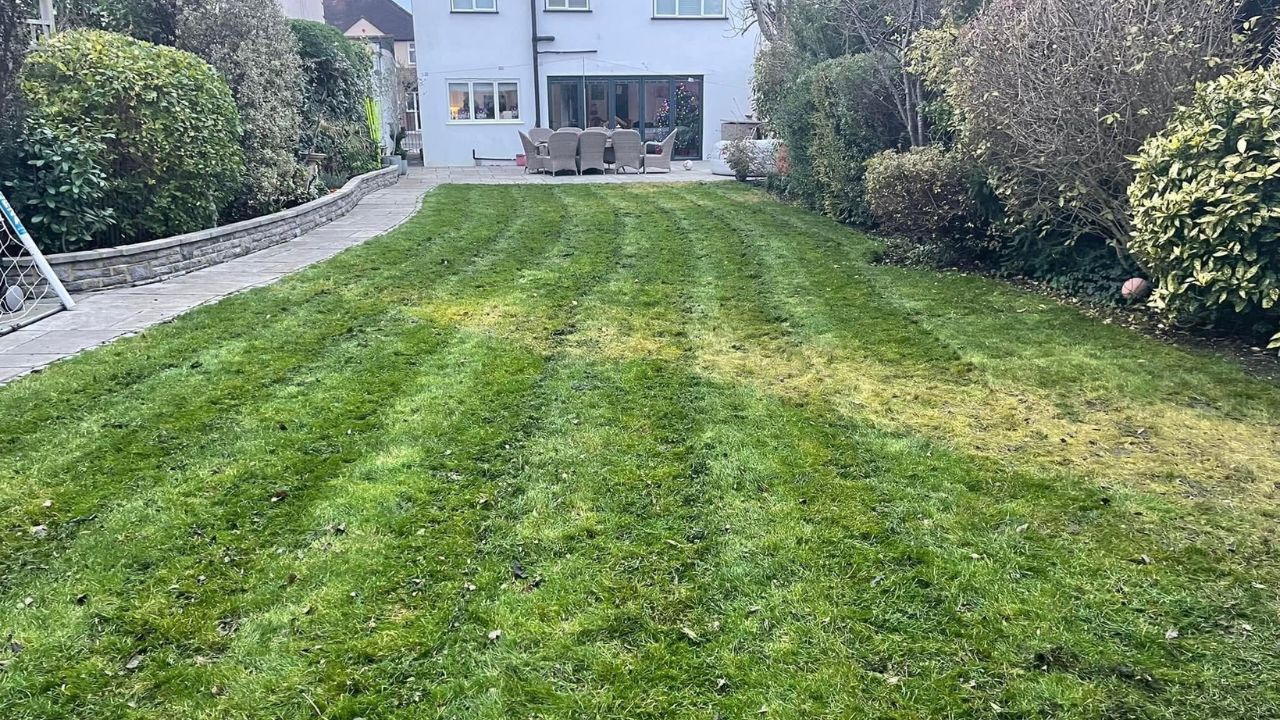
I’ve been doing this long enough to notice something that I don’t hear talked about anywhere — not in the lawn care content online, not by other contractors, not in the advice homeowners pass to each other over the fence. There’s a problem sitting underneath almost every struggling Sudbury lawn I visit, and nobody has a name for it because nobody has quite put it together the way I’m about to.
It’s not one specific issue. It’s a condition — a state the lawn is in — that shows up differently on every property but has the same root cause every time. And it’s the reason why so many Sudbury homeowners feel like they’re doing everything right and still getting the same results year after year.
I’m going to name it. And once you see it, you’ll recognize it in your own lawn.
I call it accumulated neglect lag.
What Accumulated Neglect Lag Actually Means
Here’s what I mean by it.
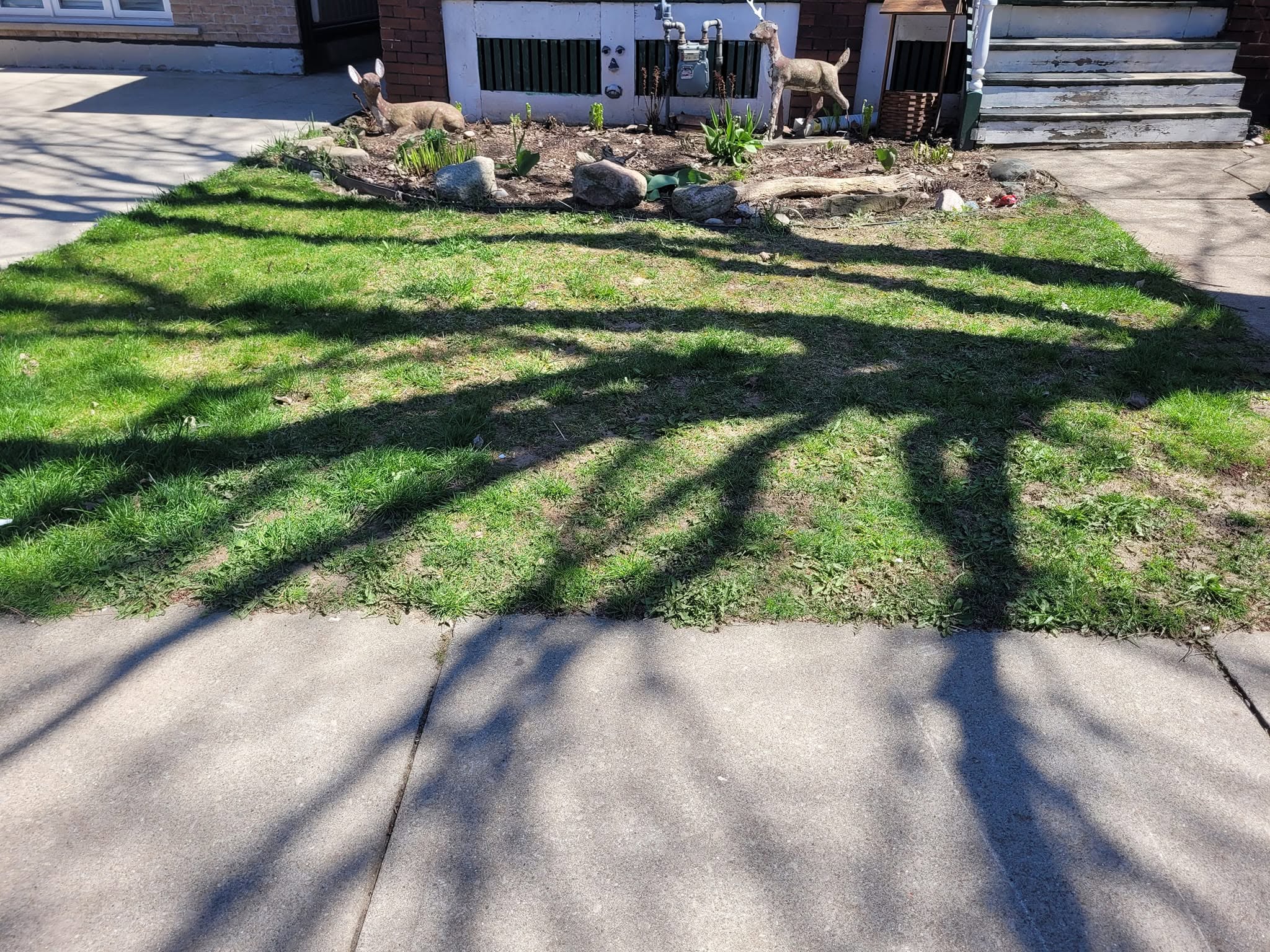
A lawn doesn’t decline all at once. It declines slowly, invisibly, over years — and the surface appearance stays acceptable far longer than the underlying condition warrants. Soil compacts a little more each winter. Thatch builds up a little each season. The root system creeps shallower year by year as the compaction layer prevents it from going deeper. Topsoil organic matter depletes gradually. The pH drifts toward acidic without anyone noticing because it happens over a decade, not overnight.
None of these individual changes is catastrophic on its own. But they compound. And the compounding happens silently, underground, while the surface still looks okay-ish. The lawn still gets mowed. It still turns green in spring. The homeowner figures things are more or less fine.
Then something tips it. A hot dry summer. A rough freeze-thaw spring. A minor patch that spreads. Suddenly the lawn looks bad and the homeowner starts trying to fix it — new seed, fertilizer, more watering. And nothing works, or nothing works as well as it should, because the fixes being applied are surface-level responses to a problem that is multiple years deep in the soil.
That gap — between the surface-level fix being applied and the years of accumulated underground decline that actually need to be addressed — is what I mean by accumulated neglect lag. The lag is the distance between where the lawn looks like it is and where it actually is underneath. And in Sudbury, with our clay soil and harsh winter cycles, that lag builds faster and runs deeper than in most Ontario climates.
Why Sudbury Makes This Problem Worse Than Anywhere Else in Ontario
I want to be specific about this because it explains why the advice from southern Ontario lawn care content — which is most of what comes up when Sudbury homeowners search for answers — often doesn’t quite fit what’s happening here.
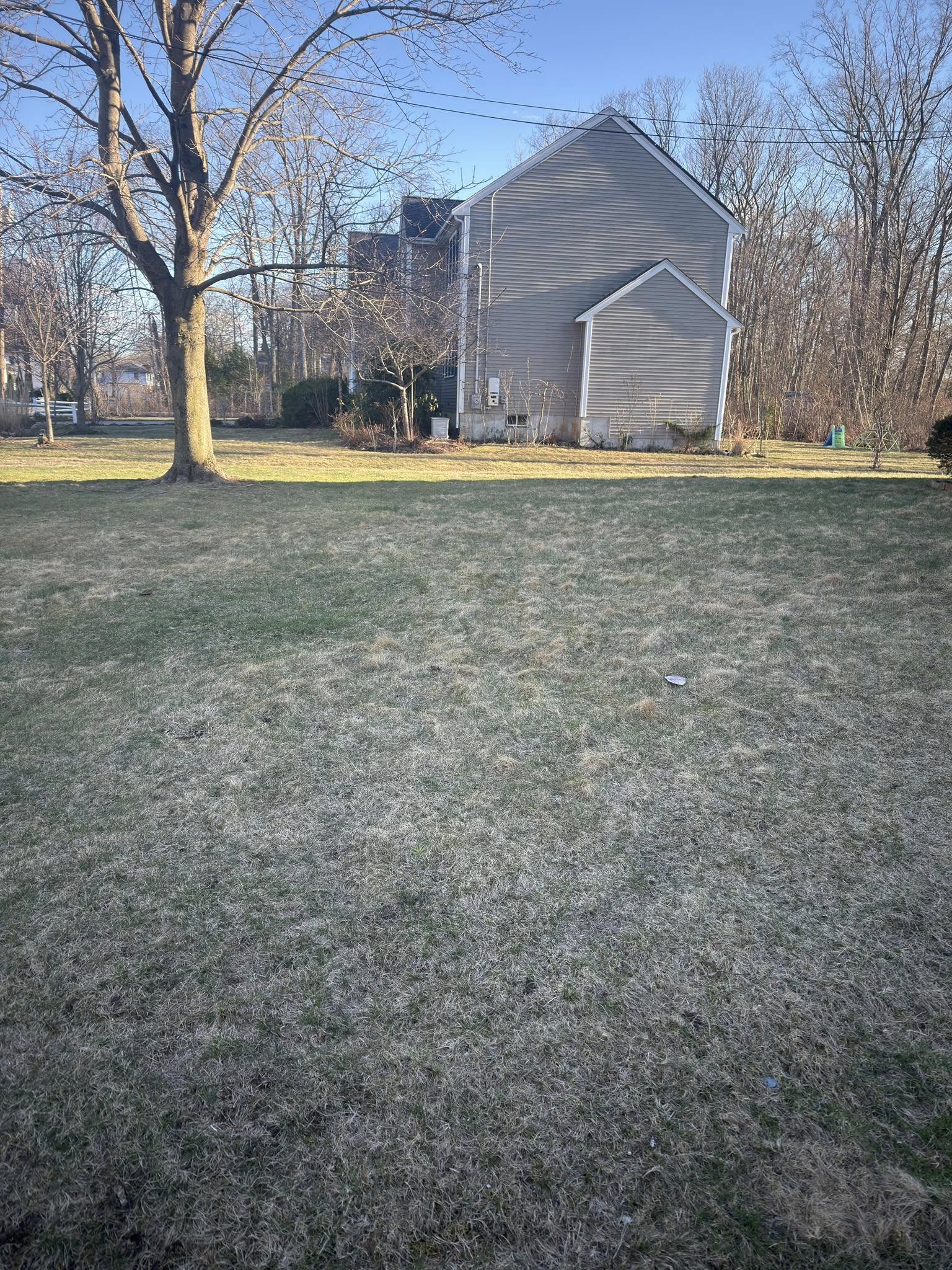
The freeze-thaw cycle in Sudbury is more aggressive and more repeated than most of Ontario. We don’t get one clean freeze and one clean thaw. We get repeated partial thaws and refreezes through March and April that work clay soil into progressively tighter, more compacted states. I wrote about exactly how this plays out in the post about Sudbury’s spring weather pattern — and the key point there is that each winter leaves the soil slightly more compacted than it was going in, not the same.
The clay content itself matters. Clay holds compaction. When sandy or loamy soil gets compressed, it partially recovers through natural processes — rain, earthworm activity, root action. Clay doesn’t recover the same way. Compaction applied to clay tends to stay. Which means every season of mowing, foot traffic, and freeze-thaw movement without aeration is a net negative for the soil structure, not a neutral event.
The implication for accumulated neglect lag is that in Sudbury, a lawn that hasn’t been aerated and properly maintained for five years is in significantly worse underground condition than a southern Ontario lawn that hasn’t been aerated for five years. The baseline decline rate is faster here. The lag builds more quickly. And the gap between what the lawn looks like and what it actually is underground is wider, on average, than what most generic lawn care content assumes.
This is why I keep coming back to core aeration as the non-negotiable annual task for Sudbury lawns. In a milder climate with better soil, you might get away with every other year. In Sudbury, every year is the right answer because the decline rate between interventions is genuinely faster than it is elsewhere.
How to Recognize Accumulated Neglect Lag on Your Own Property
Let me give you the specific signs I look for when I walk a property, because some of these are things homeowners walk past every day without connecting them to what’s actually happening underground.
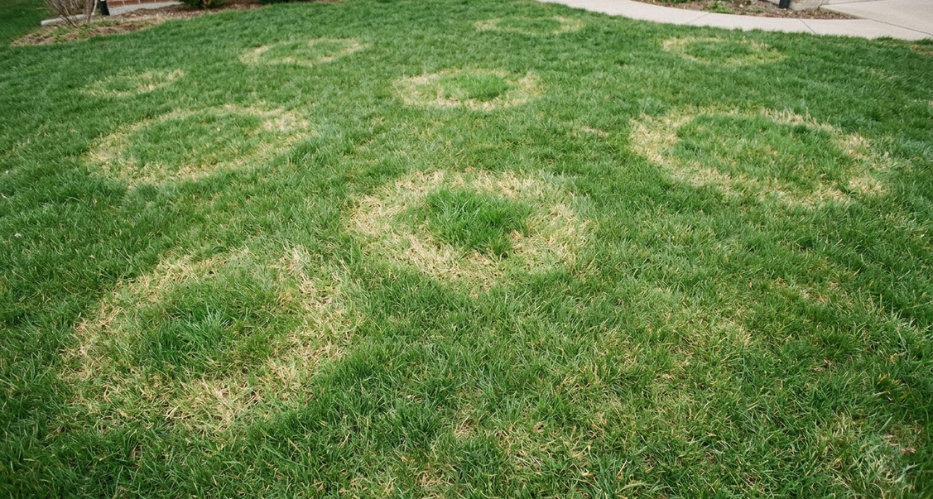
The lawn recovers slowly from stress. After a dry stretch, after a rough spring, after any period of difficult conditions — lawns with significant accumulated neglect lag come back slowly and incompletely. Sections that struggled don’t fill back in the way you’d expect. There’s always a patch or two that just never quite recovers from the last event before the next one arrives. That slow recovery rate is a direct signal that the root system is too shallow and the soil is too compacted to support the kind of bounce-back healthy lawns do.
The same spots come back bad every year. Not random bare patches — specific spots, same locations, season after season. The area near the fence line. The section around the base of the big tree. The strip along the driveway edge. These recurring problem spots are almost never about the grass seed or the fertilizer. They’re about the soil conditions in exactly that location, which haven’t changed because nobody has done anything to the soil in exactly that location. The surface gets reseeded; the underground stays the same.
Fertilizer doesn’t seem to do much. When a lawn with significant neglect lag gets fertilized, the response is underwhelming. The grass doesn’t green up the way the bag promises. A little improvement, maybe, but nothing like what the homeowner expected. This is because compacted soil with low organic matter and poor structure can’t efficiently deliver nutrients to the root zone regardless of what’s applied on top. The fertilizer is there. The roots aren’t in condition to use it.
Water runs off or pools rather than soaking in. I’ve written about drainage problems in Sudbury backyards as a standalone issue, and for severe cases it is. But in the context of accumulated neglect lag, even moderate compaction causes water to sit on the surface longer than it should rather than moving into the soil efficiently. If your lawn takes noticeably longer to absorb rain than your neighbour’s does, the soil structure is almost certainly part of why.
The screwdriver goes in less than two inches. This is the fastest physical confirmation. Push a standard flathead screwdriver into the ground with moderate, steady pressure. If it stops within an inch or two, the compaction is real and significant. Healthy soil lets it go four to six inches without much resistance. I carry one on every property walk for exactly this reason — it tells me more in thirty seconds than looking at the grass does in ten minutes.
The Way Out — and Why It Takes Longer Than People Want to Hear
I want to be honest with you here, because the honest answer is not the fast answer and I’d rather give you the right expectation upfront than have you frustrated six weeks in.
Accumulated neglect lag took years to build. It doesn’t reverse in one season. The soil compaction that’s been setting since 2018 doesn’t open up after a single aeration in September. The pH that drifted acidic over a decade doesn’t correct in one lime application. The organic matter that’s been depleting since the house was built doesn’t restore in a year of topdressing.
What does happen is this: year one, you do the right things — aeration, lime if the pH needs it, compost topdress, overseeding the thin areas in September — and the lawn looks noticeably better than it did, but not dramatically transformed. Year two, the compounding starts working in your favour instead of against you. The roots that went a little deeper in year one go a little deeper still. The soil that opened slightly with last year’s aeration opens a bit more with this year’s. The overseeded areas from September are now established turf contributing to the density that crowds out weeds and shades the soil. Year three, you have a lawn that is genuinely different from what it was — not just patched, but structurally healthier.
The best-looking Sudbury lawns I see in July are almost all lawns that are two or three years into a consistent program of the right things. None of them got there in a single season. All of them are now easier to maintain than they were before the program started, because a healthy lawn with deep roots and good soil structure is inherently more resilient than a declining one.
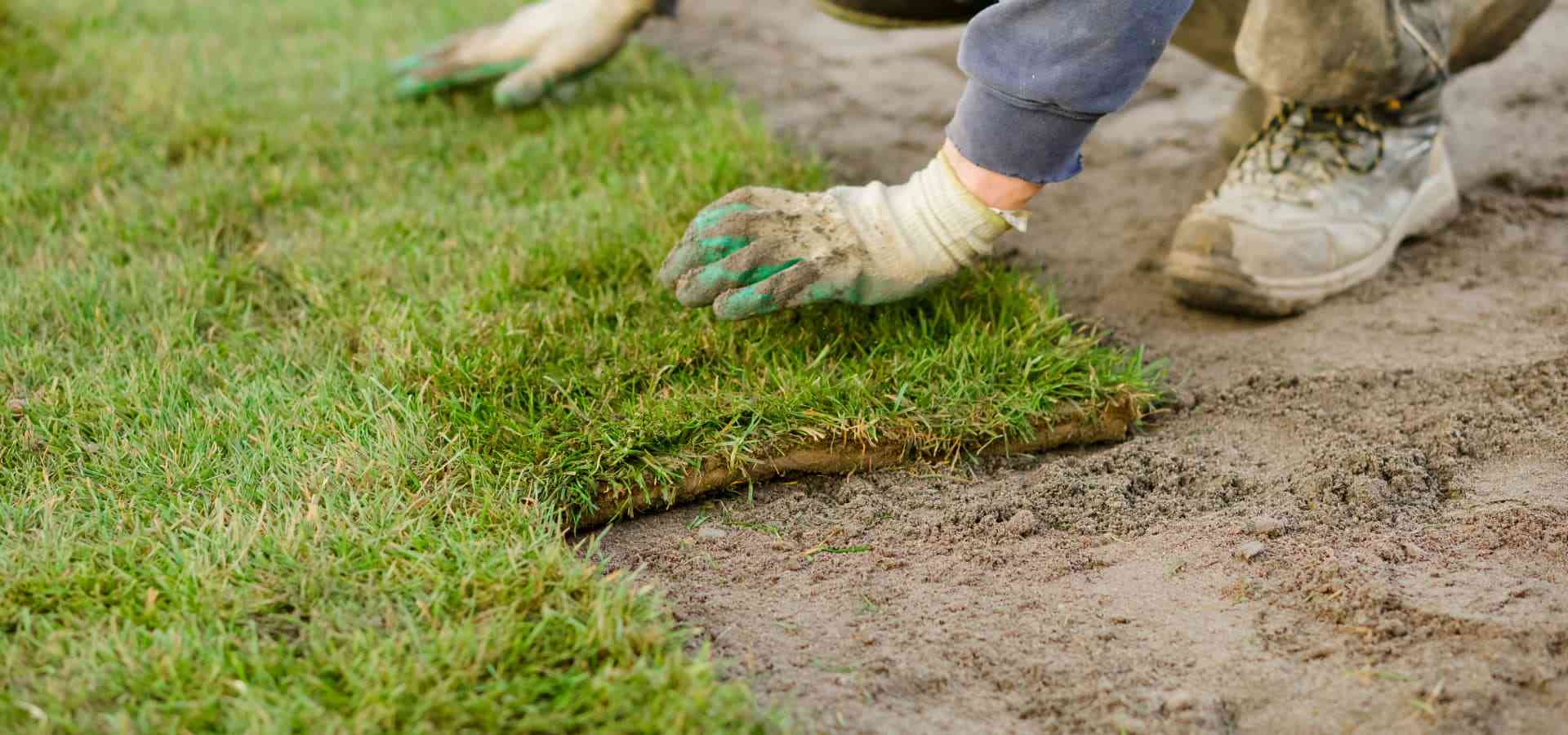
For sections where the accumulated decline is too severe for recovery — areas that are effectively bare, heavily compacted, or with underlying soil problems that surface work can’t reach — a proper sod installation on correctly prepped soil resets the clock on that section. Done right, with the soil actually prepared rather than just covering the problem, it’s the fastest legitimate path to a section of lawn that isn’t carrying years of accumulated lag into every subsequent season.
Want to Know How Much Lag Your Lawn Is Carrying?
This is exactly the kind of thing I can assess on a property walk. I’ll look at the surface, check the soil with a screwdriver or probe in a few spots, ask about the maintenance history, and give you an honest picture of where your lawn actually is versus where it looks like it is.
That gap — the lag — is the thing worth knowing. Because once you know it, everything else makes sense. Why the fertilizer underperformed. Why the reseeding didn’t hold. Why the lawn looks fine in May and struggles by July. And more usefully: what the actual path forward is, and what a realistic timeline looks like for your specific property in Greater Sudbury.
No charge for the visit. No pressure on what comes next.
📞 Call or text me directly: 705-507-6787
Or fill out the free quote form here.
— Ryan Lingenfelter
Owner, Cutting Edge Lawn & Landscaping
Garson, Ontario
