
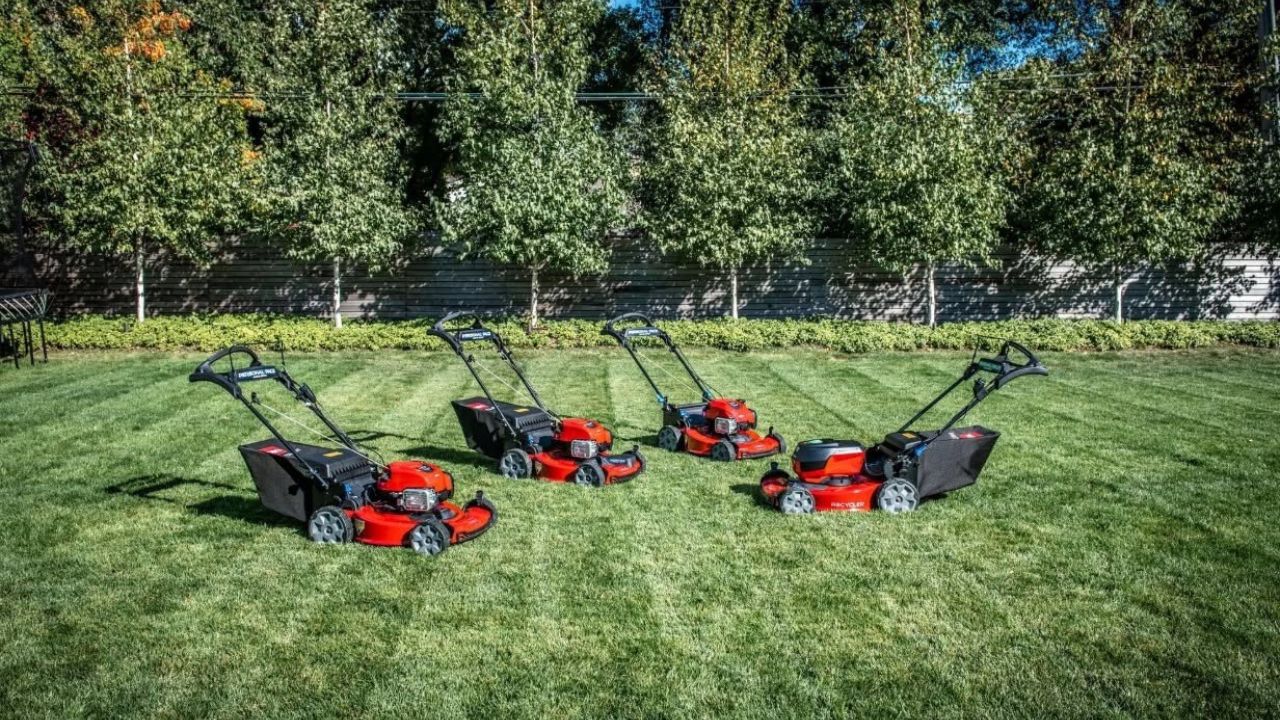
I get asked this question a lot, usually by homeowners who are either justifying a riding mower purchase they’re already leaning toward, or trying to figure out if their current setup is actually working against them. Both are fair conversations to have, and I want to give you the straight answer rather than the one that sells equipment.
Here’s my position upfront: for the majority of residential properties in Greater Sudbury, a quality self-propelled push mower does a better job and causes less long-term damage to the lawn than a riding mower. But that statement has real limits, and for some properties a riding mower is absolutely the right tool. The problem is that most homeowners draw the line in the wrong place — usually because they’re thinking about convenience rather than what actually happens to the lawn.
Let me walk you through how I think about this, because the variables that actually matter for Sudbury properties are different from what most generic lawn advice tells you.
The Real Issue With Riding Mowers on Typical Sudbury Lots
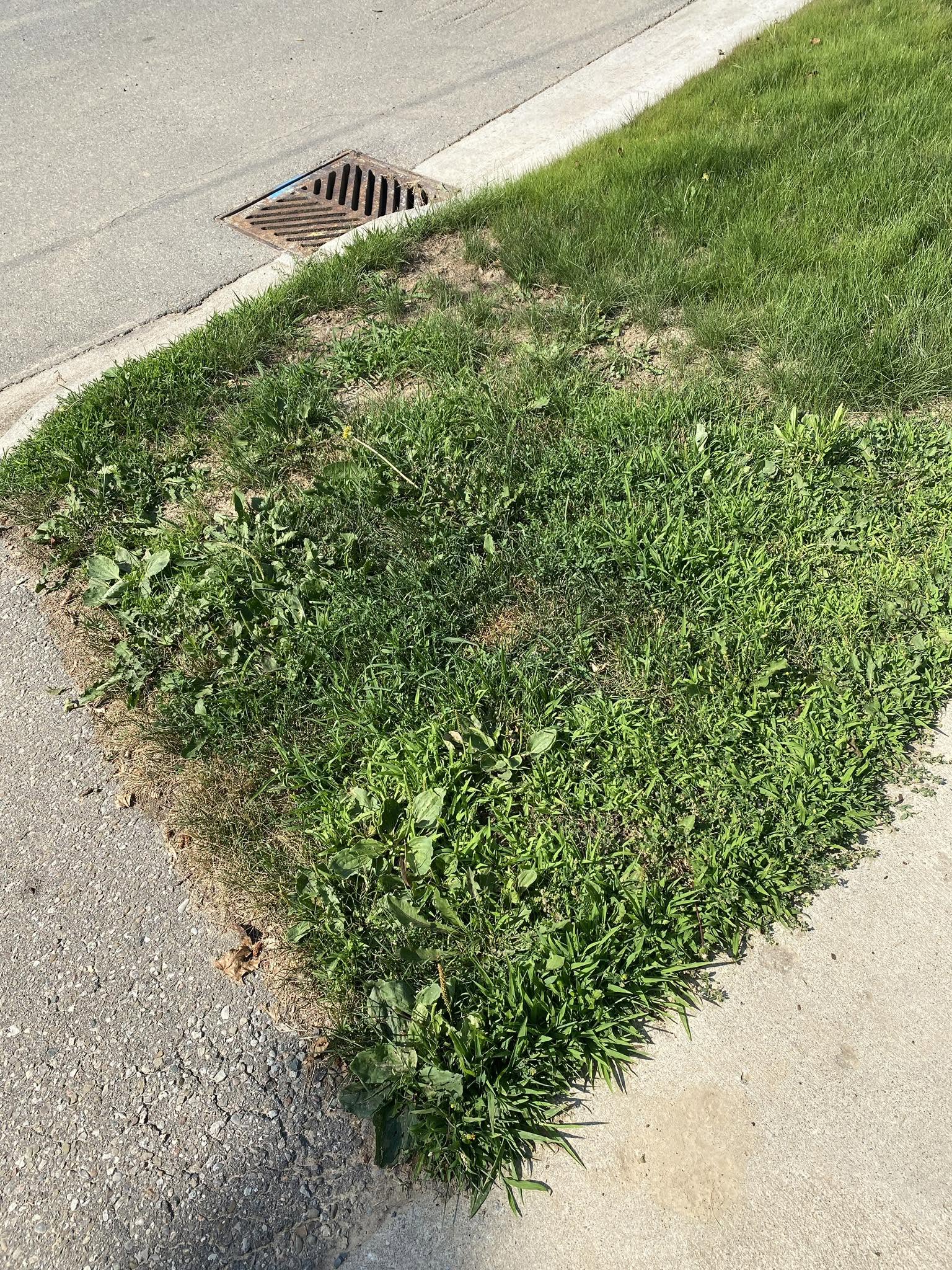
The conversation about riding mowers in Sudbury has to start with soil compaction, because this is where the damage actually happens and it’s the thing nobody talks about when they’re standing in front of a shiny zero-turn at the dealership.
A typical residential riding mower weighs between 400 and 700 pounds, depending on the model. A zero-turn can go higher. Every pass over the lawn presses that weight into the soil. On a dry day in midsummer, the effect is relatively minor. But in spring when the ground is soft, after rain when the soil is saturated, or across the same tire lines week after week — that weight compresses the soil structure repeatedly and consistently.
Sudbury soil compounds this problem. The clay-heavy ground that characterizes a huge number of properties in Garson, Val Caron, Chelmsford, Azilda, Hanmer, and throughout Greater Sudbury is especially prone to compaction. Clay packs tightly under pressure. It doesn’t spring back the way sandy or loamy soil does. After a few seasons of riding mower use on clay-heavy soil, the compaction layer builds to the point where roots can’t push through it, water pools rather than draining, and fertilizer sits on the surface rather than reaching the root zone.
The lawn starts looking worse. Thin areas appear and won’t fill in. Bare patches where the tires turn repeatedly. Drainage problems in spots that never used to stay wet. The homeowner tries overseeding, fertilizing, watering — nothing works, because nothing addresses the compaction that’s causing all of it.
I’ve written about this before in the context of the worst lawn advice I hear in Sudbury — and recommending a riding mower for a typical residential lot comes up in that conversation for exactly this reason. A core aeration program can start reversing the compaction damage, but it takes consistent work over multiple seasons to undo what years of heavy equipment did. Prevention is significantly easier.
Where the Line Actually Is — Lot Size, Terrain, and Obstacles
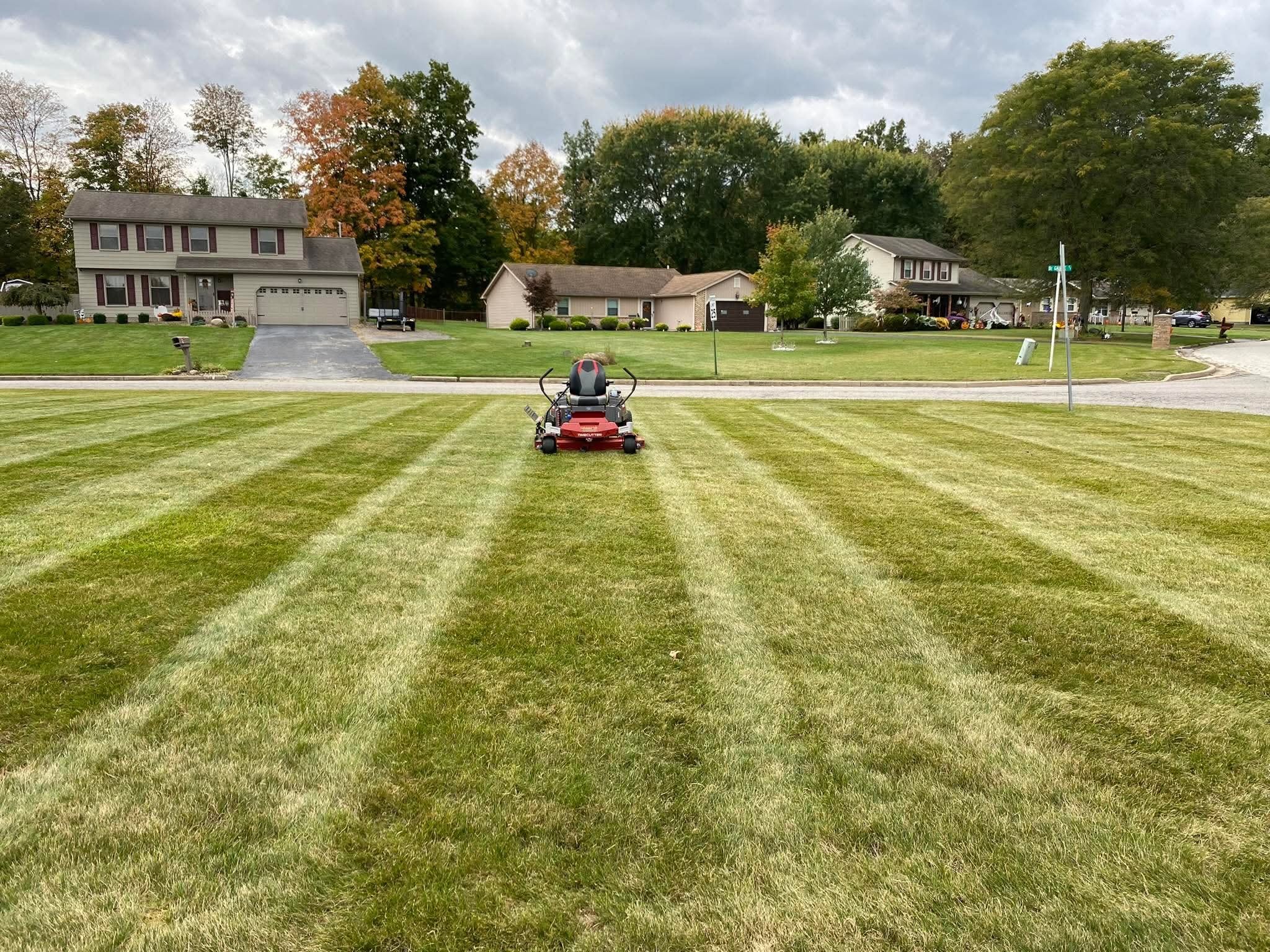
Now let me give you the honest answer on when a riding mower makes sense, because there are real situations where it’s the right tool.
Lot size is the first variable. The general threshold I use when talking to Sudbury homeowners is around three-quarters of an acre to a full acre of actual turf — not lot size, turf. That’s the area you’re mowing, not the area your property occupies. On anything smaller, a self-propelled push mower handles the job without the time burden most people assume. A typical 6,000 to 8,000 square foot lawn — which is on the larger end of most Sudbury residential lots — takes 30 to 45 minutes with a quality self-propelled mower. That’s not a hardship. On three-quarters of an acre or more, the time and physical demand start to genuinely justify the riding mower trade-off.
Terrain matters a lot. Riding mowers are safest and most effective on flat, open ground. The moment you introduce significant slopes — anything above about 15 degrees — riding mower safety becomes a real concern, and the quality of cut on uneven terrain drops noticeably. If your property has meaningful elevation changes, a self-propelled push mower with variable drive gives you better control and a more consistent cut on the slopes where most Sudbury properties have their most visible lawn.
Obstacles change the calculation entirely. Garden beds, mature trees, tight corners between structures, narrow side yards — every obstacle adds manual trimming time that the riding mower doesn’t save you. On a property with a lot of defined areas to navigate around, the riding mower’s efficiency advantage shrinks fast. Many homeowners with complex yards find they’re spending almost as much time trimming after the ride-on pass as they would have spent just mowing the whole thing with a push mower in the first place.
The simple summary: large, flat, relatively open lot over three-quarters of an acre with limited obstacles — riding mower probably makes sense. Anything smaller, hillier, or more complex — push mower will serve the lawn better and your total time investment is less than you think.
What to Actually Look for in a Push Mower for Sudbury Conditions
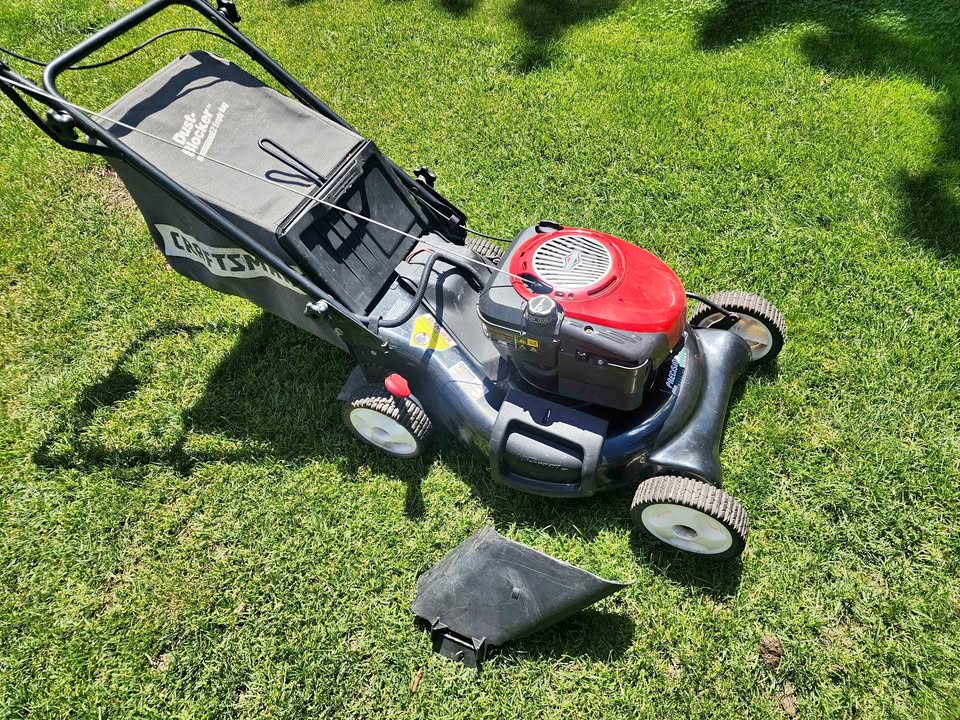
If you’ve decided a push mower is the right tool for your property — or if you’re reconsidering the riding mower you have — let me tell you what actually matters in a push mower for Sudbury conditions specifically.
Self-propelled drive is worth the extra cost. On Sudbury lots with uneven terrain, soft spring soil, or lawns that get long between cuts, a self-propelled mower is meaningfully easier to manage than a basic push model. Variable speed drive lets you set the pace to match terrain — slower on the slopes, faster on the flat open sections. For most homeowners over 40 or anyone mowing a larger lot, self-propelled isn’t a luxury, it’s the practical choice.
Rear-wheel drive handles Sudbury terrain better than front-wheel drive. Front-wheel drive mowers lose traction when the deck is raised or when going uphill because lifting the handle unweights the front wheels. Rear-wheel drive maintains contact with the ground through slope changes, which matters on the uneven terrain that’s common across Sudbury residential properties.
Deck size should match your lot, not your ambition. A 21-inch deck is the standard for good reason — it’s manoeuvrable around obstacles while covering ground efficiently. People sometimes buy 24 or 26-inch deck models thinking wider is faster, but on a typical Sudbury lot with garden beds and trees, the manoeuvrability penalty often costs more time than the wider cut saves.
Blade quality matters more than most homeowners realise. A sharp blade cuts grass cleanly. A dull blade tears it, which creates ragged ends that brown and stress the plant — exactly what you’re trying to avoid when you’re also managing for summer heat stress and drought resilience. Sharpen the blade at least once per season — twice if you’re mowing frequently or hitting debris. This is a $15 service at any small engine shop and it makes a real difference.
Battery-powered is increasingly viable, but know the runtime limits. Cordless battery mowers have improved significantly and for lots under 5,000 to 6,000 square feet, a quality battery model handles the job well. For larger lots, gas or dual-battery systems are still more reliable. I wouldn’t write off battery-powered for most Sudbury residential properties anymore, but test the runtime honestly against your actual lot before committing.
If You Already Have a Riding Mower — Here’s How to Minimise the Damage
A lot of homeowners reading this already own a riding mower and aren’t about to replace it. That’s a completely reasonable position, and I’m not suggesting you throw away a functioning piece of equipment. But if you’re going to keep using it on a Sudbury residential lot, there are things you can do to limit the compaction damage and keep the lawn healthier despite the weight.
Vary your mowing pattern every single time. This is the most important thing. When a riding mower follows the same path week after week, tire ruts develop and the compaction is concentrated in those exact lines. Deliberately changing direction — north-south one week, east-west the next, diagonal the week after — spreads the weight over different areas of the lawn rather than hammering the same lines repeatedly. It makes a meaningful difference in how compaction develops over a season.
Stay off the lawn when soil is wet. This is true for push mowers too, but the weight difference makes it far more critical with a riding mower. Wet clay soil compacts dramatically under heavy equipment. If you’ve had significant rain in the last 24 to 48 hours, wait. A few extra days of growth is infinitely less damaging than running a 500-pound machine over saturated clay.
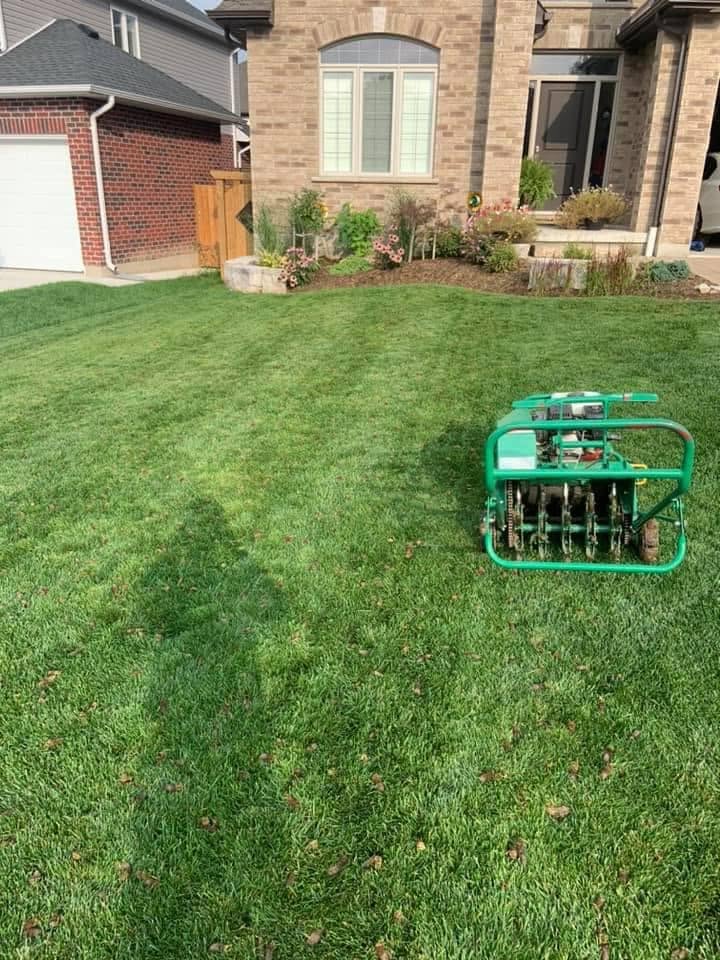
Commit to annual core aeration — non-negotiable. If you’re running a riding mower on a Sudbury lot with clay soil, core aeration in late summer or fall isn’t optional maintenance, it’s damage control. The aeration removes soil plugs and opens channels that work against the compaction the mower creates. Without it, the compaction compounds year over year. With it, you’re at least partially resetting the soil structure each season.
Consider push mowing the edges and problem areas. A hybrid approach works well on some properties — ride the main open areas of the lawn where the ground is most forgiving, and push mow the sections near beds, trees, slopes, and areas that are already showing compaction stress. You get the time efficiency of the ride-on where it matters least for the lawn, without the weight damage in the areas that are most sensitive.
And if your lawn is currently showing the effects of years of riding mower compaction — thin patches in the tire lines, bare spots at turning points, drainage issues that appeared without any obvious cause — those aren’t just cosmetic problems. Overseeding and fresh sod on the worst areas, combined with a consistent aeration program going forward, can recover most of it. But you have to address the compaction alongside the surface damage, not instead of it.
Not Sure What the Right Setup Is for Your Sudbury Property?
If you want a straight opinion on whether your current mowing setup is working for or against your lawn — or if you’re trying to decide what to buy before spending real money on equipment — I’m happy to talk through it. Come see the property, understand the terrain and soil, and give you a direct answer based on what’s actually there.
No equipment to sell you. No agenda. Just an honest read.
📞 Call or text me directly: 705-507-6787
Or fill out the free quote form here.
— Ryan Lingenfelter
Owner, Cutting Edge Lawn & Landscaping
Garson, Ontario
