By Ryan Lingenfelter — Owner, Cutting Edge Lawn & Landscaping · Garson, Ontario · Serving Greater Sudbury since 2020
I’m a lawn care company, but a meaningful part of what I see across Greater Sudbury properties involves the ground around the lawn — driveways, walkways, the transition zones between hard surfaces and grass. And there’s one driveway problem I see constantly, on property after property, that’s quietly doing real damage to vehicles, and almost nobody connects the cause to the effect.
It’s not potholes exactly — though that’s what it eventually becomes. It’s what causes the potholes in the first place. And once you understand it, you’ll see it on driveways across every neighbourhood in Greater Sudbury.
The Mistake — And Why It’s So Common in Sudbury
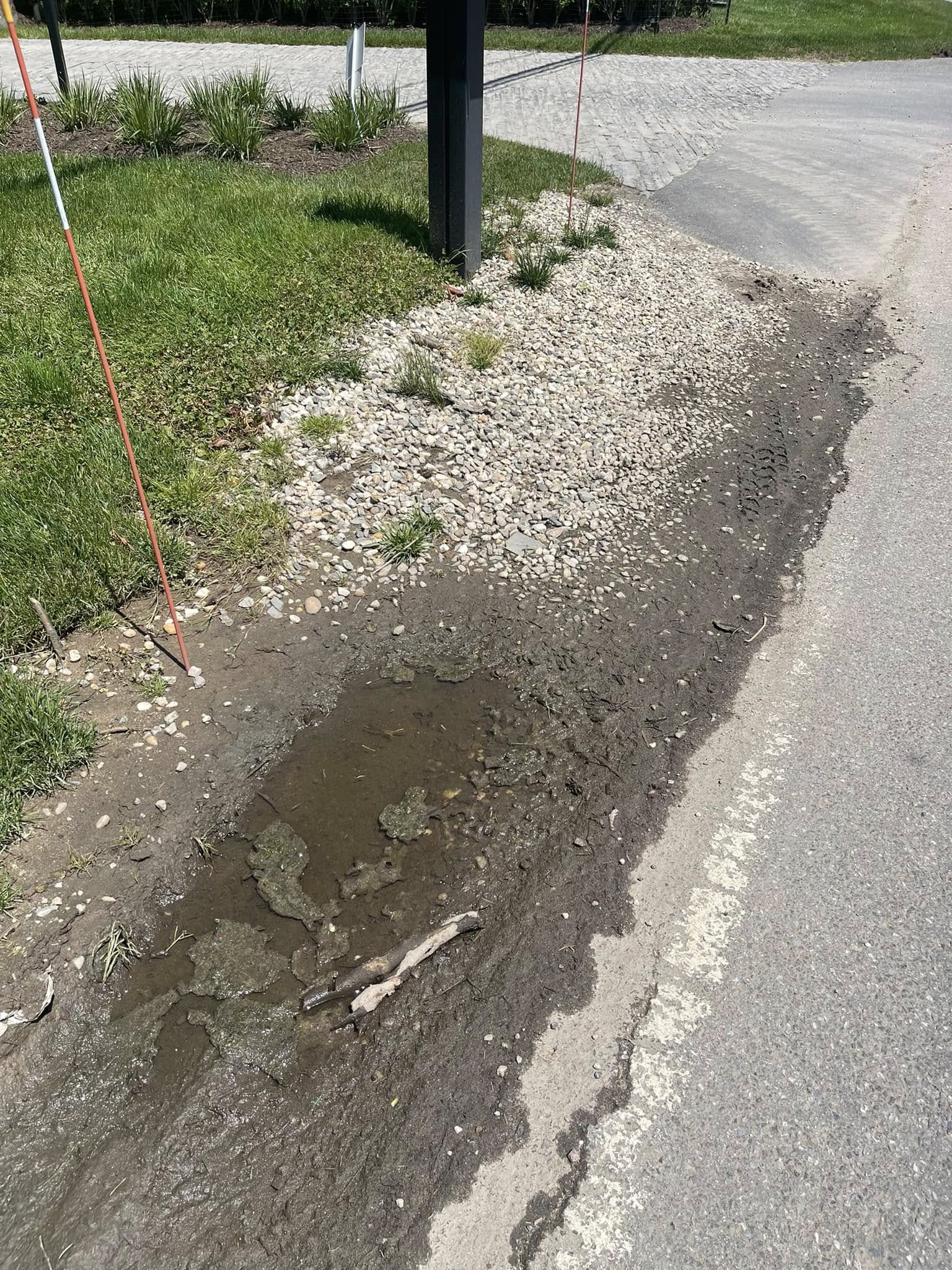
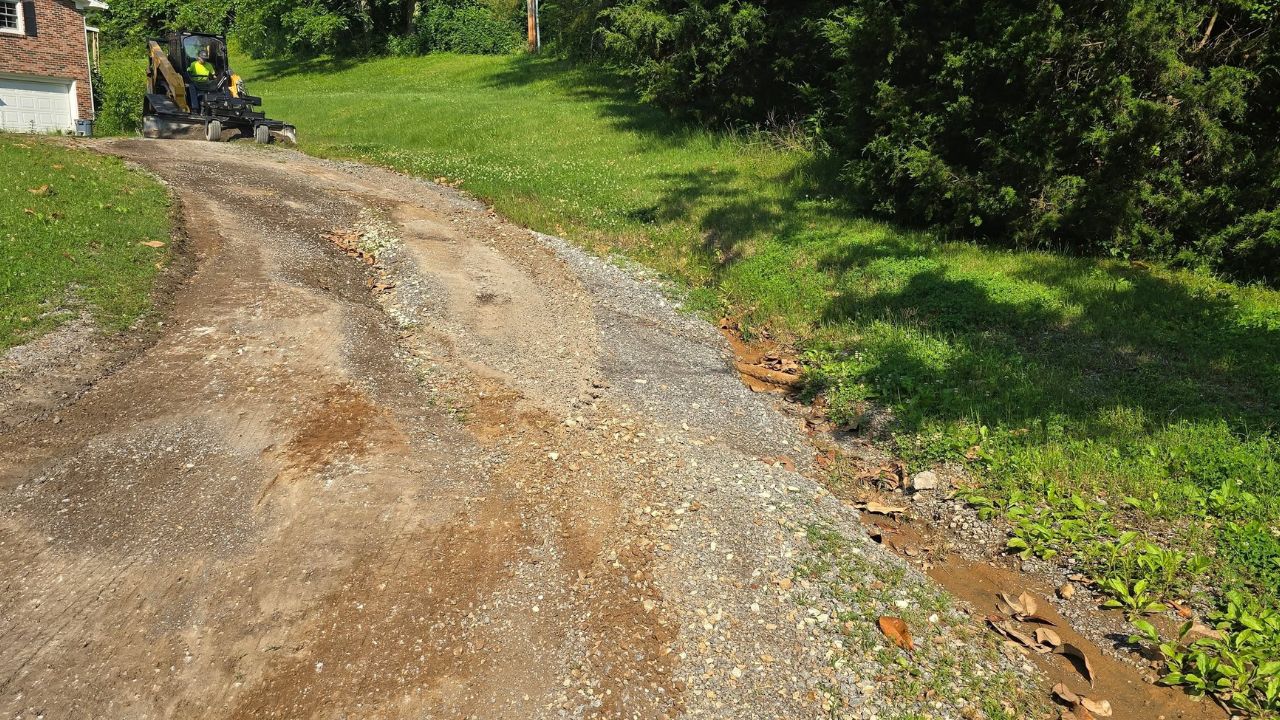
The mistake is improper grading and drainage on gravel driveways — specifically, driveways that don’t shed water properly, allowing it to pool and saturate the gravel base rather than running off to the sides.
This happens constantly in Sudbury for a specific reason: many residential driveways here were graded once, years or decades ago, and never reassessed. Over time, gravel settles unevenly, vehicle traffic creates ruts in the same spots repeatedly, and the original grade that was supposed to direct water away from the centre of the driveway gradually flattens out or reverses. What started as a properly crowned driveway — higher in the middle, sloping to both sides — becomes flat or even slightly concave, especially down the centre track where most vehicles drive.
Once that happens, water that should run off pools instead. And in Sudbury’s climate, pooled water on a gravel driveway is a serious problem, not a cosmetic one.
What Actually Happens to the Driveway — and the Cars on It
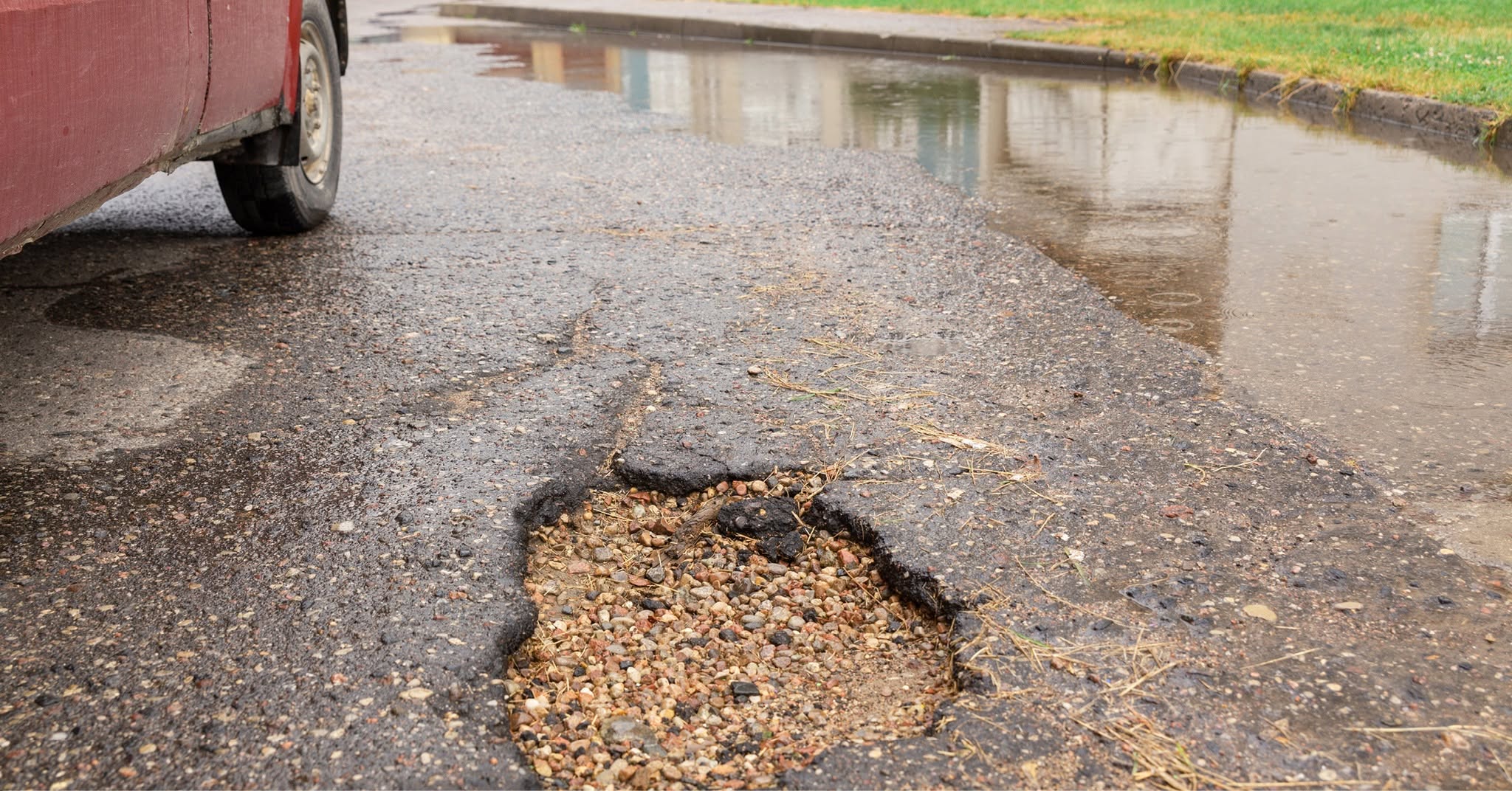
Here’s the mechanism, and why it specifically hits Sudbury driveways harder than driveways in milder climates.
Water that pools rather than draining saturates the gravel and the base material underneath. In fall and into winter, that saturated material freezes. Sudbury’s freeze-thaw cycle is among the more severe in Ontario — repeated freezing and partial thawing through a long winter. Each cycle on saturated driveway material causes expansion and disruption of the base layer underneath the gravel surface. By spring, what was a solid, compacted base has been progressively broken up by repeated freeze-thaw action concentrated in the areas where water was pooling.
This is exactly how potholes form — not gradually and evenly across a driveway, but specifically in the low points where water collects and freeze-thaw damage concentrates. Spring arrives, the ground thaws, and the disrupted base material under those low points can no longer support the gravel surface properly. The result is the deep, sharp-edged potholes that seem to appear overnight every spring on Sudbury driveways.
And this is where the vehicle damage comes in. A pothole that’s developed this way isn’t a shallow dip — it’s often a sudden, deep depression with a sharp drop-off, because the failure happened underneath the surface before it became visible. Hitting one of these at normal driveway speed can damage tire sidewalls, bend wheel rims, throw off alignment, and in worse cases damage suspension components. I’ve talked to more than one Sudbury homeowner who’s had an unexpected repair bill from hitting a pothole on their own driveway — not a public road, their own property — because the damage develops faster and more severely than most people expect from “just a driveway.”
How to Tell If Your Driveway Has This Problem
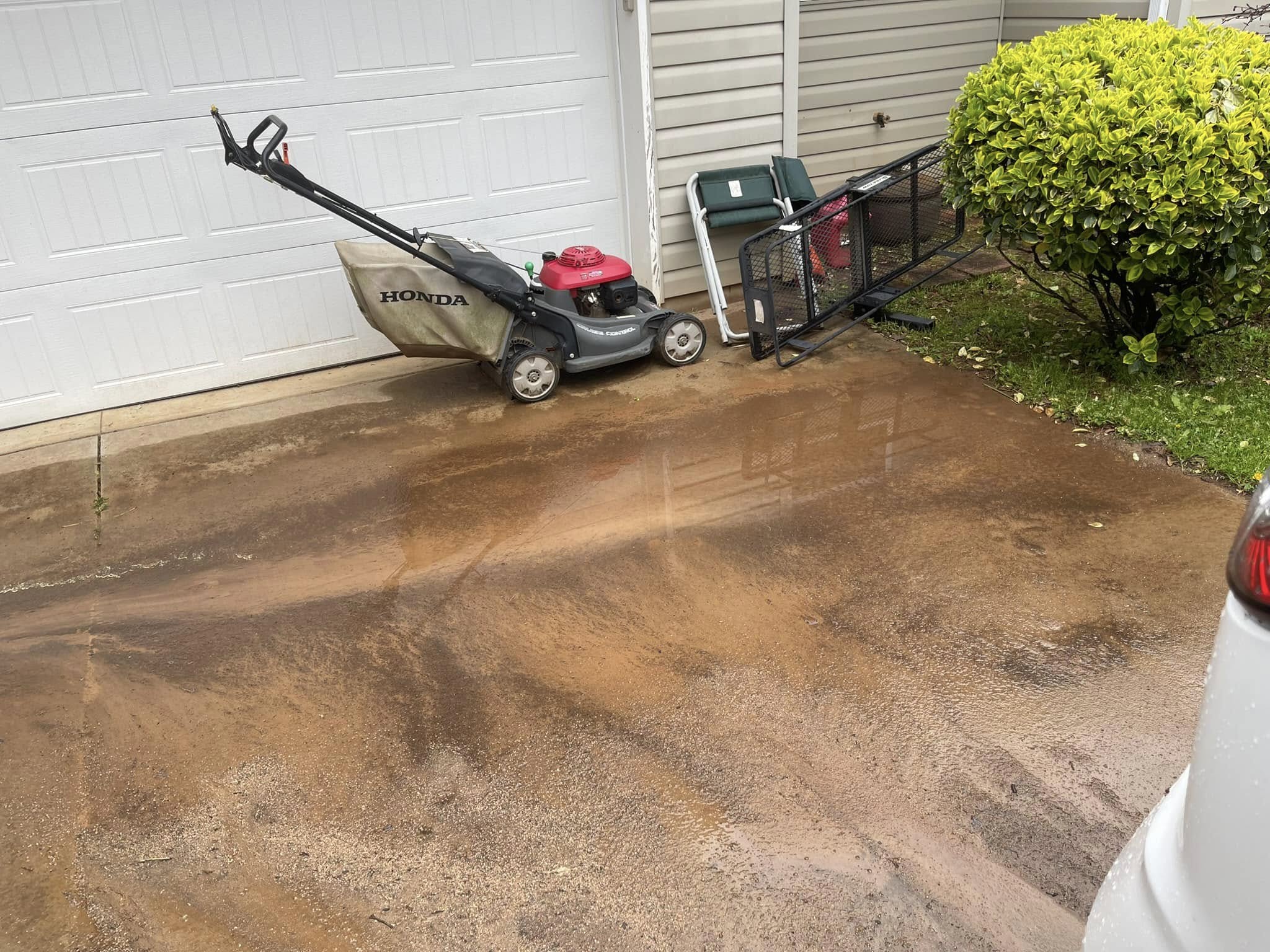
The good news is that this problem is identifiable before it becomes a pothole — if you know what to look for.
Watch your driveway during and right after rain. A properly graded driveway sheds water to the sides within a few minutes of rain stopping. If you’re seeing standing water in the centre track or anywhere along the driveway more than fifteen or twenty minutes after rain ends, that’s pooling — and pooling means the grade isn’t doing its job in that section.
Look for the centre track depression. Walk your driveway and look at where your tires typically travel. If there’s a visible lower track running down the centre or along one side compared to the rest of the surface, that’s the rutting and settling that creates the low points where water collects.
Notice soft or spongy spots in spring. If you can feel give underfoot in specific spots on your gravel driveway during spring thaw — areas that feel different from the rest of the surface — that’s often the early stage of base failure before it becomes a visible pothole.
Check for gravel migration. If you’re noticing bare or thin gravel coverage in certain areas and accumulation in others — particularly gravel that’s migrated to the edges or low points — that’s evidence of water movement carrying material with it, which is consistent with poor surface drainage.
What Actually Fixes It
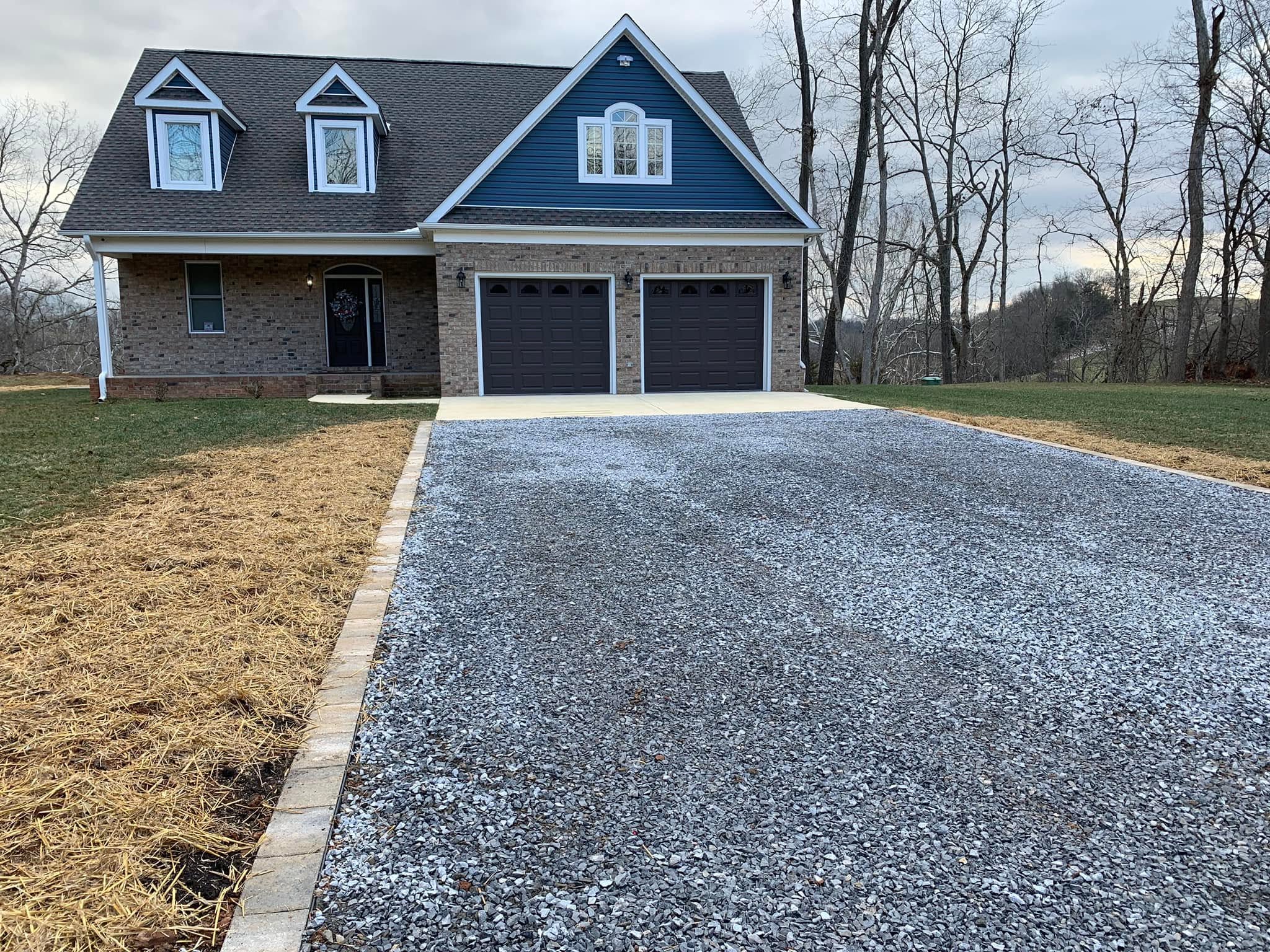
The fix isn’t filling potholes after they appear — that’s a temporary patch on a problem that will recur in the same spot the following spring if the underlying grade isn’t corrected. The real fix addresses the grade itself.
A properly graded gravel driveway in Sudbury should have a slight crown — higher in the centre, sloping gently to both edges, enough that water visibly runs off to the sides rather than pooling anywhere along the length. This isn’t a dramatic slope; even a modest, consistent crown is enough to keep water moving rather than sitting. Regrading a driveway that’s lost its crown involves redistributing the existing gravel, building the centre back up, and re-establishing the slope toward both edges. Depending on how far the grade has deteriorated, this can range from a relatively quick maintenance grading to a more significant rebuild if the base material itself has been compromised by repeated freeze-thaw damage.
Beyond the grading itself, drainage at the sides matters too. If the areas alongside the driveway where water is supposed to run off are themselves blocked, raised, or poorly drained — overgrown grass edges, accumulated debris, a lawn grade that’s higher than the driveway edge — water has nowhere to actually go even with proper crown. Keeping the edges along driveways clear during regular property maintenance supports proper drainage rather than working against it.
Timing matters too. The best time to assess and correct driveway grading in Sudbury is in spring, after the ground has thawed and before the next winter’s freeze-thaw cycle begins working on whatever condition the driveway is currently in. Catching grade problems in spring, before they’ve had a full season to deteriorate further, is significantly less work than addressing a driveway that’s been pooling water for multiple seasons.
If you’ve noticed your driveway has developed low spots, pooling, or has been producing potholes in the same locations year after year — that’s not bad luck. It’s a grading problem that’s correctable. Spring is the right window for this kind of property assessment alongside the rest of your seasonal property work. Reach out and I’ll come take a look at what’s going on with your driveway specifically.
— Ryan Lingenfelter
Cutting Edge Lawn & Landscaping, Garson, Ontario
📞 705-507-6787
Serving all of Greater Sudbury — Garson, Hanmer, Val Caron, Lively, Chelmsford, Azilda, Capreol, and Sudbury proper. We offer property cleanup, core aeration, grass cutting, sod installation, and full property maintenance. Free quotes, no pressure.
Get a Free Quote |
Call 705-507-6787