I’ve had the same kind of conversation dozens of times. Homeowner has lived in Sudbury for twenty, thirty, sometimes forty years. They’ve maintained their own lawn the whole time. They know the city, they know the winters, they know what they’re dealing with.
And then I tell them one of these things and they go quiet for a second.
Not because it’s complicated. Because it’s one of those things that’s obvious once someone explains it — but nobody ever explained it. Not the previous homeowner, not the hardware store, not the lawn care content they’ve seen online, most of which is written for southern Ontario conditions that don’t apply here.
Here are five things about Sudbury lawns specifically that most homeowners — including the ones who’ve been here their whole lives — have never been told.
1. Your Lawn’s Worst Enemy Isn’t the Summer — It’s the Six Weeks Before Summer
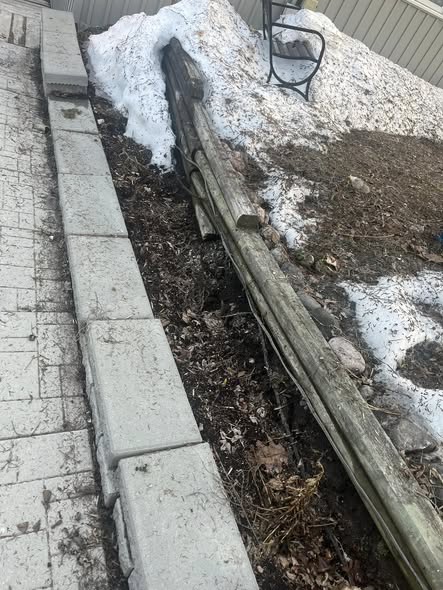
Most Sudbury homeowners track summer as the hard season for lawns. The heat, the dry stretches, the brown patches in July. And yes, summer is genuinely stressful for grass here. But in my experience, the six weeks from mid-April through late May do more damage to more lawns than the entire summer does — and almost none of it gets attributed to the right cause.
Here’s what happens. The ground starts thawing. Then it refreezes. Then it thaws again. This repeated partial-freeze cycle is normal for Sudbury’s spring, but what it does to clay soil specifically is not widely understood. Each freeze-thaw event physically disrupts the soil structure and pulls at root connections. A root system that was intact in March can be partially detached from the soil by the time May arrives — not dead, but loosened, vulnerable, and unable to support the growth demand the warming temperatures suddenly create.
The lawn looks fine until the first dry week of June. Then sections collapse faster than they should, and the homeowner assumes it was the heat. It wasn’t. The heat just revealed the damage that the spring cycle already did.
I’ve written about this in detail because it’s genuinely one of the most consistent patterns I see across Greater Sudbury — the spring weather pattern that ruins Sudbury lawns every year is something most homeowners have experienced without ever naming it.
The practical implication: what you do in fall — specifically whether you aerate before the ground freezes — determines how well your lawn handles that spring cycle. A lawn going into winter with loose, open soil handles the freeze-thaw movement far better than one going in compacted.
2. The Canadian Shield Under Sudbury Makes Your Soil Behave Differently From Almost Anywhere Else in Ontario
This one surprises people who’ve lived here forever because it feels obvious in hindsight but nobody connects it to the lawn.
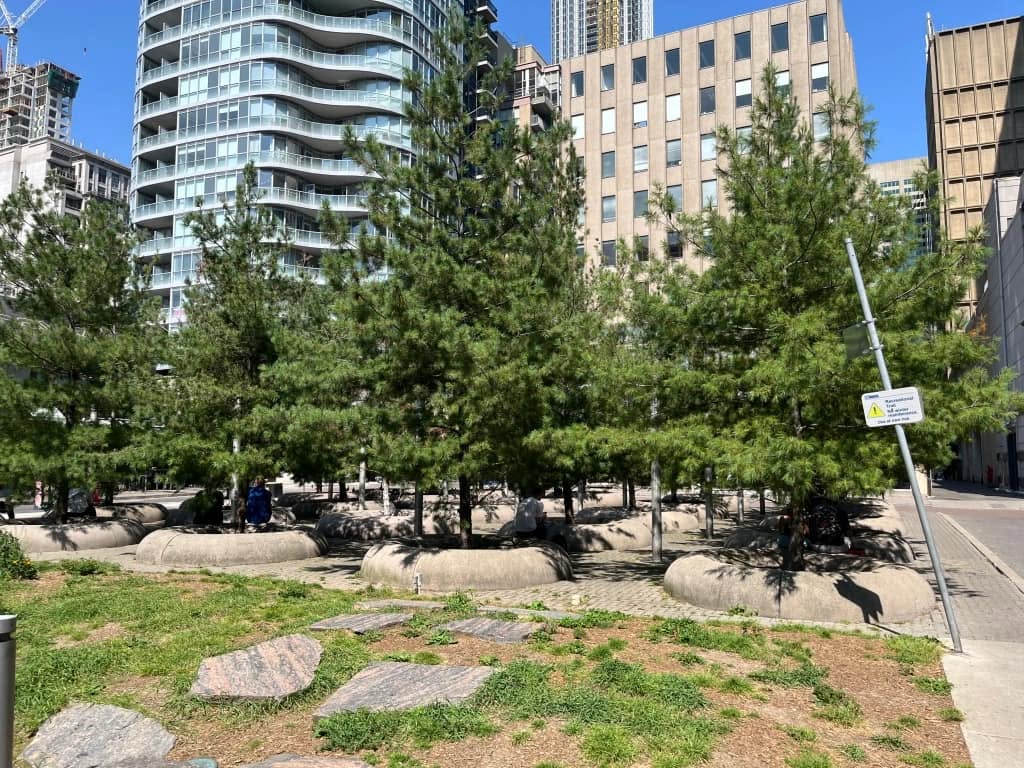
Sudbury sits on the Canadian Shield. The bedrock is close to the surface — in some parts of the city and surrounding areas, genuinely very close. What that means for soil is that the topsoil layer over much of Greater Sudbury is naturally thin to begin with, before any construction or development happened. In southern Ontario, typical topsoil depth might run eight to twelve inches over reasonably deep subsoil. In parts of Sudbury, you can hit rock, dense clay, or Shield-derived glacial fill within three or four inches of the surface.
Grass roots need depth to build resilience. A lawn with six to eight inches of workable soil goes through drought, heat, and freeze-thaw stress fundamentally differently than a lawn with two to three inches before the roots hit an impenetrable layer. The first has somewhere to go for moisture and stability. The second is surface-dependent — it only has access to what happens in the top few inches, which is exactly where conditions are most extreme.
This is part of why accumulated neglect lag builds faster on Sudbury properties than on most Ontario properties. When the natural topsoil depth is already limited, any compaction or degradation of that thin layer is disproportionately damaging. There’s no deep reserve to fall back on.
What this means practically: if your lawn has ever had an area that simply will not grow grass regardless of what you do — seed, fertilize, water — the answer might not be on the surface at all. It might be that there are literally only two inches of soil above bedrock in that spot. Bringing in topsoil to build actual depth in those areas is the only fix that works, because there’s nothing else to work with.
3. A Lawn That Goes Brown in July Is Almost Never Dying — But the Window to Save It Is Shorter Than You Think
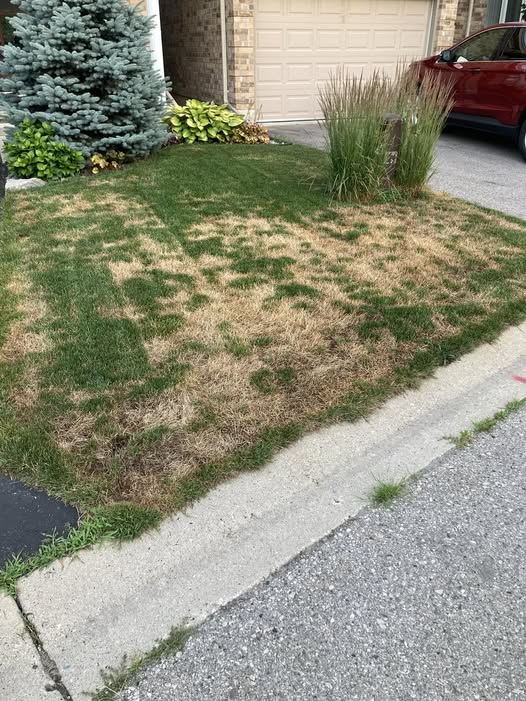
This is the one that changes how people think about summer, and it’s the one I explain most often between June and August.
When a Sudbury lawn turns brown in a dry July stretch, the overwhelming majority of homeowners assume the grass is dead or dying. It almost never is. Cool-season grass — which is what virtually every residential lawn in Greater Sudbury grows — has a built-in dormancy mechanism specifically for heat and drought conditions. The blades shut down and turn brown to conserve resources. The crown, sitting at soil level, stays alive. When moisture and temperature conditions improve, the grass wakes back up and regrows from that living crown.
The mistake isn’t believing the lawn is dying. The mistake is what people do in response to that belief. They either start aggressive watering that pulls the lawn partially out of dormancy without providing enough moisture to actually sustain it — which wastes the energy reserves the plant needs to survive — or they do nothing at all and assume it will sort itself out indefinitely.
Dormancy has limits. Four to six weeks of complete drought with no moisture will push even a dormant lawn past the point the crown can survive. The crown doesn’t need much — a deep watering every couple of weeks during a prolonged dry stretch is enough to keep it alive without breaking dormancy — but it does need something eventually.
I covered the full detail of what happens to Sudbury lawns during a heat dome in another post, but the short version is this: let it go brown, stay off it, don’t mow it, water deeply every couple of weeks if the dry stretch goes past three weeks, and give it two weeks after conditions improve before you assess what actually didn’t come back.
The lawns I see recover fastest from July dormancy are the ones whose owners did the least to them during the dry period and the most to them the previous fall.
4. Most Sudbury Lawns Have Never Had Their pH Checked — and It’s Silently Costing Them
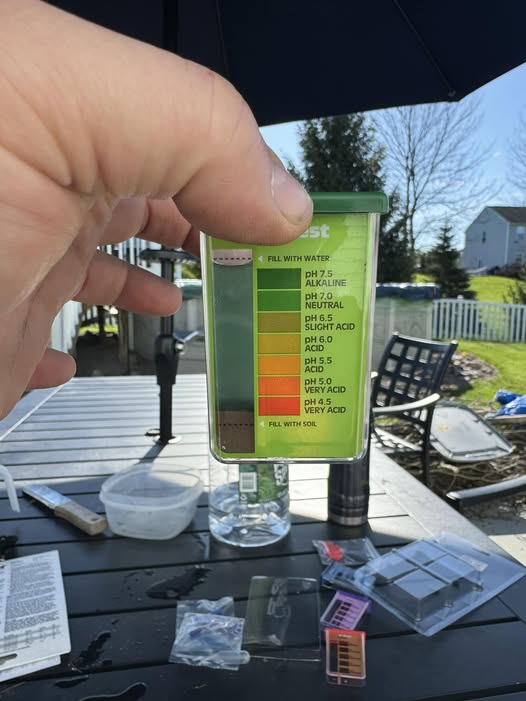
If I had to pick one single thing that most Sudbury homeowners have never done but should have done years ago, it’s test their soil pH.
pH is the measure of how acidic or alkaline the soil is. Grass performs best in a range of roughly 6.0 to 7.0 — slightly acidic to neutral. Below 6.0, the chemistry of the soil changes in a way that locks nutrients in forms the plant can’t absorb efficiently. The nutrients can be physically present in the soil — nitrogen, phosphorus, potassium — and the grass still can’t use them properly because the pH is wrong.
Sudbury’s soil tends to run acidic. The Canadian Shield geology produces naturally acidic parent material. Organic matter decomposition — leaves, grass clippings, thatch — adds acidity over time. Rainfall in this region is slightly acidic. All of this pushes the pH downward slowly but consistently, year after year, without anyone doing anything wrong.
After fifteen or twenty years on a property with no pH management, a lot of Sudbury lawns are sitting below 5.5 — significantly below the range where grass can thrive. And yet the homeowner has been fertilizing faithfully every spring, wondering why the results are underwhelming. The fertilizer is being applied. The soil chemistry isn’t allowing the grass to use it.
The fix is lime — calcium carbonate applied to the lawn to raise the pH back toward neutral. It’s inexpensive, widely available, and completely transformative for lawns where the pH has been the limiting factor. But it works slowly — a lime application in fall works through the winter and spring to shift the pH over several months. You can’t emergency-lime a lawn in June and expect results in July.
This is exactly why I changed how I approach fertilizer recommendations after seeing the same pattern play out across multiple properties, which I wrote about in the post about why I stopped giving every Sudbury homeowner the same fertilizer advice. Soil testing — including pH — comes before any fertilizer decision. Without it, you’re guessing at the solution to a problem you haven’t properly diagnosed.
5. The Grass Type Matters More in Sudbury Than It Does Almost Anywhere Else in Ontario
This is the last one, and it’s the most practical in terms of what homeowners can actually do with the information.
Most lawn seed sold at hardware stores and garden centres in Ontario is formulated for Ontario broadly — which means it’s optimized for somewhere in the middle of the province’s range of conditions. Not for Sudbury’s colder winters, harsher spring cycles, shorter growing season, or the specific soil conditions created by Canadian Shield geology.
The difference between a grass seed blend that’s genuinely suited to Sudbury conditions and a generic Ontario blend isn’t subtle over time. Fine fescue varieties — particularly creeping red fescue and hard fescue — handle Sudbury winters better than many bluegrass-heavy blends. They’re more drought-tolerant once established, more shade-tolerant under the mature tree coverage common in older Sudbury neighbourhoods like Walden, and more forgiving of the thinner topsoil conditions that are normal here.
Conversely, certain perennial ryegrasses that establish quickly and look great in the first season don’t overwinter as well in Sudbury as they do in milder climates. A homeowner who seeds with a “fast-establishing” blend that’s heavy in ryegrass might get great germination in September and come out to thin, dead patches in April — not because anything went wrong with the seeding, but because that variety wasn’t built for what Sudbury winters actually are.
When I do overseeding on Sudbury properties, the seed selection is specific to the conditions of that spot — sun exposure, soil depth, drainage, the neighbourhood’s typical shade profile. A shaded Walden property with thin topsoil gets a different blend than an open Val Caron lot with heavier clay. Generic seed off the shelf works adequately in average conditions. In Sudbury, average conditions aren’t what you’re dealing with. The blend should match where you actually are.
One More Thing — These Facts Point Toward the Same Solution
If you read through all five of these, you’ll notice they’re all pointing in the same direction. Sudbury lawns need soil-specific care — not generic lawn advice scaled down from southern Ontario conditions, but decisions made with the actual soil, climate, and seasonal cycle of Greater Sudbury in mind.
That’s what I try to bring to every property I walk. Not a standard program applied to everyone, but a read of what this specific lawn, in this specific part of Sudbury, actually needs.
If any of these five things made you think differently about something your own lawn has been doing, I’d be glad to come out and take a look with you.
📞 Call or text me directly: 705-507-6787
Or fill out the free quote form here.
— Ryan Lingenfelter
Owner, Cutting Edge Lawn & Landscaping
Garson, Ontario