
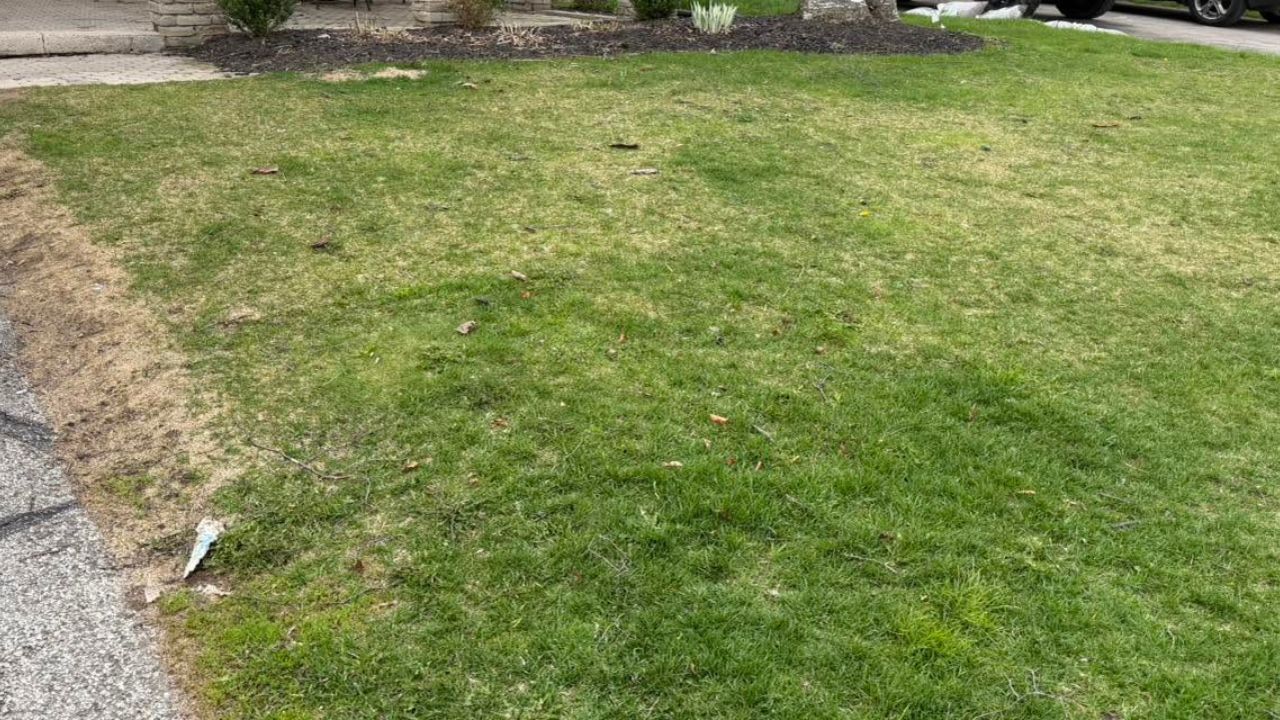
I get a version of this question several times a season.
A homeowner calls me frustrated. They bought the exact same seed their neighbour used — same bag, same brand, same blend. The neighbour has a thick green lawn. They have patchy germination, bare spots, and grass that struggles through the first summer. Same seed. Same approximate effort. Completely different result.
They want to know what they’re doing wrong.
Usually the answer is: nothing. They’re not doing anything wrong. The seed isn’t defective. The problem is that they applied the same solution to a fundamentally different problem — because their soil is different from their neighbour’s soil in ways that aren’t visible from the surface, and those differences determine almost everything about what grass seed can do once it hits the ground.
I’m Ryan Lingenfelter, owner of Cutting Edge Lawn & Landscaping in Garson, Ontario. I’ve assessed properties across Greater Sudbury since 2020 — Garson, Val Caron, Hanmer, Lively, Chelmsford, Azilda, Capreol — and the variation in soil conditions between properties even on the same street is genuinely striking. Here’s exactly why that variation exists, what it means for seed performance, and what to do about it before you spend another season wondering why your lawn won’t respond.
Why Sudbury Soil Varies So Dramatically — Even Street to Street
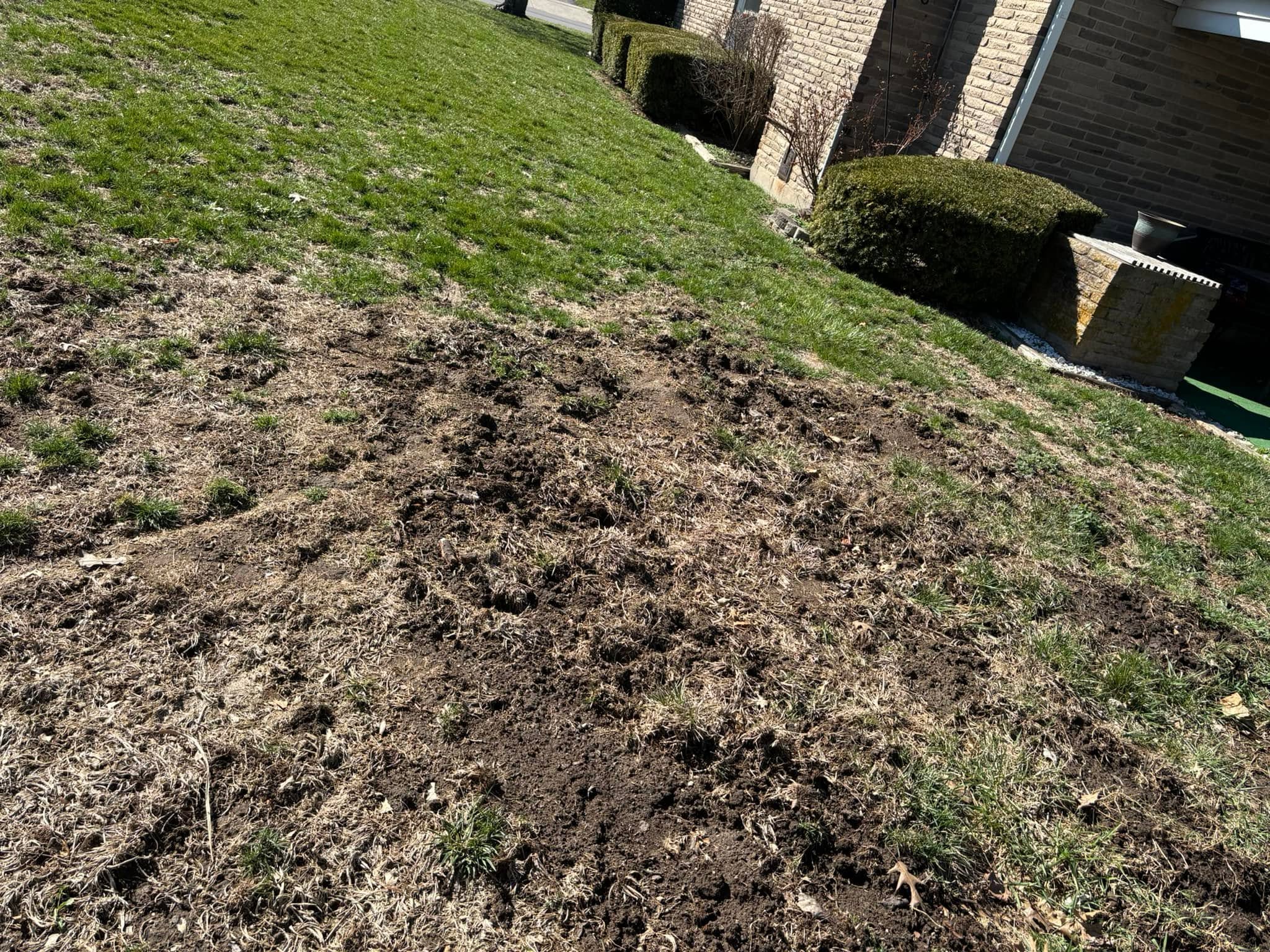
Most lawn care content is written for somewhere else. Somewhere with uniform, deep topsoil, mild winters, and soil that behaves predictably across a neighbourhood. Sudbury is not that place, and understanding why is the starting point for understanding why seed performs so inconsistently here.
Greater Sudbury sits on the Canadian Shield — some of the oldest exposed bedrock in the world. That bedrock doesn’t sit at uniform depth. It rises and falls across the landscape in ways that have nothing to do with property lines or street layouts. Two houses fifty metres apart on the same street can have dramatically different topsoil depths. One property might have eight to ten inches of workable soil above the rock shelf. The one next door might have three inches in the front yard and two inches along the side.
That depth difference changes everything about what grass seed can do. Seed that germinates on ten inches of soil has a root zone to grow into. Seed that germinates on two inches of soil over rock establishes, looks promising for a few weeks, and then dries out the first time a heat stretch hits — because there’s no depth to draw moisture from.
Beyond bedrock depth, Sudbury soil has a chemistry legacy that most generic lawn advice doesn’t account for at all. Decades of smelter operations deposited sulfur dioxide across the landscape, and combined with the naturally acidic Shield geology, this created soil conditions across Greater Sudbury that are more acidic than almost anywhere else in Ontario. Acidic soil reduces nutrient availability even when fertilizer is applied — the nutrients are present but the chemistry prevents the grass from accessing them. Seed can germinate in acidic soil but establishing a dense, healthy turf over time is significantly harder when pH is below the range cool-season grasses prefer.
I covered the full detail of why Sudbury’s soil and climate make lawn care genuinely harder here than anywhere else in Ontario — and why generic advice consistently fails on Sudbury properties: Sudbury Climate and Soil: Why Lawn Care Is Harder Here Than Anywhere in Ontario. If you haven’t read that, it’s the foundational context for everything else in this article.
What Construction History Does to a Property’s Soil — And Why New Builds Seed Badly
One of the most consistent patterns I see on Sudbury properties where seed fails predictably is recent or past construction history. And it’s not limited to new builds — renovation work, addition construction, driveway replacements, utility trenching, even significant landscaping projects can strip or compress the thin topsoil layer in ways that aren’t visible from the surface.
Here’s what happens. Construction equipment — excavators, concrete trucks, bobcats, delivery vehicles — drives across the property during the build. On Sudbury’s shallow-topsoil Canadian Shield soil, that equipment compresses the thin organic layer that supports grass growth. In some cases it strips it entirely and the builder or contractor grades the lot with subsoil or fill. The finished property looks like a lawn from the street. Underneath, the top few inches may be pure construction fill with none of the organic matter, microbial activity, or soil structure that grass roots need to establish properly.
Seed applied to construction fill germinates — seeds germinate in almost anything with moisture and warmth. But the seedlings can’t establish deep roots in compacted fill with no organic matter. They look green for a few weeks and then thin out or die at the first stress event. The homeowner buys more seed. The same thing happens again. Meanwhile, the neighbour on the same street whose property was never disturbed has eight inches of original topsoil and their seed establishes without any of that struggle.
If your property has had significant construction work — including the original build if it’s less than ten years old — that history is worth knowing about when you’re trying to understand why seed performance is inconsistent. The fix isn’t better seed. It’s soil building — incorporating quality topsoil and organic matter into the existing surface before overseeding, so there’s actually something for roots to establish in.
Seed is not the variable that determines whether a Sudbury lawn establishes well. Soil is the variable. The seed is the last step in a process that starts with what’s underneath it.
The Compaction Factor — Why the Same Street Has Different Results by Block

Even on properties with adequate topsoil depth and no construction history, compaction creates the same outcome as shallow soil: seed germinates and then fails to establish because the root system can’t penetrate the compaction layer below the surface.
Compaction builds differently on different properties even on the same street. A property where a car parks on the lawn periodically, where kids take the same path to the backyard repeatedly, where snowplow windrows sat heavy on the front lawn for two or three winters — that property has significantly higher compaction than the one next door where traffic patterns are different. You can’t see compaction from the street. It looks the same as the property with loose, healthy soil. But the screwdriver test tells the story: push a standard screwdriver into the soil in three or four spots. On a compacted Sudbury property you’ll hit hard resistance at two to three inches. On a property with healthy soil structure you’ll get five or six inches of penetration without force.
Seed applied to compacted soil sits on the surface or in the top half-inch. It germinates — that’s not the problem. The problem is that as the seedling tries to develop a root system, it hits the compaction layer and can’t go deeper. The root stays shallow. The plant is perpetually vulnerable to any dry spell, any heat stretch, any stress event. A neighbour’s property with better soil structure grows the same seed into grass with roots six inches deep that can sustain itself through a Sudbury summer. Your property grows the same seed into grass with roots in the top inch that dries out in three days of heat.
Core aeration before overseeding is the fix for this — and it’s non-negotiable on compacted Sudbury clay if you want seed to establish properly. Aeration physically breaks the compaction layer and creates channels that seedling roots can follow downward. Seed germinated after aeration on compacted soil performs dramatically better than the same seed applied to the same soil without it. I’ve watched this comparison play out on adjacent properties where one was aerated before seeding and one wasn’t. The difference by fall is not subtle.
For the full decision framework on whether your property needs aeration and overseeding versus sod replacement — and how to read a lawn to make that call correctly: Sod Replacement in Sudbury — When to Replace vs Repair.
The pH Problem — Why Fertilizer and Seed Both Underperform on Acidic Sudbury Soil
This is the variable that almost no homeowner in Sudbury has been told about, and it explains a significant portion of the “I did everything right and it still didn’t work” situations I encounter.
Cool-season grasses — Kentucky bluegrass, perennial ryegrass, fine fescue — prefer a soil pH in the range of 6.0 to 7.0. Slightly acidic to neutral. Below that range, several things happen simultaneously that work against lawn establishment.
Nutrient availability decreases. Phosphorus — critical for root development in seedlings — becomes chemically locked in the soil at pH levels below 6.0 and can’t be accessed by the plant even when it’s present. Fertilizer applied to acidic soil provides less effective nutrition than the bag suggests. Seed germinates but the seedling can’t build the root system it needs because the phosphorus for root development isn’t reaching it.
Microbial activity slows. Healthy soil is full of microorganisms that break down organic matter and cycle nutrients into forms plants can use. Below pH 6.0, many of these microorganisms become less active, which means the natural soil fertility that supports established turf is reduced.
Weeds that thrive in acidic conditions — moss, certain broadleaf weeds — establish more readily than grass in low-pH soil. So the lawn that can’t establish from seed may fill in with exactly the plants that love the conditions you’re trying to correct.
A soil pH test — available from any garden centre for a few dollars — tells you what you’re working with. If the test comes back below 6.0, lime application before seeding adjusts the pH toward the range grass needs. This is a step most generic lawn care advice mentions as optional. On Sudbury’s Canadian Shield soil with its acid chemistry legacy, it’s often not optional. It’s what determines whether everything else you do works.
Shade, Drainage, and Microclimate — The Street-Level Variables Nobody Maps

Beyond soil chemistry and compaction, there are property-specific conditions that vary dramatically even between houses on the same block — and that determine what grass seed can realistically establish on a given site.
Shade coverage. Kentucky bluegrass — the dominant grass species in most Sudbury lawn seed blends — needs a minimum of six hours of direct sun per day to establish and maintain density. A property with mature trees that have grown to canopy coverage over the last ten years may have changed from a full-sun lawn to a part-shade or full-shade situation without the homeowner fully registering that change. The same seed blend that worked on a sun-exposed property fails in those conditions because it’s the wrong seed for the light level. Fine fescue blends perform significantly better in shade, and matching the seed blend to the actual light conditions on a property is the fix — not trying more of the same seed that isn’t suited to the environment.
Drainage patterns. Low areas that pool water after rain stay wet longer than surrounding sections. Cool-season grass in standing water develops root rot and dies. The homeowner overseeds the low spot. It greens up briefly and dies again. The cycle continues until the drainage is corrected. On the same street, a property without that low spot never experiences this failure mode — the seed they use establishes normally because the site condition isn’t working against it. A grading correction or a dry well to manage that low area is the fix, not different seed.
Driveway and pavement heat. Sections of lawn immediately adjacent to south or west-facing paved surfaces — driveways, concrete walkways, asphalt — experience significantly higher soil temperatures than the open lawn. That heat stress is concentrated in a strip that may be only two to three feet wide, but it consistently kills or thins the grass in that zone while the rest of the lawn looks fine. Same seed. Different microclimate. The fix is either a drought-resistant seed blend for those edge strips or accepting that those sections will need more intensive irrigation than the rest of the lawn.
I wrote about how these property-specific variables play out on a Chelmsford property that had failed repeatedly until the actual site conditions were diagnosed: The Chelmsford Property Nobody Could Fix — Until We Found What Was Actually Wrong. The pattern — good seed, right technique, still failing — repeated until the specific site condition driving the failure was identified. Every property in this article had a version of that story.
How to Diagnose Your Specific Property Before Buying More Seed
If you’ve been through multiple seasons of seed that doesn’t establish well, here is the diagnostic sequence I’d run before spending any more money on seed or professional seeding services.
Screwdriver test across the whole lawn. Push a screwdriver into the soil in six to eight spots — front, back, problem areas, sections that grow well. Compare how deep it goes before hitting resistance. Three inches or less in the problem areas means compaction is a primary driver. Aeration before seeding is non-negotiable at that point.
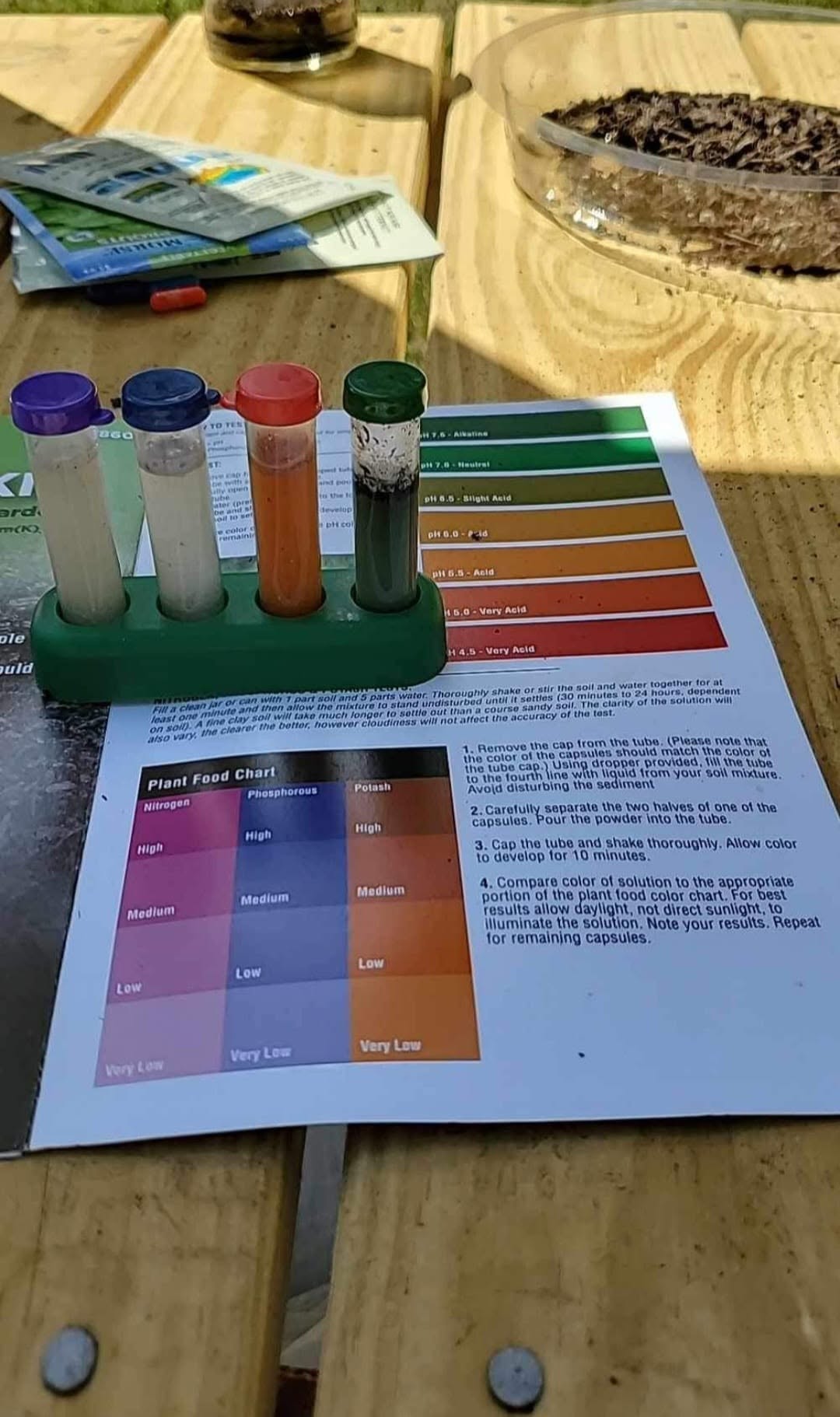
Soil pH test in the areas that fail most consistently. Available at any garden centre. If you’re consistently below 6.0 in problem areas, lime application before seeding addresses the chemistry issue that’s blocking seed establishment. Run the test a few weeks before you plan to seed so there’s time to apply and work in lime before the seed goes down.
Count the sun hours in problem areas. Stand at the problem area and note when direct sun arrives and when it’s blocked by the house, trees, or fence. Less than six hours of direct sun means you’re working with the wrong seed blend. Switching to a fine fescue shade blend for those areas changes the outcome without changing anything else.
Check for drainage in every area that has failed two or more seasons. After the next meaningful rain, walk the property within a few hours and note where water is sitting. Any area that holds standing water for more than four to six hours after rain has a drainage problem that will continue to drive seed failure until it’s corrected.
Know your construction history. If the property was built within the last fifteen years, or if significant work was done in the problem areas, that’s relevant context. Properties with construction-disturbed soil often benefit from topsoil incorporation before seeding — not a thin dressing, but actual topsoil worked into the existing surface to provide the organic matter and soil structure that the construction removed.
Most of the time, running through this diagnostic sequence identifies one or two clear factors that explain the pattern of failures. Fix those factors first — aerate, test pH, adjust seed blend for shade, correct drainage — and then apply seed into conditions that can actually support establishment. That’s the sequence that produces a result instead of repeating the same outcome a fourth or fifth time.
For the full picture of what this diagnostic process looks like on a real property — and what the right sequence of interventions is once you’ve identified the problem: Sudbury Yard Transformation: My First Year Fixing the Worst Lawn.
And if the diagnosis points toward the lawn being past the point where overseeding can produce the result you’re looking for — if it’s been three or more seasons of seed that doesn’t hold, or if the bare areas are too extensive for seed to realistically fill in — the replace vs repair decision framework is here: Sod Replacement in Sudbury — When to Replace vs Repair.
Want a Diagnosis on Your Specific Property?
Cutting Edge Lawn & Landscaping handles core aeration, sod installation, property cleanup, and weekly grass cutting across Greater Sudbury — Garson, Val Caron, Hanmer, Lively, Chelmsford, Azilda, and Capreol.
— Ryan Lingenfelter
Owner, Cutting Edge Lawn & Landscaping
Garson, Ontario
📞 705-507-6787
🌐 Free Quote — No Obligation
Licensed & Insured | Owner-Operated | BBB A+ Rated | Serving Greater Sudbury Since 2020
Frequently Asked Questions
Why does grass seed work for my neighbour but not for me in Sudbury?
Almost always because the soil conditions on the two properties are different in ways that aren’t visible from the surface. The most common drivers are soil depth above the Canadian Shield bedrock — which varies dramatically even between adjacent properties — compaction levels, soil pH, drainage patterns, and shade coverage. Grass seed performs in direct proportion to the soil conditions it’s applied to. When the conditions are right, almost any quality seed blend establishes reasonably well. When compaction, acidity, shallow bedrock, poor drainage, or shade are working against it, the same seed that produced a thick lawn next door fails repeatedly until those conditions are addressed. The seed is rarely the variable that explains the difference.
What’s the most common reason grass seed fails in Sudbury specifically?
Compaction — specifically, the compaction that builds up on Sudbury’s Canadian Shield clay soil after multiple winters without mechanical intervention. Compacted soil prevents seedling roots from going deeper than the top inch or two, which means the germinated grass has no depth to draw moisture from during any heat or dry stretch. It germinates, looks promising, and then fails at the first stress event. Core aeration before overseeding breaks the compaction layer and is non-negotiable on most Sudbury properties if you want seed to establish and hold through a summer. The second most common driver is shallow bedrock in specific areas of the property — which aeration alone can’t fix and requires topsoil depth building before seeding.
Does soil pH affect grass seed in Sudbury?
Yes — significantly. Sudbury’s Canadian Shield geology combined with the legacy of industrial acid deposition produces soil that is more acidic than almost anywhere else in Ontario. Cool-season grasses prefer pH 6.0 to 7.0. Below that range, phosphorus availability drops — which directly limits root development in seedlings — and general soil fertility decreases. Fertilizer applied to acidic soil is less effective than the application rate suggests. A basic soil pH test identifies whether acidity is a factor on your property. If it is, lime application before seeding adjusts conditions toward the range grass needs. On many Sudbury properties, this is the missing step that explains why seed establishes poorly despite correct technique.
Why does grass seed fail in the same spots on my Sudbury property every year?
Recurring failure in the same locations almost always means there’s a site condition driving those failures that seed alone can’t overcome. The most common causes on Sudbury properties are shallow rock shelf close to the surface, which leaves too little soil for roots to survive summer drought; drainage pooling that keeps soil saturated then dried in a damaging cycle; and pavement-adjacent heat stress that creates a microclimate too intense for standard seed blends. The fix requires identifying the specific condition in each area before applying more seed. The screwdriver test identifies shallow soil or compaction. Observation after rain identifies drainage. Sun exposure assessment identifies shade and heat microclimate issues. I documented this diagnostic process on a property that had failed for four years: The Chelmsford Property Nobody Could Fix — Until We Found What Was Actually Wrong.
What grass seed blend works best in Sudbury Ontario?
For standard full-sun residential lawns in Greater Sudbury, a quality Kentucky bluegrass blend or a bluegrass-ryegrass mix is the right choice — and sourcing locally matters. Valley Nursery Sod Inc. near Chelmsford grows Elite Series Kentucky Bluegrass developed specifically for northern Ontario conditions over decades — it’s cold-hardy for Sudbury winters in ways that generic seed sourced from southern Ontario or the US often isn’t. For shaded areas — under tree canopy, north-facing sections, areas with less than six hours of direct sun — fine fescue blends perform significantly better than bluegrass and are the right choice for those conditions. Matching the blend to the actual light conditions on your property is as important as soil preparation for areas where standard seed has failed.
How do I fix a Sudbury lawn where seed keeps failing?
Run the diagnostic sequence before applying more seed: screwdriver test for compaction, pH test for acidity, sun count for shade coverage, post-rain observation for drainage. Fix the condition driving the failure — aerate for compaction, lime for acidity, switch seed blend for shade, grade or drain for water pooling, build topsoil depth for areas over shallow bedrock. Then apply quality seed into conditions that can support establishment. This sequence produces a different outcome than continuing to apply seed to unaddressed conditions. If the area has been bare for multiple seasons and weed pressure is established, sod after soil correction is often the more reliable path than overseeding — it eliminates the germination window where weeds compete with new grass.
Ryan Lingenfelter is the owner of Cutting Edge Lawn & Landscaping in Garson, Ontario. Since 2020, his crew has provided full lawn care and landscaping services across Greater Sudbury — Garson, Val Caron, Hanmer, Lively, Chelmsford, Azilda, and Capreol. Licensed, insured, BBB A+ rated.
📞 Phone: 705-507-6787
📍 Service Area: Greater Sudbury, Ontario
🔗 Free Quote: cuttingedgelawn.ca/quote
Related Services
- Core Aeration — Greater Sudbury
- Sod Installation — Greater Sudbury
- Spring & Fall Property Cleanup
- Weekly Grass Cutting — Greater Sudbury
- Mulch & Decorative Stone
Continue Reading
- Sudbury Climate and Soil: Why Lawn Care Is Harder Here Than Anywhere in Ontario
- Sod Replacement in Sudbury — When to Replace vs Repair
- The Chelmsford Property Nobody Could Fix — Until We Found What Was Actually Wrong
- Sudbury Yard Transformation: My First Year Fixing the Worst Lawn
- I’ve Fixed 200+ Sudbury Lawns — This Is the #1 Mistake I See Every Spring
