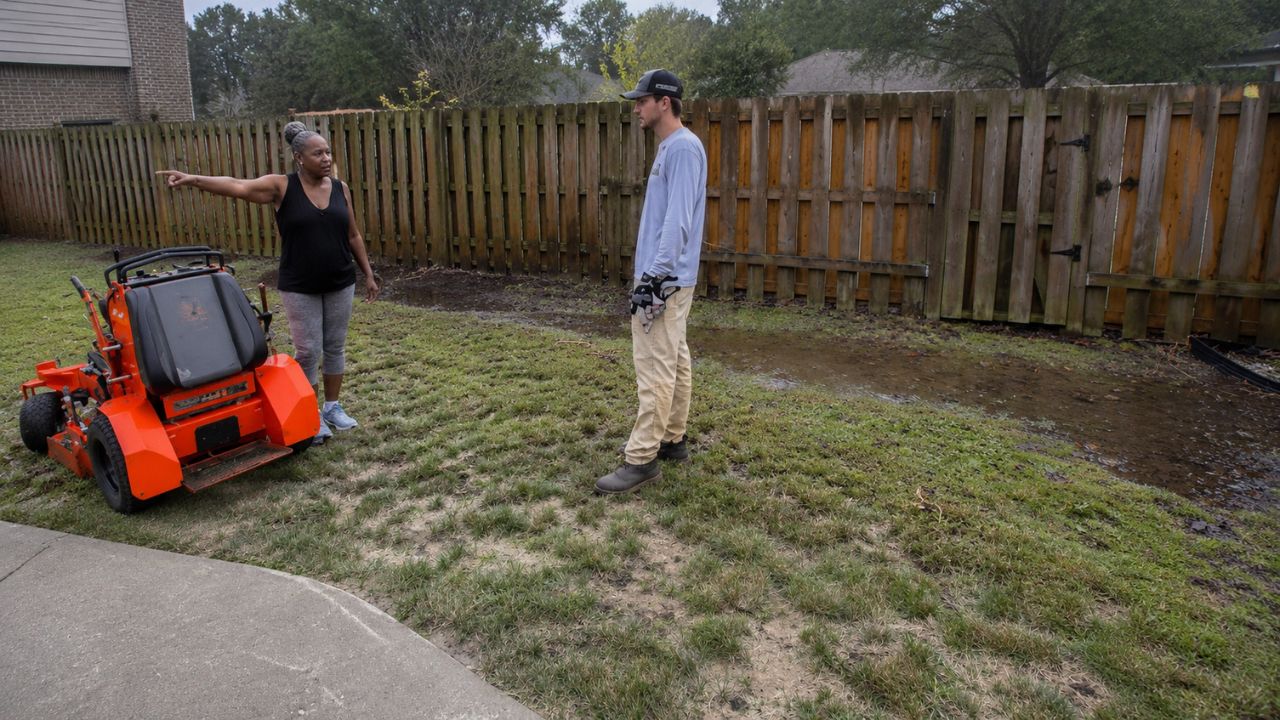
Every time I pull up to a new property in Greater Sudbury, before I say anything about pricing or services, I do a quick walk of the lawn. Five minutes, same things every time. By the end of it I almost always know the answer to the question the homeowner is really asking — which is: do I need new sod, or can we bring this lawn back with the right care?
It’s a question worth getting right. New sod is a real investment. If a lawn can be brought back with aeration, overseeding, and a consistent routine, spending money on sod doesn’t make sense. But if the lawn is past the point where care alone will fix it, throwing another season of effort at it without sodding is just wasting time and money.
Here’s exactly what I look at — and how you can do this assessment yourself before you call anyone.
Step 1 — The Coverage Check

The first thing I do is stand at one end of the lawn and look across it. I’m trying to get a rough sense of how much of the lawn is actually grass versus bare soil, weeds, or dead material.
Here’s the threshold I use: if more than 50 percent of the lawn is bare, dead, or weed-dominated, sodding is almost always the better answer. Below that, the existing grass can usually fill in with the right care — aeration, overseeding, fertilizer, consistent mowing. Above it, you’re spending money on care to recover a lawn that doesn’t have enough healthy grass left to drive the recovery.
I walk the lawn in a rough grid pattern — across the front, down the middle, across the back — so I’m not just eyeballing one section. Different parts of the same lawn can be in very different condition. The front might be 70 percent grass. The side yard near the fence might be 20 percent. I want a full picture, not a partial one.
One thing I watch for: weeds that look like grass from a distance. Creeping charlie, crabgrass, and some broadleaf weeds fill in thickly and can make a lawn look more covered than it is. I get close enough to the surface to see what I’m actually looking at. A lawn that looks 60 percent covered from the street might be 30 percent actual grass when you’re down at ground level.
Step 2 — The Soil and Root Check

Coverage tells me what I can see. This step tells me what’s happening underneath — and that’s often where the real answer lives.
I do two quick things here. First, I press my heel firmly into the soil in a few different spots. On healthy, workable soil, there’s some give — the heel sinks slightly and the soil feels alive. On heavily compacted soil, it’s like pressing into packed clay. Your heel barely leaves a mark. Compacted soil is a major reason lawns struggle and thin out, and it’s fixable with core aeration — it doesn’t mean the lawn needs to be replaced.
Second, I grab a small handful of grass in one of the thinner areas and tug gently. On a lawn where the grass is alive but stressed, it holds. The roots are there, they’re just not thriving. On a lawn where the grass is genuinely dead — not dormant, dead — it pulls out of the ground with almost no resistance, like lifting wet paper off a table. Sometimes I can see the root zone is grey or black and rotted rather than white and healthy.
If the soil is compacted but the roots are alive, that’s almost always a care problem, not a sod problem. Fix the compaction, give the grass what it needs, and it can come back. If the roots are dead across a significant portion of the lawn, there’s nothing to work with — sod is the answer.
I also check the topsoil depth if I can. In parts of Sudbury — especially on newer builds and some properties closer to the Canadian Shield — the topsoil layer is very thin or poor quality. I’ll press a small probe or even a screwdriver into the ground to see how deep the darker topsoil layer goes before hitting lighter subsoil or fill. If it’s less than two or three inches, the lawn has been fighting bad soil from the start, and the fix involves more than just care — it involves soil improvement, which changes the conversation significantly.
Step 3 — The Drainage and Grade Check

A lawn can have every other thing going for it and still struggle if water isn’t moving through it correctly. I spend a few minutes looking at the grade and thinking about where water goes when it rains.
I’m looking for low spots where water pools. Standing water for more than a few hours after rain means the soil can’t drain fast enough — grass roots sitting in waterlogged soil are under constant stress and will thin out no matter what else you do. I’m also looking at whether the grade near the house is draining away from the foundation or toward it, and whether any sections of the lawn are significantly higher or lower than the rest in ways that create problems.
Drainage issues are important to identify before deciding on sod versus care, because if you put new sod down over a drainage problem, you haven’t solved anything — you’ve just covered it up temporarily. The same sod will struggle in the same spots for the same reason within a season or two.
Minor drainage issues can often be addressed with grading work as part of a property cleanup and lawn renovation. More significant ones — persistent low spots, grading that slopes toward the house — need to be addressed as a separate scope of work before any lawn renovation makes sense.
Step 4 — The History Question

The last thing I do isn’t a physical check — it’s a conversation. I ask the homeowner a few questions, and the answers often tell me more than anything I’ve observed.
How long has the lawn been in this condition? A lawn that went downhill in one bad season is almost always recoverable with care. A lawn that’s been struggling for three or four years despite the homeowner trying different things — seeding, fertilizing, watering — has a persistent underlying problem that care alone isn’t going to fix.
What’s been done to it in the past? If the lawn has never been aerated, never been properly fertilized, and has been cut short every week — that tells me the lawn hasn’t had the basics it needs. There’s a good chance it can come back with proper care. If the homeowner has done everything right for two seasons and it keeps declining, something structural is wrong with the soil or drainage.
What are your expectations for this lawn? This one matters more than people expect. A homeowner who wants a thick, dense, show-quality lawn is going to be disappointed with a recovery project on poor soil — they need new sod and a proper foundation. A homeowner who just wants a lawn that looks reasonably good and doesn’t embarrass them when the neighbours walk by can often get there with a season of good care even on a struggling lawn.
Matching the solution to both the lawn’s actual condition and the homeowner’s realistic expectations is the whole job. I’ve sent people away without booking anything because what they wanted and what the lawn could realistically deliver didn’t match — and I’d rather have that conversation upfront than take their money and disappoint them in August.
What the Assessment Usually Tells Me
When I put all four of those checks together, most lawns fall into one of three categories:
Good candidate for care. More than 50 percent live grass coverage, compacted but alive roots, no major drainage issues, lawn has had at least some care. Aeration, overseeding, consistent mowing at the right height, and a proper fertilizer schedule will bring this lawn back in one to two seasons. Sodding would be premature and expensive.
Needs sodding. Less than 50 percent live grass, dead root zones, or multiple seasons of decline despite care. The lawn doesn’t have enough to work with. Sod installation with proper soil preparation is the right answer — and the sooner the better, because continuing to spend on care for a lawn that can’t recover is just money going nowhere.
Needs soil work first, then a decision. This is the situation on poor topsoil, severe drainage problems, or heavily amended fill. Neither sodding nor care makes sense until the soil situation is addressed. This is the conversation I have on a lot of new build properties in Sudbury, where the topsoil was stripped during construction and what’s left isn’t adequate for either approach to work properly.
If you’re looking at your lawn right now and not sure which category you’re in — reach out. I’m happy to come walk the property with you and give you a straight answer. No pressure, no upsell. Just the honest assessment.
— Ryan Lingenfelter
Cutting Edge Lawn & Landscaping, Garson, Ontario
📞 705-507-6787
Serving all of Greater Sudbury — Garson, Hanmer, Val Caron, Lively, Chelmsford, Azilda, Capreol, and Sudbury proper. We offer sod installation, core aeration, property cleanup, and full lawn care. Free quotes, no pressure.
Get a Free Quote |
Call 705-507-6787
