
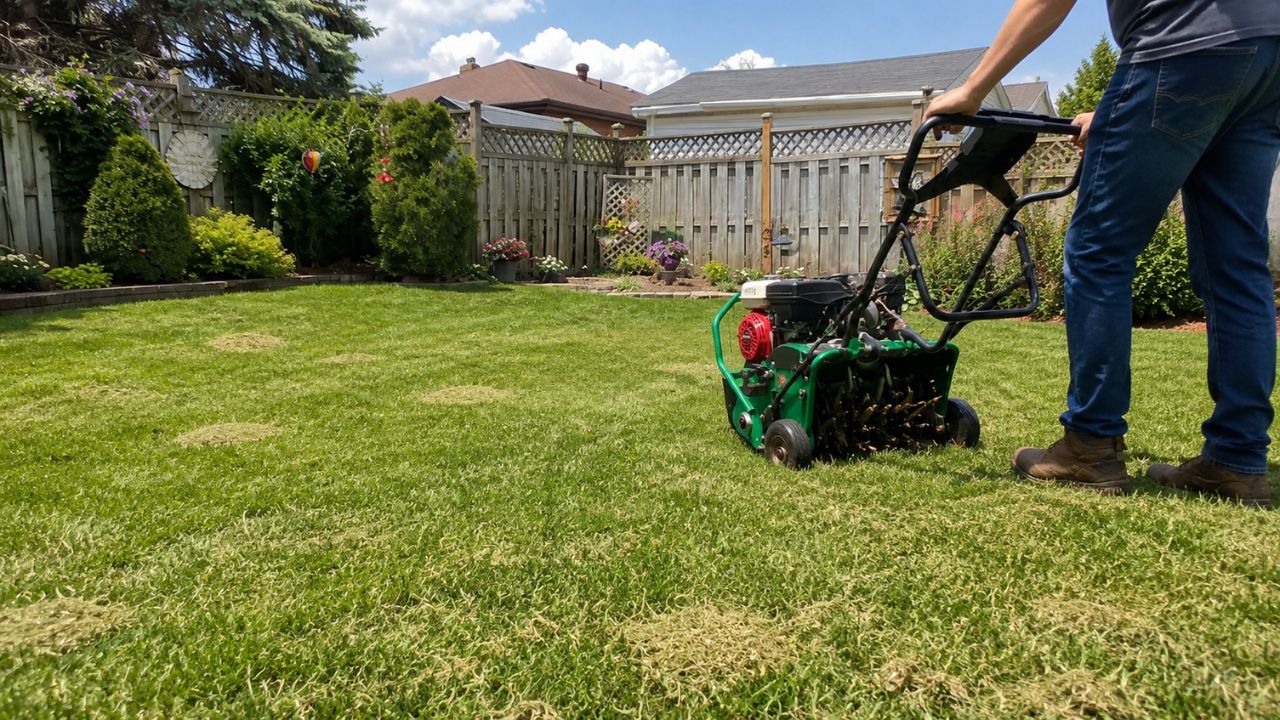
If you’ve ever searched for when to aerate your lawn you’ve probably come away more confused than when you started. Half the articles say spring. Half say fall. Some say it depends on your grass type. Some say do it twice a year. The advice contradicts itself constantly and almost none of it is written for lawns in Greater Sudbury specifically.
I’ve aerated hundreds of properties in this region since 2020 — in spring, in fall, and a few times in between. I know what the results look like here, in this climate, on this soil. So let me just give you a straight answer without the generic lawn care hedging.
For most lawns in Greater Sudbury, spring aeration is better. Here’s exactly why — and the specific situations where fall aeration makes sense instead.
What the online advice gets wrong about Sudbury
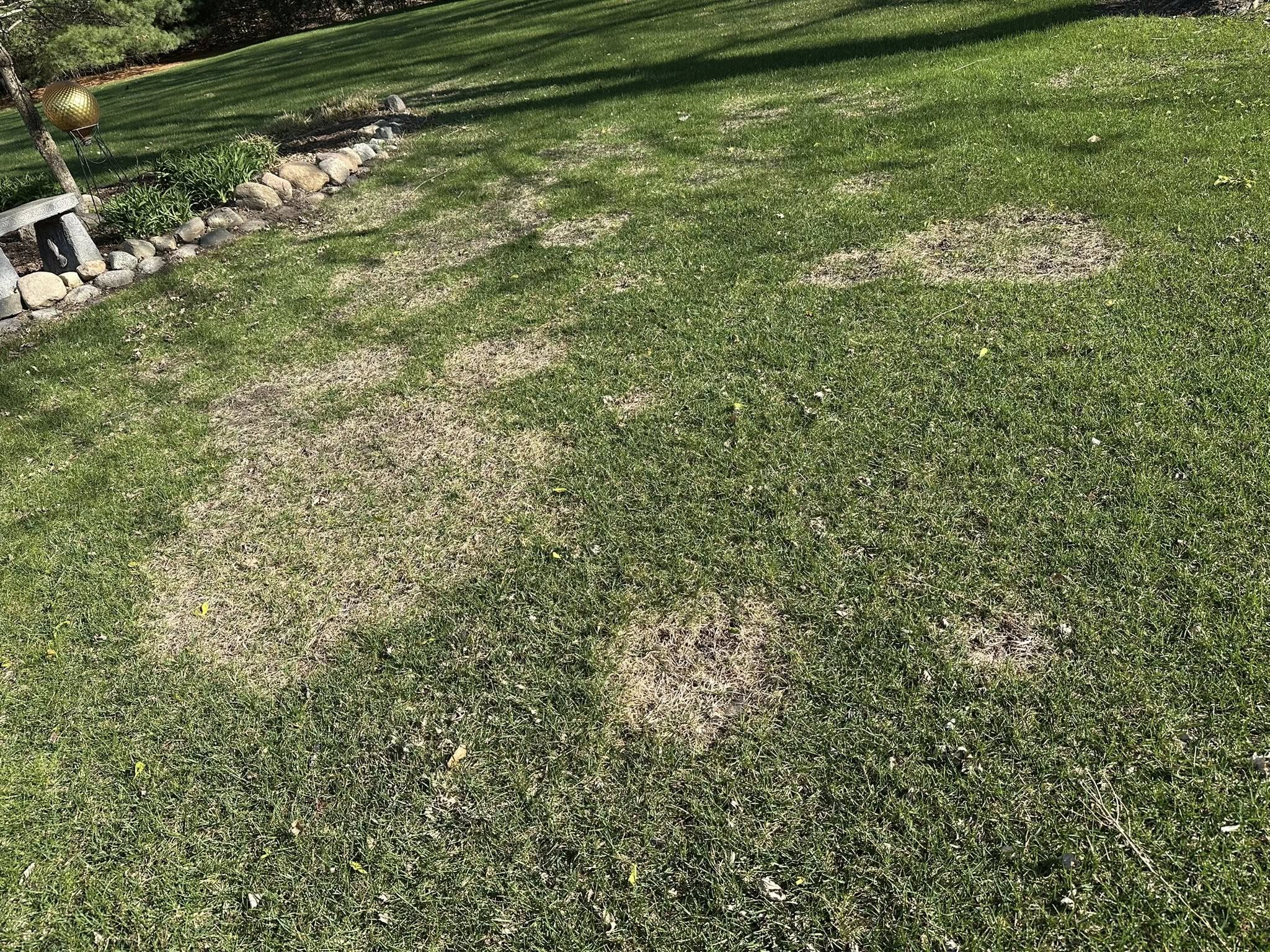
Most lawn care content online is written with a mid-Atlantic or Midwest American audience in mind — places like Ohio, Pennsylvania, Indiana. Some of it comes from southern Ontario, which is still a different climate than what we deal with in Greater Sudbury. These are cool-season grass regions, same as us, but the seasonal windows are meaningfully different.
In those climates, fall aeration gets recommended because the growing season extends well into October. Grass aereted in September has six to eight weeks of solid growing weather to recover, fill in the aeration holes, and establish the deeper roots that make the whole exercise worthwhile. Fall seeding after aeration works well because germination temperatures stay favorable through most of October.
In Sudbury, we don’t have that. Our fall comes fast and hard. The first killing frost in Greater Sudbury arrives on average in late September — sometimes earlier in Capreol and the northern parts of the region. By mid-October nighttime temperatures are regularly below five degrees Celsius. Grass that was aerated in early September has maybe three to four weeks of meaningful growing conditions before it goes dormant. That’s not enough time to establish the deep root system that makes aeration valuable in the first place.
I’ve done fall aeration on Sudbury properties when clients have insisted on it. The results are consistently less impressive than the same work done in spring. The holes stay open longer because the grass doesn’t have time to fill them in. The overseeding that should follow aeration either doesn’t germinate at all or germinates weakly and doesn’t establish before frost. By spring the benefit of the fall aeration is mostly gone — the freeze-thaw cycle through winter re-compacts a lot of what the aeration opened up.
The online advice isn’t wrong for where it was written. It just doesn’t translate to Sudbury.
Why spring aeration works better in Sudbury — specifically
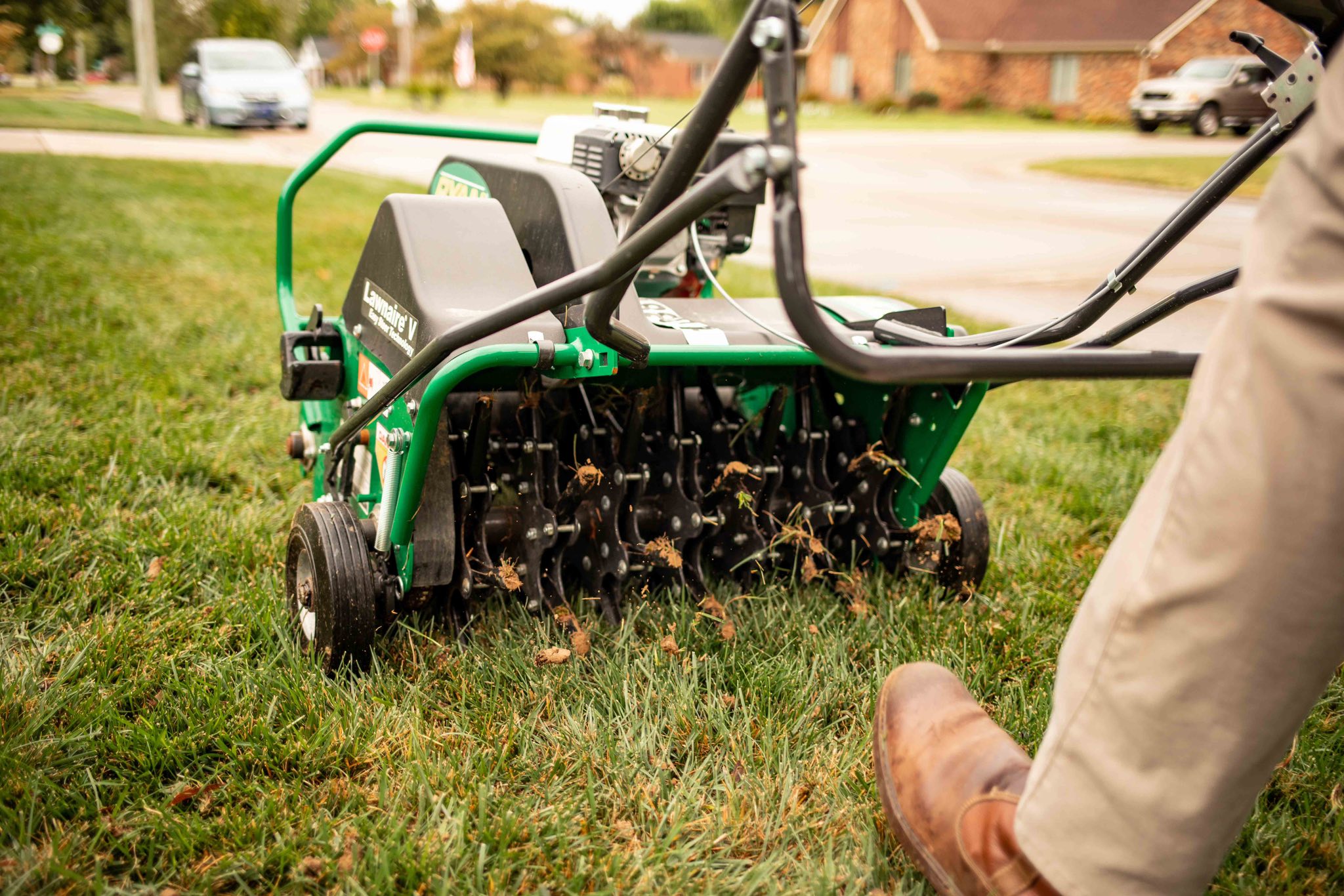
Spring aeration in Greater Sudbury works better for one central reason: what comes after it.
When you aerate in late May or early June, the grass has the entire summer ahead of it to respond. The roots that were compressed and shallow from winter compaction and freeze-thaw stress now have open channels to grow into. Over the following eight to ten weeks of warm weather, those roots push deeper — from the one to two inch depth I typically find on unaerated Sudbury lawns to four, five, six inches on a lawn that aerates annually and gives the roots room to develop.
Deeper roots mean the lawn can access water stored in the lower soil layers during the July dry stretches that hit Sudbury most summers. A lawn with roots at five or six inches can survive a ten-day heat and drought stretch with minimal stress. A lawn with roots at one and a half inches browns within four days of the same conditions. That difference traces directly back to whether and when aeration happened.
Spring aeration also times perfectly with overseeding. Seed dropped into fresh aeration holes in late May has ideal germination conditions — warm soil, consistent moisture, and full summer ahead to establish. Grass seeded after spring aeration comes in thick and has the whole growing season to root before it faces its first winter. Seed dropped after fall aeration in Sudbury is racing against frost and often loses.
The soil condition in late May is also optimal for aeration work itself. After snowmelt the soil has good moisture content — not waterlogged, but soft enough that aeration tines penetrate properly and pull clean plugs. Aeration done on dry, hard soil in August or on frozen-at-depth soil in April doesn’t produce the same quality of plug or the same depth of penetration. The late May to mid-June window hits the soil in the state where the tool does its best work.
On every property I maintain in Greater Sudbury, spring aeration is scheduled first. It’s the foundation that everything else that season builds on.
When fall aeration makes sense — and when it doesn’t
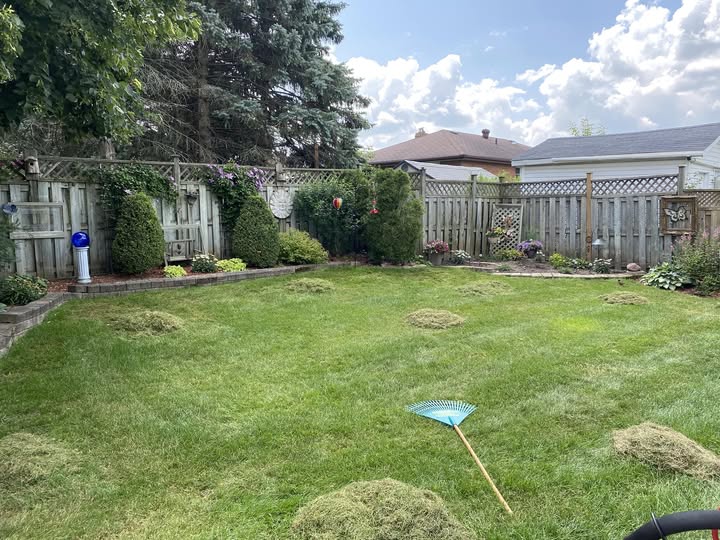
I don’t want to tell you fall aeration is never worth doing in Sudbury, because there are specific situations where it makes sense. Here’s the honest breakdown.
Fall aeration makes sense when:
You missed the spring window entirely and your lawn has significant compaction. Some aeration benefit is better than none. If you couldn’t get it done in spring and your lawn is struggling, early September aeration — before the first frost risk — gives the grass three to four weeks of recovery. It’s not as good as spring, but it’s not nothing. The key is doing it in early September, not October.
You’re doing a second pass on a heavily compacted property. On properties with severe compaction — lawns with heavy clay soil, high traffic areas, properties that haven’t been aerated in five or more years — a second aeration in early fall after a spring aeration accelerates the compaction correction significantly. Two passes in the same season, correctly timed, can achieve what might otherwise take two to three years of annual spring aeration alone.
You have a specific dormant seeding plan. Some lawn professionals use fall aeration in combination with dormant overseeding — seed applied late enough in fall that it won’t germinate until spring. This is a legitimate technique that works in Sudbury when timed correctly. The seed sits in the aeration holes over winter and germinates as soon as soil temperature allows in spring. It requires the right seed, the right timing, and accepting that you won’t see results until the following season.
Fall aeration does not make sense when:
You’re expecting the same results as spring aeration. You won’t get them. The recovery window is too short in Sudbury. If you’re choosing between spring and fall for your one annual aeration, choose spring every time.
You’re planning to overseed for same-season results. In Sudbury, overseeding after fall aeration is a gamble. Early September gives you a chance. Mid-September is marginal. October is too late. If you want overseeding to take this season, it needs to happen in spring.
You’re doing it in October. At that point in Sudbury the soil temperature is dropping below the threshold for meaningful biological activity and the grass doesn’t have enough growing time left to use the benefit. You’re doing work that won’t pay off until spring at the earliest, and the freeze-thaw cycle through winter will undo a significant portion of it.
The exact window I follow on every Sudbury property
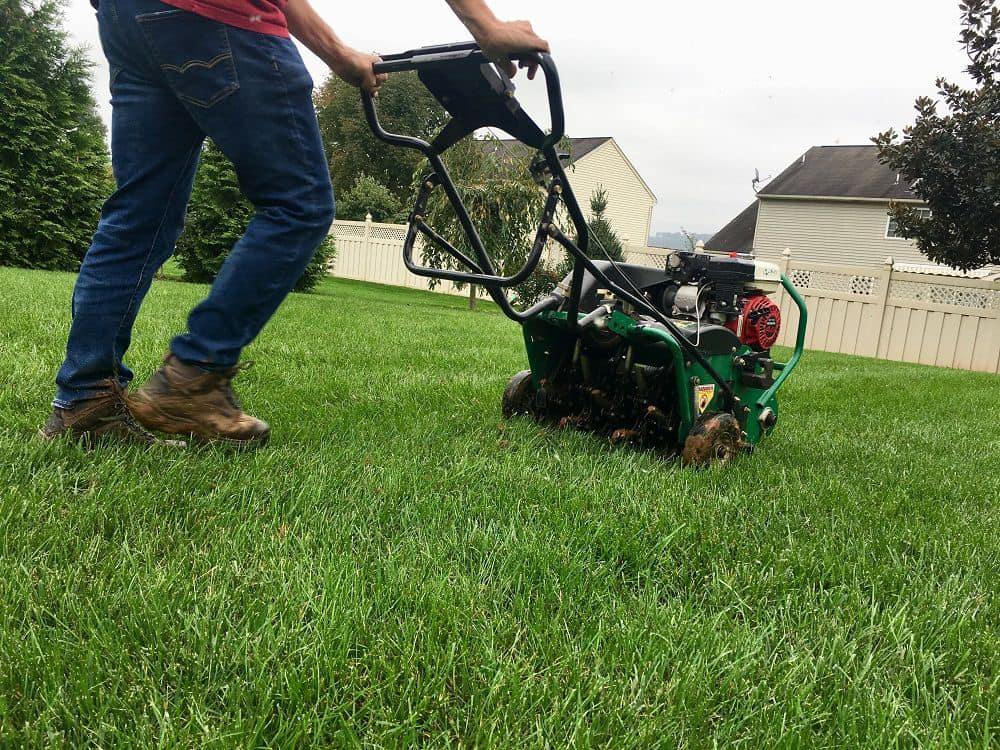
After five seasons of aeration work across Greater Sudbury, here’s the precise timing I use and why.
Target window: May 20 to June 15.
Not April. Not early May. In Greater Sudbury, soil temperature at four to six inches depth — where you want it for aeration to produce real results — doesn’t consistently reach the threshold for active root growth until the third week of May in most years. Aerating before that point means you’re opening channels into soil that isn’t biologically ready to respond. The grass is still coming out of dormancy. The roots aren’t ready to push. You’re doing the work at the right time of year on the calendar but the wrong time in the soil’s seasonal cycle.
Not after mid-June if you can help it. By late June the heat is building and the grass is moving into the more stressed part of the growing season. Aeration at that point still works, but the recovery from the disturbance is harder on the grass when temperatures are climbing. The sweet spot is when the soil is warm, the grass is growing actively, and you still have cool nights helping the plant recover between hot days.
The specific check I do before booking aeration on any property: I press a screwdriver or a soil probe into the ground in a few spots. If it goes in six inches with moderate pressure, the soil is ready. If I’m forcing it or it won’t go past three inches without serious effort, I wait another week. Soil that’s too dry or too cold for the probe test isn’t ready for aeration to produce its best result.
On every property I maintain, aeration is the first significant service of the season — scheduled after the first cut of the year and before anything else. Fertilizer goes down after aeration, not before, so nutrients can move into the channels rather than sitting on a compacted surface. Overseeding follows immediately after aeration while the holes are fresh and open. Everything else that season builds on the foundation of what aeration does to the soil in those six weeks of optimal late-spring conditions.
If you’re in Greater Sudbury and you haven’t aerated yet this season — the window is either open or closing soon depending on when you’re reading this. Give me a call and I’ll tell you honestly whether you’re still in the window and what aeration on your specific property would involve.
📞 705-507-6787 | Get a free quote online
— Ryan Lingenfelter
Owner, Cutting Edge Lawn & Landscaping
Garson, Ontario · 705-507-6787
