Every spring in Sudbury tells the same story.
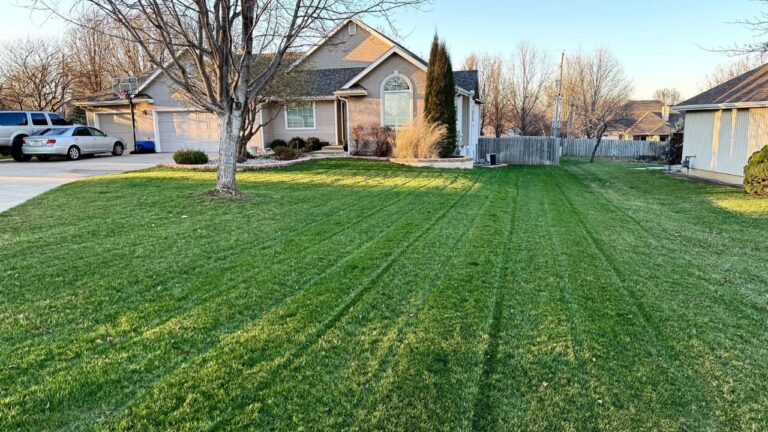
Snow melts, the lawn appears — and what’s underneath is never pretty. This year was no different. Compacted soil, dead patches, thatch buildup, and that dull yellowish-brown colour that makes every homeowner cringe.
I’m Ryan Lingenfelter, owner of Cutting Edge Lawn & Landscaping in Garson, Ontario. I’ve been maintaining lawns across Greater Sudbury since 2020, and this spring I want to share exactly what I do — step by step — to bring a damaged Sudbury lawn back to life.
Why Sudbury Winters Are So Hard on Lawns
Sudbury isn’t like southern Ontario. Our winters are longer, colder, and harder on turf. A few things happen under that snow that most homeowners don’t realize:
Snow mold forms. When snow sits on unfrozen ground for months, a fungal disease called snow mold develops underneath. You’ll see it as grey or pink circular patches when the snow lifts.
Soil compacts. The freeze-thaw cycle repeatedly compacts our already clay-heavy Sudbury soil. By April, most lawns have soil so tight that water, air, and nutrients can’t reach the roots properly.
Thatch builds up. Dead grass from last season sits matted on top of the soil, blocking sunlight and airflow to new growth.
Understanding this is why I never just start mowing in May. There’s a specific order of operations that makes all the difference.
Step 1: Wait for the Right Time to Start
The biggest mistake I see Sudbury homeowners make is starting too early.
Your lawn needs to be dry enough to walk on without sinking. If you’re leaving deep footprints, the ground is still saturated. Working on a wet lawn compacts the soil even further and tears up turf.
In Sudbury, this usually means waiting until late April to mid-May depending on the year. This spring, we had a wet first two weeks of May — patience paid off.
Step 2: Power Rake or Dethatch First
Before anything else, the thatch needs to go.
I use a commercial power rake on every property in early spring. This pulls up the dead matted grass layer sitting on top of the soil. Most homeowners are shocked at how much material comes out — sometimes several bags worth from an average-sized yard.
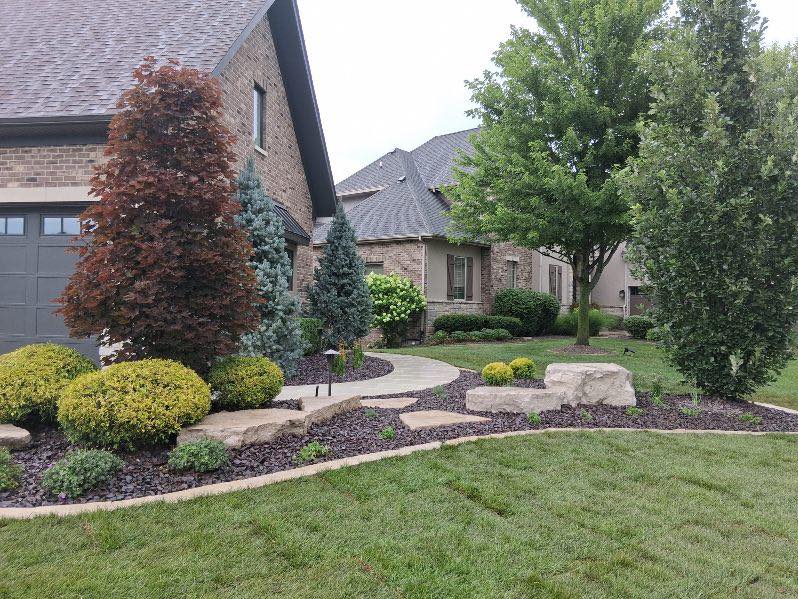
Why does this matter? Because thatch thicker than half an inch blocks water, fertilizer, and sunlight from reaching your grass roots. Your lawn can’t recover if it’s suffocating under a layer of dead material.
Step 3: Core Aeration — The Most Important Step
If I could only do one thing for a Sudbury lawn in spring, it would be core aeration.
Core aeration uses a machine to pull small plugs of soil out of the ground — typically every few inches across the entire lawn. Those holes allow:
- Air to reach compacted root zones
- Water to penetrate deeply instead of running off
- Nutrients and fertilizer to actually get to the roots
- New grass seed to make soil contact if you’re overseeding
In Sudbury’s clay-heavy soil, skipping aeration means everything else you do — fertilizer, watering, seeding — is working at maybe 30% efficiency. The soil is simply too tight for it to work properly.
I aerate every customer’s lawn at least once per year, in spring. Properties with heavy foot traffic or very compacted soil get it twice — spring and fall.
Step 4: Address the Bare and Thin Patches
After aerating, I assess the damage. Every Sudbury lawn has them after winter — bare spots from snow mold, thin areas from foot traffic, and patches where the grass simply didn’t survive.
For small patches: overseed with a quality grass seed suited to our climate. Kentucky bluegrass and perennial ryegrass blends perform well in Sudbury’s conditions.
For larger damaged areas: sod installation gives you an instant result. We offer full sod installation starting at $999 for properties across Greater Sudbury.
Step 5: First Cut of the Season — Do It Right
When the lawn is ready for its first cut, most people make the same mistake: they cut too short.
Never remove more than one-third of the grass blade in a single cut. After winter, grass is already stressed. Cutting it short adds more stress and can set back recovery by weeks.
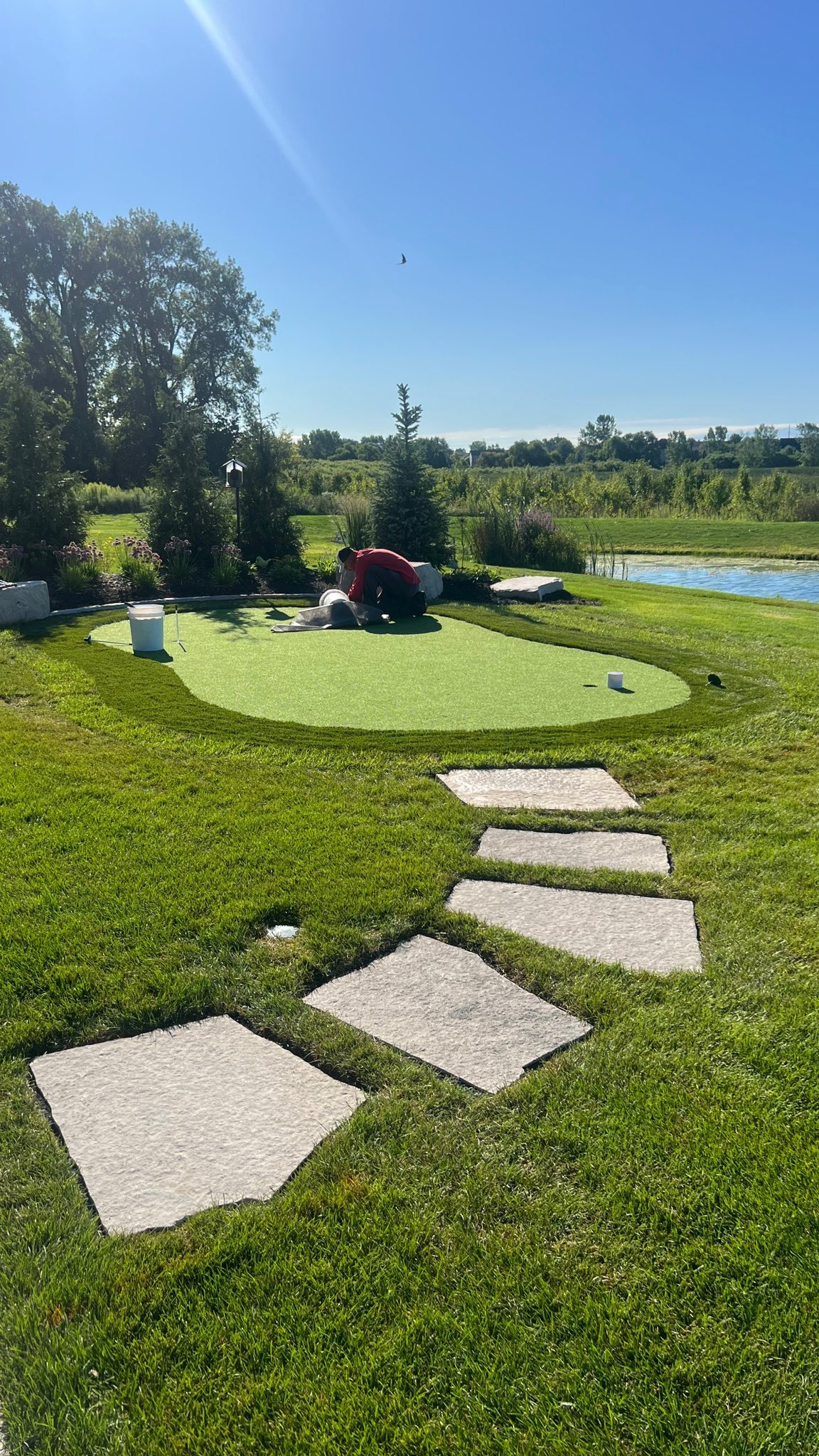
For the first few cuts of the season, I keep the blade higher — around 3 to 3.5 inches. This protects the root system while the lawn is still building strength.
What Your Sudbury Lawn Looks Like After 30 Days
If you follow these steps — dethatch, aerate, address bare patches, first cut at the right height — here’s what 30 days of spring recovery looks like in Sudbury:
- Week 1-2: Lawn looks rough after dethatching and aeration. Soil plugs visible. Completely normal.
- Week 2-3: New growth starts filling in. Colour begins to shift from yellow-brown to green.
- Week 3-4: Density noticeably improves. Bare patches filling in if seeded.
- Day 30: A lawn that looks actively healthy versus one that’s just surviving.
The difference between a lawn that bounces back by June and one that struggles all summer comes down to what you do in May.
Need Help With Your Sudbury Lawn This Spring?
Cutting Edge Lawn & Landscaping handles spring cleanup, core aeration, power raking, sod installation, and weekly grass cutting across Greater Sudbury — including Garson, Val Caron, Hanmer, Lively, Chelmsford, and Azilda.
📞 Call or text Ryan directly: 705-507-6787
🌐 Get a free quote: cuttingedgelawn.ca/quote
Licensed & Insured | Based in Garson, Ontario | Serving Sudbury Since 2020